An Analysis on PKK Disarmament

2025/03/12 | interview, Politics, top news

Strategic Council Online – Interview: A researcher in the field of strategy and geopolitical affairs considered the PKK disarmament to be due to their feeling of weakness after the collapse of Bashar al-Assad’s government and the rise of Turkey, as well as the increase in international pressure with the coming to power of Donald Trump, and said: At the current stage, both the PKK and the Turkish government welcome this agreement, but it is unlikely that this agreement will last long.

In an interview with the Strategic Council on Foreign Relations website, Pouya Davari-Monazah referred to the PKK’s recent decision to lay down arms and Turkey’s support for this decision, stating: The Kurds of Turkey have been affected by recent developments in the region, especially the political change in Syria and the coming to power of Donald Trump, as well as developments in Lebanon, and on the other hand, the acceptance of this proposal by the government based in Turkey is also due to the view that the Ankara government has of the developments of the next three to four years.

He stated that in 2015, the PKK branch in Syria, called the “SDF,” was formed. They succeeded in attracting a new view of themselves from the United States in the fight against ISIS in Kobani, which led to the United States helping them in a way and, at the same time, developing its goals and interests in the region. Even though the SDF forces were moving towards autonomy and did not have any particular alignment with the Bashar al-Assad government, they did not find much conflict with the Syrian government because their common enemy was Turkey and ISIS. On the one hand, they were close to the Patriotic Union of Kurdistan in Sulaymaniyah. These developments caused the SDF group to abandon peace with other groups in Turkey and not accept proposals to lay down their arms.

This expert on strategic and geopolitical issues said about the PKK’s acceptance of the disarmament: The fall of Bashar al-Assad by the Turkish-backed Golan, Syria’s withdrawal from the axis of resistance, and Turkey’s increased weight in these developments, as well as the rise to power of Donald Trump, are among the important reasons that seem to have led the PKK to decide to accept the proposal of Turkish Foreign Minister Hakan Fidan to disarm.

Davari continued: In previous negotiations that took place during the first term of Trump’s presidency, the US abandoned the PKK. At the beginning of Trump’s second term, a similar behavior occurred with Ukraine, an ally of the US. Therefore, the Kurds considered Trump’s behind-the-scenes agreement with Erdogan to be possible and preferred to move toward disarmament.

Regarding Turkey’s goals in presenting the proposal to the PKK, he stated: Turkey is pursuing several goals in the proposal it has made; first, to create a rift between the three axes of the Kurdish forces of Qandil (northern Iraq), the SDF (Syria), and the Dem Party (Turkish Parliament). Their political wing in Turkey is keen to achieve results through political negotiations. Qandil wants to fight, and the SDF seeks to get closer to the US. So, Hakan Fidan has created a rift between these three groups with this proposal. Second, he warned the Kurdish regions of Turkey that the government wants to give more authority to the Kurds in municipalities and other positions. If the PKK disagrees, the problem will be theirs. Third, he created a rift in the different branches of the PKK and its leaders, and this rift will definitely open the way for these groups to infiltrate.

This expert on regional issues clarified: When Fidan can create love and hatred in these groups, he can recruit and infiltrate them, and if the PKK lays down its arms, his work is over.

In response to why the Qandil branch accepted this proposal, he said: If it did not accept, the pressure on the Kurds inside Turkey would increase, and the attacks from northern Iraq would increase. In addition, they had no hope that Trump would support them, so it was in their interest to move more cautiously for now.

In response to the question of whether they might lose their identity and ideology and whether their organization would fall apart if they laid down their weapons, Davari said: “Anyway, the PKK is an armed guerrilla group and has worked for years to create the current military structure and has its own security and military organization. This has been done for over fifty years. When their leaders move towards political negotiations and disarmament, it is natural that one of the risks is the loss of this vast and long organization. It will not be easy to restore it. In addition, many people were with this group because of their ideology, and many of these people will also fall apart if they lay down their weapons, so a large part of the body of this group will be disintegrated.”

He stated Turkey’s view on this issue: In 2028, Erdogan’s presidential term will end, and he will no longer be able to run for president. Hakan Fidan is thinking very cleverly that if they want to hold a referendum to continue the AKP government, they need the votes of the Kurds. If he gives them political and identity privileges and gives them a share in small positions and, at the same time, takes away their weapons, he can expand and strengthen his party’s power structure.

This expert on strategic and geopolitical issues noted that the implementation environment of the agreement between the PKK and the Turkish government is unclear despite the initial agreement, and it is unlikely that this long-term agreement will be realized for a long period. The Turkish government is simply seeking from this agreement to have 20 to 30 million Turkish Kurds vote in favor of the AKP for 2028.

He emphasized: “The least benefit for Turkey over laying down arms is to create discord and division among the PKK and its political and military branches, and to create conflict among domestic leaders and exert influence among them.”
0 Comments

LATEST CONTENT

America’s Zero-Sum Game in Iraq

Online Strategic Council – Memoir: The swift selection of Nouri al-Maliki for the premiership constitutes a new phase in Iraq’s political sphere. Multiple factors have played a role in this process, the most important being the prevailing situation in Iraq and the region. Under such circumstances, Iraq requires a powerful and experienced prime minister who can keep the country away from the dangers of wars and crises.

America’s Strategy for Creating Tension in the Asia-Pacific

Strategic Council Online – Opinion: Relations between some countries in the Asia-Pacific region, such as China and Japan or China and Australia, which were previously relatively normal, are trending towards deterioration, and the primary reason for this is the aggressive policies of the United States of America.

The Collapse of the European Security Illusion with the Continuation of the Ukraine War?

Strategic Council Online – Interview: The Ukraine war has become a new turning point in the political, security, and even commercial relations of allies on both sides of the Atlantic. While this war is nearing its fourth year, many questions still remain regarding its future and its consequences; among them, will the continuation of the Ukraine war lead to the collapse of the European security illusion?

Is Greenland Pushing Europe Toward China?

Strategic Council Online – Interview: A European affairs expert believes that the seizure of Greenland will certainly weaken America’s relations with Europe and its allies. Donald Trump’s view is that he does not need these countries, but if Europe faces significant pressure from the United States, it is natural for it to move toward China.

Alarm Bells Sound for ISIS Revival in Syria: Threat to Iraq and West Asia

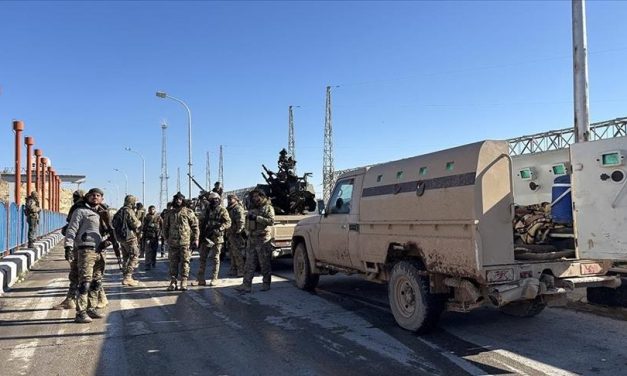
Strategic Council Online – Opinion: Numerous documents and pieces of evidence indicate that ISIS, which in recent years has been the region’s biggest threat to security and stability after the Zionist regime, has once again in recent months become a focal point for political and security exploitation by American and Zionist regime security, intelligence, and political circles.

Afghanistan’s Effective Role in the Economy of Eurasia

Strategic Council Online – Interview: A regional affairs researcher stated: Despite projects such as the Khaf-Herat railway and the Herat-Balkh-Mazar-i-Sharif corridor being on the agenda, insecurity and the absence of an inclusive government remain the most significant obstacles to realizing transit corridors and Afghanistan playing an effective role in the economy of Eurasia.

Loading

Últimas publicaciones

America’s Zero-Sum Game in Iraq

Online Strategic Council – Memoir: The swift selection of Nouri al-Maliki for the premiership constitutes a new phase in Iraq’s political sphere. Multiple factors have played a role in this process, the most important being the prevailing situation in Iraq and the region. Under such circumstances, Iraq requires a powerful and experienced prime minister who can keep the country away from the dangers of wars and crises.

America’s Strategy for Creating Tension in the Asia-Pacific

Strategic Council Online – Opinion: Relations between some countries in the Asia-Pacific region, such as China and Japan or China and Australia, which were previously relatively normal, are trending towards deterioration, and the primary reason for this is the aggressive policies of the United States of America.

The Collapse of the European Security Illusion with the Continuation of the Ukraine War?

Strategic Council Online – Interview: The Ukraine war has become a new turning point in the political, security, and even commercial relations of allies on both sides of the Atlantic. While this war is nearing its fourth year, many questions still remain regarding its future and its consequences; among them, will the continuation of the Ukraine war lead to the collapse of the European security illusion?

Is Greenland Pushing Europe Toward China?

Strategic Council Online – Interview: A European affairs expert believes that the seizure of Greenland will certainly weaken America’s relations with Europe and its allies. Donald Trump’s view is that he does not need these countries, but if Europe faces significant pressure from the United States, it is natural for it to move toward China.

Alarm Bells Sound for ISIS Revival in Syria: Threat to Iraq and West Asia

Strategic Council Online – Opinion: Numerous documents and pieces of evidence indicate that ISIS, which in recent years has been the region’s biggest threat to security and stability after the Zionist regime, has once again in recent months become a focal point for political and security exploitation by American and Zionist regime security, intelligence, and political circles.

Afghanistan’s Effective Role in the Economy of Eurasia

Strategic Council Online – Interview: A regional affairs researcher stated: Despite projects such as the Khaf-Herat railway and the Herat-Balkh-Mazar-i-Sharif corridor being on the agenda, insecurity and the absence of an inclusive government remain the most significant obstacles to realizing transit corridors and Afghanistan playing an effective role in the economy of Eurasia.

Loading

DERNIER CONTENU

America’s Zero-Sum Game in Iraq

Online Strategic Council – Memoir: The swift selection of Nouri al-Maliki for the premiership constitutes a new phase in Iraq’s political sphere. Multiple factors have played a role in this process, the most important being the prevailing situation in Iraq and the region. Under such circumstances, Iraq requires a powerful and experienced prime minister who can keep the country away from the dangers of wars and crises.

America’s Strategy for Creating Tension in the Asia-Pacific

Strategic Council Online – Opinion: Relations between some countries in the Asia-Pacific region, such as China and Japan or China and Australia, which were previously relatively normal, are trending towards deterioration, and the primary reason for this is the aggressive policies of the United States of America.

The Collapse of the European Security Illusion with the Continuation of the Ukraine War?

Strategic Council Online – Interview: The Ukraine war has become a new turning point in the political, security, and even commercial relations of allies on both sides of the Atlantic. While this war is nearing its fourth year, many questions still remain regarding its future and its consequences; among them, will the continuation of the Ukraine war lead to the collapse of the European security illusion?

Is Greenland Pushing Europe Toward China?

Strategic Council Online – Interview: A European affairs expert believes that the seizure of Greenland will certainly weaken America’s relations with Europe and its allies. Donald Trump’s view is that he does not need these countries, but if Europe faces significant pressure from the United States, it is natural for it to move toward China.

Alarm Bells Sound for ISIS Revival in Syria: Threat to Iraq and West Asia

Strategic Council Online – Opinion: Numerous documents and pieces of evidence indicate that ISIS, which in recent years has been the region’s biggest threat to security and stability after the Zionist regime, has once again in recent months become a focal point for political and security exploitation by American and Zionist regime security, intelligence, and political circles.

Afghanistan’s Effective Role in the Economy of Eurasia

Strategic Council Online – Interview: A regional affairs researcher stated: Despite projects such as the Khaf-Herat railway and the Herat-Balkh-Mazar-i-Sharif corridor being on the agenda, insecurity and the absence of an inclusive government remain the most significant obstacles to realizing transit corridors and Afghanistan playing an effective role in the economy of Eurasia.

Loading