China’s Port Cluster and the Silk Road

2025/02/28 | Economy, Note, top news

Strategic Council Online - Opinion: China’s New Silk Road Initiative is not just about land; some of it is also maritime. In fact, China is completing a cluster of ports across the globe, from Asia to Europe, Africa, and Latin America, enabling the export and import of vital goods and resources.

Reza Majidzadeh – Economics Researcher


China is trying to secure its maritime access by investing in port infrastructure along the southern route and building island infrastructure in the South China Sea. In addition, China has officially approved the vision of a “Polar Silk Road” in the Arctic. These plans, constructions, and connections are in line with China’s development plans and, of course, the New Silk Road Initiative. According to the initial plans published, the land route will run from Central Asia, the Middle East, and Turkey to Germany and end at the port of Rotterdam in the Netherlands. From Rotterdam, there is also a connection to Venice, Italy, where the route joins the maritime part of the Silk Road. This naval route starts on the east coast of China and passes through the Straits of Malacca and Kolkata in India. It then continues to Nairobi on the west coast of Africa. From there, it goes north to the Mediterranean and ends in Venice.

Maritime corridors are an important part of the geopolitics of the present century. For example, India has invested in the Chabahar port in Iran to connect to Afghanistan and Central Asia and provide an alternative route for trade out of Afghanistan, away from the excessive influence of Pakistan. This is why China has also defined a Silk Road for its modern vision, which, while emulating the United States, goes beyond it. What is now known as the Belt and Road Initiative envisages the development of transport infrastructure to facilitate communication, trade, and the flow of resources, and ultimately China’s economic and political influence.

The People’s Republic of China has been financing and building an extensive network of land connections, including highways, railways, oil and gas pipelines, as well as oil and gas fields, mines, industrial and logistics production sites, special economic zones, ports, and airports.

Such efforts have been carried out in western China, across Central Asia, and beyond, to Africa and Europe. These efforts have been supported by other innovative components such as strategic linkages with key partners, leveraging financial investments, policy coordination, and cultural linkages.

During its 11th to 14th development plans, China has taken major steps to complete its port cluster. The most important activities of China in these plans included the construction of large container ships, the construction of oil, coal, and iron ore terminals at coastal ports, and the enhancement of synergies between port clusters, which were carried out during the period 2006–2025.

According to the Liner Shipping Connectivity Index, which measures the integration of countries into global liner shipping networks, as of 2022, Shanghai has maintained its position as the world’s busiest container port for thirteen consecutive years, and several Chinese container ports are among the most connected ports in the world.

Currently, 115 of China’s 129 port projects are operational. The importance of developing ports worldwide was also evident in the opening speech of the Belt and Road Initiative in 2013, which also spoke of the 21st Century Maritime Silk Road, which has now been realized. This maritime road is based on bilateral agreements with 66 countries. Today, China’s shipping routes and service networks cover major countries and regions worldwide. Although Beijing is not yet a global maritime power and currently has limited naval bases outside China, it has become a leading trading power with significant geoeconomics spots of influence over the international sea lanes and trading ports that shape the flow of global goods.

The geographic dimension in geoeconomics means that the economic foundations of national power must define geographic features, such as resources situated in specific locations or maritime communication lines that follow particular routes.

Instead, the goal of geoeconomics strategies must be geographically limited, such as the case where a hegemon controls a sphere of influence by making the economies of neighboring countries dependent on it.


0 Comments

LATEST CONTENT

European Independence from the United States; From Dream to Reality

Strategic Council Online – Opinion: Europe has spoken of “strategic autonomy” for years, but each new crisis reveals that the gap between its aspiration for self-reliance and the reality of its security dependence on the United States remains significantly unbridged.

The Arctic; From Geographical Freezing to Geopolitical Boiling

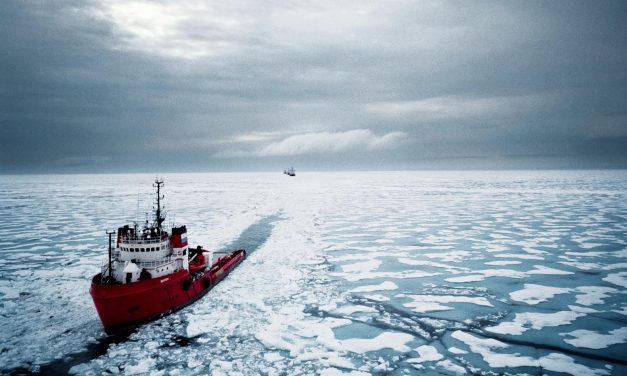
Strategic Council Online – Opinion: The Arctic is no longer a frozen, remote periphery; it has become a live theater of great-power competition, where sea routes, port infrastructure, the law of the sea, and military deterrence are intertwined, shaping the future of maritime security.

The Zionist Regime’s Time Bomb Activated in the West Bank

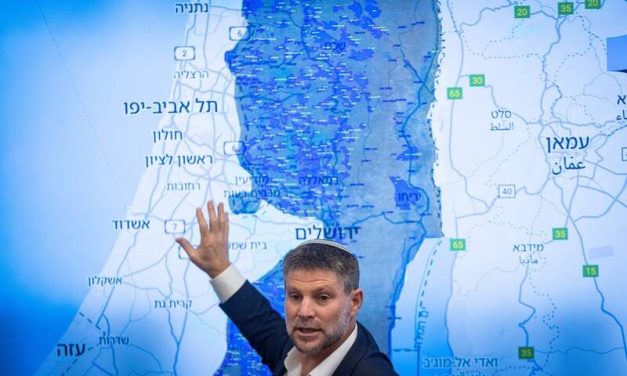
Strategic Council Online – Opinion: In the midst of America’s military deployment to West Asia and the Persian Gulf, which has increased tensions at the regional and global levels, the Zionist regime has seized the opportunity and accelerated the advancement of its ambitious projects, including the process of the illegal annexation of the West Bank to the occupied territories.

Loading

Últimas publicaciones

European Independence from the United States; From Dream to Reality

Strategic Council Online – Opinion: Europe has spoken of “strategic autonomy” for years, but each new crisis reveals that the gap between its aspiration for self-reliance and the reality of its security dependence on the United States remains significantly unbridged.

The Arctic; From Geographical Freezing to Geopolitical Boiling

Strategic Council Online – Opinion: The Arctic is no longer a frozen, remote periphery; it has become a live theater of great-power competition, where sea routes, port infrastructure, the law of the sea, and military deterrence are intertwined, shaping the future of maritime security.

The Zionist Regime’s Time Bomb Activated in the West Bank

Strategic Council Online – Opinion: In the midst of America’s military deployment to West Asia and the Persian Gulf, which has increased tensions at the regional and global levels, the Zionist regime has seized the opportunity and accelerated the advancement of its ambitious projects, including the process of the illegal annexation of the West Bank to the occupied territories.

Loading

DERNIER CONTENU

European Independence from the United States; From Dream to Reality

Strategic Council Online – Opinion: Europe has spoken of “strategic autonomy” for years, but each new crisis reveals that the gap between its aspiration for self-reliance and the reality of its security dependence on the United States remains significantly unbridged.

The Arctic; From Geographical Freezing to Geopolitical Boiling

Strategic Council Online – Opinion: The Arctic is no longer a frozen, remote periphery; it has become a live theater of great-power competition, where sea routes, port infrastructure, the law of the sea, and military deterrence are intertwined, shaping the future of maritime security.

The Zionist Regime’s Time Bomb Activated in the West Bank

Strategic Council Online – Opinion: In the midst of America’s military deployment to West Asia and the Persian Gulf, which has increased tensions at the regional and global levels, the Zionist regime has seized the opportunity and accelerated the advancement of its ambitious projects, including the process of the illegal annexation of the West Bank to the occupied territories.

Loading

DERNIER CONTENU

European Independence from the United States; From Dream to Reality

Strategic Council Online – Opinion: Europe has spoken of “strategic autonomy” for years, but each new crisis reveals that the gap between its aspiration for self-reliance and the reality of its security dependence on the United States remains significantly unbridged.

The Arctic; From Geographical Freezing to Geopolitical Boiling

Strategic Council Online – Opinion: The Arctic is no longer a frozen, remote periphery; it has become a live theater of great-power competition, where sea routes, port infrastructure, the law of the sea, and military deterrence are intertwined, shaping the future of maritime security.

The Zionist Regime’s Time Bomb Activated in the West Bank

Strategic Council Online – Opinion: In the midst of America’s military deployment to West Asia and the Persian Gulf, which has increased tensions at the regional and global levels, the Zionist regime has seized the opportunity and accelerated the advancement of its ambitious projects, including the process of the illegal annexation of the West Bank to the occupied territories.

Loading

DERNIER CONTENU

European Independence from the United States; From Dream to Reality

Strategic Council Online – Opinion: Europe has spoken of “strategic autonomy” for years, but each new crisis reveals that the gap between its aspiration for self-reliance and the reality of its security dependence on the United States remains significantly unbridged.

The Arctic; From Geographical Freezing to Geopolitical Boiling

Strategic Council Online – Opinion: The Arctic is no longer a frozen, remote periphery; it has become a live theater of great-power competition, where sea routes, port infrastructure, the law of the sea, and military deterrence are intertwined, shaping the future of maritime security.

The Zionist Regime’s Time Bomb Activated in the West Bank

Strategic Council Online – Opinion: In the midst of America’s military deployment to West Asia and the Persian Gulf, which has increased tensions at the regional and global levels, the Zionist regime has seized the opportunity and accelerated the advancement of its ambitious projects, including the process of the illegal annexation of the West Bank to the occupied territories.

Loading