US Attempts to Create Religious-Ethnic Sedition in Lebanon

2021/10/25 | Note, Politics, top news

Strategic Council Online - Opinion: On October 14, a group of Lebanese people, invited by the Lebanese Hezbollah and the Amal movement, gathered in front of the Lebanese Ministry of Justice, between Ain al-Rummaneh and Tayouneh areas, to protest the political process of investigation into the Beirut bombing, especially the performance of the judge investigating the incident, Mr. Tariq Bitar. The demonstrators were shot by the assailants affiliated to the Lebanese Forces led by Samir Geagea, “one of the parties to the Lebanese civil war and one of the present allies in the Western-Arab axis,” was witnessed which led to the killing and wounding of many protesters. Hossein Ajorloo – expert on Middle East affairs

Tariq Bitar recently summoned some ministers affiliated with the Amal Movement and Hezbollah, such as Ali Hassan Khalil (former Minister of Finance) and Ghazi Zaiter (the current member of the Lebanese parliament with judicial immunity), for questioning which, by doing so, he seems to have sought to create scenarios against groups close to the resistance. In particular, according to media reports, Judge Tariq Bitar has met with foreign parties in recent months, especially the US ambassador, which is contrary to the current judicial process in Lebanon.

The question that arises now is what are the reasons for the recent crisis and the role of foreign players in the occurrence of such events? Examining the reasons for such incidents, it can be said that Lebanon is a multi-tribal and multi-ethnic country, and the emergence of any crisis, especially inter-tribal crises, is laying the groundwork for civil sedition and, ultimately, civil war. It should be noted that Lebanon has experienced a 15-year tribal civil war. It seems that some Lebanese internal parties, especially the allies of the West and Arab countries, who after the civil war (1975 to 1990), despite all their material and spiritual support, could not achieve the desired power in the Lebanese political scene, are trying to inflame and create ethnic and religious tensions in Lebanon to play a role in that country; one of those groups is the Lebanese forces led by Samir Geagea, which has always sought to incite sedition and ethnic-religious differences in Lebanon.

Another factor in the emergence of such a crisis is Hezbollah’s success in resolving part of the fuel challenge in Lebanon. This has increased Hezbollah’s popularity and soft power, as well as demonstrating the movement’s political and economic capacity to resolve Lebanon’s internal crises.

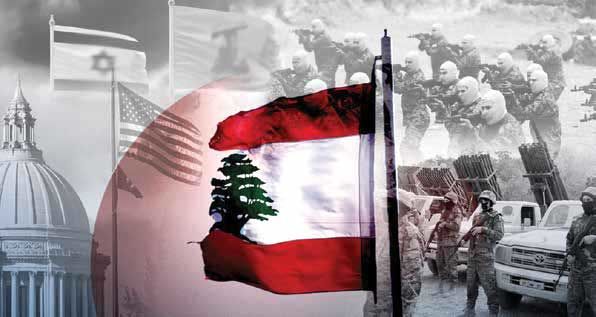
This is not to the liking of Western-backed domestic parties and foreign players such as the United States. Therefore, it seems that the United States, together with its internal allies, seeks to create and use instability and ethnic-religious seditions, which are somehow the red lines of the Lebanese people of which they have a bitter experience in mind, in order to introduce the axis of resistance, especially Hezbollah, as the culprit of such crisis. This can be understood from the recent media movements as well as the meetings of American diplomats in Lebanon.

Another reason that can be stated in this regard is that the Lebanese Hezbollah, together with its allies, has succeeded in establishing political stability, especially in the formation of a new government in that country. As the United States and its domestic allies seek to remove Hezbollah from the political arena and disarm the Lebanese resistance against the Zionist regime, formation of this government with the presence of Hezbollah and its allies in the cabinet has challenged Lebanon’s destabilization strategies to advance the aforementioned target. In this regard, it can be said that the United States seeks political and security destabilization in Lebanon in order to somehow change the current status quo and pave the way for the weakening of Hezbollah and forces close to the resistance.

In summing up the above-mentioned issues, it can be said that the Lebanese Hezbollah, considering its recent measures such as helping to partially solve the fuel challenge in that country by importing energy from Iran by the Lebanese businessmen and helping to form a new government to get the country out of a political crisis has taken effective measures which is contrary to the strategy of maximum pressure and the policy of political and security destabilization of Lebanon by the United States and its internal allies. That is why Washington has moved towards a strategy of destabilizing Lebanon, especially in sensitive areas and by creating ethnic-religious sedition, so by pursuing its own targets, prevents the Lebanese Hezbollah to face the threats of the Zionist regime. Because Hezbollah’s conflict on the domestic front will prevent the movement from focusing on its main mission, that is to defend Lebanon against the threats of the Zionist regime. In this regard, it is necessary for the resistance groups to be vigilant and avoid any ethnic-religious challenges while closely monitoring the developments, especially the sedition in the Lebanese ethnic-religious field; also, expose the destructive American strategies to the Lebanese people through legal, political and media means.
0 Comments

Submit a Comment

Your email address will not be published. Required fields are marked *

LATEST CONTENT

The Security Equation of Southern Lebanon for the Zionist Regime

Strategic Council Online – Opinion: American-Zionist objectives in the region are not limited to weakening Hezbollah. Efforts to disarm Iraqi resistance groups such as Kata’ib Hezbollah and the Popular Mobilization Forces are also part of their subsequent plans.

Commercial Exploitation of Peace; The Gaza Committee in Confrontation with International Legitimacy

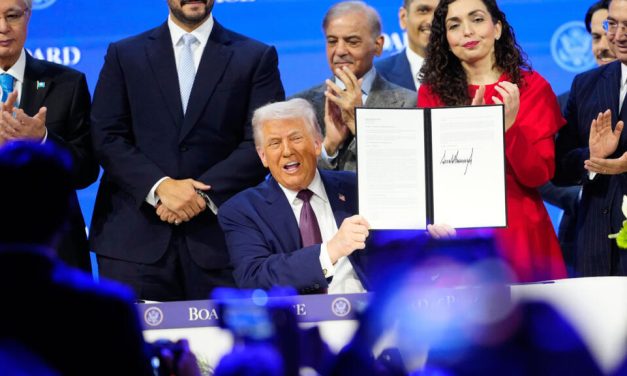
Strategic Council Online – Report: While the second phase of the implementation of the Gaza ceasefire has begun, the establishment of the “Peace Board” chaired by Donald Trump on the sidelines of the Davos meeting (22 January 2026) has become more than a technical mechanism for reconstruction and has turned into a test for the future of the international order.
Despite the signing of the charter by 22 out of 60 invited countries, the limited presence of global leaders at the Davos ceremony and the non-acceptance of this body by the European Union and key Western countries indicate a deep divide in global perceptions of the legitimacy of this mechanism.
In this report, drawing on the analysis of Hadi Borhani, a regional affairs expert, and international data, three strategic questions are addressed: Is the Peace Board an instrument for implementing UN Security Council Resolution 2803 or a substitute for the United Nations? How does the hierarchical architecture of this committee intensify executive challenges in Gaza? And finally, can this body create sustainable peace without the cooperation of Palestinians and with the concentration of power in the hands of a single individual?

America’s Zero-Sum Game in Iraq

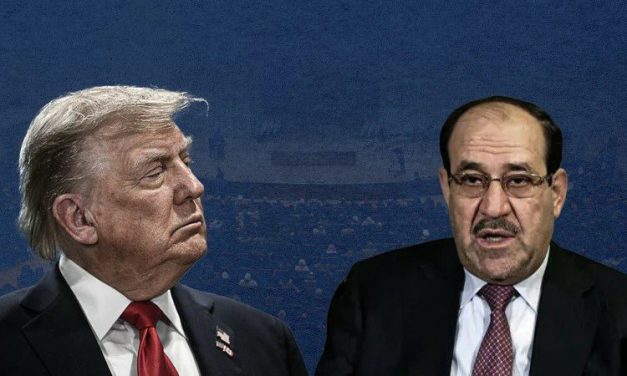
Online Strategic Council – Memoir: The swift selection of Nouri al-Maliki for the premiership constitutes a new phase in Iraq’s political sphere. Multiple factors have played a role in this process, the most important being the prevailing situation in Iraq and the region. Under such circumstances, Iraq requires a powerful and experienced prime minister who can keep the country away from the dangers of wars and crises.

America’s Strategy for Creating Tension in the Asia-Pacific

Strategic Council Online – Opinion: Relations between some countries in the Asia-Pacific region, such as China and Japan or China and Australia, which were previously relatively normal, are trending towards deterioration, and the primary reason for this is the aggressive policies of the United States of America.

Loading

Últimas publicaciones

The Security Equation of Southern Lebanon for the Zionist Regime

Strategic Council Online – Opinion: American-Zionist objectives in the region are not limited to weakening Hezbollah. Efforts to disarm Iraqi resistance groups such as Kata’ib Hezbollah and the Popular Mobilization Forces are also part of their subsequent plans.

Commercial Exploitation of Peace; The Gaza Committee in Confrontation with International Legitimacy

Strategic Council Online – Report: While the second phase of the implementation of the Gaza ceasefire has begun, the establishment of the “Peace Board” chaired by Donald Trump on the sidelines of the Davos meeting (22 January 2026) has become more than a technical mechanism for reconstruction and has turned into a test for the future of the international order.
Despite the signing of the charter by 22 out of 60 invited countries, the limited presence of global leaders at the Davos ceremony and the non-acceptance of this body by the European Union and key Western countries indicate a deep divide in global perceptions of the legitimacy of this mechanism.
In this report, drawing on the analysis of Hadi Borhani, a regional affairs expert, and international data, three strategic questions are addressed: Is the Peace Board an instrument for implementing UN Security Council Resolution 2803 or a substitute for the United Nations? How does the hierarchical architecture of this committee intensify executive challenges in Gaza? And finally, can this body create sustainable peace without the cooperation of Palestinians and with the concentration of power in the hands of a single individual?

America’s Zero-Sum Game in Iraq

Online Strategic Council – Memoir: The swift selection of Nouri al-Maliki for the premiership constitutes a new phase in Iraq’s political sphere. Multiple factors have played a role in this process, the most important being the prevailing situation in Iraq and the region. Under such circumstances, Iraq requires a powerful and experienced prime minister who can keep the country away from the dangers of wars and crises.

America’s Strategy for Creating Tension in the Asia-Pacific

Strategic Council Online – Opinion: Relations between some countries in the Asia-Pacific region, such as China and Japan or China and Australia, which were previously relatively normal, are trending towards deterioration, and the primary reason for this is the aggressive policies of the United States of America.

Loading

DERNIER CONTENU

The Security Equation of Southern Lebanon for the Zionist Regime

Strategic Council Online – Opinion: American-Zionist objectives in the region are not limited to weakening Hezbollah. Efforts to disarm Iraqi resistance groups such as Kata’ib Hezbollah and the Popular Mobilization Forces are also part of their subsequent plans.

Commercial Exploitation of Peace; The Gaza Committee in Confrontation with International Legitimacy

Strategic Council Online – Report: While the second phase of the implementation of the Gaza ceasefire has begun, the establishment of the “Peace Board” chaired by Donald Trump on the sidelines of the Davos meeting (22 January 2026) has become more than a technical mechanism for reconstruction and has turned into a test for the future of the international order.
Despite the signing of the charter by 22 out of 60 invited countries, the limited presence of global leaders at the Davos ceremony and the non-acceptance of this body by the European Union and key Western countries indicate a deep divide in global perceptions of the legitimacy of this mechanism.
In this report, drawing on the analysis of Hadi Borhani, a regional affairs expert, and international data, three strategic questions are addressed: Is the Peace Board an instrument for implementing UN Security Council Resolution 2803 or a substitute for the United Nations? How does the hierarchical architecture of this committee intensify executive challenges in Gaza? And finally, can this body create sustainable peace without the cooperation of Palestinians and with the concentration of power in the hands of a single individual?

America’s Zero-Sum Game in Iraq

Online Strategic Council – Memoir: The swift selection of Nouri al-Maliki for the premiership constitutes a new phase in Iraq’s political sphere. Multiple factors have played a role in this process, the most important being the prevailing situation in Iraq and the region. Under such circumstances, Iraq requires a powerful and experienced prime minister who can keep the country away from the dangers of wars and crises.

America’s Strategy for Creating Tension in the Asia-Pacific

Strategic Council Online – Opinion: Relations between some countries in the Asia-Pacific region, such as China and Japan or China and Australia, which were previously relatively normal, are trending towards deterioration, and the primary reason for this is the aggressive policies of the United States of America.

Loading

DERNIER CONTENU

The Security Equation of Southern Lebanon for the Zionist Regime

Strategic Council Online – Opinion: American-Zionist objectives in the region are not limited to weakening Hezbollah. Efforts to disarm Iraqi resistance groups such as Kata’ib Hezbollah and the Popular Mobilization Forces are also part of their subsequent plans.

Commercial Exploitation of Peace; The Gaza Committee in Confrontation with International Legitimacy

Strategic Council Online – Report: While the second phase of the implementation of the Gaza ceasefire has begun, the establishment of the “Peace Board” chaired by Donald Trump on the sidelines of the Davos meeting (22 January 2026) has become more than a technical mechanism for reconstruction and has turned into a test for the future of the international order.
Despite the signing of the charter by 22 out of 60 invited countries, the limited presence of global leaders at the Davos ceremony and the non-acceptance of this body by the European Union and key Western countries indicate a deep divide in global perceptions of the legitimacy of this mechanism.
In this report, drawing on the analysis of Hadi Borhani, a regional affairs expert, and international data, three strategic questions are addressed: Is the Peace Board an instrument for implementing UN Security Council Resolution 2803 or a substitute for the United Nations? How does the hierarchical architecture of this committee intensify executive challenges in Gaza? And finally, can this body create sustainable peace without the cooperation of Palestinians and with the concentration of power in the hands of a single individual?

America’s Zero-Sum Game in Iraq

Online Strategic Council – Memoir: The swift selection of Nouri al-Maliki for the premiership constitutes a new phase in Iraq’s political sphere. Multiple factors have played a role in this process, the most important being the prevailing situation in Iraq and the region. Under such circumstances, Iraq requires a powerful and experienced prime minister who can keep the country away from the dangers of wars and crises.

America’s Strategy for Creating Tension in the Asia-Pacific

Strategic Council Online – Opinion: Relations between some countries in the Asia-Pacific region, such as China and Japan or China and Australia, which were previously relatively normal, are trending towards deterioration, and the primary reason for this is the aggressive policies of the United States of America.

Loading

DERNIER CONTENU

The Security Equation of Southern Lebanon for the Zionist Regime

Strategic Council Online – Opinion: American-Zionist objectives in the region are not limited to weakening Hezbollah. Efforts to disarm Iraqi resistance groups such as Kata’ib Hezbollah and the Popular Mobilization Forces are also part of their subsequent plans.

Commercial Exploitation of Peace; The Gaza Committee in Confrontation with International Legitimacy

Strategic Council Online – Report: While the second phase of the implementation of the Gaza ceasefire has begun, the establishment of the “Peace Board” chaired by Donald Trump on the sidelines of the Davos meeting (22 January 2026) has become more than a technical mechanism for reconstruction and has turned into a test for the future of the international order.
Despite the signing of the charter by 22 out of 60 invited countries, the limited presence of global leaders at the Davos ceremony and the non-acceptance of this body by the European Union and key Western countries indicate a deep divide in global perceptions of the legitimacy of this mechanism.
In this report, drawing on the analysis of Hadi Borhani, a regional affairs expert, and international data, three strategic questions are addressed: Is the Peace Board an instrument for implementing UN Security Council Resolution 2803 or a substitute for the United Nations? How does the hierarchical architecture of this committee intensify executive challenges in Gaza? And finally, can this body create sustainable peace without the cooperation of Palestinians and with the concentration of power in the hands of a single individual?

America’s Zero-Sum Game in Iraq

Online Strategic Council – Memoir: The swift selection of Nouri al-Maliki for the premiership constitutes a new phase in Iraq’s political sphere. Multiple factors have played a role in this process, the most important being the prevailing situation in Iraq and the region. Under such circumstances, Iraq requires a powerful and experienced prime minister who can keep the country away from the dangers of wars and crises.

America’s Strategy for Creating Tension in the Asia-Pacific

Strategic Council Online – Opinion: Relations between some countries in the Asia-Pacific region, such as China and Japan or China and Australia, which were previously relatively normal, are trending towards deterioration, and the primary reason for this is the aggressive policies of the United States of America.

Loading