Responsibility of Biden’s Silence Versus Bennett’s Threats against Iran

2021/09/12 | Note, Politics, top news

Strategic Council Online- Opinion: It seems that the U.S. is happy with sabotage measures of the Zionist regime against Iran, because such measures will hamper Iran’s nuclear program at the Zionist regime’s cost. Dr. Tahmoores Gholami, Expert on America

On August 24, 2021, Bennett, the Prime Minister of the Zionist regime travelled to the U.S. Prior to this trip, he had already announced that the chief objective of the trip will be focused on the Islamic Republic of Iran within two important dossiers of Iran’s nuclear and regional programs. Before the visit, Naftali Bennet explicitly vowed of continuation of sabotage measures against Iran’s nuclear program and also formation of a coalition with Arab countries against the Islamic Republic of Iran. In the course of the meeting with Biden, Naftali Bennett did not only budge an inch from his position but also spelled out more explicitly about the continuation of the measures against Iran. He likened Iran with the former Soviet Union that is suffering from corruption and is collapsing. He counted the Zionist regime as the U.S. during the cold war that should make Iran to surrender with a thousand of stabbings. Bennett’s positions were raised while Joe Biden’s Administration is looking for the revival of nuclear agreement with Iran, the Agreement which the U.S. (unilaterally) withdrew from in May 2018. Now, the essential question is: how the aforesaid positions could affect the trend of talks on JCPOA revival? In reply, it should be said in view of undeniable role and influence of the Zionist regime, and her lobbies in setting the U.S. policies to confront the Islamic Republic of Iran, the continuous oppositions and sabotages of the Zionist regime will make very difficult the perspective of JCPOA revival. One of the reasons to achieve success in concluding nuclear talks during Obama’s tenure of office was the U.S. achievement in containing the then prime minister Netanyahu’s oppositions. But it seems that unlike Obama, Biden did not only take any action to contain possible measures of the Zionist regime but also signaled Tel Aviv a green light to continue her previous policies by no practical disagreement with the declared positions of Bennett and the Zionist regime measures.

In the course of the meeting, for the first time Biden spoke of the possibility of “failure of diplomacy” and his readiness to employ “other options” against Iran. It is important to note that although Biden supported the diplomatic approach towards Iran which was welcomed by Bennett too, but the issue was not dealt with whether explicit threats of the Zionist regime would principally let diplomacy succeed or not. Biden did not only raise any objection to the Zionist regime’s measures against Iran and did not call them as counter-productive, but also went beyond and when he spoke of “other options” against Iran he was close to the position of the prime minister of the Zionist regime. But a more essential question is why Biden’s approach was different from that of Obama? And he did not show any reaction to Bennett’s clear threat against Iran?

It seems that the U.S. is happy with sabotage measures of the Zionist regime against Iran because such measures will hamper Iran’s nuclear program at the Zionist regime’s price. Perhaps, in view of the measures taken by the Zionist regime, the U.S. has indeed concluded the assessment that there is no need to adopt costly measures like developing and applying stuxnet virus. Therefore, the U.S. conceives that at present situation it is beneficial to this country if the Zionist regime will pay a part of containment price of Iran’s nuclear program. During the visit of CIA Director to Tel Aviv, intelligence- security cooperation between the two sides was stressed. From this point of view, it should be said that there is a division of task-force; the U.S. would exert economic pressures on Iran and the Zionist regime would hamper Iran’s nuclear program through sabotage measures. Amid all this, Secretary Blinken who believes that the advancement of Iran’s nuclear program has become an “intractable impediment” for JCPOA revival has encouraged the U.S. not to oppose the sabotage measures of the Zionist regime more than ever in the past. Therefore, it should be said that from the U.S. point of view, the measure of the Zionist regime is perhaps not an impediment but a U.S. leverage to be applied against Iran’s nuclear program along with other instruments and leverages. That’s why perhaps Bennett considers non-serious objection of the U.S. against his policies versus Iran as the achievement of his trip to the U.S. Therefore, there is a possibility that Tel Aviv measures will continue along with the silence of the U.S. for which the latter should assume the responsibilities and consequences.

0 Comments

Submit a Comment

Your email address will not be published. Required fields are marked *

LATEST CONTENT

Commercial Exploitation of Peace; The Gaza Committee in Confrontation with International Legitimacy

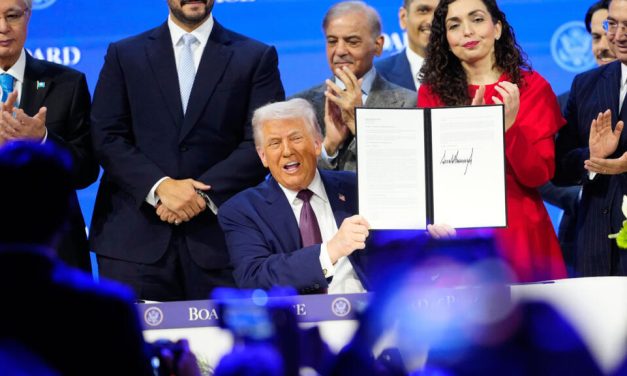
Strategic Council Online – Report: While the second phase of the implementation of the Gaza ceasefire has begun, the establishment of the “Peace Board” chaired by Donald Trump on the sidelines of the Davos meeting (22 January 2026) has become more than a technical mechanism for reconstruction and has turned into a test for the future of the international order.
Despite the signing of the charter by 22 out of 60 invited countries, the limited presence of global leaders at the Davos ceremony and the non-acceptance of this body by the European Union and key Western countries indicate a deep divide in global perceptions of the legitimacy of this mechanism.
In this report, drawing on the analysis of Hadi Borhani, a regional affairs expert, and international data, three strategic questions are addressed: Is the Peace Board an instrument for implementing UN Security Council Resolution 2803 or a substitute for the United Nations? How does the hierarchical architecture of this committee intensify executive challenges in Gaza? And finally, can this body create sustainable peace without the cooperation of Palestinians and with the concentration of power in the hands of a single individual?

America’s Zero-Sum Game in Iraq

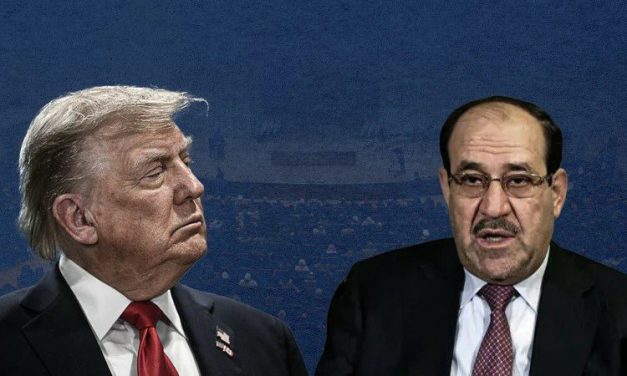
Online Strategic Council – Memoir: The swift selection of Nouri al-Maliki for the premiership constitutes a new phase in Iraq’s political sphere. Multiple factors have played a role in this process, the most important being the prevailing situation in Iraq and the region. Under such circumstances, Iraq requires a powerful and experienced prime minister who can keep the country away from the dangers of wars and crises.

America’s Strategy for Creating Tension in the Asia-Pacific

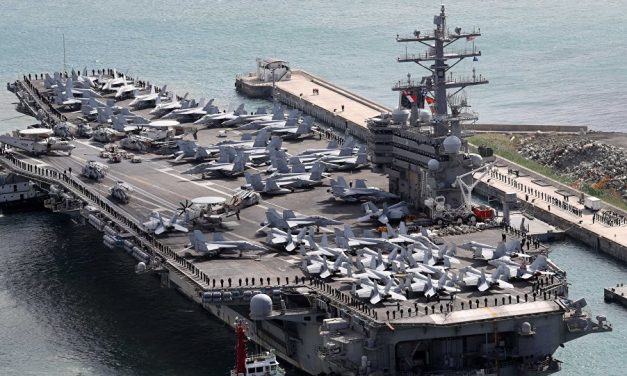
Strategic Council Online – Opinion: Relations between some countries in the Asia-Pacific region, such as China and Japan or China and Australia, which were previously relatively normal, are trending towards deterioration, and the primary reason for this is the aggressive policies of the United States of America.

The Collapse of the European Security Illusion with the Continuation of the Ukraine War?

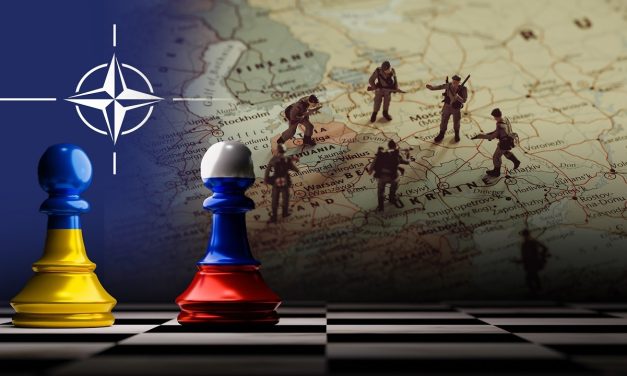
Strategic Council Online – Interview: The Ukraine war has become a new turning point in the political, security, and even commercial relations of allies on both sides of the Atlantic. While this war is nearing its fourth year, many questions still remain regarding its future and its consequences; among them, will the continuation of the Ukraine war lead to the collapse of the European security illusion?

Loading

Últimas publicaciones

Commercial Exploitation of Peace; The Gaza Committee in Confrontation with International Legitimacy

Strategic Council Online – Report: While the second phase of the implementation of the Gaza ceasefire has begun, the establishment of the “Peace Board” chaired by Donald Trump on the sidelines of the Davos meeting (22 January 2026) has become more than a technical mechanism for reconstruction and has turned into a test for the future of the international order.
Despite the signing of the charter by 22 out of 60 invited countries, the limited presence of global leaders at the Davos ceremony and the non-acceptance of this body by the European Union and key Western countries indicate a deep divide in global perceptions of the legitimacy of this mechanism.
In this report, drawing on the analysis of Hadi Borhani, a regional affairs expert, and international data, three strategic questions are addressed: Is the Peace Board an instrument for implementing UN Security Council Resolution 2803 or a substitute for the United Nations? How does the hierarchical architecture of this committee intensify executive challenges in Gaza? And finally, can this body create sustainable peace without the cooperation of Palestinians and with the concentration of power in the hands of a single individual?

America’s Zero-Sum Game in Iraq

Online Strategic Council – Memoir: The swift selection of Nouri al-Maliki for the premiership constitutes a new phase in Iraq’s political sphere. Multiple factors have played a role in this process, the most important being the prevailing situation in Iraq and the region. Under such circumstances, Iraq requires a powerful and experienced prime minister who can keep the country away from the dangers of wars and crises.

America’s Strategy for Creating Tension in the Asia-Pacific

Strategic Council Online – Opinion: Relations between some countries in the Asia-Pacific region, such as China and Japan or China and Australia, which were previously relatively normal, are trending towards deterioration, and the primary reason for this is the aggressive policies of the United States of America.

The Collapse of the European Security Illusion with the Continuation of the Ukraine War?

Strategic Council Online – Interview: The Ukraine war has become a new turning point in the political, security, and even commercial relations of allies on both sides of the Atlantic. While this war is nearing its fourth year, many questions still remain regarding its future and its consequences; among them, will the continuation of the Ukraine war lead to the collapse of the European security illusion?

Loading

DERNIER CONTENU

Commercial Exploitation of Peace; The Gaza Committee in Confrontation with International Legitimacy

Strategic Council Online – Report: While the second phase of the implementation of the Gaza ceasefire has begun, the establishment of the “Peace Board” chaired by Donald Trump on the sidelines of the Davos meeting (22 January 2026) has become more than a technical mechanism for reconstruction and has turned into a test for the future of the international order.
Despite the signing of the charter by 22 out of 60 invited countries, the limited presence of global leaders at the Davos ceremony and the non-acceptance of this body by the European Union and key Western countries indicate a deep divide in global perceptions of the legitimacy of this mechanism.
In this report, drawing on the analysis of Hadi Borhani, a regional affairs expert, and international data, three strategic questions are addressed: Is the Peace Board an instrument for implementing UN Security Council Resolution 2803 or a substitute for the United Nations? How does the hierarchical architecture of this committee intensify executive challenges in Gaza? And finally, can this body create sustainable peace without the cooperation of Palestinians and with the concentration of power in the hands of a single individual?

America’s Zero-Sum Game in Iraq

Online Strategic Council – Memoir: The swift selection of Nouri al-Maliki for the premiership constitutes a new phase in Iraq’s political sphere. Multiple factors have played a role in this process, the most important being the prevailing situation in Iraq and the region. Under such circumstances, Iraq requires a powerful and experienced prime minister who can keep the country away from the dangers of wars and crises.

America’s Strategy for Creating Tension in the Asia-Pacific

Strategic Council Online – Opinion: Relations between some countries in the Asia-Pacific region, such as China and Japan or China and Australia, which were previously relatively normal, are trending towards deterioration, and the primary reason for this is the aggressive policies of the United States of America.

The Collapse of the European Security Illusion with the Continuation of the Ukraine War?

Strategic Council Online – Interview: The Ukraine war has become a new turning point in the political, security, and even commercial relations of allies on both sides of the Atlantic. While this war is nearing its fourth year, many questions still remain regarding its future and its consequences; among them, will the continuation of the Ukraine war lead to the collapse of the European security illusion?

Loading

DERNIER CONTENU

Commercial Exploitation of Peace; The Gaza Committee in Confrontation with International Legitimacy

Strategic Council Online – Report: While the second phase of the implementation of the Gaza ceasefire has begun, the establishment of the “Peace Board” chaired by Donald Trump on the sidelines of the Davos meeting (22 January 2026) has become more than a technical mechanism for reconstruction and has turned into a test for the future of the international order.
Despite the signing of the charter by 22 out of 60 invited countries, the limited presence of global leaders at the Davos ceremony and the non-acceptance of this body by the European Union and key Western countries indicate a deep divide in global perceptions of the legitimacy of this mechanism.
In this report, drawing on the analysis of Hadi Borhani, a regional affairs expert, and international data, three strategic questions are addressed: Is the Peace Board an instrument for implementing UN Security Council Resolution 2803 or a substitute for the United Nations? How does the hierarchical architecture of this committee intensify executive challenges in Gaza? And finally, can this body create sustainable peace without the cooperation of Palestinians and with the concentration of power in the hands of a single individual?

America’s Zero-Sum Game in Iraq

Online Strategic Council – Memoir: The swift selection of Nouri al-Maliki for the premiership constitutes a new phase in Iraq’s political sphere. Multiple factors have played a role in this process, the most important being the prevailing situation in Iraq and the region. Under such circumstances, Iraq requires a powerful and experienced prime minister who can keep the country away from the dangers of wars and crises.

America’s Strategy for Creating Tension in the Asia-Pacific

Strategic Council Online – Opinion: Relations between some countries in the Asia-Pacific region, such as China and Japan or China and Australia, which were previously relatively normal, are trending towards deterioration, and the primary reason for this is the aggressive policies of the United States of America.

The Collapse of the European Security Illusion with the Continuation of the Ukraine War?

Strategic Council Online – Interview: The Ukraine war has become a new turning point in the political, security, and even commercial relations of allies on both sides of the Atlantic. While this war is nearing its fourth year, many questions still remain regarding its future and its consequences; among them, will the continuation of the Ukraine war lead to the collapse of the European security illusion?

Loading

DERNIER CONTENU

Commercial Exploitation of Peace; The Gaza Committee in Confrontation with International Legitimacy

Strategic Council Online – Report: While the second phase of the implementation of the Gaza ceasefire has begun, the establishment of the “Peace Board” chaired by Donald Trump on the sidelines of the Davos meeting (22 January 2026) has become more than a technical mechanism for reconstruction and has turned into a test for the future of the international order.
Despite the signing of the charter by 22 out of 60 invited countries, the limited presence of global leaders at the Davos ceremony and the non-acceptance of this body by the European Union and key Western countries indicate a deep divide in global perceptions of the legitimacy of this mechanism.
In this report, drawing on the analysis of Hadi Borhani, a regional affairs expert, and international data, three strategic questions are addressed: Is the Peace Board an instrument for implementing UN Security Council Resolution 2803 or a substitute for the United Nations? How does the hierarchical architecture of this committee intensify executive challenges in Gaza? And finally, can this body create sustainable peace without the cooperation of Palestinians and with the concentration of power in the hands of a single individual?

America’s Zero-Sum Game in Iraq

Online Strategic Council – Memoir: The swift selection of Nouri al-Maliki for the premiership constitutes a new phase in Iraq’s political sphere. Multiple factors have played a role in this process, the most important being the prevailing situation in Iraq and the region. Under such circumstances, Iraq requires a powerful and experienced prime minister who can keep the country away from the dangers of wars and crises.

America’s Strategy for Creating Tension in the Asia-Pacific

Strategic Council Online – Opinion: Relations between some countries in the Asia-Pacific region, such as China and Japan or China and Australia, which were previously relatively normal, are trending towards deterioration, and the primary reason for this is the aggressive policies of the United States of America.

The Collapse of the European Security Illusion with the Continuation of the Ukraine War?

Strategic Council Online – Interview: The Ukraine war has become a new turning point in the political, security, and even commercial relations of allies on both sides of the Atlantic. While this war is nearing its fourth year, many questions still remain regarding its future and its consequences; among them, will the continuation of the Ukraine war lead to the collapse of the European security illusion?

Loading