Reasons Why Russia and China Oppose Anti-Syrian Resolution

2020/07/14 | interview, Politics, top news

Strategic Council Online - Russia's inference from the German-Belgian resolution proposed at the UN Security Council is that it could be a cover for the destructive activities of various Western countries in Syria, and therefore prevented the adoption of this resolution. Hassan Beheshtipour - Expert on Russian Affairs

China and Russia vetoed a resolution against Syria at a UN Security Council meeting on Tuesday night, calling for so-called humanitarian aid to be sent to Syria across its borders without coordination with the central government and ignoring its sovereignty. As Russia has repeatedly stressed, the distribution of foreign aid in Syria must be done through the legal channels and the central government in Damascus, and foreign countries should not interfere in the internal affairs of Syria.

During the meeting, China and Russia noted that they wanted the aid to be extended at a more limited level. According to diplomats, the German and Belgian drafters were expecting Moscow’s veto. Russia then proposed another resolution to provide cross border aid for six months, which despite the positive vote of Russia, China, South Africa and Vietnam, and the abstentions of Indonesia, Niger, St. Vincent and Grenadines and Tunisia, Belgium, Germany, France, Estonia, Britain, the Dominican Republic and the United States opposed the resolution.

Regarding the reasons for the negative view of Russia and China on the proposed resolution of Germany and Belgium, a few points can be mentioned; First, their inference from the German and Belgian resolutions is that it could be a cover for the destructive activities of various Western countries in Syria, and therefore they have prevented the implementation of this resolution, but the Russians in Syria in particular are seeking to strengthen their position. And the argument is that Russia’s past experience in Syria has been that typically international organizations seek help from Western supporters in Syria rather than help the Syrian people.

Another issue is that Russia has been present in Syria since the former Soviet Union and Damascus is one of Russia’s most important allies in West Asia. There are also two Syrian ports owned by the Russians, with Tartus on the east coast of the Mediterranean dating back to the time of former Soviet Union and another port in recent years, which has become an air base.

In any case, Russia has consolidated its position in these two bases and presence in the Mediterranean is of great geopolitical importance to Russia. At the same time, from Russia’s point of view, the government in Damascus must be Russia’s ally and the best person for this job is Bashar al-Assad. Although Russia had a different view early on, over time and after ISIS activities and the group’s defeat, and in general the developments we witnessed from 2014 to 2018, the Kremlin was convinced to work with Assad and continues to do so for the time being. Meantime, Moscow will not allow other countries to disrupt this path. As Moscow considers the adoption of such resolutions, which are pursued under the pretext of helping the Syrian people, only in support the opponents of Bashar Assad and therefore opposes them.

In addition, as for the importance of Syria for Moscow the sale of weapons to Syria is noteworthy. At the same time, Syria is Russia’s most important ally in West Asia, and as a result, it is trying to maintain that alliance and expand its presence in the Middle East through Syria.

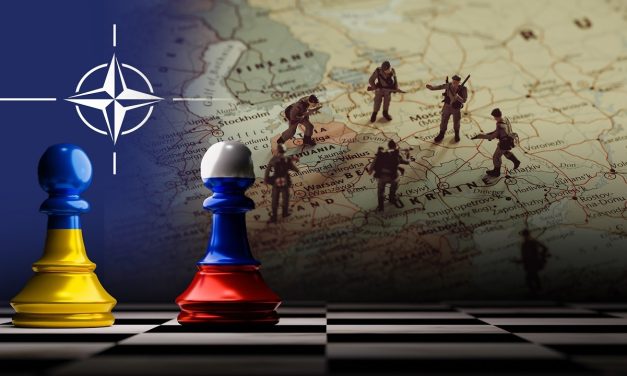
As for Moscow’s and Washington’s policies toward each other, and what the US response is to Russia’s growing presence in Syria, and what concerns it has, as the United States is in Russia’s backyard in Eastern Europe, such as Ukraine, Crimea, Poland, and to some extent Bulgaria. In turn, Washington finds Russia’s troop deployment in the traditional backyard of the United States in West Asia, like Syria. Therefore, both the United States understands the reason for Russia’s presence and Russia understands the reason for the US presence. In fact, the two countries have understood each other’s situation and come to terms with each other.

It should also be noted that Russia’s presence in Syria is not in conflict with Israel’s interests, and even Moscow is trying to maintain its ties with Tel Aviv and advance its goals in the region.

Finally, regarding the cooperation between Tehran and Moscow in Syria, it should be noted that Moscow’s cooperation with Tehran is not limited to Syria alone as Iran has an important position for Moscow, but one of the most important aspect of cooperation between Iran and Russia after the Islamic Revolution is in Syria and therefore this cooperation is very important for both countries and is in the interest of both nations.
0 Comments

Submit a Comment

Your email address will not be published. Required fields are marked *

LATEST CONTENT

America’s Zero-Sum Game in Iraq

Online Strategic Council – Memoir: The swift selection of Nouri al-Maliki for the premiership constitutes a new phase in Iraq’s political sphere. Multiple factors have played a role in this process, the most important being the prevailing situation in Iraq and the region. Under such circumstances, Iraq requires a powerful and experienced prime minister who can keep the country away from the dangers of wars and crises.

America’s Strategy for Creating Tension in the Asia-Pacific

Strategic Council Online – Opinion: Relations between some countries in the Asia-Pacific region, such as China and Japan or China and Australia, which were previously relatively normal, are trending towards deterioration, and the primary reason for this is the aggressive policies of the United States of America.

The Collapse of the European Security Illusion with the Continuation of the Ukraine War?

Strategic Council Online – Interview: The Ukraine war has become a new turning point in the political, security, and even commercial relations of allies on both sides of the Atlantic. While this war is nearing its fourth year, many questions still remain regarding its future and its consequences; among them, will the continuation of the Ukraine war lead to the collapse of the European security illusion?

Is Greenland Pushing Europe Toward China?

Strategic Council Online – Interview: A European affairs expert believes that the seizure of Greenland will certainly weaken America’s relations with Europe and its allies. Donald Trump’s view is that he does not need these countries, but if Europe faces significant pressure from the United States, it is natural for it to move toward China.

Alarm Bells Sound for ISIS Revival in Syria: Threat to Iraq and West Asia

Strategic Council Online – Opinion: Numerous documents and pieces of evidence indicate that ISIS, which in recent years has been the region’s biggest threat to security and stability after the Zionist regime, has once again in recent months become a focal point for political and security exploitation by American and Zionist regime security, intelligence, and political circles.

Afghanistan’s Effective Role in the Economy of Eurasia

Strategic Council Online – Interview: A regional affairs researcher stated: Despite projects such as the Khaf-Herat railway and the Herat-Balkh-Mazar-i-Sharif corridor being on the agenda, insecurity and the absence of an inclusive government remain the most significant obstacles to realizing transit corridors and Afghanistan playing an effective role in the economy of Eurasia.

Loading

Últimas publicaciones

America’s Zero-Sum Game in Iraq

Online Strategic Council – Memoir: The swift selection of Nouri al-Maliki for the premiership constitutes a new phase in Iraq’s political sphere. Multiple factors have played a role in this process, the most important being the prevailing situation in Iraq and the region. Under such circumstances, Iraq requires a powerful and experienced prime minister who can keep the country away from the dangers of wars and crises.

America’s Strategy for Creating Tension in the Asia-Pacific

Strategic Council Online – Opinion: Relations between some countries in the Asia-Pacific region, such as China and Japan or China and Australia, which were previously relatively normal, are trending towards deterioration, and the primary reason for this is the aggressive policies of the United States of America.

The Collapse of the European Security Illusion with the Continuation of the Ukraine War?

Strategic Council Online – Interview: The Ukraine war has become a new turning point in the political, security, and even commercial relations of allies on both sides of the Atlantic. While this war is nearing its fourth year, many questions still remain regarding its future and its consequences; among them, will the continuation of the Ukraine war lead to the collapse of the European security illusion?

Is Greenland Pushing Europe Toward China?

Strategic Council Online – Interview: A European affairs expert believes that the seizure of Greenland will certainly weaken America’s relations with Europe and its allies. Donald Trump’s view is that he does not need these countries, but if Europe faces significant pressure from the United States, it is natural for it to move toward China.

Alarm Bells Sound for ISIS Revival in Syria: Threat to Iraq and West Asia

Strategic Council Online – Opinion: Numerous documents and pieces of evidence indicate that ISIS, which in recent years has been the region’s biggest threat to security and stability after the Zionist regime, has once again in recent months become a focal point for political and security exploitation by American and Zionist regime security, intelligence, and political circles.

Afghanistan’s Effective Role in the Economy of Eurasia

Strategic Council Online – Interview: A regional affairs researcher stated: Despite projects such as the Khaf-Herat railway and the Herat-Balkh-Mazar-i-Sharif corridor being on the agenda, insecurity and the absence of an inclusive government remain the most significant obstacles to realizing transit corridors and Afghanistan playing an effective role in the economy of Eurasia.

Loading

DERNIER CONTENU

America’s Zero-Sum Game in Iraq

Online Strategic Council – Memoir: The swift selection of Nouri al-Maliki for the premiership constitutes a new phase in Iraq’s political sphere. Multiple factors have played a role in this process, the most important being the prevailing situation in Iraq and the region. Under such circumstances, Iraq requires a powerful and experienced prime minister who can keep the country away from the dangers of wars and crises.

America’s Strategy for Creating Tension in the Asia-Pacific

Strategic Council Online – Opinion: Relations between some countries in the Asia-Pacific region, such as China and Japan or China and Australia, which were previously relatively normal, are trending towards deterioration, and the primary reason for this is the aggressive policies of the United States of America.

The Collapse of the European Security Illusion with the Continuation of the Ukraine War?

Strategic Council Online – Interview: The Ukraine war has become a new turning point in the political, security, and even commercial relations of allies on both sides of the Atlantic. While this war is nearing its fourth year, many questions still remain regarding its future and its consequences; among them, will the continuation of the Ukraine war lead to the collapse of the European security illusion?

Is Greenland Pushing Europe Toward China?

Strategic Council Online – Interview: A European affairs expert believes that the seizure of Greenland will certainly weaken America’s relations with Europe and its allies. Donald Trump’s view is that he does not need these countries, but if Europe faces significant pressure from the United States, it is natural for it to move toward China.

Alarm Bells Sound for ISIS Revival in Syria: Threat to Iraq and West Asia

Strategic Council Online – Opinion: Numerous documents and pieces of evidence indicate that ISIS, which in recent years has been the region’s biggest threat to security and stability after the Zionist regime, has once again in recent months become a focal point for political and security exploitation by American and Zionist regime security, intelligence, and political circles.

Afghanistan’s Effective Role in the Economy of Eurasia

Strategic Council Online – Interview: A regional affairs researcher stated: Despite projects such as the Khaf-Herat railway and the Herat-Balkh-Mazar-i-Sharif corridor being on the agenda, insecurity and the absence of an inclusive government remain the most significant obstacles to realizing transit corridors and Afghanistan playing an effective role in the economy of Eurasia.

Loading