Washington’s Afghan Approach after Plane Crash

2020/02/09 | interview, Politics, top news

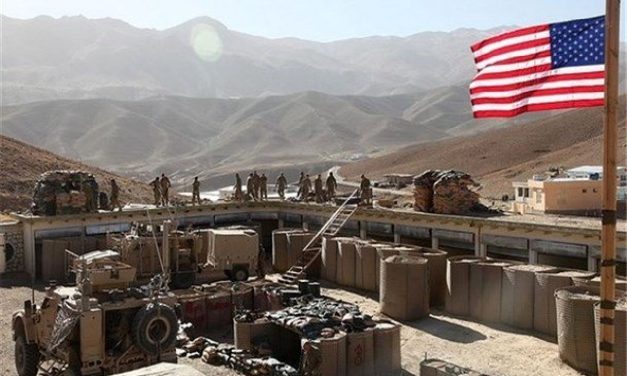
Strategic Council Online: An Afghan affairs expert says it seems we will witness more Taliban violence against the United States in the future. “Under Ronald Trump, keeping the status quo and its continuation despite the Taliban violence is regarded one of the main indicators of the US foreign policy in Afghanistan and one cannot expect Washington to make a tangible change in its Afghan policies after the failure of 11 rounds of negotiations and the shooting down of a military plane,” he said.

Mohammad Reza Asgari Muroudi, speaking in an interview with the website of the Strategic Council on Foreign Relations, referring to the Taliban claim to have shot down a US military aircraft, said: The talks took place in Qatar between US Special Representative for Afghanistan Zalmay Khalilzad and Taliban representative and suggest that the Taliban are unwilling to reduce the intensity of violence and conflicts in Afghanistan even in the midst of talks with the White House.

He recalled that Khalilzad had earlier called on the Taliban to work toward a peace deal to reduce violence, adding that the Taliban, on the one hand, is negotiating with the United States in an effort to escalate the conflict and cause more violence in Afghanistan in order to gain more concessions from the Americans in the negotiation process.

The message of Plane Downing to White House

He pointed out that given the Taliban’s approach in the last two decades it is often known as an invulnerable group in Afghanistan’s political scene: The downing of the plane is a message to the White House that Americans should agree to Taliban’s main term to establish peace in Afghanistan.

He explained: The Taliban have repeatedly stated that until US forces completely leave Afghanistan, any peace accord and permanent ceasefire in the country will be beyond expectation, and the failure of 11 rounds of talks between the two sides has shown that the Taliban are unwilling to back down.

America’s Dishonesty about Leaving Afghanistan

Asgari emphasized that the Americans do not seem to be sincere about their withdrawal, adding: “Although it is quite obvious that the end of the war and the establishment of stability and peace in Afghanistan depend on the complete withdrawal of US troops from Afghanistan, but during the more than a year of talks with the Taliban, they have been reluctant to withdraw part of their forces from some parts of Afghanistan, in order to build confidence in a peace deal.”

He added: “The Americans, within the framework of their strategy in the region, are reluctant to leave Afghanistan, and have considered it a permanent base that would allow their military easier access in times of need for overall US security.”

More Violence and Conflicts Expected from Taliban

Asgari added: Taking this issue into consideration, the Taliban are seeking to convey the message that it continues to insist on confronting the presence of foreign troops in Afghanistan, and it seems that as long as the Americans fail to set a specific timetable for the withdrawal of their troops the talks with the Taliban would turn ambiguous with no prospects in sight and we should also expect the escalation of Taliban violence in Afghanistan.

On the future status of the Americans in Afghanistan under the current conditions, the experts said: “Because of Mr Trump’s lack of foreign policy experience, in the nearly four years he has been in the White House, the various aspects of the US foreign policy have faced confusion and the Americans were unable to gain clear frameworks in foreign policy and in regulating their relations with various countries and regional and international organizations.”

Unknown US Strategy towards Afghanistan

He cited Afghanistan as one of the challenges Trump failed to provide a clear strategy for, and added: “This has led to an uncertain strategy for Afghanistan before White House officials.” In such circumstances, maintaining the status quo, despite the Taliban’s violence, is one of the key indicators of US foreign policy in Afghanistan, so it is unlikely that Americans would want a tangible change after the deadlock of eleven rounds of talks and a plane crash.


Noting that an escalation of Taliban violence against America is likely in the future Asgari said there is strong speculation among the Taliban that the Americans are practically challenging the talks by disrupting the peace negotiations and by insisting to stay in Afghanistan.

Taliban Distrust US in Peace Talks

He added: “This perception has been created by the Taliban leadership council that the Americans have taken them into a vicious circle. Basically, the issue of peace talks in Afghanistan has become a joke for the Americans and the Taliban in order to show that they are not willing to modify their positions they show their resolve by increasing violence.

Asgari said that US troops in the region and Afghanistan have become more vulnerable than ever, adding: “It seems that if the Taliban add to their violence and conflicts, the Americans will have to reconsider their military presence in Afghanistan under these critical and difficult conditions.

US Strategy Shift toward Taliban Ineffective

On possibility of a change of strategy towards the Taliban in the wake of growing violence, he said: As of the end of 2014, based on an agreement they reached with the Afghan government, the Americans had announced that their combat mission had been completed and they will be beside the army and the police force as advisors and trainers. Although they have repeatedly violated this commitment over the past five years, they have arbitrarily launched nightly airstrikes against civilians in Afghanistan killing hundreds of women and children and innocent people in Afghanistan.

Asgari continued: Although it is likely that as the Taliban violence intensifies the Americans will more or less breach their commitment to end combat operations in Afghanistan, but there is a clear experience facing Western countries, especially the United States. Even before 2014, when NATO was involved in counter-Taliban operations, despite having 150,000 foreign troops in Afghanistan, they were unable to accomplish their plans in Afghanistan and contain the Taliban. If they change their strategy in Afghanistan and enter a new round of combat operations, there will be no better outcome!
0 Comments

Submit a Comment

Your email address will not be published. Required fields are marked *

LATEST CONTENT

The Security Equation of Southern Lebanon for the Zionist Regime

Strategic Council Online – Opinion: American-Zionist objectives in the region are not limited to weakening Hezbollah. Efforts to disarm Iraqi resistance groups such as Kata’ib Hezbollah and the Popular Mobilization Forces are also part of their subsequent plans.

Commercial Exploitation of Peace; The Gaza Committee in Confrontation with International Legitimacy

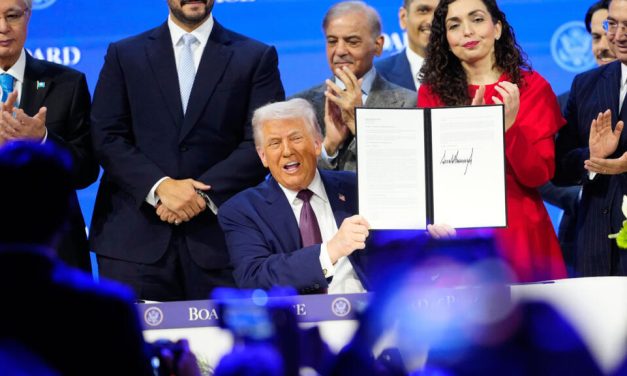
Strategic Council Online – Report: While the second phase of the implementation of the Gaza ceasefire has begun, the establishment of the “Peace Board” chaired by Donald Trump on the sidelines of the Davos meeting (22 January 2026) has become more than a technical mechanism for reconstruction and has turned into a test for the future of the international order.
Despite the signing of the charter by 22 out of 60 invited countries, the limited presence of global leaders at the Davos ceremony and the non-acceptance of this body by the European Union and key Western countries indicate a deep divide in global perceptions of the legitimacy of this mechanism.
In this report, drawing on the analysis of Hadi Borhani, a regional affairs expert, and international data, three strategic questions are addressed: Is the Peace Board an instrument for implementing UN Security Council Resolution 2803 or a substitute for the United Nations? How does the hierarchical architecture of this committee intensify executive challenges in Gaza? And finally, can this body create sustainable peace without the cooperation of Palestinians and with the concentration of power in the hands of a single individual?

America’s Zero-Sum Game in Iraq

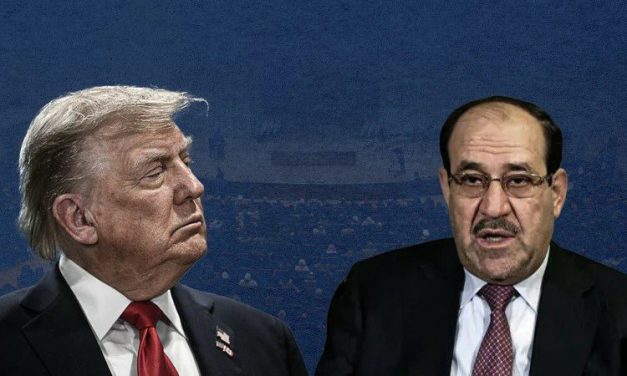
Online Strategic Council – Memoir: The swift selection of Nouri al-Maliki for the premiership constitutes a new phase in Iraq’s political sphere. Multiple factors have played a role in this process, the most important being the prevailing situation in Iraq and the region. Under such circumstances, Iraq requires a powerful and experienced prime minister who can keep the country away from the dangers of wars and crises.

America’s Strategy for Creating Tension in the Asia-Pacific

Strategic Council Online – Opinion: Relations between some countries in the Asia-Pacific region, such as China and Japan or China and Australia, which were previously relatively normal, are trending towards deterioration, and the primary reason for this is the aggressive policies of the United States of America.

Loading

Últimas publicaciones

The Security Equation of Southern Lebanon for the Zionist Regime

Strategic Council Online – Opinion: American-Zionist objectives in the region are not limited to weakening Hezbollah. Efforts to disarm Iraqi resistance groups such as Kata’ib Hezbollah and the Popular Mobilization Forces are also part of their subsequent plans.

Commercial Exploitation of Peace; The Gaza Committee in Confrontation with International Legitimacy

Strategic Council Online – Report: While the second phase of the implementation of the Gaza ceasefire has begun, the establishment of the “Peace Board” chaired by Donald Trump on the sidelines of the Davos meeting (22 January 2026) has become more than a technical mechanism for reconstruction and has turned into a test for the future of the international order.
Despite the signing of the charter by 22 out of 60 invited countries, the limited presence of global leaders at the Davos ceremony and the non-acceptance of this body by the European Union and key Western countries indicate a deep divide in global perceptions of the legitimacy of this mechanism.
In this report, drawing on the analysis of Hadi Borhani, a regional affairs expert, and international data, three strategic questions are addressed: Is the Peace Board an instrument for implementing UN Security Council Resolution 2803 or a substitute for the United Nations? How does the hierarchical architecture of this committee intensify executive challenges in Gaza? And finally, can this body create sustainable peace without the cooperation of Palestinians and with the concentration of power in the hands of a single individual?

America’s Zero-Sum Game in Iraq

Online Strategic Council – Memoir: The swift selection of Nouri al-Maliki for the premiership constitutes a new phase in Iraq’s political sphere. Multiple factors have played a role in this process, the most important being the prevailing situation in Iraq and the region. Under such circumstances, Iraq requires a powerful and experienced prime minister who can keep the country away from the dangers of wars and crises.

America’s Strategy for Creating Tension in the Asia-Pacific

Strategic Council Online – Opinion: Relations between some countries in the Asia-Pacific region, such as China and Japan or China and Australia, which were previously relatively normal, are trending towards deterioration, and the primary reason for this is the aggressive policies of the United States of America.

Loading

DERNIER CONTENU

The Security Equation of Southern Lebanon for the Zionist Regime

Strategic Council Online – Opinion: American-Zionist objectives in the region are not limited to weakening Hezbollah. Efforts to disarm Iraqi resistance groups such as Kata’ib Hezbollah and the Popular Mobilization Forces are also part of their subsequent plans.

Commercial Exploitation of Peace; The Gaza Committee in Confrontation with International Legitimacy

Strategic Council Online – Report: While the second phase of the implementation of the Gaza ceasefire has begun, the establishment of the “Peace Board” chaired by Donald Trump on the sidelines of the Davos meeting (22 January 2026) has become more than a technical mechanism for reconstruction and has turned into a test for the future of the international order.
Despite the signing of the charter by 22 out of 60 invited countries, the limited presence of global leaders at the Davos ceremony and the non-acceptance of this body by the European Union and key Western countries indicate a deep divide in global perceptions of the legitimacy of this mechanism.
In this report, drawing on the analysis of Hadi Borhani, a regional affairs expert, and international data, three strategic questions are addressed: Is the Peace Board an instrument for implementing UN Security Council Resolution 2803 or a substitute for the United Nations? How does the hierarchical architecture of this committee intensify executive challenges in Gaza? And finally, can this body create sustainable peace without the cooperation of Palestinians and with the concentration of power in the hands of a single individual?

America’s Zero-Sum Game in Iraq

Online Strategic Council – Memoir: The swift selection of Nouri al-Maliki for the premiership constitutes a new phase in Iraq’s political sphere. Multiple factors have played a role in this process, the most important being the prevailing situation in Iraq and the region. Under such circumstances, Iraq requires a powerful and experienced prime minister who can keep the country away from the dangers of wars and crises.

America’s Strategy for Creating Tension in the Asia-Pacific

Strategic Council Online – Opinion: Relations between some countries in the Asia-Pacific region, such as China and Japan or China and Australia, which were previously relatively normal, are trending towards deterioration, and the primary reason for this is the aggressive policies of the United States of America.

Loading

DERNIER CONTENU

The Security Equation of Southern Lebanon for the Zionist Regime

Strategic Council Online – Opinion: American-Zionist objectives in the region are not limited to weakening Hezbollah. Efforts to disarm Iraqi resistance groups such as Kata’ib Hezbollah and the Popular Mobilization Forces are also part of their subsequent plans.

Commercial Exploitation of Peace; The Gaza Committee in Confrontation with International Legitimacy

Strategic Council Online – Report: While the second phase of the implementation of the Gaza ceasefire has begun, the establishment of the “Peace Board” chaired by Donald Trump on the sidelines of the Davos meeting (22 January 2026) has become more than a technical mechanism for reconstruction and has turned into a test for the future of the international order.
Despite the signing of the charter by 22 out of 60 invited countries, the limited presence of global leaders at the Davos ceremony and the non-acceptance of this body by the European Union and key Western countries indicate a deep divide in global perceptions of the legitimacy of this mechanism.
In this report, drawing on the analysis of Hadi Borhani, a regional affairs expert, and international data, three strategic questions are addressed: Is the Peace Board an instrument for implementing UN Security Council Resolution 2803 or a substitute for the United Nations? How does the hierarchical architecture of this committee intensify executive challenges in Gaza? And finally, can this body create sustainable peace without the cooperation of Palestinians and with the concentration of power in the hands of a single individual?

America’s Zero-Sum Game in Iraq

Online Strategic Council – Memoir: The swift selection of Nouri al-Maliki for the premiership constitutes a new phase in Iraq’s political sphere. Multiple factors have played a role in this process, the most important being the prevailing situation in Iraq and the region. Under such circumstances, Iraq requires a powerful and experienced prime minister who can keep the country away from the dangers of wars and crises.

America’s Strategy for Creating Tension in the Asia-Pacific

Strategic Council Online – Opinion: Relations between some countries in the Asia-Pacific region, such as China and Japan or China and Australia, which were previously relatively normal, are trending towards deterioration, and the primary reason for this is the aggressive policies of the United States of America.

Loading

DERNIER CONTENU

The Security Equation of Southern Lebanon for the Zionist Regime

Strategic Council Online – Opinion: American-Zionist objectives in the region are not limited to weakening Hezbollah. Efforts to disarm Iraqi resistance groups such as Kata’ib Hezbollah and the Popular Mobilization Forces are also part of their subsequent plans.

Commercial Exploitation of Peace; The Gaza Committee in Confrontation with International Legitimacy

Strategic Council Online – Report: While the second phase of the implementation of the Gaza ceasefire has begun, the establishment of the “Peace Board” chaired by Donald Trump on the sidelines of the Davos meeting (22 January 2026) has become more than a technical mechanism for reconstruction and has turned into a test for the future of the international order.
Despite the signing of the charter by 22 out of 60 invited countries, the limited presence of global leaders at the Davos ceremony and the non-acceptance of this body by the European Union and key Western countries indicate a deep divide in global perceptions of the legitimacy of this mechanism.
In this report, drawing on the analysis of Hadi Borhani, a regional affairs expert, and international data, three strategic questions are addressed: Is the Peace Board an instrument for implementing UN Security Council Resolution 2803 or a substitute for the United Nations? How does the hierarchical architecture of this committee intensify executive challenges in Gaza? And finally, can this body create sustainable peace without the cooperation of Palestinians and with the concentration of power in the hands of a single individual?

America’s Zero-Sum Game in Iraq

Online Strategic Council – Memoir: The swift selection of Nouri al-Maliki for the premiership constitutes a new phase in Iraq’s political sphere. Multiple factors have played a role in this process, the most important being the prevailing situation in Iraq and the region. Under such circumstances, Iraq requires a powerful and experienced prime minister who can keep the country away from the dangers of wars and crises.

America’s Strategy for Creating Tension in the Asia-Pacific

Strategic Council Online – Opinion: Relations between some countries in the Asia-Pacific region, such as China and Japan or China and Australia, which were previously relatively normal, are trending towards deterioration, and the primary reason for this is the aggressive policies of the United States of America.

Loading