جدیدترین مطالب

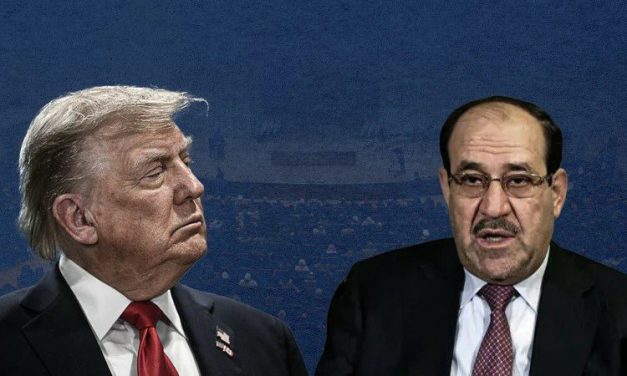
America’s Zero-Sum Game in Iraq

Online Strategic Council – Memoir: The swift selection of Nouri al-Maliki for the premiership constitutes a new phase in Iraq’s political sphere. Multiple factors have played a role in this process, the most important being the prevailing situation in Iraq and the region. Under such circumstances, Iraq requires a powerful and experienced prime minister who can keep the country away from the dangers of wars and crises.
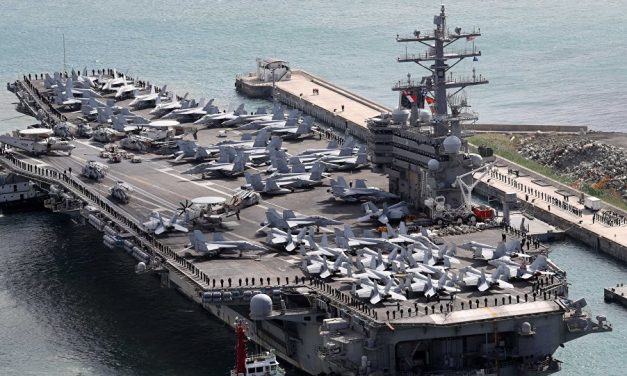
America’s Strategy for Creating Tension in the Asia-Pacific

Strategic Council Online – Opinion: Relations between some countries in the Asia-Pacific region, such as China and Japan or China and Australia, which were previously relatively normal, are trending towards deterioration, and the primary reason for this is the aggressive policies of the United States of America.

The Collapse of the European Security Illusion with the Continuation of the Ukraine War?

Strategic Council Online – Interview: The Ukraine war has become a new turning point in the political, security, and even commercial relations of allies on both sides of the Atlantic. While this war is nearing its fourth year, many questions still remain regarding its future and its consequences; among them, will the continuation of the Ukraine war lead to the collapse of the European security illusion?

Is Greenland Pushing Europe Toward China?

Strategic Council Online – Interview: A European affairs expert believes that the seizure of Greenland will certainly weaken America’s relations with Europe and its allies. Donald Trump’s view is that he does not need these countries, but if Europe faces significant pressure from the United States, it is natural for it to move toward China.

Alarm Bells Sound for ISIS Revival in Syria: Threat to Iraq and West Asia

Strategic Council Online – Opinion: Numerous documents and pieces of evidence indicate that ISIS, which in recent years has been the region’s biggest threat to security and stability after the Zionist regime, has once again in recent months become a focal point for political and security exploitation by American and Zionist regime security, intelligence, and political circles.

Afghanistan’s Effective Role in the Economy of Eurasia

Strategic Council Online – Interview: A regional affairs researcher stated: Despite projects such as the Khaf-Herat railway and the Herat-Balkh-Mazar-i-Sharif corridor being on the agenda, insecurity and the absence of an inclusive government remain the most significant obstacles to realizing transit corridors and Afghanistan playing an effective role in the economy of Eurasia.

Loading

Ukraine war

Europe’s Threat to Deploy Military Forces in Ukraine: From Words to Actions

Europe’s Threat to Deploy Military Forces in Ukraine: From Words to Actions

Strategic Council Online – Interview: An expert on Eurasian and Russian affairs stated that the West’s reaction to Russia’s threats regarding any deployment of foreign forces in Ukraine, whether under NATO or as an independent force, will be a combination of caution and deterrence. He said: Despite the desire of Europe and America to deploy military forces in Ukraine, they emphasize indirect support for Ukraine, including economic sanctions and increased diplomatic pressure on Moscow, and at best propose deploying neutral observers in Ukraine.

Europe and Russia Confront Each Other Over Allocating Russian Assets to Arm Ukraine

Europe and Russia Confront Each Other Over Allocating Russian Assets to Arm Ukraine

Strategic Council Online – Interview: A senior European affairs analyst stated that Russia’s sharp reaction to the decision by Britain and the European Union to use Moscow’s frozen assets in favor of Ukraine has once again revealed new dimensions of the West’s economic war against Russia. The Russian embassy in London described the allocation of over one billion pounds of its blocked funds to purchase weapons for Ukraine as a “criminal act”. It warned that such policies would not only weaken London’s financial and political credibility in the world but would also not go unanswered. Simultaneously, the European Commission is also considering transferring 200 billion euros of Russian assets for the reconstruction of Ukraine—a decision that Moscow has described as a clear violation of international law.
Experts believe that by arming Ukraine using Russia’s frozen resources, the West has not only escalated the level of economic confrontation but has also challenged the traditional rules of the international financial and trade system. While Russia is seeking ways to circumvent sanctions through some of its partners, Europe and Britain are also determined to maintain pressure. It appears that this economic war is no longer confined to the conflict over Ukraine, and its effects will continue for years to come, redefining international relations and creating new geopolitical blocs.

An Analysis of Macron’s Initiative to Send European Troops to Ukraine

An Analysis of Macron’s Initiative to Send European Troops to Ukraine

Strategic Council Online – Interview: A senior international affairs analyst stated that Europe today, more than ever, needs a unified strategy; without such a strategy, not only will peace be unachievable, but Europe itself will become the main stage for the consequences of this war.

Trump and the Humiliation of Europe in the Ukraine Crisis

Trump and the Humiliation of Europe in the Ukraine Crisis

Strategic Council Online – Interview: A senior international affairs analyst stated that Trump’s deal-oriented and authoritarian diplomacy, disregarding the complexities of a multipolar world, is doomed to failure. Lasting peace in Ukraine will only be possible through cooperation with Europe and respect for international law. Donald Trump, the President of the United States, with a deal-oriented approach aimed at quickly ending the war in Ukraine, has increased pressure on Europe to accept primary responsibility for that country’s security guarantees. According to a Politico report, senior Pentagon officials, in meetings with European defense ministers, emphasized that the U.S. would play a minimal role in this regard, with the main burden falling on Europe. This approach, evident at the August 18 meeting in Washington with European leaders and Volodymyr Zelenskyy, highlights a deep rift in transatlantic relations. Europe, concerned about the diminishing U.S. commitments to NATO and the fragility of the peace, is seeking security independence and strengthening its own diplomacy.

Alaska: Deal-Making Stage or Geopolitical Minefield?

Alaska: Deal-Making Stage or Geopolitical Minefield?

Strategic Council Online – Interview: A senior international affairs analyst stated: “The final week of summer 2025 marks a sensitive test for international relations and the future of the Ukraine war. The meeting between Donald Trump and Vladimir Putin in Alaska was merely seven months after Trump’s return to the White House, as the Ukraine war rages on relentlessly.” Volodymyr Zelenskyy, Ukraine’s president, has preemptively rejected Trump’s proposed peace plan—likely based on territorial concessions to Russia—warning that any agreement without Kyiv’s presence and consent would be a “dead solution.” Observers view the clash of interests among Moscow, Washington, Kyiv, and Europe as the intersection of four conflicting logics: Washington’s deal-driven logic, Moscow’s consolidationist logic, and Kyiv’s and Europe’s survivalist logic. While scenarios range from a minimal agreement to tacit Putin-Trump collusion solidifying current frontlines, each carries profound implications for European security and global power balances. Zelenskyy’s absence from Alaska could heighten risks of a deal that not only weakens Ukraine’s position but also undermines the legitimacy of fundamental international law.

An Analysis of Russia’s Official Recognition of the Taliban

An Analysis of Russia’s Official Recognition of the Taliban

Strategic Council Online – Interview: A former Iranian diplomat stated that Russia’s recognition of the Taliban or the Islamic Emirate of Afghanistan is primarily a security and intelligence matter, and any expansion of political and economic relations with the Taliban will undoubtedly be carried out with Moscow’s specific considerations.

The Ukraine War and Europe’s Security Scenarios

The Ukraine War and Europe’s Security Scenarios

Strategic Council Online – Interview: A Russia affairs expert stated that Europe will face a complex security environment in the future, including increased militarization, economic challenges stemming from cutting dependence on Russian energy, and the need to redefine relations with the U.S. and NATO. As a result, without sustainable solutions, Europe may face greater existential, economic, and social threats in the future.

Nuclear Deterrence of Britain and France: A Step Toward Reducing Europe’s Defense Dependence on the U.S.

Nuclear Deterrence of Britain and France: A Step Toward Reducing Europe’s Defense Dependence on the U.S.

Strategic Council Online – Interview: A senior European affairs analyst stated that the nuclear deterrence agreement between Britain and France marks a turning point in Europe’s security architecture. This pact not only addresses immediate threats, including those posed by Russia, but also lays the groundwork for long-term cooperation in cyber, space, and military domains. The success of this collaboration depends on the two nations’ commitment to fulfilling existing obligations and actively participating in new security arrangements.

Reasons for NATO Members’ Agreement to the Proposed U.S. Budget Increase

Reasons for NATO Members’ Agreement to the Proposed U.S. Budget Increase

Strategic Council Online – Interview: An international affairs expert stated that, given the Russian threat and the rise of militarism worldwide, European countries have concluded that they must cooperate with the U.S. in establishing a unified European defense shield and strengthening NATO. Consequently, they agreed to a five percent increase in NATO’s budget during the recent summit.

Ukraine’s Permission to Use Long-Range Weapons; Europe’s New Alignment Against Russia

Ukraine’s Permission to Use Long-Range Weapons; Europe’s New Alignment Against Russia

Strategic Council–Online – Interview: A European affairs expert stated that German Chancellor Friedrich Merz recently announced that Western allies would no longer impose any restrictions on Ukraine’s use of long-range weapons against Russian military targets. Following the decision by European countries, the question arises as to why this decision was made at this stage and what consequences it will have.

أحدث الوظائف

America’s Zero-Sum Game in Iraq

Online Strategic Council – Memoir: The swift selection of Nouri al-Maliki for the premiership constitutes a new phase in Iraq’s political sphere. Multiple factors have played a role in this process, the most important being the prevailing situation in Iraq and the region. Under such circumstances, Iraq requires a powerful and experienced prime minister who can keep the country away from the dangers of wars and crises.
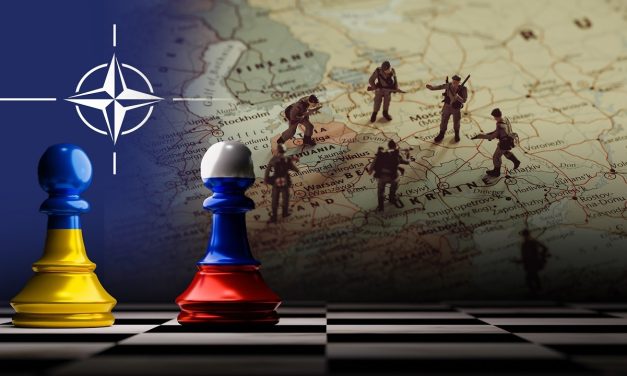
America’s Strategy for Creating Tension in the Asia-Pacific

Strategic Council Online – Opinion: Relations between some countries in the Asia-Pacific region, such as China and Japan or China and Australia, which were previously relatively normal, are trending towards deterioration, and the primary reason for this is the aggressive policies of the United States of America.

The Collapse of the European Security Illusion with the Continuation of the Ukraine War?

Strategic Council Online – Interview: The Ukraine war has become a new turning point in the political, security, and even commercial relations of allies on both sides of the Atlantic. While this war is nearing its fourth year, many questions still remain regarding its future and its consequences; among them, will the continuation of the Ukraine war lead to the collapse of the European security illusion?

Is Greenland Pushing Europe Toward China?

Strategic Council Online – Interview: A European affairs expert believes that the seizure of Greenland will certainly weaken America’s relations with Europe and its allies. Donald Trump’s view is that he does not need these countries, but if Europe faces significant pressure from the United States, it is natural for it to move toward China.

Alarm Bells Sound for ISIS Revival in Syria: Threat to Iraq and West Asia

Strategic Council Online – Opinion: Numerous documents and pieces of evidence indicate that ISIS, which in recent years has been the region’s biggest threat to security and stability after the Zionist regime, has once again in recent months become a focal point for political and security exploitation by American and Zionist regime security, intelligence, and political circles.

Afghanistan’s Effective Role in the Economy of Eurasia

Strategic Council Online – Interview: A regional affairs researcher stated: Despite projects such as the Khaf-Herat railway and the Herat-Balkh-Mazar-i-Sharif corridor being on the agenda, insecurity and the absence of an inclusive government remain the most significant obstacles to realizing transit corridors and Afghanistan playing an effective role in the economy of Eurasia.

Loading

Ukraine war

Europe’s Threat to Deploy Military Forces in Ukraine: From Words to Actions

Europe’s Threat to Deploy Military Forces in Ukraine: From Words to Actions

Strategic Council Online – Interview: An expert on Eurasian and Russian affairs stated that the West’s reaction to Russia’s threats regarding any deployment of foreign forces in Ukraine, whether under NATO or as an independent force, will be a combination of caution and deterrence. He said: Despite the desire of Europe and America to deploy military forces in Ukraine, they emphasize indirect support for Ukraine, including economic sanctions and increased diplomatic pressure on Moscow, and at best propose deploying neutral observers in Ukraine.

Europe and Russia Confront Each Other Over Allocating Russian Assets to Arm Ukraine

Europe and Russia Confront Each Other Over Allocating Russian Assets to Arm Ukraine

Strategic Council Online – Interview: A senior European affairs analyst stated that Russia’s sharp reaction to the decision by Britain and the European Union to use Moscow’s frozen assets in favor of Ukraine has once again revealed new dimensions of the West’s economic war against Russia. The Russian embassy in London described the allocation of over one billion pounds of its blocked funds to purchase weapons for Ukraine as a “criminal act”. It warned that such policies would not only weaken London’s financial and political credibility in the world but would also not go unanswered. Simultaneously, the European Commission is also considering transferring 200 billion euros of Russian assets for the reconstruction of Ukraine—a decision that Moscow has described as a clear violation of international law.
Experts believe that by arming Ukraine using Russia’s frozen resources, the West has not only escalated the level of economic confrontation but has also challenged the traditional rules of the international financial and trade system. While Russia is seeking ways to circumvent sanctions through some of its partners, Europe and Britain are also determined to maintain pressure. It appears that this economic war is no longer confined to the conflict over Ukraine, and its effects will continue for years to come, redefining international relations and creating new geopolitical blocs.

An Analysis of Macron’s Initiative to Send European Troops to Ukraine

An Analysis of Macron’s Initiative to Send European Troops to Ukraine

Strategic Council Online – Interview: A senior international affairs analyst stated that Europe today, more than ever, needs a unified strategy; without such a strategy, not only will peace be unachievable, but Europe itself will become the main stage for the consequences of this war.

Trump and the Humiliation of Europe in the Ukraine Crisis

Trump and the Humiliation of Europe in the Ukraine Crisis

Strategic Council Online – Interview: A senior international affairs analyst stated that Trump’s deal-oriented and authoritarian diplomacy, disregarding the complexities of a multipolar world, is doomed to failure. Lasting peace in Ukraine will only be possible through cooperation with Europe and respect for international law. Donald Trump, the President of the United States, with a deal-oriented approach aimed at quickly ending the war in Ukraine, has increased pressure on Europe to accept primary responsibility for that country’s security guarantees. According to a Politico report, senior Pentagon officials, in meetings with European defense ministers, emphasized that the U.S. would play a minimal role in this regard, with the main burden falling on Europe. This approach, evident at the August 18 meeting in Washington with European leaders and Volodymyr Zelenskyy, highlights a deep rift in transatlantic relations. Europe, concerned about the diminishing U.S. commitments to NATO and the fragility of the peace, is seeking security independence and strengthening its own diplomacy.

Alaska: Deal-Making Stage or Geopolitical Minefield?

Alaska: Deal-Making Stage or Geopolitical Minefield?

Strategic Council Online – Interview: A senior international affairs analyst stated: “The final week of summer 2025 marks a sensitive test for international relations and the future of the Ukraine war. The meeting between Donald Trump and Vladimir Putin in Alaska was merely seven months after Trump’s return to the White House, as the Ukraine war rages on relentlessly.” Volodymyr Zelenskyy, Ukraine’s president, has preemptively rejected Trump’s proposed peace plan—likely based on territorial concessions to Russia—warning that any agreement without Kyiv’s presence and consent would be a “dead solution.” Observers view the clash of interests among Moscow, Washington, Kyiv, and Europe as the intersection of four conflicting logics: Washington’s deal-driven logic, Moscow’s consolidationist logic, and Kyiv’s and Europe’s survivalist logic. While scenarios range from a minimal agreement to tacit Putin-Trump collusion solidifying current frontlines, each carries profound implications for European security and global power balances. Zelenskyy’s absence from Alaska could heighten risks of a deal that not only weakens Ukraine’s position but also undermines the legitimacy of fundamental international law.

An Analysis of Russia’s Official Recognition of the Taliban

An Analysis of Russia’s Official Recognition of the Taliban

Strategic Council Online – Interview: A former Iranian diplomat stated that Russia’s recognition of the Taliban or the Islamic Emirate of Afghanistan is primarily a security and intelligence matter, and any expansion of political and economic relations with the Taliban will undoubtedly be carried out with Moscow’s specific considerations.

The Ukraine War and Europe’s Security Scenarios

The Ukraine War and Europe’s Security Scenarios

Strategic Council Online – Interview: A Russia affairs expert stated that Europe will face a complex security environment in the future, including increased militarization, economic challenges stemming from cutting dependence on Russian energy, and the need to redefine relations with the U.S. and NATO. As a result, without sustainable solutions, Europe may face greater existential, economic, and social threats in the future.

Nuclear Deterrence of Britain and France: A Step Toward Reducing Europe’s Defense Dependence on the U.S.

Nuclear Deterrence of Britain and France: A Step Toward Reducing Europe’s Defense Dependence on the U.S.

Strategic Council Online – Interview: A senior European affairs analyst stated that the nuclear deterrence agreement between Britain and France marks a turning point in Europe’s security architecture. This pact not only addresses immediate threats, including those posed by Russia, but also lays the groundwork for long-term cooperation in cyber, space, and military domains. The success of this collaboration depends on the two nations’ commitment to fulfilling existing obligations and actively participating in new security arrangements.

Reasons for NATO Members’ Agreement to the Proposed U.S. Budget Increase

Reasons for NATO Members’ Agreement to the Proposed U.S. Budget Increase

Strategic Council Online – Interview: An international affairs expert stated that, given the Russian threat and the rise of militarism worldwide, European countries have concluded that they must cooperate with the U.S. in establishing a unified European defense shield and strengthening NATO. Consequently, they agreed to a five percent increase in NATO’s budget during the recent summit.

Ukraine’s Permission to Use Long-Range Weapons; Europe’s New Alignment Against Russia

Ukraine’s Permission to Use Long-Range Weapons; Europe’s New Alignment Against Russia

Strategic Council–Online – Interview: A European affairs expert stated that German Chancellor Friedrich Merz recently announced that Western allies would no longer impose any restrictions on Ukraine’s use of long-range weapons against Russian military targets. Following the decision by European countries, the question arises as to why this decision was made at this stage and what consequences it will have.

Ukraine war

Europe’s Threat to Deploy Military Forces in Ukraine: From Words to Actions

Europe’s Threat to Deploy Military Forces in Ukraine: From Words to Actions

Strategic Council Online – Interview: An expert on Eurasian and Russian affairs stated that the West’s reaction to Russia’s threats regarding any deployment of foreign forces in Ukraine, whether under NATO or as an independent force, will be a combination of caution and deterrence. He said: Despite the desire of Europe and America to deploy military forces in Ukraine, they emphasize indirect support for Ukraine, including economic sanctions and increased diplomatic pressure on Moscow, and at best propose deploying neutral observers in Ukraine.

Europe and Russia Confront Each Other Over Allocating Russian Assets to Arm Ukraine

Europe and Russia Confront Each Other Over Allocating Russian Assets to Arm Ukraine

Strategic Council Online – Interview: A senior European affairs analyst stated that Russia’s sharp reaction to the decision by Britain and the European Union to use Moscow’s frozen assets in favor of Ukraine has once again revealed new dimensions of the West’s economic war against Russia. The Russian embassy in London described the allocation of over one billion pounds of its blocked funds to purchase weapons for Ukraine as a “criminal act”. It warned that such policies would not only weaken London’s financial and political credibility in the world but would also not go unanswered. Simultaneously, the European Commission is also considering transferring 200 billion euros of Russian assets for the reconstruction of Ukraine—a decision that Moscow has described as a clear violation of international law.
Experts believe that by arming Ukraine using Russia’s frozen resources, the West has not only escalated the level of economic confrontation but has also challenged the traditional rules of the international financial and trade system. While Russia is seeking ways to circumvent sanctions through some of its partners, Europe and Britain are also determined to maintain pressure. It appears that this economic war is no longer confined to the conflict over Ukraine, and its effects will continue for years to come, redefining international relations and creating new geopolitical blocs.

An Analysis of Macron’s Initiative to Send European Troops to Ukraine

An Analysis of Macron’s Initiative to Send European Troops to Ukraine

Strategic Council Online – Interview: A senior international affairs analyst stated that Europe today, more than ever, needs a unified strategy; without such a strategy, not only will peace be unachievable, but Europe itself will become the main stage for the consequences of this war.

Trump and the Humiliation of Europe in the Ukraine Crisis

Trump and the Humiliation of Europe in the Ukraine Crisis

Strategic Council Online – Interview: A senior international affairs analyst stated that Trump’s deal-oriented and authoritarian diplomacy, disregarding the complexities of a multipolar world, is doomed to failure. Lasting peace in Ukraine will only be possible through cooperation with Europe and respect for international law. Donald Trump, the President of the United States, with a deal-oriented approach aimed at quickly ending the war in Ukraine, has increased pressure on Europe to accept primary responsibility for that country’s security guarantees. According to a Politico report, senior Pentagon officials, in meetings with European defense ministers, emphasized that the U.S. would play a minimal role in this regard, with the main burden falling on Europe. This approach, evident at the August 18 meeting in Washington with European leaders and Volodymyr Zelenskyy, highlights a deep rift in transatlantic relations. Europe, concerned about the diminishing U.S. commitments to NATO and the fragility of the peace, is seeking security independence and strengthening its own diplomacy.

Alaska: Deal-Making Stage or Geopolitical Minefield?

Alaska: Deal-Making Stage or Geopolitical Minefield?

Strategic Council Online – Interview: A senior international affairs analyst stated: “The final week of summer 2025 marks a sensitive test for international relations and the future of the Ukraine war. The meeting between Donald Trump and Vladimir Putin in Alaska was merely seven months after Trump’s return to the White House, as the Ukraine war rages on relentlessly.” Volodymyr Zelenskyy, Ukraine’s president, has preemptively rejected Trump’s proposed peace plan—likely based on territorial concessions to Russia—warning that any agreement without Kyiv’s presence and consent would be a “dead solution.” Observers view the clash of interests among Moscow, Washington, Kyiv, and Europe as the intersection of four conflicting logics: Washington’s deal-driven logic, Moscow’s consolidationist logic, and Kyiv’s and Europe’s survivalist logic. While scenarios range from a minimal agreement to tacit Putin-Trump collusion solidifying current frontlines, each carries profound implications for European security and global power balances. Zelenskyy’s absence from Alaska could heighten risks of a deal that not only weakens Ukraine’s position but also undermines the legitimacy of fundamental international law.

An Analysis of Russia’s Official Recognition of the Taliban

An Analysis of Russia’s Official Recognition of the Taliban

Strategic Council Online – Interview: A former Iranian diplomat stated that Russia’s recognition of the Taliban or the Islamic Emirate of Afghanistan is primarily a security and intelligence matter, and any expansion of political and economic relations with the Taliban will undoubtedly be carried out with Moscow’s specific considerations.

The Ukraine War and Europe’s Security Scenarios

The Ukraine War and Europe’s Security Scenarios

Strategic Council Online – Interview: A Russia affairs expert stated that Europe will face a complex security environment in the future, including increased militarization, economic challenges stemming from cutting dependence on Russian energy, and the need to redefine relations with the U.S. and NATO. As a result, without sustainable solutions, Europe may face greater existential, economic, and social threats in the future.

Nuclear Deterrence of Britain and France: A Step Toward Reducing Europe’s Defense Dependence on the U.S.

Nuclear Deterrence of Britain and France: A Step Toward Reducing Europe’s Defense Dependence on the U.S.

Strategic Council Online – Interview: A senior European affairs analyst stated that the nuclear deterrence agreement between Britain and France marks a turning point in Europe’s security architecture. This pact not only addresses immediate threats, including those posed by Russia, but also lays the groundwork for long-term cooperation in cyber, space, and military domains. The success of this collaboration depends on the two nations’ commitment to fulfilling existing obligations and actively participating in new security arrangements.

Reasons for NATO Members’ Agreement to the Proposed U.S. Budget Increase

Reasons for NATO Members’ Agreement to the Proposed U.S. Budget Increase

Strategic Council Online – Interview: An international affairs expert stated that, given the Russian threat and the rise of militarism worldwide, European countries have concluded that they must cooperate with the U.S. in establishing a unified European defense shield and strengthening NATO. Consequently, they agreed to a five percent increase in NATO’s budget during the recent summit.

Ukraine’s Permission to Use Long-Range Weapons; Europe’s New Alignment Against Russia

Ukraine’s Permission to Use Long-Range Weapons; Europe’s New Alignment Against Russia

Strategic Council–Online – Interview: A European affairs expert stated that German Chancellor Friedrich Merz recently announced that Western allies would no longer impose any restrictions on Ukraine’s use of long-range weapons against Russian military targets. Following the decision by European countries, the question arises as to why this decision was made at this stage and what consequences it will have.

LATEST CONTENT

America’s Zero-Sum Game in Iraq

Online Strategic Council – Memoir: The swift selection of Nouri al-Maliki for the premiership constitutes a new phase in Iraq’s political sphere. Multiple factors have played a role in this process, the most important being the prevailing situation in Iraq and the region. Under such circumstances, Iraq requires a powerful and experienced prime minister who can keep the country away from the dangers of wars and crises.
America’s Strategy for Creating Tension in the Asia-Pacific

Strategic Council Online – Opinion: Relations between some countries in the Asia-Pacific region, such as China and Japan or China and Australia, which were previously relatively normal, are trending towards deterioration, and the primary reason for this is the aggressive policies of the United States of America.

The Collapse of the European Security Illusion with the Continuation of the Ukraine War?

Strategic Council Online – Interview: The Ukraine war has become a new turning point in the political, security, and even commercial relations of allies on both sides of the Atlantic. While this war is nearing its fourth year, many questions still remain regarding its future and its consequences; among them, will the continuation of the Ukraine war lead to the collapse of the European security illusion?

Is Greenland Pushing Europe Toward China?

Strategic Council Online – Interview: A European affairs expert believes that the seizure of Greenland will certainly weaken America’s relations with Europe and its allies. Donald Trump’s view is that he does not need these countries, but if Europe faces significant pressure from the United States, it is natural for it to move toward China.

Alarm Bells Sound for ISIS Revival in Syria: Threat to Iraq and West Asia

Strategic Council Online – Opinion: Numerous documents and pieces of evidence indicate that ISIS, which in recent years has been the region’s biggest threat to security and stability after the Zionist regime, has once again in recent months become a focal point for political and security exploitation by American and Zionist regime security, intelligence, and political circles.

Afghanistan’s Effective Role in the Economy of Eurasia

Strategic Council Online – Interview: A regional affairs researcher stated: Despite projects such as the Khaf-Herat railway and the Herat-Balkh-Mazar-i-Sharif corridor being on the agenda, insecurity and the absence of an inclusive government remain the most significant obstacles to realizing transit corridors and Afghanistan playing an effective role in the economy of Eurasia.

Loading

Ukraine war

Europe’s Threat to Deploy Military Forces in Ukraine: From Words to Actions

Europe’s Threat to Deploy Military Forces in Ukraine: From Words to Actions

Strategic Council Online – Interview: An expert on Eurasian and Russian affairs stated that the West’s reaction to Russia’s threats regarding any deployment of foreign forces in Ukraine, whether under NATO or as an independent force, will be a combination of caution and deterrence. He said: Despite the desire of Europe and America to deploy military forces in Ukraine, they emphasize indirect support for Ukraine, including economic sanctions and increased diplomatic pressure on Moscow, and at best propose deploying neutral observers in Ukraine.

Europe and Russia Confront Each Other Over Allocating Russian Assets to Arm Ukraine

Europe and Russia Confront Each Other Over Allocating Russian Assets to Arm Ukraine

Strategic Council Online – Interview: A senior European affairs analyst stated that Russia’s sharp reaction to the decision by Britain and the European Union to use Moscow’s frozen assets in favor of Ukraine has once again revealed new dimensions of the West’s economic war against Russia. The Russian embassy in London described the allocation of over one billion pounds of its blocked funds to purchase weapons for Ukraine as a “criminal act”. It warned that such policies would not only weaken London’s financial and political credibility in the world but would also not go unanswered. Simultaneously, the European Commission is also considering transferring 200 billion euros of Russian assets for the reconstruction of Ukraine—a decision that Moscow has described as a clear violation of international law.
Experts believe that by arming Ukraine using Russia’s frozen resources, the West has not only escalated the level of economic confrontation but has also challenged the traditional rules of the international financial and trade system. While Russia is seeking ways to circumvent sanctions through some of its partners, Europe and Britain are also determined to maintain pressure. It appears that this economic war is no longer confined to the conflict over Ukraine, and its effects will continue for years to come, redefining international relations and creating new geopolitical blocs.

An Analysis of Macron’s Initiative to Send European Troops to Ukraine

An Analysis of Macron’s Initiative to Send European Troops to Ukraine

Strategic Council Online – Interview: A senior international affairs analyst stated that Europe today, more than ever, needs a unified strategy; without such a strategy, not only will peace be unachievable, but Europe itself will become the main stage for the consequences of this war.

Trump and the Humiliation of Europe in the Ukraine Crisis

Trump and the Humiliation of Europe in the Ukraine Crisis

Strategic Council Online – Interview: A senior international affairs analyst stated that Trump’s deal-oriented and authoritarian diplomacy, disregarding the complexities of a multipolar world, is doomed to failure. Lasting peace in Ukraine will only be possible through cooperation with Europe and respect for international law. Donald Trump, the President of the United States, with a deal-oriented approach aimed at quickly ending the war in Ukraine, has increased pressure on Europe to accept primary responsibility for that country’s security guarantees. According to a Politico report, senior Pentagon officials, in meetings with European defense ministers, emphasized that the U.S. would play a minimal role in this regard, with the main burden falling on Europe. This approach, evident at the August 18 meeting in Washington with European leaders and Volodymyr Zelenskyy, highlights a deep rift in transatlantic relations. Europe, concerned about the diminishing U.S. commitments to NATO and the fragility of the peace, is seeking security independence and strengthening its own diplomacy.

Alaska: Deal-Making Stage or Geopolitical Minefield?

Alaska: Deal-Making Stage or Geopolitical Minefield?

Strategic Council Online – Interview: A senior international affairs analyst stated: “The final week of summer 2025 marks a sensitive test for international relations and the future of the Ukraine war. The meeting between Donald Trump and Vladimir Putin in Alaska was merely seven months after Trump’s return to the White House, as the Ukraine war rages on relentlessly.” Volodymyr Zelenskyy, Ukraine’s president, has preemptively rejected Trump’s proposed peace plan—likely based on territorial concessions to Russia—warning that any agreement without Kyiv’s presence and consent would be a “dead solution.” Observers view the clash of interests among Moscow, Washington, Kyiv, and Europe as the intersection of four conflicting logics: Washington’s deal-driven logic, Moscow’s consolidationist logic, and Kyiv’s and Europe’s survivalist logic. While scenarios range from a minimal agreement to tacit Putin-Trump collusion solidifying current frontlines, each carries profound implications for European security and global power balances. Zelenskyy’s absence from Alaska could heighten risks of a deal that not only weakens Ukraine’s position but also undermines the legitimacy of fundamental international law.

An Analysis of Russia’s Official Recognition of the Taliban

An Analysis of Russia’s Official Recognition of the Taliban

Strategic Council Online – Interview: A former Iranian diplomat stated that Russia’s recognition of the Taliban or the Islamic Emirate of Afghanistan is primarily a security and intelligence matter, and any expansion of political and economic relations with the Taliban will undoubtedly be carried out with Moscow’s specific considerations.

The Ukraine War and Europe’s Security Scenarios

The Ukraine War and Europe’s Security Scenarios

Strategic Council Online – Interview: A Russia affairs expert stated that Europe will face a complex security environment in the future, including increased militarization, economic challenges stemming from cutting dependence on Russian energy, and the need to redefine relations with the U.S. and NATO. As a result, without sustainable solutions, Europe may face greater existential, economic, and social threats in the future.

Nuclear Deterrence of Britain and France: A Step Toward Reducing Europe’s Defense Dependence on the U.S.

Nuclear Deterrence of Britain and France: A Step Toward Reducing Europe’s Defense Dependence on the U.S.

Strategic Council Online – Interview: A senior European affairs analyst stated that the nuclear deterrence agreement between Britain and France marks a turning point in Europe’s security architecture. This pact not only addresses immediate threats, including those posed by Russia, but also lays the groundwork for long-term cooperation in cyber, space, and military domains. The success of this collaboration depends on the two nations’ commitment to fulfilling existing obligations and actively participating in new security arrangements.

Reasons for NATO Members’ Agreement to the Proposed U.S. Budget Increase

Reasons for NATO Members’ Agreement to the Proposed U.S. Budget Increase

Strategic Council Online – Interview: An international affairs expert stated that, given the Russian threat and the rise of militarism worldwide, European countries have concluded that they must cooperate with the U.S. in establishing a unified European defense shield and strengthening NATO. Consequently, they agreed to a five percent increase in NATO’s budget during the recent summit.

Ukraine’s Permission to Use Long-Range Weapons; Europe’s New Alignment Against Russia

Ukraine’s Permission to Use Long-Range Weapons; Europe’s New Alignment Against Russia

Strategic Council–Online – Interview: A European affairs expert stated that German Chancellor Friedrich Merz recently announced that Western allies would no longer impose any restrictions on Ukraine’s use of long-range weapons against Russian military targets. Following the decision by European countries, the question arises as to why this decision was made at this stage and what consequences it will have.

ÚLTIMAS PUBLICACIONES

America’s Zero-Sum Game in Iraq

Online Strategic Council – Memoir: The swift selection of Nouri al-Maliki for the premiership constitutes a new phase in Iraq’s political sphere. Multiple factors have played a role in this process, the most important being the prevailing situation in Iraq and the region. Under such circumstances, Iraq requires a powerful and experienced prime minister who can keep the country away from the dangers of wars and crises.
America’s Strategy for Creating Tension in the Asia-Pacific

Strategic Council Online – Opinion: Relations between some countries in the Asia-Pacific region, such as China and Japan or China and Australia, which were previously relatively normal, are trending towards deterioration, and the primary reason for this is the aggressive policies of the United States of America.

The Collapse of the European Security Illusion with the Continuation of the Ukraine War?

Strategic Council Online – Interview: The Ukraine war has become a new turning point in the political, security, and even commercial relations of allies on both sides of the Atlantic. While this war is nearing its fourth year, many questions still remain regarding its future and its consequences; among them, will the continuation of the Ukraine war lead to the collapse of the European security illusion?

Is Greenland Pushing Europe Toward China?

Strategic Council Online – Interview: A European affairs expert believes that the seizure of Greenland will certainly weaken America’s relations with Europe and its allies. Donald Trump’s view is that he does not need these countries, but if Europe faces significant pressure from the United States, it is natural for it to move toward China.

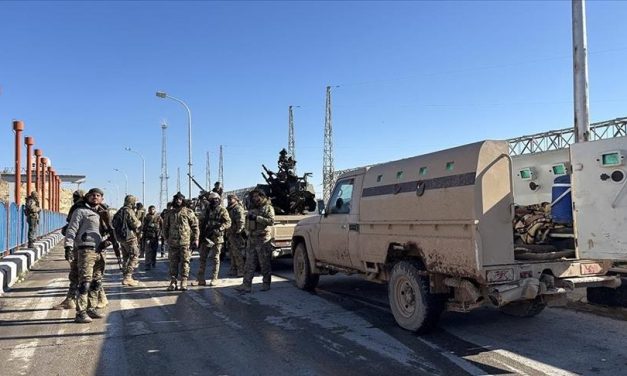
Alarm Bells Sound for ISIS Revival in Syria: Threat to Iraq and West Asia

Strategic Council Online – Opinion: Numerous documents and pieces of evidence indicate that ISIS, which in recent years has been the region’s biggest threat to security and stability after the Zionist regime, has once again in recent months become a focal point for political and security exploitation by American and Zionist regime security, intelligence, and political circles.

Afghanistan’s Effective Role in the Economy of Eurasia

Strategic Council Online – Interview: A regional affairs researcher stated: Despite projects such as the Khaf-Herat railway and the Herat-Balkh-Mazar-i-Sharif corridor being on the agenda, insecurity and the absence of an inclusive government remain the most significant obstacles to realizing transit corridors and Afghanistan playing an effective role in the economy of Eurasia.

Loading

Ukraine war

Europe’s Threat to Deploy Military Forces in Ukraine: From Words to Actions

Europe’s Threat to Deploy Military Forces in Ukraine: From Words to Actions

Strategic Council Online – Interview: An expert on Eurasian and Russian affairs stated that the West’s reaction to Russia’s threats regarding any deployment of foreign forces in Ukraine, whether under NATO or as an independent force, will be a combination of caution and deterrence. He said: Despite the desire of Europe and America to deploy military forces in Ukraine, they emphasize indirect support for Ukraine, including economic sanctions and increased diplomatic pressure on Moscow, and at best propose deploying neutral observers in Ukraine.

Europe and Russia Confront Each Other Over Allocating Russian Assets to Arm Ukraine

Europe and Russia Confront Each Other Over Allocating Russian Assets to Arm Ukraine

Strategic Council Online – Interview: A senior European affairs analyst stated that Russia’s sharp reaction to the decision by Britain and the European Union to use Moscow’s frozen assets in favor of Ukraine has once again revealed new dimensions of the West’s economic war against Russia. The Russian embassy in London described the allocation of over one billion pounds of its blocked funds to purchase weapons for Ukraine as a “criminal act”. It warned that such policies would not only weaken London’s financial and political credibility in the world but would also not go unanswered. Simultaneously, the European Commission is also considering transferring 200 billion euros of Russian assets for the reconstruction of Ukraine—a decision that Moscow has described as a clear violation of international law.
Experts believe that by arming Ukraine using Russia’s frozen resources, the West has not only escalated the level of economic confrontation but has also challenged the traditional rules of the international financial and trade system. While Russia is seeking ways to circumvent sanctions through some of its partners, Europe and Britain are also determined to maintain pressure. It appears that this economic war is no longer confined to the conflict over Ukraine, and its effects will continue for years to come, redefining international relations and creating new geopolitical blocs.

An Analysis of Macron’s Initiative to Send European Troops to Ukraine

An Analysis of Macron’s Initiative to Send European Troops to Ukraine

Strategic Council Online – Interview: A senior international affairs analyst stated that Europe today, more than ever, needs a unified strategy; without such a strategy, not only will peace be unachievable, but Europe itself will become the main stage for the consequences of this war.

Trump and the Humiliation of Europe in the Ukraine Crisis

Trump and the Humiliation of Europe in the Ukraine Crisis

Strategic Council Online – Interview: A senior international affairs analyst stated that Trump’s deal-oriented and authoritarian diplomacy, disregarding the complexities of a multipolar world, is doomed to failure. Lasting peace in Ukraine will only be possible through cooperation with Europe and respect for international law. Donald Trump, the President of the United States, with a deal-oriented approach aimed at quickly ending the war in Ukraine, has increased pressure on Europe to accept primary responsibility for that country’s security guarantees. According to a Politico report, senior Pentagon officials, in meetings with European defense ministers, emphasized that the U.S. would play a minimal role in this regard, with the main burden falling on Europe. This approach, evident at the August 18 meeting in Washington with European leaders and Volodymyr Zelenskyy, highlights a deep rift in transatlantic relations. Europe, concerned about the diminishing U.S. commitments to NATO and the fragility of the peace, is seeking security independence and strengthening its own diplomacy.

Alaska: Deal-Making Stage or Geopolitical Minefield?

Alaska: Deal-Making Stage or Geopolitical Minefield?

Strategic Council Online – Interview: A senior international affairs analyst stated: “The final week of summer 2025 marks a sensitive test for international relations and the future of the Ukraine war. The meeting between Donald Trump and Vladimir Putin in Alaska was merely seven months after Trump’s return to the White House, as the Ukraine war rages on relentlessly.” Volodymyr Zelenskyy, Ukraine’s president, has preemptively rejected Trump’s proposed peace plan—likely based on territorial concessions to Russia—warning that any agreement without Kyiv’s presence and consent would be a “dead solution.” Observers view the clash of interests among Moscow, Washington, Kyiv, and Europe as the intersection of four conflicting logics: Washington’s deal-driven logic, Moscow’s consolidationist logic, and Kyiv’s and Europe’s survivalist logic. While scenarios range from a minimal agreement to tacit Putin-Trump collusion solidifying current frontlines, each carries profound implications for European security and global power balances. Zelenskyy’s absence from Alaska could heighten risks of a deal that not only weakens Ukraine’s position but also undermines the legitimacy of fundamental international law.

An Analysis of Russia’s Official Recognition of the Taliban

An Analysis of Russia’s Official Recognition of the Taliban

Strategic Council Online – Interview: A former Iranian diplomat stated that Russia’s recognition of the Taliban or the Islamic Emirate of Afghanistan is primarily a security and intelligence matter, and any expansion of political and economic relations with the Taliban will undoubtedly be carried out with Moscow’s specific considerations.

The Ukraine War and Europe’s Security Scenarios

The Ukraine War and Europe’s Security Scenarios

Strategic Council Online – Interview: A Russia affairs expert stated that Europe will face a complex security environment in the future, including increased militarization, economic challenges stemming from cutting dependence on Russian energy, and the need to redefine relations with the U.S. and NATO. As a result, without sustainable solutions, Europe may face greater existential, economic, and social threats in the future.

Nuclear Deterrence of Britain and France: A Step Toward Reducing Europe’s Defense Dependence on the U.S.

Nuclear Deterrence of Britain and France: A Step Toward Reducing Europe’s Defense Dependence on the U.S.

Strategic Council Online – Interview: A senior European affairs analyst stated that the nuclear deterrence agreement between Britain and France marks a turning point in Europe’s security architecture. This pact not only addresses immediate threats, including those posed by Russia, but also lays the groundwork for long-term cooperation in cyber, space, and military domains. The success of this collaboration depends on the two nations’ commitment to fulfilling existing obligations and actively participating in new security arrangements.

Reasons for NATO Members’ Agreement to the Proposed U.S. Budget Increase

Reasons for NATO Members’ Agreement to the Proposed U.S. Budget Increase

Strategic Council Online – Interview: An international affairs expert stated that, given the Russian threat and the rise of militarism worldwide, European countries have concluded that they must cooperate with the U.S. in establishing a unified European defense shield and strengthening NATO. Consequently, they agreed to a five percent increase in NATO’s budget during the recent summit.

Ukraine’s Permission to Use Long-Range Weapons; Europe’s New Alignment Against Russia

Ukraine’s Permission to Use Long-Range Weapons; Europe’s New Alignment Against Russia

Strategic Council–Online – Interview: A European affairs expert stated that German Chancellor Friedrich Merz recently announced that Western allies would no longer impose any restrictions on Ukraine’s use of long-range weapons against Russian military targets. Following the decision by European countries, the question arises as to why this decision was made at this stage and what consequences it will have.

ÚLTIMAS PUBLICACIONES

America’s Zero-Sum Game in Iraq

Online Strategic Council – Memoir: The swift selection of Nouri al-Maliki for the premiership constitutes a new phase in Iraq’s political sphere. Multiple factors have played a role in this process, the most important being the prevailing situation in Iraq and the region. Under such circumstances, Iraq requires a powerful and experienced prime minister who can keep the country away from the dangers of wars and crises.

America’s Strategy for Creating Tension in the Asia-Pacific

Strategic Council Online – Opinion: Relations between some countries in the Asia-Pacific region, such as China and Japan or China and Australia, which were previously relatively normal, are trending towards deterioration, and the primary reason for this is the aggressive policies of the United States of America.

The Collapse of the European Security Illusion with the Continuation of the Ukraine War?

Strategic Council Online – Interview: The Ukraine war has become a new turning point in the political, security, and even commercial relations of allies on both sides of the Atlantic. While this war is nearing its fourth year, many questions still remain regarding its future and its consequences; among them, will the continuation of the Ukraine war lead to the collapse of the European security illusion?

Is Greenland Pushing Europe Toward China?

Strategic Council Online – Interview: A European affairs expert believes that the seizure of Greenland will certainly weaken America’s relations with Europe and its allies. Donald Trump’s view is that he does not need these countries, but if Europe faces significant pressure from the United States, it is natural for it to move toward China.

Alarm Bells Sound for ISIS Revival in Syria: Threat to Iraq and West Asia

Strategic Council Online – Opinion: Numerous documents and pieces of evidence indicate that ISIS, which in recent years has been the region’s biggest threat to security and stability after the Zionist regime, has once again in recent months become a focal point for political and security exploitation by American and Zionist regime security, intelligence, and political circles.

Afghanistan’s Effective Role in the Economy of Eurasia

Strategic Council Online – Interview: A regional affairs researcher stated: Despite projects such as the Khaf-Herat railway and the Herat-Balkh-Mazar-i-Sharif corridor being on the agenda, insecurity and the absence of an inclusive government remain the most significant obstacles to realizing transit corridors and Afghanistan playing an effective role in the economy of Eurasia.

Loading