
Hossein Dalaveri – Artificial Intelligence Researcher
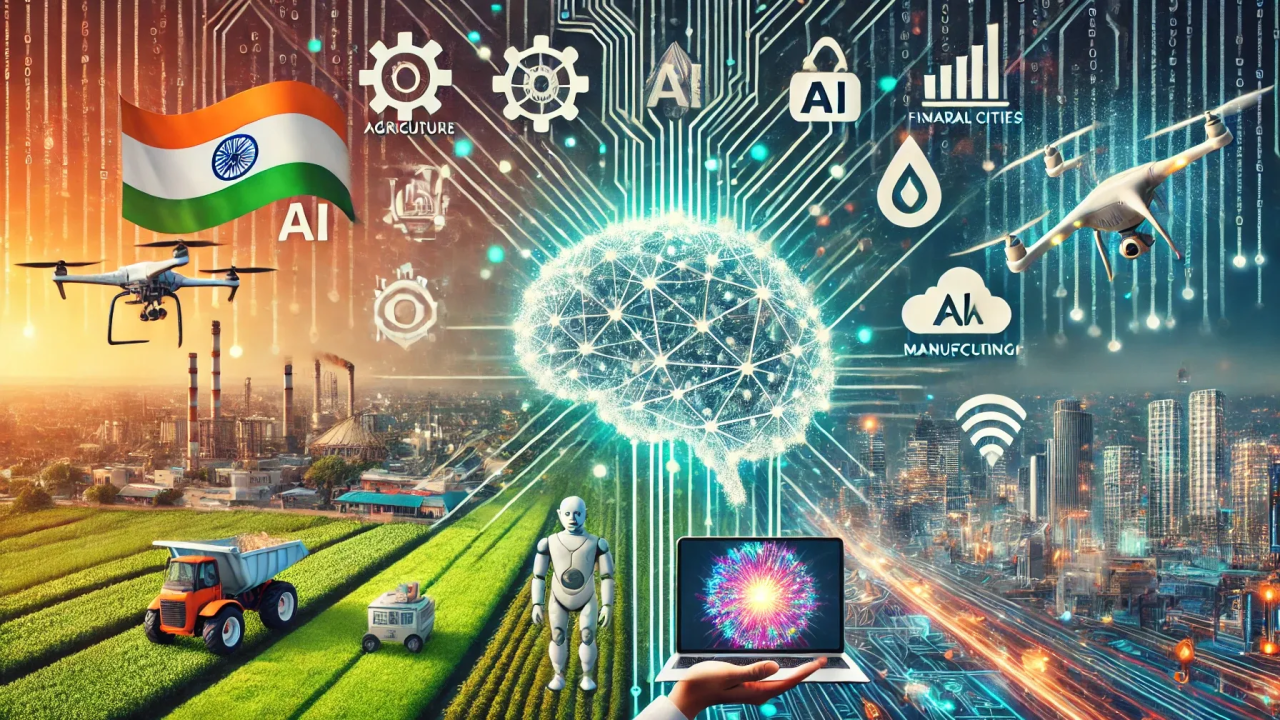
Despite evident economic limitations, India has achieved remarkable progress in artificial intelligence in recent years, transforming itself from a mere consumer to a shaping player in this domain. This success has not been accidental; rather, it is the product of a practical and people-centric strategy based on two key principles: first, expanding access through low-cost consumption models, and second, long-term investment in technical human capital. Examining this approach, especially for countries facing limitations in access to capital and advanced technologies, can contain valuable strategic lessons.
The Core of Success: Prioritizing Application and Widespread Access
The key to India’s progress in AI lies not in direct competition with global leaders in fundamental research, but in focusing on the practical and scalable applications of this technology in the daily lives of millions. Relying on the success of its previous public digital infrastructures like the “Aadhaar” biometric identification system and the Unified Payments Interface, the Indian government also promotes AI as a developmental tool to solve tangible problems in agriculture, health, and administrative services. This perspective transforms AI from a luxury and specialized commodity into a user-friendly and inclusive service. In this regard, two interconnected components form the driving engine of this strategy.
The first component is the creation of a “small-packet model” for consumer access. This idea is inspired by India’s consumer revolution in the 1980s, where selling hygiene products in small, very cheap packets turned a vast low-income population into consumers. Today, this concept has extended to the AI domain. Instead of expensive monthly subscriptions, a solution to provide AI services for micro and specific applications at negligible cost has been proposed. For example, a shopkeeper can pay a negligible fee to use a text-reading service for analyzing their invoices and automating inventory management. The pilot project “IndiaAI Compute Pillar,” which provides computing power to researchers for less than one dollar per hour, also moves toward testing this same concept. The goal is to reduce the cost barrier and create a mass demand drastically.
The second component is designing a smart “talent development roadmap.” India knows that competing to attract the limited number of global AI elites is not a scalable solution; therefore, it has placed its primary focus on training interdisciplinary and applied professionals. This means educating not only engineers but also product managers, industry analysts, and specialists who can bridge the gap between technical capabilities and the real needs of different sectors of the economy.
The government’s role here is crucial: by playing the role of the “first customer” and employing AI solutions in public services, the government both creates an initial market and, by demonstrating benefit, inspires trust and demand in society. Efforts to make infrastructure access inclusive by providing low-cost computational resources to educational centers in smaller cities also fall within this framework.
Turning Limitation into Opportunity
India’s model can be inspiring for several reasons. Firstly, this model emphasizes relative self-reliance and development based on internal needs. Other developing countries, such as Iran, can also create value and provide a platform for the growth and maturity of domestic companies by prioritizing the application of AI to solve internal challenges, such as water resource management, energy optimization, and the development of telemedicine services.
Secondly, economies of scale and a large domestic market in Iran, similar to India, provide the possibility to test and develop low-cost “small-packet” models for the vast number of micro and small-to-medium enterprises.
Thirdly, a young and interested human capital is a shared initial advantage. The key to success is creating a clear educational pathway to transform this raw talent into applied professional forces, emphasizing skills that connect technology to national specialized domains.
However, this path is not without challenges. Dependence on advanced processing hardware and semiconductors, a significant portion of which is still imported, is a significant vulnerability for India and, by extension, for Iran.
This issue can be more severe under sanctions and requires ancillary strategies such as optimizing algorithms for available hardware or targeted technology diplomacy. Also, the risk of deepening the digital divide and creating a persistent separation between those with and without access to this technology is a serious threat that affects the success of the entire project. Smart governance to balance oversight, security, and innovation space, as well as designing mechanisms to retain trained talents within the country, are among the other challenges facing this development model.
In summary, India’s experience shows that progress in advanced technologies does not necessarily require copying Western models. Relying on its indigenous conditions, India has brought AI from the ivory tower to the people and turned it into a tool for development. For Iran, perhaps the main lesson is to redefine AI as a “development-facilitating technology” and to focus on creating low-cost, high-impact, and scalable solutions for society. On this path, investing in people and creating institutional platforms for innovation will be more important than merely investing in technology.
This text was translated using artificial intelligence and may contain errors. If you notice an apparent mistake that makes the text incomprehensible, please inform the website editors.








0 Comments