Al-Aqsa Mosque & Responsibility of OIC, International Community

Strategic Council Online - Opinion: The recent measure by Itamar Ben-Gvir, the Minister of Internal Security of the Zionist regime, in attacking the Al-Aqsa Mosque and desecrating the Palestinian worshipers, although met with different reactions, showed that the role of the international community and the Islamic countries in preserving the sanctity of Islamic holy places in Palestine has faded away. Hassan Hanizadeh - Expert on Middle East affairs

In recent weeks, the Minister of Internal Security of the Zionist regime, who is considered as one of the most extreme personalities of the regime, entered the Al-Aqsa Mosque together with a large number of Zionists and started beating the Palestinian worshipers. The extremist Zionists entered the Al-Aqsa Mosque and beat the Palestinian worshipers with the support of the Zionist regime army that surrounded the Al-Aqsa Mosque.

Binyamin Netanyahu’s coalition cabinet, which was formed with the presence of five extreme ministers affiliated with the Religious Zionism Party and the Jewish Power party, is trying to force the Palestinians to take a quick reaction towards its adventurous actions. Suppression of Palestinians living in Gaza, exclusion of Palestinians from East al-Quds, expansion of Jewish settlements in the West Bank, blockade of Gaza, and torture of Palestinian prisoners in the custody of the Israeli regime are part of the internal policies of that cabinet.

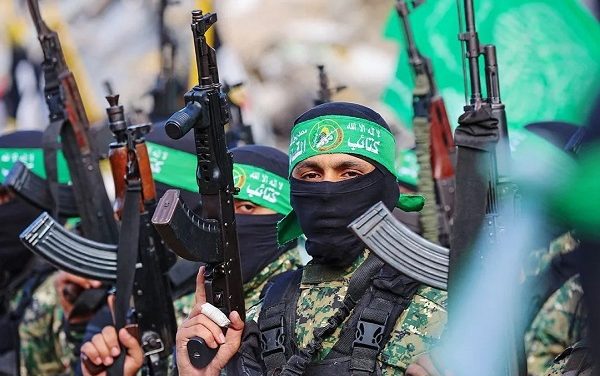
The violent behavior of that cabinet towards the defenseless people of Palestine also led to the displeasure of the Palestinian National Authority, headed by Mahmoud Abbas, to such an extent that it announced that it will not negotiate with that cabinet under any circumstances. On the other hand, Hamas and Islamic Jihad, as the two influential Palestinian militant movements in Gaza, announced that they have formed a joint war room to confront the aggression of the Zionist army. After the formation of Benjamin Netanyahu’s extreme cabinet, the atmosphere of the occupied territories is moving towards intensification of violence and field conflict, and in the event of a war in the occupied territories of 1967 between the Palestinians and the Zionist regime army, this war will definitely be long and different from the past. The reason for this is that the Palestinian militant movements, especially Hamas and Islamic Jihad, will be able to change the balance of the field in possible future wars in favor of the Palestinian nation, with missile deterrence capability. According to reports, Hamas and Islamic Jihad have recently produced all kinds of ballistic missiles and are determined to target the most sensitive and vital military installations of the Zionist regime in Haifa, Hebron, Tel Aviv and the Negev desert in any possible war. Therefore, some leftist parties of the Zionist regime warned Benjamin Netanyahu’s cabinet against any conflict in the near future between Palestinian militant movements and the Israeli army. The leaders of the left and middle parties of the Zionist regime believe that in the event of a possible conflict, the Palestinian militant movements will be able to target the depth of the occupied lands with ballistic missiles.

At the same time, continuation of the disrespect of the extremist elements of the new Israeli cabinet towards Al-Aqsa Mosque and al-Quds will cause the Arab regimes that have established relations with Israel to reconsider such relationship. In this way, the extreme cabinet of the Zionist regime, which has faced the opposition of some western countries, may collapse in the near future due to the adventures of Itamar Ben-Gvir, the Minister of Internal Security of Israel. On the other hand, considering that the UN General Assembly recently issued a statement condemning the aggression of Israeli cabinet members to Al-Aqsa Mosque, it seems that a kind of sensitivity has been created among Islamic and Arab countries towards the holy places of Palestine. However, the Organization of Islamic Cooperation, which is made up of 57 Muslim countries in the world, and the Arab League, which is made up of 22 Arab countries, have not shown a serious and practical reaction to the actions of the Zionist regime against the Palestinian worshipers in Al-Aqsa Mosque. The silence of the Organization of Islamic Cooperation and the Arab League regarding the aggression of some ministers of Netanyahu’s cabinet shows that the two important Islamic and Arab institutions are not fulfilling their responsibilities towards the oppressed Palestinian nation.

Now, considering that there is a possibility of repeating Zionist attacks on al-Quds and Al-Aqsa Mosque, it is expected that the Organization of Islamic Cooperation, which is headquartered in Jeddah, Saudi Arabia, holds an extraordinary meeting of the foreign ministers of Islamic countries and condemn the behavior of the Zionists. Otherwise, it is possible that the Zionists will use the silence of the international community and Islamic and Arab countries in the near future, while intensifying their attacks against the worshipers of Al-Aqsa Mosque, prevent prayers in that mosque, which will lead to tensions and unpredictable consequences.


0 Comments

Submit a Comment

Your email address will not be published. Required fields are marked *

LATEST CONTENT

America’s Zero-Sum Game in Iraq

Online Strategic Council – Memoir: The swift selection of Nouri al-Maliki for the premiership constitutes a new phase in Iraq’s political sphere. Multiple factors have played a role in this process, the most important being the prevailing situation in Iraq and the region. Under such circumstances, Iraq requires a powerful and experienced prime minister who can keep the country away from the dangers of wars and crises.

America’s Strategy for Creating Tension in the Asia-Pacific

Strategic Council Online – Opinion: Relations between some countries in the Asia-Pacific region, such as China and Japan or China and Australia, which were previously relatively normal, are trending towards deterioration, and the primary reason for this is the aggressive policies of the United States of America.

The Collapse of the European Security Illusion with the Continuation of the Ukraine War?

Strategic Council Online – Interview: The Ukraine war has become a new turning point in the political, security, and even commercial relations of allies on both sides of the Atlantic. While this war is nearing its fourth year, many questions still remain regarding its future and its consequences; among them, will the continuation of the Ukraine war lead to the collapse of the European security illusion?

Is Greenland Pushing Europe Toward China?

Strategic Council Online – Interview: A European affairs expert believes that the seizure of Greenland will certainly weaken America’s relations with Europe and its allies. Donald Trump’s view is that he does not need these countries, but if Europe faces significant pressure from the United States, it is natural for it to move toward China.

Alarm Bells Sound for ISIS Revival in Syria: Threat to Iraq and West Asia

Strategic Council Online – Opinion: Numerous documents and pieces of evidence indicate that ISIS, which in recent years has been the region’s biggest threat to security and stability after the Zionist regime, has once again in recent months become a focal point for political and security exploitation by American and Zionist regime security, intelligence, and political circles.

Afghanistan’s Effective Role in the Economy of Eurasia

Strategic Council Online – Interview: A regional affairs researcher stated: Despite projects such as the Khaf-Herat railway and the Herat-Balkh-Mazar-i-Sharif corridor being on the agenda, insecurity and the absence of an inclusive government remain the most significant obstacles to realizing transit corridors and Afghanistan playing an effective role in the economy of Eurasia.

Loading

Últimas publicaciones

America’s Zero-Sum Game in Iraq

Online Strategic Council – Memoir: The swift selection of Nouri al-Maliki for the premiership constitutes a new phase in Iraq’s political sphere. Multiple factors have played a role in this process, the most important being the prevailing situation in Iraq and the region. Under such circumstances, Iraq requires a powerful and experienced prime minister who can keep the country away from the dangers of wars and crises.

America’s Strategy for Creating Tension in the Asia-Pacific

Strategic Council Online – Opinion: Relations between some countries in the Asia-Pacific region, such as China and Japan or China and Australia, which were previously relatively normal, are trending towards deterioration, and the primary reason for this is the aggressive policies of the United States of America.

The Collapse of the European Security Illusion with the Continuation of the Ukraine War?

Strategic Council Online – Interview: The Ukraine war has become a new turning point in the political, security, and even commercial relations of allies on both sides of the Atlantic. While this war is nearing its fourth year, many questions still remain regarding its future and its consequences; among them, will the continuation of the Ukraine war lead to the collapse of the European security illusion?

Is Greenland Pushing Europe Toward China?

Strategic Council Online – Interview: A European affairs expert believes that the seizure of Greenland will certainly weaken America’s relations with Europe and its allies. Donald Trump’s view is that he does not need these countries, but if Europe faces significant pressure from the United States, it is natural for it to move toward China.

Alarm Bells Sound for ISIS Revival in Syria: Threat to Iraq and West Asia

Strategic Council Online – Opinion: Numerous documents and pieces of evidence indicate that ISIS, which in recent years has been the region’s biggest threat to security and stability after the Zionist regime, has once again in recent months become a focal point for political and security exploitation by American and Zionist regime security, intelligence, and political circles.

Afghanistan’s Effective Role in the Economy of Eurasia

Strategic Council Online – Interview: A regional affairs researcher stated: Despite projects such as the Khaf-Herat railway and the Herat-Balkh-Mazar-i-Sharif corridor being on the agenda, insecurity and the absence of an inclusive government remain the most significant obstacles to realizing transit corridors and Afghanistan playing an effective role in the economy of Eurasia.

Loading

DERNIER CONTENU

America’s Zero-Sum Game in Iraq

Online Strategic Council – Memoir: The swift selection of Nouri al-Maliki for the premiership constitutes a new phase in Iraq’s political sphere. Multiple factors have played a role in this process, the most important being the prevailing situation in Iraq and the region. Under such circumstances, Iraq requires a powerful and experienced prime minister who can keep the country away from the dangers of wars and crises.

America’s Strategy for Creating Tension in the Asia-Pacific

Strategic Council Online – Opinion: Relations between some countries in the Asia-Pacific region, such as China and Japan or China and Australia, which were previously relatively normal, are trending towards deterioration, and the primary reason for this is the aggressive policies of the United States of America.

The Collapse of the European Security Illusion with the Continuation of the Ukraine War?

Strategic Council Online – Interview: The Ukraine war has become a new turning point in the political, security, and even commercial relations of allies on both sides of the Atlantic. While this war is nearing its fourth year, many questions still remain regarding its future and its consequences; among them, will the continuation of the Ukraine war lead to the collapse of the European security illusion?

Is Greenland Pushing Europe Toward China?

Strategic Council Online – Interview: A European affairs expert believes that the seizure of Greenland will certainly weaken America’s relations with Europe and its allies. Donald Trump’s view is that he does not need these countries, but if Europe faces significant pressure from the United States, it is natural for it to move toward China.

Alarm Bells Sound for ISIS Revival in Syria: Threat to Iraq and West Asia

Strategic Council Online – Opinion: Numerous documents and pieces of evidence indicate that ISIS, which in recent years has been the region’s biggest threat to security and stability after the Zionist regime, has once again in recent months become a focal point for political and security exploitation by American and Zionist regime security, intelligence, and political circles.

Afghanistan’s Effective Role in the Economy of Eurasia

Strategic Council Online – Interview: A regional affairs researcher stated: Despite projects such as the Khaf-Herat railway and the Herat-Balkh-Mazar-i-Sharif corridor being on the agenda, insecurity and the absence of an inclusive government remain the most significant obstacles to realizing transit corridors and Afghanistan playing an effective role in the economy of Eurasia.

Loading