Ukraine War; Challenges, Deepening Gaps in Intl. Cyberspace Governance

Strategic Council Online - Interview: An expert on international governance of cyberspace, stating that militarization of cyberspace causes a change in understanding from cooperation-oriented cyber geopolitics to conflict-oriented cyber geopolitics, said: Especially after Russia’s attack on Ukraine, the gaps in the discussion of international cyberspace governance have deepened.

Dr. Behzad Ahmadi Lafourki in an interview with the website of the Strategic Council of Foreign Relations, referring to Moscow’s threat that Western cyberattacks against Russia’s infrastructures could lead to a direct military confrontation, stated: The accusations of both sides against each other during this period have been high, but since May 20, that is when Putin warned in the meeting of the Russian Security Council that the infrastructures of foreign countries are being used against the country’s cyberspace and it seems that foreign armies are involved in this respect, the issue of militarization of cyberspace has become more prominent and raised to a higher level.
US preemptive cyberattacks in Ukraine
He said: After Putin’s speech, one of the commanders of the US cyber force in Estonia, which plays an important role in the NATO cyber security arrangements, along with Latvia, said that the US has carried out a range of defensive, offensive and intelligence cyber operations in support of Ukraine. Previously, this command had announced that it was conducting pre-emptive cyber operations in Ukraine.
Ahmadi continued: Those positions of the American side followed the warning of Krutskikh, Putin’s special representative in the field of international cyber security, and he announced that if those attacks continued, there would be a reciprocal response with conventional military action, and the responses may not be limited to cyber reaction. According to Krutskikh, the United States has ignored even its domestic laws in cyberattacks and has obviously lowered the threshold of military use of cyberspace. Although the words of Putin’s representative in showing the conventional military response to cyberattacks are considered as a fundamental development, in fact, here we are more witnessing a preliminary warning from the two sides of Russia and the United States not to raise the threshold of war from a cyber point of view.
He added: Therefore, it can be said that the warnings of both sides are more to create cyber deterrence and the evidence shows that this deterrence has been effective and the range of cyberattacks has not increased as expected. For this reason, except for a few attacks on European satellite companies put at the disposal of the Ukrainian military, the Russians did not expand their cyberattacks outside Ukraine, and no serious cyber actions against European or American companies have been reported.
Turning point of recognition of cyber power of Russians
Ahmadi considered the meeting between Biden and Putin in Geneva last year as a turning point for the Russians and explained: In that meeting, Biden gave the Russians a list of 16 critical American infrastructures and asked for an agreement not to attack them and the Russians were pleased with the recognition of their cyber power. A few months before that, Putin had proposed four points in the field of cyber security to the Americans, which was said to be a very comprehensive and extensive agreement for not attacking each other and to cooperate by opening communication channels and have common protocols.
The expert on international governance of the virtual space called those negotiations effective in controlling the scope of the cyber conflict in the Ukraine war and said: According to what we are witnessing, the cyber conflict can definitely become one of the types of wars in the near future; that is why we are witnessing the formation of cyber command and outer space command in many countries.
Geopoliticization of technology companies
Stating that cyber insecurity can deal a big blow on the economic interests of cyberspace, which has become of great importance to the international economy, Ahmadi noted: In the Ukraine war, technology became geopolitical to a great extent, and this was an important development in the field of ICT. In conflicts, technology companies often try to be neutral so that they can work with both sides of the conflict and benefit; but in that war, they were forced to choose a side, willingly or unwillingly; and of course, it helped to increase their weight, especially Google, Meta and Microsoft companies. Some of them, such as Starlink satellite internet, led by Elon Musk, even voluntarily got involved in that war, which will be instructive to study their behavior.
Emphasizing the role of decentralized technologies in the cyber conflict in the Ukraine war, the expert said: The importance of technologies that are available to individuals and do not require high expertise was shown in that war. At the same time, social networks as well as open source information, such as tracking movements through Google Maps and sharing them, also gained a new role and double importance.
Stabilization of cyber geopolitics, necessity of strengthening Iran’s presence, role in relevant Intl. forums
Ahmadi considered intensification of cyber conflict to the detriment of international economy, causing more serious issues related to the islandization of the Internet and added: Militarization of cyberspace causes a change in understanding from cooperation-oriented cyber geopolitics to conflict-oriented cyber geopolitics. In the Ukraine war, on the one hand, we are witnessing the uncontrolled and irresponsible distribution of cyber weapons and encouraging their use, and on the other hand, intensification of information campaigns to win the war of narratives; in fact, there is a kind of cyber spread on a large scale, which can fuel spread of cybercrimes and attacks in the whole world.
The expert on international governance of virtual cyberspace, referring to the formation of the understanding of the strategic threat of cyberspace from a military point of view in many countries after the war in Ukraine, said: In such an environment, the task of international law that can help reduce conflicts is not clear, and measures in this field in the form of GGE and OEWG have not yet come to fruition, and especially after Russia’s attack on Ukraine, the gaps in the international governance of cyberspace discussion has deepened.
According to Ahmadi, in such an atmosphere, in addition to taking the necessary measures in the field of cyber security and increasing resilience, it is necessary for the country to have a prominent presence in international forums related to the governance of virtual cyberspace and play an effective role in the evolving process of norms, rules and rights shaping such an atmosphere.
0 Comments

Submit a Comment

Your email address will not be published. Required fields are marked *

LATEST CONTENT

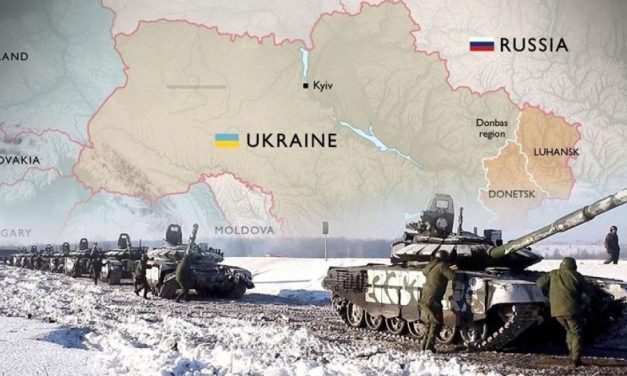
Examining Political Developments Related to the Ukraine War

Strategic Council Online – Interview: An international affairs analyst stated: Today, Ukraine is facing a set of structural corruption, intra-European divisions, a shift in America’s approach, and a legitimacy crisis for Zelenskyy, which has propelled the course of the war and the future of the European Union and NATO into an entirely new phase.
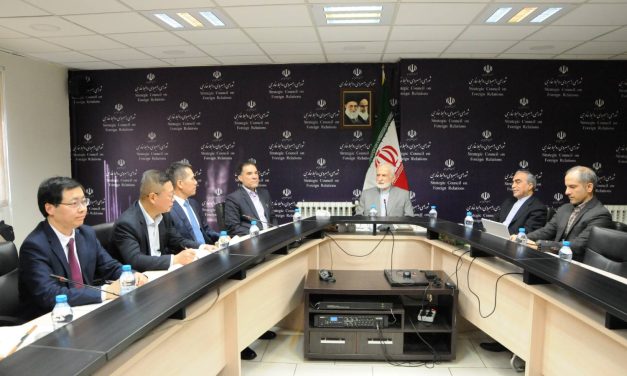
Dr. Kharrazi Meets Delegation from Chinese Think Tanks: Emphasizes the Need for an Action Plan to Implement the Comprehensive Iran–China Cooperation Document

Strategic Council Online: The President of the Strategic Council on Foreign Relations stated, “Despite the signing of the 25-year Comprehensive Cooperation Agreement between Iran and China, a long path remains toward its full implementation. One key point both countries must observe is to move away from a project-based approach and instead adopt a program-oriented relationship by formulating a concrete action plan. This plan should be grounded in Iran’s national spatial planning framework and aligned with the mutual priorities of both nations as outlined in the 25-year Comprehensive Cooperation Document.”

An Analysis of the New U.S. National Security Strategy Document

Strategic Council Online – Opinion: The new U.S. National Security Strategy document, which emphasizes the slogan “America First,” indicates that Washington has moved away from many previous patterns and shifted its focus from external interventions to the preservation of domestic security and the preservation of the Western Hemisphere. This document redefines threats, priorities, and America’s global role.

Artificial Intelligence and the Intensification of Global Inequality

Strategic Council Online – Opinion: Although other revolutions have occurred between the Industrial Revolution and the artificial intelligence revolution, especially the ICT (Information and Communications Technology) revolution, and humanity has made remarkable progress along this path, in terms of fundamental transformations in the mode of production and social relations, it can be said that the transformations of artificial intelligence and the scope of its effects are perhaps similar to the Industrial Revolution but on a much larger scale. It is, in fact, a new revolution, much more profound and complex than the Industrial Revolution.

Reasons for Trump’s Attempt to Remove South Africa from the Upcoming G20 Summit

Strategic Council Online – Interview: Iran’s former ambassador to South Africa stated: “Trump’s decision to remove South Africa from the upcoming G20 summit is an irrational, reactionary decision lacking a legal basis. On one hand, it stems from Trump’s contemptuous and narcissistic outlook. On the other hand, it is a response to Pretoria’s prominent role in pursuing the legal case against the Israeli regime at the International Court of Justice.”

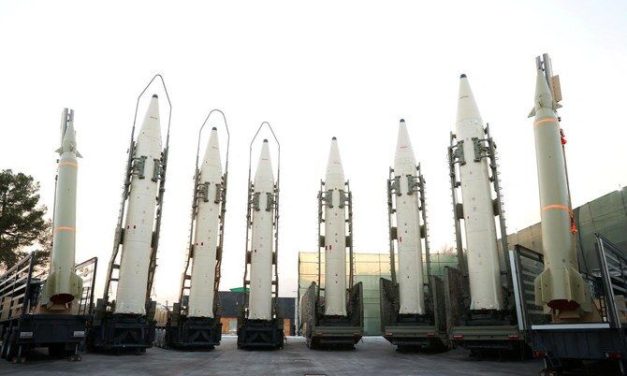
An Analysis of Iran’s Missile Capability

Strategic Council Online – Interview: A strategic affairs analyst said: Iran’s missile doctrine is not only part of its deterrent capability but also part of the security identity of the Islamic Republic of Iran and should not be weakened.

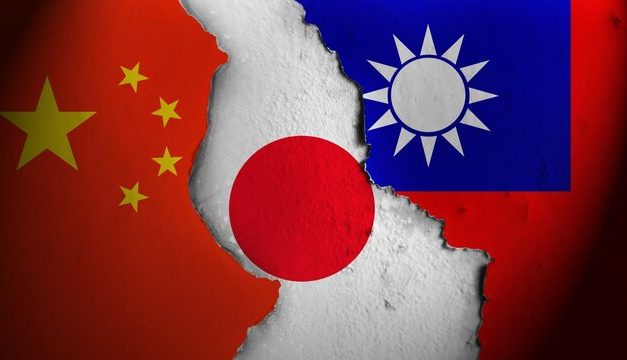
Japan-China Tensions Over Taiwan

Strategic Council Online – Interview: An international affairs expert said that U.S. President Donald Trump, in a phone call this week with Sanae Takaichi, asked her not to further escalate disputes with China. Earlier this month, Takaichi created a rare tension with Beijing by stating that “a potential Chinese attack on Taiwan could lead to military action by Japan,” remarks that drew a sharp reaction from China. Beijing demanded that she retract these statements, but the Japanese Prime Minister has not done so thus far, and Tokyo has only emphasized that its policy regarding Taiwan has not changed.

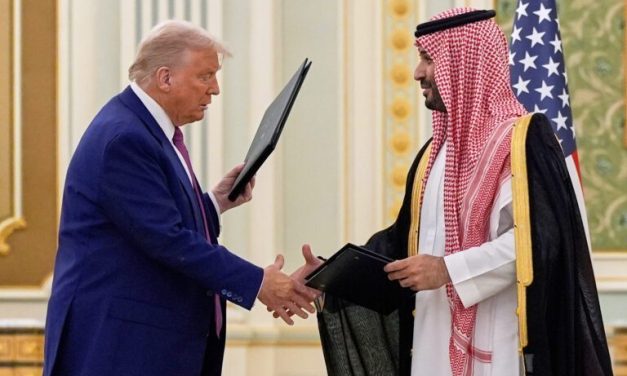
A Look at bin Salman’s Recent Trip to America

Strategic Council Online – Opinion: The recent trip of the Saudi Crown Prince to America was a targeted effort to solidify the strategic partnership with Washington, reduce political uncertainties, and strengthen Riyadh’s political role-playing.

Loading

Últimas publicaciones

Examining Political Developments Related to the Ukraine War

Strategic Council Online – Interview: An international affairs analyst stated: Today, Ukraine is facing a set of structural corruption, intra-European divisions, a shift in America’s approach, and a legitimacy crisis for Zelenskyy, which has propelled the course of the war and the future of the European Union and NATO into an entirely new phase.

Dr. Kharrazi Meets Delegation from Chinese Think Tanks: Emphasizes the Need for an Action Plan to Implement the Comprehensive Iran–China Cooperation Document

Strategic Council Online: The President of the Strategic Council on Foreign Relations stated, “Despite the signing of the 25-year Comprehensive Cooperation Agreement between Iran and China, a long path remains toward its full implementation. One key point both countries must observe is to move away from a project-based approach and instead adopt a program-oriented relationship by formulating a concrete action plan. This plan should be grounded in Iran’s national spatial planning framework and aligned with the mutual priorities of both nations as outlined in the 25-year Comprehensive Cooperation Document.”

An Analysis of the New U.S. National Security Strategy Document

Strategic Council Online – Opinion: The new U.S. National Security Strategy document, which emphasizes the slogan “America First,” indicates that Washington has moved away from many previous patterns and shifted its focus from external interventions to the preservation of domestic security and the preservation of the Western Hemisphere. This document redefines threats, priorities, and America’s global role.

Artificial Intelligence and the Intensification of Global Inequality

Strategic Council Online – Opinion: Although other revolutions have occurred between the Industrial Revolution and the artificial intelligence revolution, especially the ICT (Information and Communications Technology) revolution, and humanity has made remarkable progress along this path, in terms of fundamental transformations in the mode of production and social relations, it can be said that the transformations of artificial intelligence and the scope of its effects are perhaps similar to the Industrial Revolution but on a much larger scale. It is, in fact, a new revolution, much more profound and complex than the Industrial Revolution.

Reasons for Trump’s Attempt to Remove South Africa from the Upcoming G20 Summit

Strategic Council Online – Interview: Iran’s former ambassador to South Africa stated: “Trump’s decision to remove South Africa from the upcoming G20 summit is an irrational, reactionary decision lacking a legal basis. On one hand, it stems from Trump’s contemptuous and narcissistic outlook. On the other hand, it is a response to Pretoria’s prominent role in pursuing the legal case against the Israeli regime at the International Court of Justice.”

An Analysis of Iran’s Missile Capability

Strategic Council Online – Interview: A strategic affairs analyst said: Iran’s missile doctrine is not only part of its deterrent capability but also part of the security identity of the Islamic Republic of Iran and should not be weakened.

Japan-China Tensions Over Taiwan

Strategic Council Online – Interview: An international affairs expert said that U.S. President Donald Trump, in a phone call this week with Sanae Takaichi, asked her not to further escalate disputes with China. Earlier this month, Takaichi created a rare tension with Beijing by stating that “a potential Chinese attack on Taiwan could lead to military action by Japan,” remarks that drew a sharp reaction from China. Beijing demanded that she retract these statements, but the Japanese Prime Minister has not done so thus far, and Tokyo has only emphasized that its policy regarding Taiwan has not changed.

A Look at bin Salman’s Recent Trip to America

Strategic Council Online – Opinion: The recent trip of the Saudi Crown Prince to America was a targeted effort to solidify the strategic partnership with Washington, reduce political uncertainties, and strengthen Riyadh’s political role-playing.

Loading

DERNIER CONTENU

Examining Political Developments Related to the Ukraine War

Strategic Council Online – Interview: An international affairs analyst stated: Today, Ukraine is facing a set of structural corruption, intra-European divisions, a shift in America’s approach, and a legitimacy crisis for Zelenskyy, which has propelled the course of the war and the future of the European Union and NATO into an entirely new phase.

Dr. Kharrazi Meets Delegation from Chinese Think Tanks: Emphasizes the Need for an Action Plan to Implement the Comprehensive Iran–China Cooperation Document

Strategic Council Online: The President of the Strategic Council on Foreign Relations stated, “Despite the signing of the 25-year Comprehensive Cooperation Agreement between Iran and China, a long path remains toward its full implementation. One key point both countries must observe is to move away from a project-based approach and instead adopt a program-oriented relationship by formulating a concrete action plan. This plan should be grounded in Iran’s national spatial planning framework and aligned with the mutual priorities of both nations as outlined in the 25-year Comprehensive Cooperation Document.”

An Analysis of the New U.S. National Security Strategy Document

Strategic Council Online – Opinion: The new U.S. National Security Strategy document, which emphasizes the slogan “America First,” indicates that Washington has moved away from many previous patterns and shifted its focus from external interventions to the preservation of domestic security and the preservation of the Western Hemisphere. This document redefines threats, priorities, and America’s global role.

Artificial Intelligence and the Intensification of Global Inequality

Strategic Council Online – Opinion: Although other revolutions have occurred between the Industrial Revolution and the artificial intelligence revolution, especially the ICT (Information and Communications Technology) revolution, and humanity has made remarkable progress along this path, in terms of fundamental transformations in the mode of production and social relations, it can be said that the transformations of artificial intelligence and the scope of its effects are perhaps similar to the Industrial Revolution but on a much larger scale. It is, in fact, a new revolution, much more profound and complex than the Industrial Revolution.

Reasons for Trump’s Attempt to Remove South Africa from the Upcoming G20 Summit

Strategic Council Online – Interview: Iran’s former ambassador to South Africa stated: “Trump’s decision to remove South Africa from the upcoming G20 summit is an irrational, reactionary decision lacking a legal basis. On one hand, it stems from Trump’s contemptuous and narcissistic outlook. On the other hand, it is a response to Pretoria’s prominent role in pursuing the legal case against the Israeli regime at the International Court of Justice.”

An Analysis of Iran’s Missile Capability

Strategic Council Online – Interview: A strategic affairs analyst said: Iran’s missile doctrine is not only part of its deterrent capability but also part of the security identity of the Islamic Republic of Iran and should not be weakened.

Japan-China Tensions Over Taiwan

Strategic Council Online – Interview: An international affairs expert said that U.S. President Donald Trump, in a phone call this week with Sanae Takaichi, asked her not to further escalate disputes with China. Earlier this month, Takaichi created a rare tension with Beijing by stating that “a potential Chinese attack on Taiwan could lead to military action by Japan,” remarks that drew a sharp reaction from China. Beijing demanded that she retract these statements, but the Japanese Prime Minister has not done so thus far, and Tokyo has only emphasized that its policy regarding Taiwan has not changed.

A Look at bin Salman’s Recent Trip to America

Strategic Council Online – Opinion: The recent trip of the Saudi Crown Prince to America was a targeted effort to solidify the strategic partnership with Washington, reduce political uncertainties, and strengthen Riyadh’s political role-playing.

Loading