An Analysis of France’s Decision to Recognize the Palestinian State

2025/08/17 | interview, Politics, top news

Strategic Council Online - Interview: A senior West Asia affairs analyst stated: The explicit support of Spain, Ireland, Portugal, and some political factions in the Netherlands and Britain for France's decision to recognize the Palestinian state indicates that the public atmosphere in Europe is changing. Emmanuel Macron, the President of France, has announced that in September, coinciding with the United Nations General Assembly, his government will recognize the State of Palestine. This decision, amid the humanitarian crisis in the Gaza Strip and the continuation of the Israeli regime's military attacks, is considered a significant step in the diplomatic arena. Of course, it should not go unmentioned that France, as one of the founders of the Israeli regime's nuclear program and a member of the Rome Statute, has a past full of legal and moral responsibilities towards this regime. In this vein, many analysts believe that if France wants to go beyond this symbolic decision and truly play a role in changing international relations regarding the Palestinian crisis, now is the time to reexamine its historical past.

Tactical Caution or Strategic Will?
Jaafar Qannadbashi, in an interview with the website of the Strategic Council on Foreign Relations, regarding the seriousness of France and the likelihood of Macron’s decision to recognize the Palestinian state being operationalized, stated: “Given France’s track record in this area, one cannot easily be hopeful about the fulfillment of this promise.” According to this analyst, “The official announcement of such a decision is more a clever reaction to domestic developments and the increasing pressure of public opinion in this country than the product of a strategic shift in France’s foreign policy. In reality, Macron’s decision should be analyzed more in a domestic context than merely a global one.”
Qannadbashi believes, “The Macron government has faced a wave of widespread criticism from left-wing parties and the French public opinion in recent months, who consider the Élysée Palace’s traditional approach towards the Israeli regime as complicity in war crimes and genocide in Gaza. Therefore, announcing this decision in the summer, when the French parliament is in recess and the political atmosphere has calmed down, is merely a clever move by Macron.” However, according to this expert, “Although the recognition of Palestine by the French president was a calculated move to reduce domestic political pressures and prevent the cohesion of opposing factions, it is also a step forward towards reviving the Palestinian ideal.”
According to this analyst, “There is still considerable time until September, and it cannot be certain that the Élysée will maintain its position at that time. Because experience has shown that such promises in Europe are usually easily retractable, especially if faced with a strong reaction from Washington or diplomatic pressures from the Zionist regime.” Referring to this issue, Qannadbashi says: “Whether Macron actually operationalizes this decision in September depends on several factors. First, the weight of domestic public opinion; second, the cohesion of left-wing factions; and most importantly, the reaction of America and the Israeli regime’s lobbies in France.”

Forgotten Responsibilities: From the ICC to Dimona
Qannadbashi further emphasizes that “France’s role is not limited to the decision to recognize Palestine.” The senior international affairs analyst believes that “France, due to its legal standing in the international system, has tools it can use to pressure the Israeli regime. The first and most important tool is membership in the Rome Statute and active membership in the International Criminal Court (ICC). Given the issuance of an arrest warrant for Benjamin Netanyahu, the Prime Minister of the Israeli regime, the French government is obligated under international law to execute this warrant or at least explicitly declare its position.” Noting that so far, no sign of France’s will to implement this warrant has been seen, he points out: “If France truly wants to move beyond symbolic politics, it must explicitly declare that it will comply with the ICC’s decision. Implementing this warrant could be a turning point in the international structures in which France plays a key role.”
Qannadbashi further refers to France’s historical past and its responsibility in the formation of the Israeli regime’s nuclear program, stating: “In the initial decades after the establishment of the Israeli regime, France was the founder and main supplier of the Dimona project.” For this reason, he believes that “Now, France has a duty, not only morally but based on a historical responsibility, to disclose this truth and end the decades-long silence surrounding the Israeli regime’s undeclared nuclear arsenal.” This expert says: “No country is in a position like France to question the legitimacy of the Israeli regime’s narrative. Revealing the nuclear arsenal could seriously challenge this regime’s exceptionalism in the international system.”
While many have focused on the diplomatic dimension of France’s decision, Qannadbashi believes that “a deeper look must be taken at the relationship between France’s domestic politics and this decision.” With a critical view, he emphasizes that “Politicians like Macron act more based on managing domestic conflicts and their own political survival than on principles. In this framework, the announcement of recognizing the Palestinian state is assessed as a kind of political investment to control the social space and restrain left-wing faction rivals.”
According to him, “The escalation of protests against the French government following its previous support for the Israeli regime – from weapons sales to alignment with Tel Aviv’s positions in international institutions – has led Macron to resort to this diplomatic tool to rebuild his political image. In fact, this action can be seen as the ‘moral reconstruction’ of the French government in public opinion; a reconstruction that is more symbolic and may not even reach the implementation stage.”

Positive Consequences of Paris’s Decision
Analyzing the positive consequences of this Paris decision, Qannadbashi emphasizes the importance of the wave it has created among other European governments. According to him, “The explicit support of Spain, Ireland, Portugal, and some political factions in the Netherlands and Britain shows that the public atmosphere in Europe is changing.” This senior West Asia affairs analyst emphasizes that “If France takes the path of officially recognizing Palestine, it could become a ‘political catalyst’ for other countries.”
He also reminds that “The United Nations, on two occasions in the past two years, has welcomed Palestine’s admission as a full member with an overwhelming majority vote, and even the International Court of Justice has warned about the Israeli regime’s policies in the West Bank. In such an atmosphere, France’s inaction could be interpreted as a clear retreat from its international responsibilities.”
Qannadbashi concludes his analysis by noting: “France is now at a historical turning point. If it does not use this opportunity to exit its dual policy and play an independent role, it will not only undermine its international credibility but will also show that it is still incapable of making independent decisions within the framework of American and Zionist regime interests.”
0 Comments

LATEST CONTENT

America’s Zero-Sum Game in Iraq

Online Strategic Council – Memoir: The swift selection of Nouri al-Maliki for the premiership constitutes a new phase in Iraq’s political sphere. Multiple factors have played a role in this process, the most important being the prevailing situation in Iraq and the region. Under such circumstances, Iraq requires a powerful and experienced prime minister who can keep the country away from the dangers of wars and crises.

America’s Strategy for Creating Tension in the Asia-Pacific

Strategic Council Online – Opinion: Relations between some countries in the Asia-Pacific region, such as China and Japan or China and Australia, which were previously relatively normal, are trending towards deterioration, and the primary reason for this is the aggressive policies of the United States of America.

The Collapse of the European Security Illusion with the Continuation of the Ukraine War?

Strategic Council Online – Interview: The Ukraine war has become a new turning point in the political, security, and even commercial relations of allies on both sides of the Atlantic. While this war is nearing its fourth year, many questions still remain regarding its future and its consequences; among them, will the continuation of the Ukraine war lead to the collapse of the European security illusion?

Is Greenland Pushing Europe Toward China?

Strategic Council Online – Interview: A European affairs expert believes that the seizure of Greenland will certainly weaken America’s relations with Europe and its allies. Donald Trump’s view is that he does not need these countries, but if Europe faces significant pressure from the United States, it is natural for it to move toward China.

Alarm Bells Sound for ISIS Revival in Syria: Threat to Iraq and West Asia

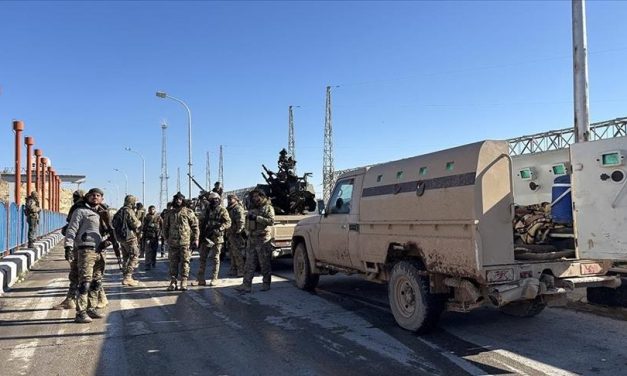
Strategic Council Online – Opinion: Numerous documents and pieces of evidence indicate that ISIS, which in recent years has been the region’s biggest threat to security and stability after the Zionist regime, has once again in recent months become a focal point for political and security exploitation by American and Zionist regime security, intelligence, and political circles.

Afghanistan’s Effective Role in the Economy of Eurasia

Strategic Council Online – Interview: A regional affairs researcher stated: Despite projects such as the Khaf-Herat railway and the Herat-Balkh-Mazar-i-Sharif corridor being on the agenda, insecurity and the absence of an inclusive government remain the most significant obstacles to realizing transit corridors and Afghanistan playing an effective role in the economy of Eurasia.

Loading

Últimas publicaciones

America’s Zero-Sum Game in Iraq

Online Strategic Council – Memoir: The swift selection of Nouri al-Maliki for the premiership constitutes a new phase in Iraq’s political sphere. Multiple factors have played a role in this process, the most important being the prevailing situation in Iraq and the region. Under such circumstances, Iraq requires a powerful and experienced prime minister who can keep the country away from the dangers of wars and crises.

America’s Strategy for Creating Tension in the Asia-Pacific

Strategic Council Online – Opinion: Relations between some countries in the Asia-Pacific region, such as China and Japan or China and Australia, which were previously relatively normal, are trending towards deterioration, and the primary reason for this is the aggressive policies of the United States of America.

The Collapse of the European Security Illusion with the Continuation of the Ukraine War?

Strategic Council Online – Interview: The Ukraine war has become a new turning point in the political, security, and even commercial relations of allies on both sides of the Atlantic. While this war is nearing its fourth year, many questions still remain regarding its future and its consequences; among them, will the continuation of the Ukraine war lead to the collapse of the European security illusion?

Is Greenland Pushing Europe Toward China?

Strategic Council Online – Interview: A European affairs expert believes that the seizure of Greenland will certainly weaken America’s relations with Europe and its allies. Donald Trump’s view is that he does not need these countries, but if Europe faces significant pressure from the United States, it is natural for it to move toward China.

Alarm Bells Sound for ISIS Revival in Syria: Threat to Iraq and West Asia

Strategic Council Online – Opinion: Numerous documents and pieces of evidence indicate that ISIS, which in recent years has been the region’s biggest threat to security and stability after the Zionist regime, has once again in recent months become a focal point for political and security exploitation by American and Zionist regime security, intelligence, and political circles.

Afghanistan’s Effective Role in the Economy of Eurasia

Strategic Council Online – Interview: A regional affairs researcher stated: Despite projects such as the Khaf-Herat railway and the Herat-Balkh-Mazar-i-Sharif corridor being on the agenda, insecurity and the absence of an inclusive government remain the most significant obstacles to realizing transit corridors and Afghanistan playing an effective role in the economy of Eurasia.

Loading

DERNIER CONTENU

America’s Zero-Sum Game in Iraq

Online Strategic Council – Memoir: The swift selection of Nouri al-Maliki for the premiership constitutes a new phase in Iraq’s political sphere. Multiple factors have played a role in this process, the most important being the prevailing situation in Iraq and the region. Under such circumstances, Iraq requires a powerful and experienced prime minister who can keep the country away from the dangers of wars and crises.

America’s Strategy for Creating Tension in the Asia-Pacific

Strategic Council Online – Opinion: Relations between some countries in the Asia-Pacific region, such as China and Japan or China and Australia, which were previously relatively normal, are trending towards deterioration, and the primary reason for this is the aggressive policies of the United States of America.

The Collapse of the European Security Illusion with the Continuation of the Ukraine War?

Strategic Council Online – Interview: The Ukraine war has become a new turning point in the political, security, and even commercial relations of allies on both sides of the Atlantic. While this war is nearing its fourth year, many questions still remain regarding its future and its consequences; among them, will the continuation of the Ukraine war lead to the collapse of the European security illusion?

Is Greenland Pushing Europe Toward China?

Strategic Council Online – Interview: A European affairs expert believes that the seizure of Greenland will certainly weaken America’s relations with Europe and its allies. Donald Trump’s view is that he does not need these countries, but if Europe faces significant pressure from the United States, it is natural for it to move toward China.

Alarm Bells Sound for ISIS Revival in Syria: Threat to Iraq and West Asia

Strategic Council Online – Opinion: Numerous documents and pieces of evidence indicate that ISIS, which in recent years has been the region’s biggest threat to security and stability after the Zionist regime, has once again in recent months become a focal point for political and security exploitation by American and Zionist regime security, intelligence, and political circles.

Afghanistan’s Effective Role in the Economy of Eurasia

Strategic Council Online – Interview: A regional affairs researcher stated: Despite projects such as the Khaf-Herat railway and the Herat-Balkh-Mazar-i-Sharif corridor being on the agenda, insecurity and the absence of an inclusive government remain the most significant obstacles to realizing transit corridors and Afghanistan playing an effective role in the economy of Eurasia.

Loading