An Analysis of the Escalating Isolation of Netanyahu Govt Worldwide

2025/06/07 | Note, Politics, top news

Strategic Council Online – Opinion: Netanyahu’s cabinet, which has recently launched a new military operation in Gaza, is insanely massacring civilians. The continuation of the war until the complete destruction of Gaza and its takeover is the ultimate goal of the Zionist regime’s recent military operation.

Hamid Khoshayand – Middle East Affairs Expert
Netanyahu and the extremist elements of his cabinet, in violation of international law and conventions and disregarding global protests, are using every military mechanism to achieve the aforementioned goal and are even preventing international aid from entering Gaza. Ben Gvir, the Minister of National Security, emphasized in a recent meeting of the regime’s war cabinet: “No aid should be allowed into Gaza. The only aid that should enter Gaza is voluntary migration.”

To force the residents of Gaza to flee, the Zionist regime has resorted to a policy of starving the people of Gaza. Recently, Amichai Eliyahu, the Heritage Minister of the Zionist regime, stated in an interview with Channel 7 of the regime’s television: “We must stop humanitarian aid to Gaza. As long as they receive food, they will fight us. There is no problem with bombing their food and fuel warehouses—they should all starve to death. If anyone is concerned for their life, they should accept the offer to migrate from the Gaza Strip.”


Ehud Olmert, the former Prime Minister of the Israeli regime, strongly criticized the recent statements of Netanyahu’s cabinet ministers about starving the people of Gaza, saying: “What we are doing in Gaza now is a devastating war—blind, limitless, barbaric, and criminal slaughter of civilians. We are not doing this because of the disproportionate motivation of a few soldiers in a unit, but as a result of a malicious and dictatorial policy of an irresponsible government. Yes, Israel is committing war crimes.”

The Zionist regime’s war policy and Netanyahu cabinet’s insistence on achieving war goals—which are practically impossible and unattainable—have, in addition to numerous political, economic, and military consequences for the Zionist regime, unprecedentedly weakened Netanyahu’s domestic standing and isolated him among the regime’s international allies. Never before has an Israeli prime minister and his cabinet been so despised and isolated in domestic public opinion and the international community.

Unlike previous months, today the Zionist regime’s Western partners, due to the widespread crimes Netanyahu is committing in Gaza—which have angered global public opinion, especially in Western and non-Muslim countries—are not only sharply criticizing him but also showing little willingness to support the prime minister of the Zionist regime. Europe’s significant shift in tone toward the Zionist regime confirms this claim.

A group of European Union officials, in a letter to EU leaders, criticized the Union for its minimal or meaningless actions in response to the severe humanitarian crisis in Gaza. Kaja Kallas, the EU’s foreign policy chief, also announced at the request of an overwhelming majority of member states that the EU is reviewing its trade agreement with the Israeli regime.

Some unnamed European diplomats, in an interview with The Washington Post, emphasized that “the horrific images from Gaza have pushed us to our limits,” stressing that dissatisfaction with Netanyahu in Europe is rising as officials lose patience.

The political leaders of France, Britain, and Canada also threatened in a recent joint statement: “If Israel does not stop its renewed military attack and lift restrictions on humanitarian aid, we will take more concrete measures in response.”

The British government, while imposing new sanctions on Zionist settlers who carry out violent acts against Palestinians, has announced that it has suspended trade negotiations with the Israeli regime.

Currently, many of the Israeli regime’s closest international allies in Western countries—except for the U.S.—have openly distanced themselves from and abandoned Netanyahu’s cabinet. Although such positions and approaches by Western political leaders are mainly driven by domestic and political reasons—influenced by public pressure and the need to maintain their political positions—they have intensified the isolation of the Zionist regime’s cabinet and further weakened Netanyahu’s political standing.

The Zionist regime’s cabinet is now in the most unprecedented period of isolation in its history. Although a significant portion of the regime’s field and non-field capabilities—including deterrence, psychological security, intelligence power, maritime economy, and trade—have been weakened or lost in the Gaza war, the isolation of the Israeli regime’s cabinet among its Western allies must also be considered one of the most important consequences of this war.

This could create more trouble for Netanyahu and the extremist members of his cabinet—who are also at risk of international arrest warrants—in the coming months, or even lead to the overthrow of Netanyahu’s cabinet and his removal from power, as supporting Netanyahu has become a highly costly issue for Western leaders.

The widespread international criticism and opposition to Netanyahu’s war policies come despite the fact that at the beginning of the Gaza war, he enjoyed unprecedented international legitimacy, especially among Western partners and allies. However, the international support that gradually waned as the war prolonged and war crimes and massacres in Gaza were committed has now turned into a massive diplomatic wave threatening the Zionist regime’s position on the international stage.
0 Comments

LATEST CONTENT

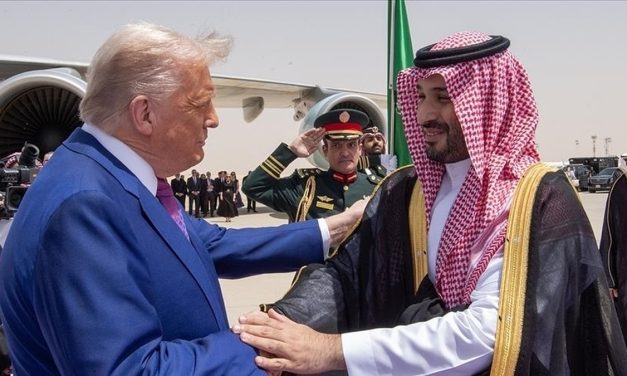
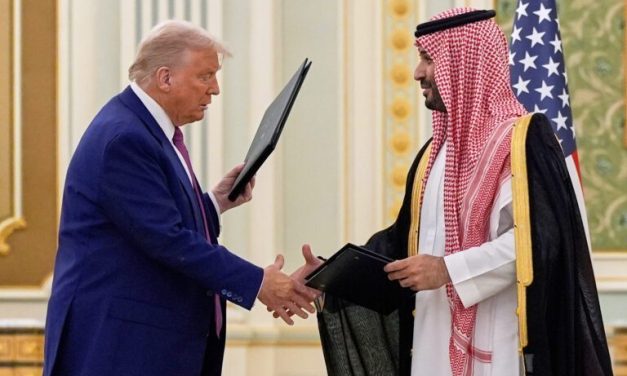
A Look at bin Salman’s Recent Trip to America

Strategic Council Online – Opinion: The recent trip of the Saudi Crown Prince to America was a targeted effort to solidify the strategic partnership with Washington, reduce political uncertainties, and strengthen Riyadh’s political role-playing.

Creating the Right Narrative: A Principled Strategy for Countering the Enemy’s Soft War

Strategic Council Online – Interview: A media expert stated: Given the intensification of the West’s soft war and psychological operations against Iran, our country’s primary strategy must be based on public education, strengthening national cohesion, developing international media, and countering the distortion of history through creating the right narrative.

F-35 Sale to Saudi Arabia: From Promise to Reality

Strategic Council Online – Interview: An international affairs analyst said: The issue of selling the F-35 to Saudi Arabia is not merely a military case, but rather part of a regional engineering that Washington is trying to advance.

Caspian Sea Water Level Drop; A Geopolitical Harm for Coastal Countries

Strategic Council Online – Interview: An expert in geopolitics stated, “The unprecedented drop in the Caspian Sea water level is not only an environmental threat but also a geopolitical alarm bell for Iran and the coastal countries, requiring urgent multilateral cooperation.”

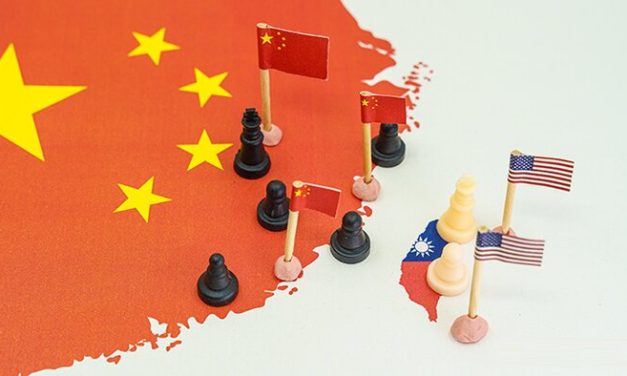
China’s Strategy to Counter the U.S. Effort to Escalate the Taiwan Crisis

Strategic Council Online – Interview: “Any miscalculated move could lead to escalating tensions and uncontrollable crises, but Beijing’s prudence and precise strategies have so far prevented the Taiwan issue from escalating into a crisis similar to that of Ukraine,” said an East Asia analyst.

Iran in the New Eurasian Order

Strategic Council Online – Interview: A geostrategic affairs analyst said: The emerging Eurasian order is not merely an economic plan, but an effort to redefine the global order based on independence, multilateralism, and regional convergence.

Loading

Últimas publicaciones

A Look at bin Salman’s Recent Trip to America

Strategic Council Online – Opinion: The recent trip of the Saudi Crown Prince to America was a targeted effort to solidify the strategic partnership with Washington, reduce political uncertainties, and strengthen Riyadh’s political role-playing.

Creating the Right Narrative: A Principled Strategy for Countering the Enemy’s Soft War

Strategic Council Online – Interview: A media expert stated: Given the intensification of the West’s soft war and psychological operations against Iran, our country’s primary strategy must be based on public education, strengthening national cohesion, developing international media, and countering the distortion of history through creating the right narrative.

F-35 Sale to Saudi Arabia: From Promise to Reality

Strategic Council Online – Interview: An international affairs analyst said: The issue of selling the F-35 to Saudi Arabia is not merely a military case, but rather part of a regional engineering that Washington is trying to advance.

Caspian Sea Water Level Drop; A Geopolitical Harm for Coastal Countries

Strategic Council Online – Interview: An expert in geopolitics stated, “The unprecedented drop in the Caspian Sea water level is not only an environmental threat but also a geopolitical alarm bell for Iran and the coastal countries, requiring urgent multilateral cooperation.”

China’s Strategy to Counter the U.S. Effort to Escalate the Taiwan Crisis

Strategic Council Online – Interview: “Any miscalculated move could lead to escalating tensions and uncontrollable crises, but Beijing’s prudence and precise strategies have so far prevented the Taiwan issue from escalating into a crisis similar to that of Ukraine,” said an East Asia analyst.

Iran in the New Eurasian Order

Strategic Council Online – Interview: A geostrategic affairs analyst said: The emerging Eurasian order is not merely an economic plan, but an effort to redefine the global order based on independence, multilateralism, and regional convergence.

Loading

DERNIER CONTENU

A Look at bin Salman’s Recent Trip to America

Strategic Council Online – Opinion: The recent trip of the Saudi Crown Prince to America was a targeted effort to solidify the strategic partnership with Washington, reduce political uncertainties, and strengthen Riyadh’s political role-playing.

Creating the Right Narrative: A Principled Strategy for Countering the Enemy’s Soft War

Strategic Council Online – Interview: A media expert stated: Given the intensification of the West’s soft war and psychological operations against Iran, our country’s primary strategy must be based on public education, strengthening national cohesion, developing international media, and countering the distortion of history through creating the right narrative.

F-35 Sale to Saudi Arabia: From Promise to Reality

Strategic Council Online – Interview: An international affairs analyst said: The issue of selling the F-35 to Saudi Arabia is not merely a military case, but rather part of a regional engineering that Washington is trying to advance.

Caspian Sea Water Level Drop; A Geopolitical Harm for Coastal Countries

Strategic Council Online – Interview: An expert in geopolitics stated, “The unprecedented drop in the Caspian Sea water level is not only an environmental threat but also a geopolitical alarm bell for Iran and the coastal countries, requiring urgent multilateral cooperation.”

China’s Strategy to Counter the U.S. Effort to Escalate the Taiwan Crisis

Strategic Council Online – Interview: “Any miscalculated move could lead to escalating tensions and uncontrollable crises, but Beijing’s prudence and precise strategies have so far prevented the Taiwan issue from escalating into a crisis similar to that of Ukraine,” said an East Asia analyst.

Iran in the New Eurasian Order

Strategic Council Online – Interview: A geostrategic affairs analyst said: The emerging Eurasian order is not merely an economic plan, but an effort to redefine the global order based on independence, multilateralism, and regional convergence.

Loading