Strategic Objectives, Results of 1st China-Central Asian Summit Meeting

2023/06/10 | interview, Politics, top news

Strategic Council Online - Interview: A faculty member of Allameh Tabataba'i University stated that in relations with Central Asia, China has considered a pragmatic policy centered on the economy and has put this economy in interaction with politics, and for this reason, concerning political and security issues has not been indifferent, adding: the agreements reached in the recent meeting of the heads of states of China and Central Asian countries, entails stabilization and intensification of Beijing's presence and influence in that region, and as a result, an increase of Beijing's playing capability in those countries.

In an interview with the website of the Strategic Council on Foreign Relations, Dr. Hamid Hakim referred to the first face-to-face meeting of the heads of state of China and five Central Asian countries, including Kazakhstan, Kyrgyzstan, Turkmenistan, Uzbekistan, and Tajikistan, in Beijing and the agreements reached there, and stated: Last year The first session of this meeting was held virtually. In this year’s face-to-face meeting, China and five Central Asian countries signed seven bilateral and multilateral documents, including the “Xi’an Declaration” of the China-Central Asia Summit and the list of the results of the China-Central Asia Summit, including the Asian Investment Bank of China, signed agreements to participate in large projects in those countries.

The professor of Allameh Tabataba’i University said: In his speech at the summit, Xi Jinping presented four visions of what kind of Central Asia the world needs, four principles for creating a China-Central Asia society with a common future, and eight proposals for developing bilateral cooperation. 

Saying that in the analysis of holding the meeting of the heads of state of Central Asia in China, Beijing’s competition with Moscow can also be considered, he continued: China’s influence expansion in that region, which is regarded as Russia’s backyard, is definitely not acceptable to Moscow. Over the past three decades, China has gradually come out of its defensive shell and increased its role in the world arena, and over time, this increasing trend has continued. This active presence and seeking interests outside its borders is a requirement for China to play its role as a world power.

The analyst of international affairs considered Central Asia as having particular importance for China and said: In thirty years after the collapse of the Soviet Union, China has been able to establish its position as the most significant economic and trade partner of Central Asian countries, and in fact, China views this region as the gateway to the Western world. The routes proposed by China in the vast “Belt and Road Initiative” are the codes that confirm this view. In its interaction with Central Asia, China has considered a pragmatic policy centered on the economy. It has put this economy in interaction with politics and has not been indifferent to political and security issues.

Hakim elaborated on the final statement of the meeting of the leaders of Beijing and Central Asian countries and pointed to the agreements reached to increase participation in the field of energy supply, emphasizing and supporting the territorial integrity, independence, security, and sovereignty of those countries as well as infrastructure development, adding: These agreements bring stabilization and intensification of China’s presence and influence in this region, and as a result, it entails an increase in Beijing’s ability to play in those countries.

Saying that the countries of the Central Asian region tend to get out of the shadow of Russia while maintaining their interactions with that country, he added: China has a balancing role for those countries, and at the same time, those countries are very important for China in supplying energy. However, China has greater interests in expanding such relations and puts its steps on Russia’s foothold.

Hakim continued: So far, in the joint agreements between China and Russia, we have seen a kind of task division between them; China did not enter much into security issues, and Russia, despite some measures, had accepted China’s role-playing in the economic sphere in those areas. But this meeting, the implementation of the agreements, and the consequences it will have will make it more transparent that China is putting its steps on Russia’s foothold in this region.

Saying that China has now gone beyond the task division with Russia in Central Asia in line with developing its power and enhancing its role in the international system and seeks to develop economic relations and strengthen security and political relations with the countries of this region, he said: Last year, China’s customs announced that in 2022, China’s trade with five Central Asian countries reached more than 70 billion dollars and have grown by 40 percent. Such figures were evaluated as a historical record of China’s relations with those countries. According to the latest published statistics, this trend continued in the first quarter of 2023 and reached 18 billion dollars, with a growth of about 22 percent.

Remembering that China has invested 15 billion dollars in Central Asian countries, the professor of international relations noted that all Central Asian countries, especially those that claim superiority, such as Kazakhstan and Uzbekistan, have extensive interactions with the West and the United States. But definitely, in this region, the influence and power of China and Russia cannot be compared to that of the West, and the US should accept the immediate neighborhood role of China and Russia in this region. Especially considering Russia’s conflict in Ukraine, China is seeking to improve its relations in Central Asia to raise its weight in this region and challenge the presence of the West.

Emphasizing that China’s promises to the heads of Central Asian countries and agreements for the development of infrastructure are very important for them and that it is important for China to use the geopolitical weaknesses of those countries, especially the weaknesses of the two smaller countries in the region, he stated: The countries of the region also want to overcome those weaknesses and China is considered as a suitable option in this regard. In addition, taking into account the analysis presented about China’s development and ambitious intentions in this region, the mutual regional interests and meeting the needs of those countries through China are still vital.

While referring to the positions of the Western countries regarding the talks between Beijing and the heads of the Central Asian countries, as well as Russia’s warnings about some anti-security actions of the United States in that region, Hakim said: In the situation that after the war in Ukraine, we are witnessing more confrontation between the East and the West, the East with the approach of opposing the unipolar system and emphasizing the multipolar system takes measures. The West considers this action to strengthen the anti-domination front. In particular, the issue of “building a society with a common future” between China and Central Asia was raised in that meeting, and its implementation at multilateral and bilateral levels in the region was officially included in the “Xi’an Declaration.”
0 Comments

Submit a Comment

Your email address will not be published. Required fields are marked *

LATEST CONTENT

The Security Equation of Southern Lebanon for the Zionist Regime

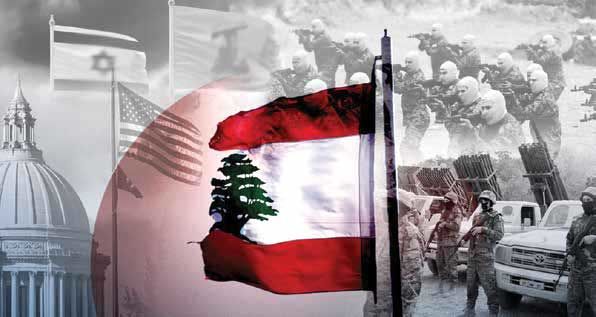
Strategic Council Online – Opinion: American-Zionist objectives in the region are not limited to weakening Hezbollah. Efforts to disarm Iraqi resistance groups such as Kata’ib Hezbollah and the Popular Mobilization Forces are also part of their subsequent plans.

Commercial Exploitation of Peace; The Gaza Committee in Confrontation with International Legitimacy

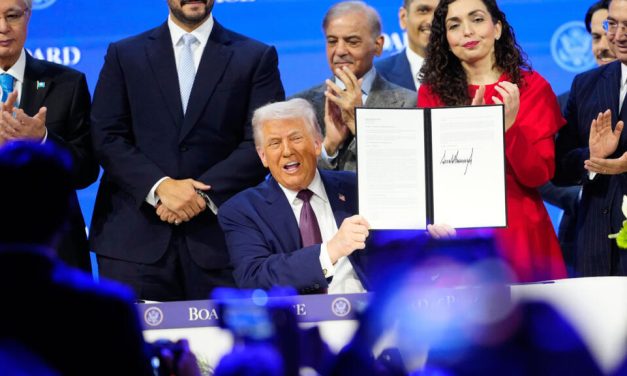
Strategic Council Online – Report: While the second phase of the implementation of the Gaza ceasefire has begun, the establishment of the “Peace Board” chaired by Donald Trump on the sidelines of the Davos meeting (22 January 2026) has become more than a technical mechanism for reconstruction and has turned into a test for the future of the international order.
Despite the signing of the charter by 22 out of 60 invited countries, the limited presence of global leaders at the Davos ceremony and the non-acceptance of this body by the European Union and key Western countries indicate a deep divide in global perceptions of the legitimacy of this mechanism.
In this report, drawing on the analysis of Hadi Borhani, a regional affairs expert, and international data, three strategic questions are addressed: Is the Peace Board an instrument for implementing UN Security Council Resolution 2803 or a substitute for the United Nations? How does the hierarchical architecture of this committee intensify executive challenges in Gaza? And finally, can this body create sustainable peace without the cooperation of Palestinians and with the concentration of power in the hands of a single individual?

America’s Zero-Sum Game in Iraq

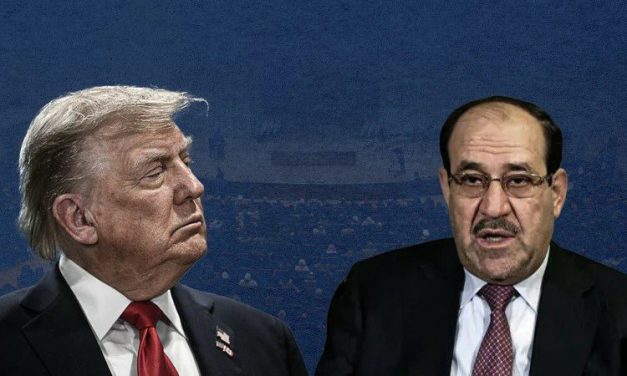
Online Strategic Council – Memoir: The swift selection of Nouri al-Maliki for the premiership constitutes a new phase in Iraq’s political sphere. Multiple factors have played a role in this process, the most important being the prevailing situation in Iraq and the region. Under such circumstances, Iraq requires a powerful and experienced prime minister who can keep the country away from the dangers of wars and crises.

America’s Strategy for Creating Tension in the Asia-Pacific

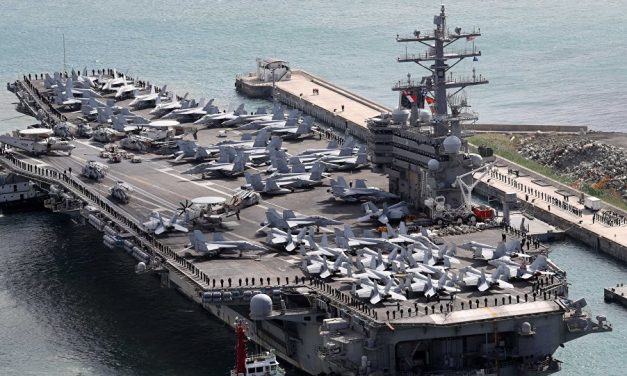
Strategic Council Online – Opinion: Relations between some countries in the Asia-Pacific region, such as China and Japan or China and Australia, which were previously relatively normal, are trending towards deterioration, and the primary reason for this is the aggressive policies of the United States of America.

Loading

Últimas publicaciones

The Security Equation of Southern Lebanon for the Zionist Regime

Strategic Council Online – Opinion: American-Zionist objectives in the region are not limited to weakening Hezbollah. Efforts to disarm Iraqi resistance groups such as Kata’ib Hezbollah and the Popular Mobilization Forces are also part of their subsequent plans.

Commercial Exploitation of Peace; The Gaza Committee in Confrontation with International Legitimacy

Strategic Council Online – Report: While the second phase of the implementation of the Gaza ceasefire has begun, the establishment of the “Peace Board” chaired by Donald Trump on the sidelines of the Davos meeting (22 January 2026) has become more than a technical mechanism for reconstruction and has turned into a test for the future of the international order.
Despite the signing of the charter by 22 out of 60 invited countries, the limited presence of global leaders at the Davos ceremony and the non-acceptance of this body by the European Union and key Western countries indicate a deep divide in global perceptions of the legitimacy of this mechanism.
In this report, drawing on the analysis of Hadi Borhani, a regional affairs expert, and international data, three strategic questions are addressed: Is the Peace Board an instrument for implementing UN Security Council Resolution 2803 or a substitute for the United Nations? How does the hierarchical architecture of this committee intensify executive challenges in Gaza? And finally, can this body create sustainable peace without the cooperation of Palestinians and with the concentration of power in the hands of a single individual?

America’s Zero-Sum Game in Iraq

Online Strategic Council – Memoir: The swift selection of Nouri al-Maliki for the premiership constitutes a new phase in Iraq’s political sphere. Multiple factors have played a role in this process, the most important being the prevailing situation in Iraq and the region. Under such circumstances, Iraq requires a powerful and experienced prime minister who can keep the country away from the dangers of wars and crises.

America’s Strategy for Creating Tension in the Asia-Pacific

Strategic Council Online – Opinion: Relations between some countries in the Asia-Pacific region, such as China and Japan or China and Australia, which were previously relatively normal, are trending towards deterioration, and the primary reason for this is the aggressive policies of the United States of America.

Loading

DERNIER CONTENU

The Security Equation of Southern Lebanon for the Zionist Regime

Strategic Council Online – Opinion: American-Zionist objectives in the region are not limited to weakening Hezbollah. Efforts to disarm Iraqi resistance groups such as Kata’ib Hezbollah and the Popular Mobilization Forces are also part of their subsequent plans.

Commercial Exploitation of Peace; The Gaza Committee in Confrontation with International Legitimacy

Strategic Council Online – Report: While the second phase of the implementation of the Gaza ceasefire has begun, the establishment of the “Peace Board” chaired by Donald Trump on the sidelines of the Davos meeting (22 January 2026) has become more than a technical mechanism for reconstruction and has turned into a test for the future of the international order.
Despite the signing of the charter by 22 out of 60 invited countries, the limited presence of global leaders at the Davos ceremony and the non-acceptance of this body by the European Union and key Western countries indicate a deep divide in global perceptions of the legitimacy of this mechanism.
In this report, drawing on the analysis of Hadi Borhani, a regional affairs expert, and international data, three strategic questions are addressed: Is the Peace Board an instrument for implementing UN Security Council Resolution 2803 or a substitute for the United Nations? How does the hierarchical architecture of this committee intensify executive challenges in Gaza? And finally, can this body create sustainable peace without the cooperation of Palestinians and with the concentration of power in the hands of a single individual?

America’s Zero-Sum Game in Iraq

Online Strategic Council – Memoir: The swift selection of Nouri al-Maliki for the premiership constitutes a new phase in Iraq’s political sphere. Multiple factors have played a role in this process, the most important being the prevailing situation in Iraq and the region. Under such circumstances, Iraq requires a powerful and experienced prime minister who can keep the country away from the dangers of wars and crises.

America’s Strategy for Creating Tension in the Asia-Pacific

Strategic Council Online – Opinion: Relations between some countries in the Asia-Pacific region, such as China and Japan or China and Australia, which were previously relatively normal, are trending towards deterioration, and the primary reason for this is the aggressive policies of the United States of America.

Loading

DERNIER CONTENU

The Security Equation of Southern Lebanon for the Zionist Regime

Strategic Council Online – Opinion: American-Zionist objectives in the region are not limited to weakening Hezbollah. Efforts to disarm Iraqi resistance groups such as Kata’ib Hezbollah and the Popular Mobilization Forces are also part of their subsequent plans.

Commercial Exploitation of Peace; The Gaza Committee in Confrontation with International Legitimacy

Strategic Council Online – Report: While the second phase of the implementation of the Gaza ceasefire has begun, the establishment of the “Peace Board” chaired by Donald Trump on the sidelines of the Davos meeting (22 January 2026) has become more than a technical mechanism for reconstruction and has turned into a test for the future of the international order.
Despite the signing of the charter by 22 out of 60 invited countries, the limited presence of global leaders at the Davos ceremony and the non-acceptance of this body by the European Union and key Western countries indicate a deep divide in global perceptions of the legitimacy of this mechanism.
In this report, drawing on the analysis of Hadi Borhani, a regional affairs expert, and international data, three strategic questions are addressed: Is the Peace Board an instrument for implementing UN Security Council Resolution 2803 or a substitute for the United Nations? How does the hierarchical architecture of this committee intensify executive challenges in Gaza? And finally, can this body create sustainable peace without the cooperation of Palestinians and with the concentration of power in the hands of a single individual?

America’s Zero-Sum Game in Iraq

Online Strategic Council – Memoir: The swift selection of Nouri al-Maliki for the premiership constitutes a new phase in Iraq’s political sphere. Multiple factors have played a role in this process, the most important being the prevailing situation in Iraq and the region. Under such circumstances, Iraq requires a powerful and experienced prime minister who can keep the country away from the dangers of wars and crises.

America’s Strategy for Creating Tension in the Asia-Pacific

Strategic Council Online – Opinion: Relations between some countries in the Asia-Pacific region, such as China and Japan or China and Australia, which were previously relatively normal, are trending towards deterioration, and the primary reason for this is the aggressive policies of the United States of America.

Loading

DERNIER CONTENU

The Security Equation of Southern Lebanon for the Zionist Regime

Strategic Council Online – Opinion: American-Zionist objectives in the region are not limited to weakening Hezbollah. Efforts to disarm Iraqi resistance groups such as Kata’ib Hezbollah and the Popular Mobilization Forces are also part of their subsequent plans.

Commercial Exploitation of Peace; The Gaza Committee in Confrontation with International Legitimacy

Strategic Council Online – Report: While the second phase of the implementation of the Gaza ceasefire has begun, the establishment of the “Peace Board” chaired by Donald Trump on the sidelines of the Davos meeting (22 January 2026) has become more than a technical mechanism for reconstruction and has turned into a test for the future of the international order.
Despite the signing of the charter by 22 out of 60 invited countries, the limited presence of global leaders at the Davos ceremony and the non-acceptance of this body by the European Union and key Western countries indicate a deep divide in global perceptions of the legitimacy of this mechanism.
In this report, drawing on the analysis of Hadi Borhani, a regional affairs expert, and international data, three strategic questions are addressed: Is the Peace Board an instrument for implementing UN Security Council Resolution 2803 or a substitute for the United Nations? How does the hierarchical architecture of this committee intensify executive challenges in Gaza? And finally, can this body create sustainable peace without the cooperation of Palestinians and with the concentration of power in the hands of a single individual?

America’s Zero-Sum Game in Iraq

Online Strategic Council – Memoir: The swift selection of Nouri al-Maliki for the premiership constitutes a new phase in Iraq’s political sphere. Multiple factors have played a role in this process, the most important being the prevailing situation in Iraq and the region. Under such circumstances, Iraq requires a powerful and experienced prime minister who can keep the country away from the dangers of wars and crises.

America’s Strategy for Creating Tension in the Asia-Pacific

Strategic Council Online – Opinion: Relations between some countries in the Asia-Pacific region, such as China and Japan or China and Australia, which were previously relatively normal, are trending towards deterioration, and the primary reason for this is the aggressive policies of the United States of America.

Loading