Revival of Saudi-Turkey Ties, Strategic Need of Bin Salman, Erdogan

2022/07/04 | Note, Politics, top news

Strategic Council Online - Opinion: Old and new alliances in the Middle East region are being revived or developed, which were unattainable until recently. Mahmoud Fazeli – Analyst of international affairs

Turkey and Saudi Arabia have been at odds with each other in the Middle East for a long time. The tension between Turkey and Saudi Arabia started during the Arab Spring in 2011. The year that the President of Egypt, Mohamed Morsi, who was supported by Erdogan, was ousted by General al-Sisi, who was supported by Riyadh.

Saudi Arabia supported Egypt’s leader al-Sisi, who was accused by Turkey of staging a coup, and stood against Turkey in Libya and even in Syria. In 2017 and the sanctions imposed by Saudi Arabia, Egypt, and the UAE against Qatar, Turkey came to Qatar’s aid. A year later, after the incident of Jamal Khashoggi, who was killed in the Saudi consulate in Istanbul, relations reached a state of complete freezing. Khashoggi’s murder was the peak of the crisis in the relations between the two sides.

Although the investigation of the case filed against Saudi Arabia for Khashoggi’s murder was stopped recently, with Turkey’s efforts bin Salman’s name was recorded in history as a murderer. But due to the fact that Turkey handed over the reasons and first-hand evidence about the crime to Saudi Arabia, there is no longer any threat left for Mohammed bin Salman.

Bin Salman’s visit to Ankara is considered part of the strategy of the economically damaged Turkey, which seeks to attract Saudi investments. Erdogan is well aware that his aggressive diplomacy will lead to a stalemate and he is trying to improve his strained relations with the UAE, Egypt, meanwhile, the Zionist regime.

For Turkey, which is struggling with serious issues such as the unprecedented drop in the value of the Turkish lira in recent months and the increase in the inflation rate, Saudi investment can have a positive impact in the short term in terms of having underground resources among the Persian Gulf countries.

It is expected that Saudi Arabia’s income this year from the sale of oil, the price of which has increased due to the war in Ukraine, will reach more than 400 billion dollars. Therefore, Saudi Arabia is looking for opportunities to increase foreign investments.

Prior to this trip, the Turkish authorities had carried out activities in order to sign contracts and agreements with Riyadh in various fields, especially trade and energy, but those activities have not been fruitful. One of the main topics of the meeting between bin Salman and Erdogan was the lifting of the Saudi embargo on Turkish exports. It is said that those sanctions will be lifted soon.

During the said trip, new agreements in the economic field were discussed and it was agreed to increase investment in Turkey. Turkey is going through a difficult time economically, so it attaches special importance to contracts and possible economic cooperation.

Riyadh is eyeing the companies that are in the Turkish financial fund and has planned for the entry of Saudi financial resources into the Turkish capital market. The currency that is likely to come with the funding could bolster Erdogan’s support ahead of crucial elections in June 2023.

Erdogan, who came to power 20 years ago in a bad economic situation in Turkey, wants to prove that he is ready to make any concessions to fill the coffers of the country. The government, which is desperately looking for foreign financial funds, has pinned its hopes on bin Salman. He has little time before the election to assure his voters that they will retain their purchasing power.

Polls show that the Justice and Development Party is in a difficult situation to regain power. The reserves of the Central Bank of Turkey are in a miserable state. Turkey is in dire need of money. Therefore, the meetings regarding the swap with Saudi Arabia will be important. The swap agreement with the Central Bank of Saudi Arabia will strengthen the reserves of the Central Bank of Turkey, reduce the risk factor to some extent and buy time for the Erdogan government.

If the swap agreement between Turkey and Saudi Arabia is signed, the Saudi bargaining will have a good result.

Also, the project of transferring natural gas extracted from the Black Sea to Europe through the island of Cyprus and the signing of the EastMed pipeline contract among Egypt, Greece, Cyprus, and the Zionist regime for the transfer of the regime’s gas is also important for Ankara.

Ankara believes that in the shadow of the existing pipelines, it can play a key role in the transfer of underground reserves of Iraq and even the Zionist regime. Riyadh can play a facilitating role in the rapprochement of Egypt with Turkey.

At a time when global energy markets are in a fragile state, the most important order of US President Joe Biden’s visit to Saudi Arabia in July will be to request an increase in energy supply from Saudi Arabia and the oil-rich countries of the Persian Gulf in order to reduce dependence on Russian energy to zero.

Riyadh wants to remind both global and regional players that it is a country that everyone should cooperate with at times of crisis. With the decrease in trust in America, Riyadh and other Persian Gulf countries are preparing for the period after the decline of the US influence. During this period, Riyadh wants to expand relations with the countries of the region. Bin Salman wants to have several achievements from the trip to Ankara. One of those is to strengthen his position against Biden. He wants to show that he can, not only prevent some events but also take new steps.

The purpose of this trip is to start the process of complete normalization. However, it seems that bin Salman’s visit to Ankara was not as fruitful as was expected. Erdogan’s opposition parties had harsh criticisms against that trip.

Erdoğan’s efforts are at a time when his policies have failed to satisfy public opinion. The results of the Metropol polling institute show that Erdoğan’s foreign policy turns have not been favorable to them. Some 60 percent voted against getting closer to Saudi Arabia, 48 percent against relations with the UAE, 67 percent against improving relations with the Zionist regime, and 56 percent against relations with Egypt.
0 Comments

Submit a Comment

Your email address will not be published. Required fields are marked *

LATEST CONTENT

Commercial Exploitation of Peace; The Gaza Committee in Confrontation with International Legitimacy

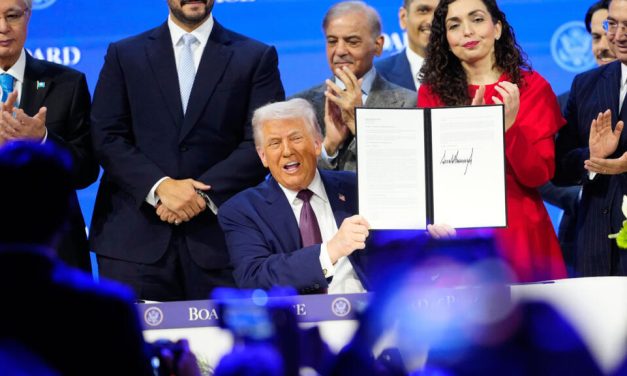
Strategic Council Online – Report: While the second phase of the implementation of the Gaza ceasefire has begun, the establishment of the “Peace Board” chaired by Donald Trump on the sidelines of the Davos meeting (22 January 2026) has become more than a technical mechanism for reconstruction and has turned into a test for the future of the international order.
Despite the signing of the charter by 22 out of 60 invited countries, the limited presence of global leaders at the Davos ceremony and the non-acceptance of this body by the European Union and key Western countries indicate a deep divide in global perceptions of the legitimacy of this mechanism.
In this report, drawing on the analysis of Hadi Borhani, a regional affairs expert, and international data, three strategic questions are addressed: Is the Peace Board an instrument for implementing UN Security Council Resolution 2803 or a substitute for the United Nations? How does the hierarchical architecture of this committee intensify executive challenges in Gaza? And finally, can this body create sustainable peace without the cooperation of Palestinians and with the concentration of power in the hands of a single individual?

America’s Zero-Sum Game in Iraq

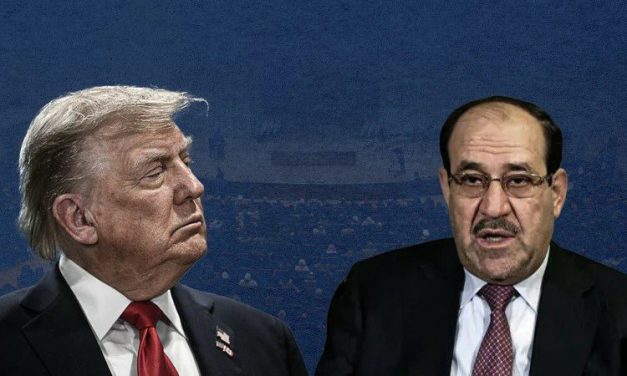
Online Strategic Council – Memoir: The swift selection of Nouri al-Maliki for the premiership constitutes a new phase in Iraq’s political sphere. Multiple factors have played a role in this process, the most important being the prevailing situation in Iraq and the region. Under such circumstances, Iraq requires a powerful and experienced prime minister who can keep the country away from the dangers of wars and crises.

America’s Strategy for Creating Tension in the Asia-Pacific

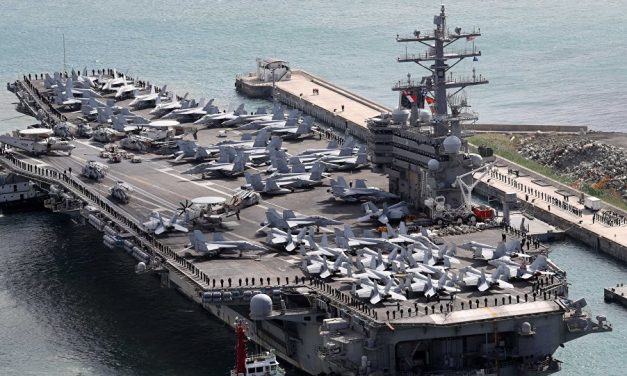
Strategic Council Online – Opinion: Relations between some countries in the Asia-Pacific region, such as China and Japan or China and Australia, which were previously relatively normal, are trending towards deterioration, and the primary reason for this is the aggressive policies of the United States of America.

The Collapse of the European Security Illusion with the Continuation of the Ukraine War?

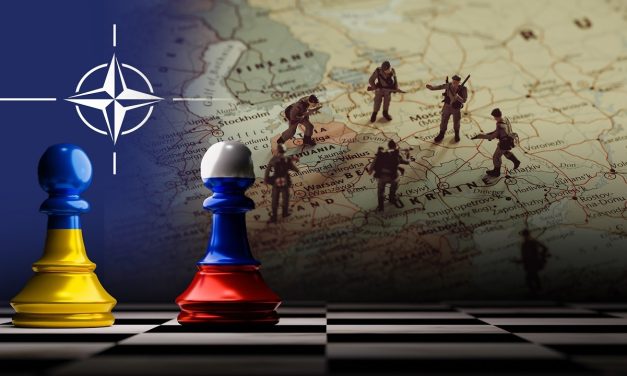
Strategic Council Online – Interview: The Ukraine war has become a new turning point in the political, security, and even commercial relations of allies on both sides of the Atlantic. While this war is nearing its fourth year, many questions still remain regarding its future and its consequences; among them, will the continuation of the Ukraine war lead to the collapse of the European security illusion?

Loading

Últimas publicaciones

Commercial Exploitation of Peace; The Gaza Committee in Confrontation with International Legitimacy

Strategic Council Online – Report: While the second phase of the implementation of the Gaza ceasefire has begun, the establishment of the “Peace Board” chaired by Donald Trump on the sidelines of the Davos meeting (22 January 2026) has become more than a technical mechanism for reconstruction and has turned into a test for the future of the international order.
Despite the signing of the charter by 22 out of 60 invited countries, the limited presence of global leaders at the Davos ceremony and the non-acceptance of this body by the European Union and key Western countries indicate a deep divide in global perceptions of the legitimacy of this mechanism.
In this report, drawing on the analysis of Hadi Borhani, a regional affairs expert, and international data, three strategic questions are addressed: Is the Peace Board an instrument for implementing UN Security Council Resolution 2803 or a substitute for the United Nations? How does the hierarchical architecture of this committee intensify executive challenges in Gaza? And finally, can this body create sustainable peace without the cooperation of Palestinians and with the concentration of power in the hands of a single individual?

America’s Zero-Sum Game in Iraq

Online Strategic Council – Memoir: The swift selection of Nouri al-Maliki for the premiership constitutes a new phase in Iraq’s political sphere. Multiple factors have played a role in this process, the most important being the prevailing situation in Iraq and the region. Under such circumstances, Iraq requires a powerful and experienced prime minister who can keep the country away from the dangers of wars and crises.

America’s Strategy for Creating Tension in the Asia-Pacific

Strategic Council Online – Opinion: Relations between some countries in the Asia-Pacific region, such as China and Japan or China and Australia, which were previously relatively normal, are trending towards deterioration, and the primary reason for this is the aggressive policies of the United States of America.

The Collapse of the European Security Illusion with the Continuation of the Ukraine War?

Strategic Council Online – Interview: The Ukraine war has become a new turning point in the political, security, and even commercial relations of allies on both sides of the Atlantic. While this war is nearing its fourth year, many questions still remain regarding its future and its consequences; among them, will the continuation of the Ukraine war lead to the collapse of the European security illusion?

Loading

DERNIER CONTENU

Commercial Exploitation of Peace; The Gaza Committee in Confrontation with International Legitimacy

Strategic Council Online – Report: While the second phase of the implementation of the Gaza ceasefire has begun, the establishment of the “Peace Board” chaired by Donald Trump on the sidelines of the Davos meeting (22 January 2026) has become more than a technical mechanism for reconstruction and has turned into a test for the future of the international order.
Despite the signing of the charter by 22 out of 60 invited countries, the limited presence of global leaders at the Davos ceremony and the non-acceptance of this body by the European Union and key Western countries indicate a deep divide in global perceptions of the legitimacy of this mechanism.
In this report, drawing on the analysis of Hadi Borhani, a regional affairs expert, and international data, three strategic questions are addressed: Is the Peace Board an instrument for implementing UN Security Council Resolution 2803 or a substitute for the United Nations? How does the hierarchical architecture of this committee intensify executive challenges in Gaza? And finally, can this body create sustainable peace without the cooperation of Palestinians and with the concentration of power in the hands of a single individual?

America’s Zero-Sum Game in Iraq

Online Strategic Council – Memoir: The swift selection of Nouri al-Maliki for the premiership constitutes a new phase in Iraq’s political sphere. Multiple factors have played a role in this process, the most important being the prevailing situation in Iraq and the region. Under such circumstances, Iraq requires a powerful and experienced prime minister who can keep the country away from the dangers of wars and crises.

America’s Strategy for Creating Tension in the Asia-Pacific

Strategic Council Online – Opinion: Relations between some countries in the Asia-Pacific region, such as China and Japan or China and Australia, which were previously relatively normal, are trending towards deterioration, and the primary reason for this is the aggressive policies of the United States of America.

The Collapse of the European Security Illusion with the Continuation of the Ukraine War?

Strategic Council Online – Interview: The Ukraine war has become a new turning point in the political, security, and even commercial relations of allies on both sides of the Atlantic. While this war is nearing its fourth year, many questions still remain regarding its future and its consequences; among them, will the continuation of the Ukraine war lead to the collapse of the European security illusion?

Loading

DERNIER CONTENU

Commercial Exploitation of Peace; The Gaza Committee in Confrontation with International Legitimacy

Strategic Council Online – Report: While the second phase of the implementation of the Gaza ceasefire has begun, the establishment of the “Peace Board” chaired by Donald Trump on the sidelines of the Davos meeting (22 January 2026) has become more than a technical mechanism for reconstruction and has turned into a test for the future of the international order.
Despite the signing of the charter by 22 out of 60 invited countries, the limited presence of global leaders at the Davos ceremony and the non-acceptance of this body by the European Union and key Western countries indicate a deep divide in global perceptions of the legitimacy of this mechanism.
In this report, drawing on the analysis of Hadi Borhani, a regional affairs expert, and international data, three strategic questions are addressed: Is the Peace Board an instrument for implementing UN Security Council Resolution 2803 or a substitute for the United Nations? How does the hierarchical architecture of this committee intensify executive challenges in Gaza? And finally, can this body create sustainable peace without the cooperation of Palestinians and with the concentration of power in the hands of a single individual?

America’s Zero-Sum Game in Iraq

Online Strategic Council – Memoir: The swift selection of Nouri al-Maliki for the premiership constitutes a new phase in Iraq’s political sphere. Multiple factors have played a role in this process, the most important being the prevailing situation in Iraq and the region. Under such circumstances, Iraq requires a powerful and experienced prime minister who can keep the country away from the dangers of wars and crises.

America’s Strategy for Creating Tension in the Asia-Pacific

Strategic Council Online – Opinion: Relations between some countries in the Asia-Pacific region, such as China and Japan or China and Australia, which were previously relatively normal, are trending towards deterioration, and the primary reason for this is the aggressive policies of the United States of America.

The Collapse of the European Security Illusion with the Continuation of the Ukraine War?

Strategic Council Online – Interview: The Ukraine war has become a new turning point in the political, security, and even commercial relations of allies on both sides of the Atlantic. While this war is nearing its fourth year, many questions still remain regarding its future and its consequences; among them, will the continuation of the Ukraine war lead to the collapse of the European security illusion?

Loading

DERNIER CONTENU

Commercial Exploitation of Peace; The Gaza Committee in Confrontation with International Legitimacy

Strategic Council Online – Report: While the second phase of the implementation of the Gaza ceasefire has begun, the establishment of the “Peace Board” chaired by Donald Trump on the sidelines of the Davos meeting (22 January 2026) has become more than a technical mechanism for reconstruction and has turned into a test for the future of the international order.
Despite the signing of the charter by 22 out of 60 invited countries, the limited presence of global leaders at the Davos ceremony and the non-acceptance of this body by the European Union and key Western countries indicate a deep divide in global perceptions of the legitimacy of this mechanism.
In this report, drawing on the analysis of Hadi Borhani, a regional affairs expert, and international data, three strategic questions are addressed: Is the Peace Board an instrument for implementing UN Security Council Resolution 2803 or a substitute for the United Nations? How does the hierarchical architecture of this committee intensify executive challenges in Gaza? And finally, can this body create sustainable peace without the cooperation of Palestinians and with the concentration of power in the hands of a single individual?

America’s Zero-Sum Game in Iraq

Online Strategic Council – Memoir: The swift selection of Nouri al-Maliki for the premiership constitutes a new phase in Iraq’s political sphere. Multiple factors have played a role in this process, the most important being the prevailing situation in Iraq and the region. Under such circumstances, Iraq requires a powerful and experienced prime minister who can keep the country away from the dangers of wars and crises.

America’s Strategy for Creating Tension in the Asia-Pacific

Strategic Council Online – Opinion: Relations between some countries in the Asia-Pacific region, such as China and Japan or China and Australia, which were previously relatively normal, are trending towards deterioration, and the primary reason for this is the aggressive policies of the United States of America.

The Collapse of the European Security Illusion with the Continuation of the Ukraine War?

Strategic Council Online – Interview: The Ukraine war has become a new turning point in the political, security, and even commercial relations of allies on both sides of the Atlantic. While this war is nearing its fourth year, many questions still remain regarding its future and its consequences; among them, will the continuation of the Ukraine war lead to the collapse of the European security illusion?

Loading