Lebanese Parliamentary Election & Political Perspective Ahead

2022/06/16 | interview, Politics, top news

Strategic Council Online – Interview: The expert of West Asia affairs commented about the recent parliamentary election of Lebanon and its results:” the results obtained was in a way that no party managed to win the majority of the parliament. It means the lists of Resistance Coalition groups gained about 58 to 59 seats and the other party that is in line with the West – Arab axis gained nearly 41 to 45 seats. Amid this, independent groups and individuals also won 128 seats”.

Hossein Ajorloo in an interview with the site of Strategic Council on Foreign Relations stated:” in view of no party managed to gain the majority in the election, and concerning the political system of Lebanon in which governments are formed through political agreements among groups, it can be said even if one party wins the majority, there still exist political challenges”.

He continued:” in the last election, although Hezbollah won 71 seats, yet it faced challenges to form government. In the other word, no group or tribe can not be ignored. Therefore, no section of a political fraction can form a cabinet without the accompaniment of the opposite political fraction”.

Ajorloo emphasized that governments, in principle, are formed through coalition in Lebanon and almost all groups are present in a government.

According to the expert, the same rule applies in the recent election of Lebanon. Even if Hezbollah could win the majority (although Resistance groups continue to be the largest fraction), it should have formed the government, ultimately, with the accompaniment and agreement of other fractions.

Having stated that it seems the situation continues to be there for the time being, he added:” to settle the issue, all groups should stand by together, come to an agreement among themselves and form a government”.

The expert of the West Asia issues explained unlike many other countries, in Lebanon political decisions are characterized with a certain volatility; it means, even serious contenders, i.e. Hezbollah and Lebanese Ghovaat (military forces), may think similarly in an issue and vote for it. For example, concerning the election of President Michel Auon, all sides including Hezbollah, Sa’ad Hariri and Samir Geagea voted for him”.

He added:” in the meantime, on some issues within the same coalition, there may be allies who have different ideas and votes on an issue”.

Ajorloo stressed that in view of the volatility of votes in Lebanon, we should now adopt a wait and see policy how the situation will go on under different conditions, and how the agreements will be directed?”.

According to the expert, another issue that drew the attention in the last election was the arrival of a new fraction called Independents & Civil Groups with no political background. Therefore, one of the important issues to be dealt with is to see which party they will incline to and vote for?

Ajorloo continued:” the inclination of the new and independent players containing 27 persons will be decisive and can form a part of future decisions”.

The expert of the West Asia affairs commented about the political arena of Lebanon as:” political agreements in Lebanon come to fruition after internal dialogues as well as regional and international agreements”. Having referred that there are parties in Lebanon (with Western inclination) who were trying to win the majority, he said:” they intended to proceed with some essential decisions like disarming Hezbollah and Lebanon’s strategic system, but they failed to succeed in this field”.

Having emphasized that this inclination will not be successful in disarming Hezbollah, he explained:” as it faces serious obstacles, even a large number of independents and a part of civil society oppose disarming and deletion issue of Hezbollah as a national inclination”.

On the possibility of rising external interventions in Lebanon, specially, after holding the election, the expert said:” Lebanon has always been and continues to be the focal point of external interventions; the Islamic Republic of Iran is the only player whose influence in Lebanon is not considered as an intervention”.

He added:” the Islamic Republic of Iran has an ally in Lebanon who acts on the basis of sagacity and indigenous rules of game”.

Having underscored that other players like the embassy of Saudi Arabia or the U.S. embassy are strongly active in the internal affairs of Lebanon, he said:” now, after the election, these players will continue and even increase their interventions; but the political arena of Lebanon will only be directed towards disagreement and deadlock more the ever”.
0 Comments

Submit a Comment

Your email address will not be published. Required fields are marked *

LATEST CONTENT

Examining Political Developments Related to the Ukraine War

Strategic Council Online – Interview: An international affairs analyst stated: Today, Ukraine is facing a set of structural corruption, intra-European divisions, a shift in America’s approach, and a legitimacy crisis for Zelenskyy, which has propelled the course of the war and the future of the European Union and NATO into an entirely new phase.

Dr. Kharrazi Meets Delegation from Chinese Think Tanks: Emphasizes the Need for an Action Plan to Implement the Comprehensive Iran–China Cooperation Document

Strategic Council Online: The President of the Strategic Council on Foreign Relations stated, “Despite the signing of the 25-year Comprehensive Cooperation Agreement between Iran and China, a long path remains toward its full implementation. One key point both countries must observe is to move away from a project-based approach and instead adopt a program-oriented relationship by formulating a concrete action plan. This plan should be grounded in Iran’s national spatial planning framework and aligned with the mutual priorities of both nations as outlined in the 25-year Comprehensive Cooperation Document.”

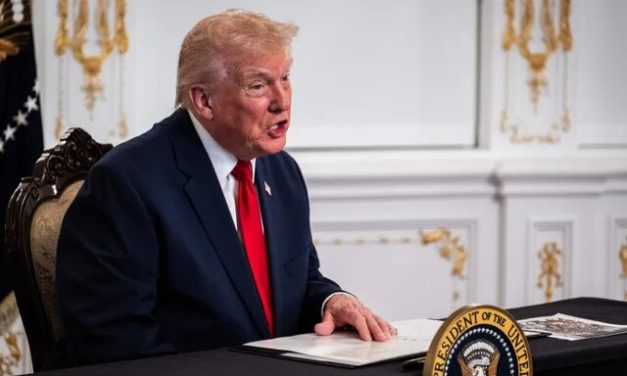
An Analysis of the New U.S. National Security Strategy Document

Strategic Council Online – Opinion: The new U.S. National Security Strategy document, which emphasizes the slogan “America First,” indicates that Washington has moved away from many previous patterns and shifted its focus from external interventions to the preservation of domestic security and the preservation of the Western Hemisphere. This document redefines threats, priorities, and America’s global role.

Artificial Intelligence and the Intensification of Global Inequality

Strategic Council Online – Opinion: Although other revolutions have occurred between the Industrial Revolution and the artificial intelligence revolution, especially the ICT (Information and Communications Technology) revolution, and humanity has made remarkable progress along this path, in terms of fundamental transformations in the mode of production and social relations, it can be said that the transformations of artificial intelligence and the scope of its effects are perhaps similar to the Industrial Revolution but on a much larger scale. It is, in fact, a new revolution, much more profound and complex than the Industrial Revolution.

Reasons for Trump’s Attempt to Remove South Africa from the Upcoming G20 Summit

Strategic Council Online – Interview: Iran’s former ambassador to South Africa stated: “Trump’s decision to remove South Africa from the upcoming G20 summit is an irrational, reactionary decision lacking a legal basis. On one hand, it stems from Trump’s contemptuous and narcissistic outlook. On the other hand, it is a response to Pretoria’s prominent role in pursuing the legal case against the Israeli regime at the International Court of Justice.”

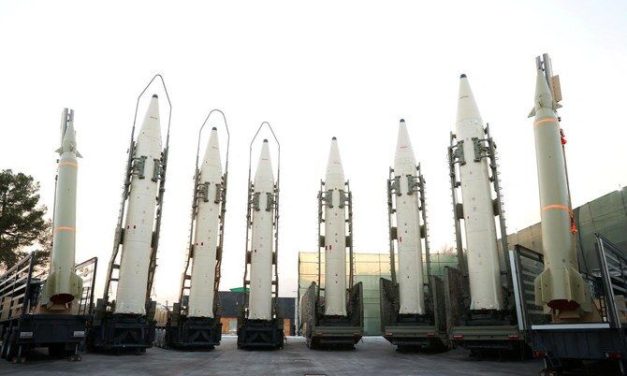
An Analysis of Iran’s Missile Capability

Strategic Council Online – Interview: A strategic affairs analyst said: Iran’s missile doctrine is not only part of its deterrent capability but also part of the security identity of the Islamic Republic of Iran and should not be weakened.

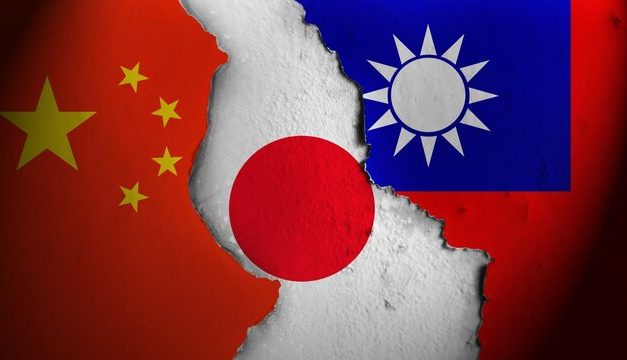
Japan-China Tensions Over Taiwan

Strategic Council Online – Interview: An international affairs expert said that U.S. President Donald Trump, in a phone call this week with Sanae Takaichi, asked her not to further escalate disputes with China. Earlier this month, Takaichi created a rare tension with Beijing by stating that “a potential Chinese attack on Taiwan could lead to military action by Japan,” remarks that drew a sharp reaction from China. Beijing demanded that she retract these statements, but the Japanese Prime Minister has not done so thus far, and Tokyo has only emphasized that its policy regarding Taiwan has not changed.

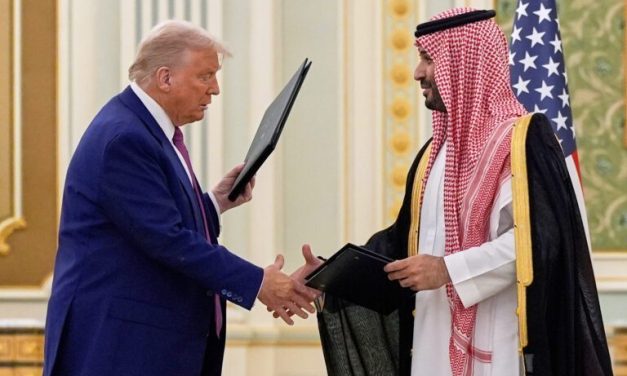
A Look at bin Salman’s Recent Trip to America

Strategic Council Online – Opinion: The recent trip of the Saudi Crown Prince to America was a targeted effort to solidify the strategic partnership with Washington, reduce political uncertainties, and strengthen Riyadh’s political role-playing.

Loading

Últimas publicaciones

Examining Political Developments Related to the Ukraine War

Strategic Council Online – Interview: An international affairs analyst stated: Today, Ukraine is facing a set of structural corruption, intra-European divisions, a shift in America’s approach, and a legitimacy crisis for Zelenskyy, which has propelled the course of the war and the future of the European Union and NATO into an entirely new phase.

Dr. Kharrazi Meets Delegation from Chinese Think Tanks: Emphasizes the Need for an Action Plan to Implement the Comprehensive Iran–China Cooperation Document

Strategic Council Online: The President of the Strategic Council on Foreign Relations stated, “Despite the signing of the 25-year Comprehensive Cooperation Agreement between Iran and China, a long path remains toward its full implementation. One key point both countries must observe is to move away from a project-based approach and instead adopt a program-oriented relationship by formulating a concrete action plan. This plan should be grounded in Iran’s national spatial planning framework and aligned with the mutual priorities of both nations as outlined in the 25-year Comprehensive Cooperation Document.”

An Analysis of the New U.S. National Security Strategy Document

Strategic Council Online – Opinion: The new U.S. National Security Strategy document, which emphasizes the slogan “America First,” indicates that Washington has moved away from many previous patterns and shifted its focus from external interventions to the preservation of domestic security and the preservation of the Western Hemisphere. This document redefines threats, priorities, and America’s global role.

Artificial Intelligence and the Intensification of Global Inequality

Strategic Council Online – Opinion: Although other revolutions have occurred between the Industrial Revolution and the artificial intelligence revolution, especially the ICT (Information and Communications Technology) revolution, and humanity has made remarkable progress along this path, in terms of fundamental transformations in the mode of production and social relations, it can be said that the transformations of artificial intelligence and the scope of its effects are perhaps similar to the Industrial Revolution but on a much larger scale. It is, in fact, a new revolution, much more profound and complex than the Industrial Revolution.

Reasons for Trump’s Attempt to Remove South Africa from the Upcoming G20 Summit

Strategic Council Online – Interview: Iran’s former ambassador to South Africa stated: “Trump’s decision to remove South Africa from the upcoming G20 summit is an irrational, reactionary decision lacking a legal basis. On one hand, it stems from Trump’s contemptuous and narcissistic outlook. On the other hand, it is a response to Pretoria’s prominent role in pursuing the legal case against the Israeli regime at the International Court of Justice.”

An Analysis of Iran’s Missile Capability

Strategic Council Online – Interview: A strategic affairs analyst said: Iran’s missile doctrine is not only part of its deterrent capability but also part of the security identity of the Islamic Republic of Iran and should not be weakened.

Japan-China Tensions Over Taiwan

Strategic Council Online – Interview: An international affairs expert said that U.S. President Donald Trump, in a phone call this week with Sanae Takaichi, asked her not to further escalate disputes with China. Earlier this month, Takaichi created a rare tension with Beijing by stating that “a potential Chinese attack on Taiwan could lead to military action by Japan,” remarks that drew a sharp reaction from China. Beijing demanded that she retract these statements, but the Japanese Prime Minister has not done so thus far, and Tokyo has only emphasized that its policy regarding Taiwan has not changed.

A Look at bin Salman’s Recent Trip to America

Strategic Council Online – Opinion: The recent trip of the Saudi Crown Prince to America was a targeted effort to solidify the strategic partnership with Washington, reduce political uncertainties, and strengthen Riyadh’s political role-playing.

Loading

DERNIER CONTENU

Examining Political Developments Related to the Ukraine War

Strategic Council Online – Interview: An international affairs analyst stated: Today, Ukraine is facing a set of structural corruption, intra-European divisions, a shift in America’s approach, and a legitimacy crisis for Zelenskyy, which has propelled the course of the war and the future of the European Union and NATO into an entirely new phase.

Dr. Kharrazi Meets Delegation from Chinese Think Tanks: Emphasizes the Need for an Action Plan to Implement the Comprehensive Iran–China Cooperation Document

Strategic Council Online: The President of the Strategic Council on Foreign Relations stated, “Despite the signing of the 25-year Comprehensive Cooperation Agreement between Iran and China, a long path remains toward its full implementation. One key point both countries must observe is to move away from a project-based approach and instead adopt a program-oriented relationship by formulating a concrete action plan. This plan should be grounded in Iran’s national spatial planning framework and aligned with the mutual priorities of both nations as outlined in the 25-year Comprehensive Cooperation Document.”

An Analysis of the New U.S. National Security Strategy Document

Strategic Council Online – Opinion: The new U.S. National Security Strategy document, which emphasizes the slogan “America First,” indicates that Washington has moved away from many previous patterns and shifted its focus from external interventions to the preservation of domestic security and the preservation of the Western Hemisphere. This document redefines threats, priorities, and America’s global role.

Artificial Intelligence and the Intensification of Global Inequality

Strategic Council Online – Opinion: Although other revolutions have occurred between the Industrial Revolution and the artificial intelligence revolution, especially the ICT (Information and Communications Technology) revolution, and humanity has made remarkable progress along this path, in terms of fundamental transformations in the mode of production and social relations, it can be said that the transformations of artificial intelligence and the scope of its effects are perhaps similar to the Industrial Revolution but on a much larger scale. It is, in fact, a new revolution, much more profound and complex than the Industrial Revolution.

Reasons for Trump’s Attempt to Remove South Africa from the Upcoming G20 Summit

Strategic Council Online – Interview: Iran’s former ambassador to South Africa stated: “Trump’s decision to remove South Africa from the upcoming G20 summit is an irrational, reactionary decision lacking a legal basis. On one hand, it stems from Trump’s contemptuous and narcissistic outlook. On the other hand, it is a response to Pretoria’s prominent role in pursuing the legal case against the Israeli regime at the International Court of Justice.”

An Analysis of Iran’s Missile Capability

Strategic Council Online – Interview: A strategic affairs analyst said: Iran’s missile doctrine is not only part of its deterrent capability but also part of the security identity of the Islamic Republic of Iran and should not be weakened.

Japan-China Tensions Over Taiwan

Strategic Council Online – Interview: An international affairs expert said that U.S. President Donald Trump, in a phone call this week with Sanae Takaichi, asked her not to further escalate disputes with China. Earlier this month, Takaichi created a rare tension with Beijing by stating that “a potential Chinese attack on Taiwan could lead to military action by Japan,” remarks that drew a sharp reaction from China. Beijing demanded that she retract these statements, but the Japanese Prime Minister has not done so thus far, and Tokyo has only emphasized that its policy regarding Taiwan has not changed.

A Look at bin Salman’s Recent Trip to America

Strategic Council Online – Opinion: The recent trip of the Saudi Crown Prince to America was a targeted effort to solidify the strategic partnership with Washington, reduce political uncertainties, and strengthen Riyadh’s political role-playing.

Loading