French Middle East Policy & Its Utilitarian Role in Nuclear Talks

2022/01/12 | Note, Politics, top news

Strategic Council Online – Opinion: After the conclusion of French weapons deal with the UAE, we witnessed a wave of internal and external critiques which assessed the French military attitude contrary to human rights attitude of the European Union, but due to some reservations, the European Union affiliated institutions remained tight-lipped in this respect. Dr. Abbass Sarvestani, Graduated in European Studies, Tehran University

The understanding of the French tough positions in JCPOA is impossible without the understanding of the origins of its Middle East policies or more precise to say, without the studying Macron doctrine in the Middle East region. After the U.S. withdrawal from the Persian Gulf and the presence of countries like China and Russia to fill its vacuum, French government has also started movements to become, at least, part of the power equation.

Macron visits to Lebanon and his presence in Baghdad and his meeting with Barham Saleh Iraqi President, Mustafa Al-Kazimi Prime Minister and Nechirvan Barzani President of the Kurdistan region, his visits of November 2021 to Qatar, Saudi Arabia, UAE and conclusion of Rafael Weapons deal, of which some analysts consider it as appeasement of the U.S. Administration to France to compensate AUKUS agreement must be analyzed in line with this.

France Effort to Play an Effective Role in the Middle East

Although Middle East visits and boosting the French military presence in East Mediterranean have short term economic and presidential campaign objectives, but at macro level analysis indicate that France has cast its eyes to post-American Middle East and in an unilateralism ear of the U.S. that started during Trump, and distrust to post – Brexit Britain, and the development in post – Merkel German foreign policy, and thus makes effort to revive the Gaullistic tradition in French foreign policy and to become one of the effective players of Middle East region.

Middle East region has always had special importance not only in French foreign policy but also in its society, politics, history and culture, and has been an arena for its international ambition for over 200 years. After the World War II and weakening of position of European countries at international scene, cross- border ambitions of France in this region went into decline. But at the present situation that seems Joe Biden is determined to reduce of the U.S. presence in the Middle East, Emanuel Macron, French President is heading to the opposition direction.

Although France took a relative realistic approach against the Middle East after the Arab Spring took place, and because of its concern about the extension of instability of the region to Europe and an increase in terrorist attacks, it was after the stability of the region and giving assurance and boosting security cooperation with its regional partners to preserve the balance in regional power, but during the present era, the Americans reluctance to remain present in the region and the return of Russia to the policy of major powers in the region have challenged the French interests more than ever in the past.

Therefore, France makes effort to have a role in the equations of power of this region. Tough positions of the country on the missile program of Iran as well as concluding arms deal along with distancing from traditional human rights policies and supporting some Arab authoritarian and rich leaders can be analyzed in line with the policy of the great power game, the policy of balanced power which we witnessed once again during the imposed war and the supports of French government to the Iraqi dictator.

It seems that in a situation that the Hebrew-Arab axis is concerned about Iran nuclear deal and the U.S. return to JCPOA, French government is representing, behind the scene, the interests of Arab countries and also the Zionist regime in JCPOA talks which will be win-win for French government. In case an agreement is reached French companies will be the first ones to try their best to take the benefits of Iranian market and in case of non-reaching an agreement, in the absence of the U.S., the French government will be benefitted from Iran phobia and selling its weapons to Arab countries.

Critiques of French NGOs on Arms Sale to the UAE

Following the conclusion of French arms deal with UAE, we witness a wave of internal and external critiques including 5 French NGOs which assessed the French military attitude in contradiction with human rights attitude of the European Union, but since the recent French measures in the Middle East can be considered as to remove the long term concerns of the European Union, we witness that the European Union affiliated foundations remained tight-lipped in this respect.

It is long since the littoral countries of the Persian Gulf due to the inherent insecurity feeling of their undemocratic governments and using sophisticated arms as a means to preserve their identity and national pride, and having relied on petro-dollars, they are considered as to be the main impetus of the global weapons business. Great powers have always taken benefits from the leverage of arms sale to influence and to increase their political weight in the region. France is not an exception to this rule.

It is obvious that due to its strategy and global position as well as technological excellence of the U.S. made arms, the country was the major arms supplier of the region for years. But now because of the U.S. reluctance to sell its F-35 fighter jets to the UAE, and restrictions of arms sale to Saudi Arabia, particularly after the butchering of Jamal Khashoggi and the war crimes of the country, as well as the crimes committed by Arab Coalition in attacking Yemen, it seems that these countries are attempting to diversify the suppliers of their arms imports and creating the capacity to manufacture internally and thus to respond to their security concerns. The inclinations of these countries towards Russia and France could be analyzed in line with this.

The French policy on arms sales is the very same old policy of the UK and the U.S. colonialist powers. They try to propagate Iran phobia in the region and to show the peaceful nuclear activities of the Islamic Republic of Iran as perilous and thus to provide financial benefits to their arms corporations.

However, French authorities have always admitted that their arms are not used for offensive purposes, instead, their attitude is the sale of defensive arms. But according to French Military Intelligence Agency, as the third arms exporting country to the Persian Gulf, France has a major share in the war crimes of Arab Coalition led by Saudi Arabia in Yemen that has destroyed the economy of that country and has created the worst human crisis in the world, in which more than 10000 civilians lost their lives and has brought nearly 10 million to suffer from famine.
0 Comments

Submit a Comment

Your email address will not be published. Required fields are marked *

LATEST CONTENT

The Security Equation of Southern Lebanon for the Zionist Regime

Strategic Council Online – Opinion: American-Zionist objectives in the region are not limited to weakening Hezbollah. Efforts to disarm Iraqi resistance groups such as Kata’ib Hezbollah and the Popular Mobilization Forces are also part of their subsequent plans.

Commercial Exploitation of Peace; The Gaza Committee in Confrontation with International Legitimacy

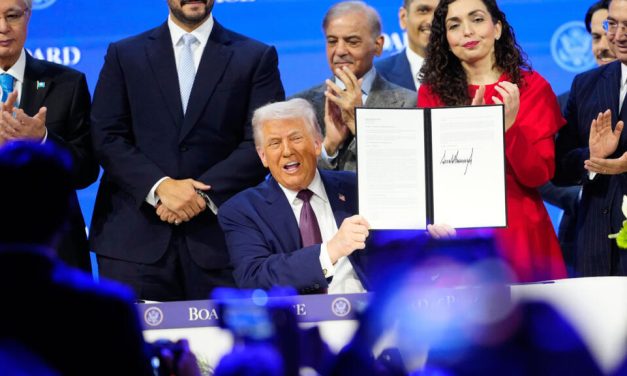
Strategic Council Online – Report: While the second phase of the implementation of the Gaza ceasefire has begun, the establishment of the “Peace Board” chaired by Donald Trump on the sidelines of the Davos meeting (22 January 2026) has become more than a technical mechanism for reconstruction and has turned into a test for the future of the international order.
Despite the signing of the charter by 22 out of 60 invited countries, the limited presence of global leaders at the Davos ceremony and the non-acceptance of this body by the European Union and key Western countries indicate a deep divide in global perceptions of the legitimacy of this mechanism.
In this report, drawing on the analysis of Hadi Borhani, a regional affairs expert, and international data, three strategic questions are addressed: Is the Peace Board an instrument for implementing UN Security Council Resolution 2803 or a substitute for the United Nations? How does the hierarchical architecture of this committee intensify executive challenges in Gaza? And finally, can this body create sustainable peace without the cooperation of Palestinians and with the concentration of power in the hands of a single individual?

America’s Zero-Sum Game in Iraq

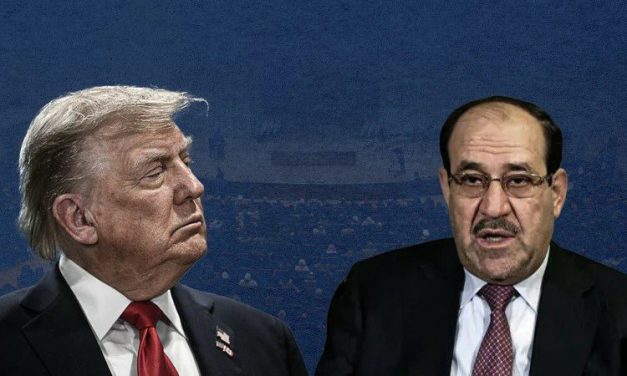
Online Strategic Council – Memoir: The swift selection of Nouri al-Maliki for the premiership constitutes a new phase in Iraq’s political sphere. Multiple factors have played a role in this process, the most important being the prevailing situation in Iraq and the region. Under such circumstances, Iraq requires a powerful and experienced prime minister who can keep the country away from the dangers of wars and crises.

America’s Strategy for Creating Tension in the Asia-Pacific

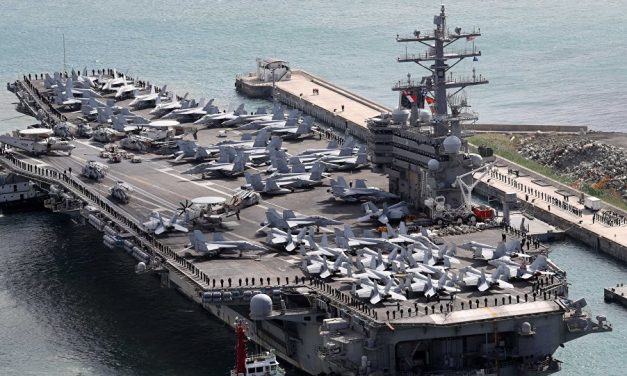
Strategic Council Online – Opinion: Relations between some countries in the Asia-Pacific region, such as China and Japan or China and Australia, which were previously relatively normal, are trending towards deterioration, and the primary reason for this is the aggressive policies of the United States of America.

Loading

Últimas publicaciones

The Security Equation of Southern Lebanon for the Zionist Regime

Strategic Council Online – Opinion: American-Zionist objectives in the region are not limited to weakening Hezbollah. Efforts to disarm Iraqi resistance groups such as Kata’ib Hezbollah and the Popular Mobilization Forces are also part of their subsequent plans.

Commercial Exploitation of Peace; The Gaza Committee in Confrontation with International Legitimacy

Strategic Council Online – Report: While the second phase of the implementation of the Gaza ceasefire has begun, the establishment of the “Peace Board” chaired by Donald Trump on the sidelines of the Davos meeting (22 January 2026) has become more than a technical mechanism for reconstruction and has turned into a test for the future of the international order.
Despite the signing of the charter by 22 out of 60 invited countries, the limited presence of global leaders at the Davos ceremony and the non-acceptance of this body by the European Union and key Western countries indicate a deep divide in global perceptions of the legitimacy of this mechanism.
In this report, drawing on the analysis of Hadi Borhani, a regional affairs expert, and international data, three strategic questions are addressed: Is the Peace Board an instrument for implementing UN Security Council Resolution 2803 or a substitute for the United Nations? How does the hierarchical architecture of this committee intensify executive challenges in Gaza? And finally, can this body create sustainable peace without the cooperation of Palestinians and with the concentration of power in the hands of a single individual?

America’s Zero-Sum Game in Iraq

Online Strategic Council – Memoir: The swift selection of Nouri al-Maliki for the premiership constitutes a new phase in Iraq’s political sphere. Multiple factors have played a role in this process, the most important being the prevailing situation in Iraq and the region. Under such circumstances, Iraq requires a powerful and experienced prime minister who can keep the country away from the dangers of wars and crises.

America’s Strategy for Creating Tension in the Asia-Pacific

Strategic Council Online – Opinion: Relations between some countries in the Asia-Pacific region, such as China and Japan or China and Australia, which were previously relatively normal, are trending towards deterioration, and the primary reason for this is the aggressive policies of the United States of America.

Loading

DERNIER CONTENU

The Security Equation of Southern Lebanon for the Zionist Regime

Strategic Council Online – Opinion: American-Zionist objectives in the region are not limited to weakening Hezbollah. Efforts to disarm Iraqi resistance groups such as Kata’ib Hezbollah and the Popular Mobilization Forces are also part of their subsequent plans.

Commercial Exploitation of Peace; The Gaza Committee in Confrontation with International Legitimacy

Strategic Council Online – Report: While the second phase of the implementation of the Gaza ceasefire has begun, the establishment of the “Peace Board” chaired by Donald Trump on the sidelines of the Davos meeting (22 January 2026) has become more than a technical mechanism for reconstruction and has turned into a test for the future of the international order.
Despite the signing of the charter by 22 out of 60 invited countries, the limited presence of global leaders at the Davos ceremony and the non-acceptance of this body by the European Union and key Western countries indicate a deep divide in global perceptions of the legitimacy of this mechanism.
In this report, drawing on the analysis of Hadi Borhani, a regional affairs expert, and international data, three strategic questions are addressed: Is the Peace Board an instrument for implementing UN Security Council Resolution 2803 or a substitute for the United Nations? How does the hierarchical architecture of this committee intensify executive challenges in Gaza? And finally, can this body create sustainable peace without the cooperation of Palestinians and with the concentration of power in the hands of a single individual?

America’s Zero-Sum Game in Iraq

Online Strategic Council – Memoir: The swift selection of Nouri al-Maliki for the premiership constitutes a new phase in Iraq’s political sphere. Multiple factors have played a role in this process, the most important being the prevailing situation in Iraq and the region. Under such circumstances, Iraq requires a powerful and experienced prime minister who can keep the country away from the dangers of wars and crises.

America’s Strategy for Creating Tension in the Asia-Pacific

Strategic Council Online – Opinion: Relations between some countries in the Asia-Pacific region, such as China and Japan or China and Australia, which were previously relatively normal, are trending towards deterioration, and the primary reason for this is the aggressive policies of the United States of America.

Loading

DERNIER CONTENU

The Security Equation of Southern Lebanon for the Zionist Regime

Strategic Council Online – Opinion: American-Zionist objectives in the region are not limited to weakening Hezbollah. Efforts to disarm Iraqi resistance groups such as Kata’ib Hezbollah and the Popular Mobilization Forces are also part of their subsequent plans.

Commercial Exploitation of Peace; The Gaza Committee in Confrontation with International Legitimacy

Strategic Council Online – Report: While the second phase of the implementation of the Gaza ceasefire has begun, the establishment of the “Peace Board” chaired by Donald Trump on the sidelines of the Davos meeting (22 January 2026) has become more than a technical mechanism for reconstruction and has turned into a test for the future of the international order.
Despite the signing of the charter by 22 out of 60 invited countries, the limited presence of global leaders at the Davos ceremony and the non-acceptance of this body by the European Union and key Western countries indicate a deep divide in global perceptions of the legitimacy of this mechanism.
In this report, drawing on the analysis of Hadi Borhani, a regional affairs expert, and international data, three strategic questions are addressed: Is the Peace Board an instrument for implementing UN Security Council Resolution 2803 or a substitute for the United Nations? How does the hierarchical architecture of this committee intensify executive challenges in Gaza? And finally, can this body create sustainable peace without the cooperation of Palestinians and with the concentration of power in the hands of a single individual?

America’s Zero-Sum Game in Iraq

Online Strategic Council – Memoir: The swift selection of Nouri al-Maliki for the premiership constitutes a new phase in Iraq’s political sphere. Multiple factors have played a role in this process, the most important being the prevailing situation in Iraq and the region. Under such circumstances, Iraq requires a powerful and experienced prime minister who can keep the country away from the dangers of wars and crises.

America’s Strategy for Creating Tension in the Asia-Pacific

Strategic Council Online – Opinion: Relations between some countries in the Asia-Pacific region, such as China and Japan or China and Australia, which were previously relatively normal, are trending towards deterioration, and the primary reason for this is the aggressive policies of the United States of America.

Loading

DERNIER CONTENU

The Security Equation of Southern Lebanon for the Zionist Regime

Strategic Council Online – Opinion: American-Zionist objectives in the region are not limited to weakening Hezbollah. Efforts to disarm Iraqi resistance groups such as Kata’ib Hezbollah and the Popular Mobilization Forces are also part of their subsequent plans.

Commercial Exploitation of Peace; The Gaza Committee in Confrontation with International Legitimacy

Strategic Council Online – Report: While the second phase of the implementation of the Gaza ceasefire has begun, the establishment of the “Peace Board” chaired by Donald Trump on the sidelines of the Davos meeting (22 January 2026) has become more than a technical mechanism for reconstruction and has turned into a test for the future of the international order.
Despite the signing of the charter by 22 out of 60 invited countries, the limited presence of global leaders at the Davos ceremony and the non-acceptance of this body by the European Union and key Western countries indicate a deep divide in global perceptions of the legitimacy of this mechanism.
In this report, drawing on the analysis of Hadi Borhani, a regional affairs expert, and international data, three strategic questions are addressed: Is the Peace Board an instrument for implementing UN Security Council Resolution 2803 or a substitute for the United Nations? How does the hierarchical architecture of this committee intensify executive challenges in Gaza? And finally, can this body create sustainable peace without the cooperation of Palestinians and with the concentration of power in the hands of a single individual?

America’s Zero-Sum Game in Iraq

Online Strategic Council – Memoir: The swift selection of Nouri al-Maliki for the premiership constitutes a new phase in Iraq’s political sphere. Multiple factors have played a role in this process, the most important being the prevailing situation in Iraq and the region. Under such circumstances, Iraq requires a powerful and experienced prime minister who can keep the country away from the dangers of wars and crises.

America’s Strategy for Creating Tension in the Asia-Pacific

Strategic Council Online – Opinion: Relations between some countries in the Asia-Pacific region, such as China and Japan or China and Australia, which were previously relatively normal, are trending towards deterioration, and the primary reason for this is the aggressive policies of the United States of America.

Loading