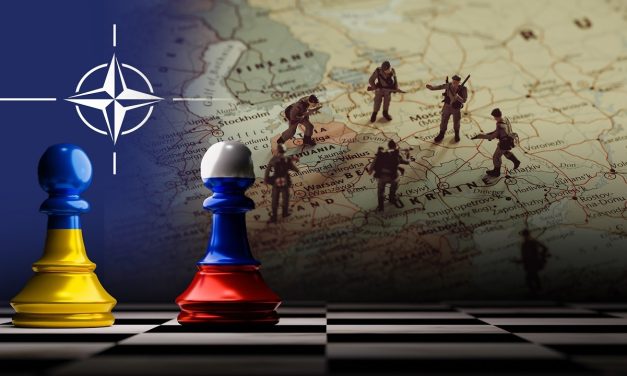
Blurred Perspective of Russia-West Relations

2021/11/20 | Note, Politics, top news

Strategic Council Online - Opinion: After the collapse of the Soviet Union, many in the West thought that the Russians were interested in joining the Western world and would become more like Europeans and Americans, but it soon became clear that centuries of Russian history has given shape to a distinct and unique understanding of the position of that country in the world. Moscow now considers its security zone not the borders of the Russian Federation, but the borders of the Soviet Union, and demands that the United States and Europe accept it. Alireza Thamoudi -Expert on Europe Affairs

In the past two decades, much of the debate in the United States and Europe has been focused on how to deal with Russia and the so-called resumption of relations with that country. The policy of resuming relations in the Obama administration, the EU-Russia modernization partnership, the German Mosberg initiative, or the EU’s proposals for selective engagement with Russia have been among the initiatives to start talks with Russia in recent years.

Challenges between the West and Russia

During Putin’s presidency, Russia has become a centralized state and has returned to its traditional global position. It has also competed with the United States to strengthen its influence in various fields. Despite its economic weakness, Moscow has been able to intervene in various parts of the world and challenge Western interests. Russia’s relations with the West have been peaceful only at two junctures in recent years: first, the events of 9/11 and Russian aid to the United States in the war in Afghanistan; and the second juncture was between 2008-2012 during Medvedev’s presidency and the policy of resumption of relations during the Obama administration, when the West and Russia cooperated in areas such as arms control, Afghanistan and Iran; but with Putin returning to the Kremlin in 2012, tensions between the West and Russia resumed once again. Russia initially accused the West of being the main culprit in the 2012 anti-Putin protests. Granting asylum to Edward Snowden was another important factor in escalating tensions. Meanwhile, the escape of Ukrainian President Yanukovych and the subsequent entry of Russian troops into the Crimean peninsula (a violation of the 1994 Budapest Accord) caused tensions in the relations between the two sides. Since spring of 2014, Russia and Ukraine have been embroiled in a war in Donbas in which more than 14,000 people have lost their lives. Moscow’s involvement in the Syrian crisis has also raised tensions between Russia and the West. Another example of such tensions was the accusation of Russian cyber-interference in the 2016 US presidential election, in which Russia used social media to intensify the polarized US political climate. Russia’s actions against some of its citizens on the European soil or the imprisonment of Alexei Navalny also indicate a significant difference between Russia’s and the West’s perception of human rights issues.

West and Russia trying to undermine each other

In the years of the first decade of the third millennium, Russia sought to restore its position on the world stage by increasing energy prices, economic growth and modernization, and by building powerful state-owned companies worldwide in the field of selling strategic resource, and was using political influence in this regard. However, since the beginning of the second decade of this millennium, there has been a fundamental shift in Moscow’s policies. Given the disappeared hopes for economic modernization and the weakening of Russia’s economy, the path to power through economic growth was eroded, and in fact the path to power recovery through the enhancement of domestic capabilities was replaced by the weakening of geopolitical rivals. Arrests of political opponents, financial support for European populist parties, hybrid warfare and misinformation, and in some cases support for specific political forces, have been among Russia’s policies.

In contrast, Western countries did not seek to weaken Russia in the 1990s and the first decade of the third millennium. Although it was in the interests of Europe and the United States that the Russian Federation not to remain as powerful as in Soviet times, they never wanted a big country like Russia to go bankrupt with nuclear weapons, thus upsetting all geopolitical balances. Although the European Union and Russia even launched the “Partnership for Modernization” program due to the Obama administration’s policy of resuming relations, the Ukraine-Crimea crisis was the end of the resumption strategy. Following such developments, the imposition of economic sanctions aimed at isolating Russia became part of the Western agenda. Western experts warn that mutual weakening strategies between the West and Russia have weakened both sides, and that the rise of populists in the United States and the European Union has undermined the West’s credibility, cohesion and capabilities. On the other hand, Russia’s resources and its economic future have also fallen victim to Moscow’s military and political targets.

Concluding remarks

In recent years, the war in Georgia in 2008, the annexation of Crimea and the start of the Ukraine war in 2014 have shaken Russia’s position as a strategic partner and made Moscow a very important strategic challenge for the West. Russia has now been able to maintain its global credibility due to its traditional advantages of nuclear weapons, geographical size, military might, and permanent membership in the Security Council (despite economic difficulties). Of course, there are also differences among European countries over the type of interaction with Russia. While the historical experiences of the Baltic States and former countries of the Warsaw Pact have raised serious concerns for EU about Russia, larger countries such as France and Germany are seeking economic engagement with Russia.

It can be said that after years of declining relations, the sanctions, diplomatic reprisal and escalation of information war has put relations between the two sides at their lowest level since the end of the Cold War. There is a growing feeling among Russian leaders that the fragile relations between the West and the East have reached an irreversible point, and that Moscow must abandon the hope for reconciliation with the West and look for lasting alternatives; including intensive strengthening of relations with China and establishment of purposeful relations with some European countries and other regions that are interested in doing business with Moscow. It seems that this competition will end only when one side of the story comes to the conclusion that it is losing this endless competition.
0 Comments

Submit a Comment

Your email address will not be published. Required fields are marked *

LATEST CONTENT

America’s Zero-Sum Game in Iraq

Online Strategic Council – Memoir: The swift selection of Nouri al-Maliki for the premiership constitutes a new phase in Iraq’s political sphere. Multiple factors have played a role in this process, the most important being the prevailing situation in Iraq and the region. Under such circumstances, Iraq requires a powerful and experienced prime minister who can keep the country away from the dangers of wars and crises.

America’s Strategy for Creating Tension in the Asia-Pacific

Strategic Council Online – Opinion: Relations between some countries in the Asia-Pacific region, such as China and Japan or China and Australia, which were previously relatively normal, are trending towards deterioration, and the primary reason for this is the aggressive policies of the United States of America.

The Collapse of the European Security Illusion with the Continuation of the Ukraine War?

Strategic Council Online – Interview: The Ukraine war has become a new turning point in the political, security, and even commercial relations of allies on both sides of the Atlantic. While this war is nearing its fourth year, many questions still remain regarding its future and its consequences; among them, will the continuation of the Ukraine war lead to the collapse of the European security illusion?

Is Greenland Pushing Europe Toward China?

Strategic Council Online – Interview: A European affairs expert believes that the seizure of Greenland will certainly weaken America’s relations with Europe and its allies. Donald Trump’s view is that he does not need these countries, but if Europe faces significant pressure from the United States, it is natural for it to move toward China.

Alarm Bells Sound for ISIS Revival in Syria: Threat to Iraq and West Asia

Strategic Council Online – Opinion: Numerous documents and pieces of evidence indicate that ISIS, which in recent years has been the region’s biggest threat to security and stability after the Zionist regime, has once again in recent months become a focal point for political and security exploitation by American and Zionist regime security, intelligence, and political circles.

Afghanistan’s Effective Role in the Economy of Eurasia

Strategic Council Online – Interview: A regional affairs researcher stated: Despite projects such as the Khaf-Herat railway and the Herat-Balkh-Mazar-i-Sharif corridor being on the agenda, insecurity and the absence of an inclusive government remain the most significant obstacles to realizing transit corridors and Afghanistan playing an effective role in the economy of Eurasia.

Loading

Últimas publicaciones

America’s Zero-Sum Game in Iraq

Online Strategic Council – Memoir: The swift selection of Nouri al-Maliki for the premiership constitutes a new phase in Iraq’s political sphere. Multiple factors have played a role in this process, the most important being the prevailing situation in Iraq and the region. Under such circumstances, Iraq requires a powerful and experienced prime minister who can keep the country away from the dangers of wars and crises.

America’s Strategy for Creating Tension in the Asia-Pacific

Strategic Council Online – Opinion: Relations between some countries in the Asia-Pacific region, such as China and Japan or China and Australia, which were previously relatively normal, are trending towards deterioration, and the primary reason for this is the aggressive policies of the United States of America.

The Collapse of the European Security Illusion with the Continuation of the Ukraine War?

Strategic Council Online – Interview: The Ukraine war has become a new turning point in the political, security, and even commercial relations of allies on both sides of the Atlantic. While this war is nearing its fourth year, many questions still remain regarding its future and its consequences; among them, will the continuation of the Ukraine war lead to the collapse of the European security illusion?

Is Greenland Pushing Europe Toward China?

Strategic Council Online – Interview: A European affairs expert believes that the seizure of Greenland will certainly weaken America’s relations with Europe and its allies. Donald Trump’s view is that he does not need these countries, but if Europe faces significant pressure from the United States, it is natural for it to move toward China.

Alarm Bells Sound for ISIS Revival in Syria: Threat to Iraq and West Asia

Strategic Council Online – Opinion: Numerous documents and pieces of evidence indicate that ISIS, which in recent years has been the region’s biggest threat to security and stability after the Zionist regime, has once again in recent months become a focal point for political and security exploitation by American and Zionist regime security, intelligence, and political circles.

Afghanistan’s Effective Role in the Economy of Eurasia

Strategic Council Online – Interview: A regional affairs researcher stated: Despite projects such as the Khaf-Herat railway and the Herat-Balkh-Mazar-i-Sharif corridor being on the agenda, insecurity and the absence of an inclusive government remain the most significant obstacles to realizing transit corridors and Afghanistan playing an effective role in the economy of Eurasia.

Loading

DERNIER CONTENU

America’s Zero-Sum Game in Iraq

Online Strategic Council – Memoir: The swift selection of Nouri al-Maliki for the premiership constitutes a new phase in Iraq’s political sphere. Multiple factors have played a role in this process, the most important being the prevailing situation in Iraq and the region. Under such circumstances, Iraq requires a powerful and experienced prime minister who can keep the country away from the dangers of wars and crises.

America’s Strategy for Creating Tension in the Asia-Pacific

Strategic Council Online – Opinion: Relations between some countries in the Asia-Pacific region, such as China and Japan or China and Australia, which were previously relatively normal, are trending towards deterioration, and the primary reason for this is the aggressive policies of the United States of America.

The Collapse of the European Security Illusion with the Continuation of the Ukraine War?

Strategic Council Online – Interview: The Ukraine war has become a new turning point in the political, security, and even commercial relations of allies on both sides of the Atlantic. While this war is nearing its fourth year, many questions still remain regarding its future and its consequences; among them, will the continuation of the Ukraine war lead to the collapse of the European security illusion?

Is Greenland Pushing Europe Toward China?

Strategic Council Online – Interview: A European affairs expert believes that the seizure of Greenland will certainly weaken America’s relations with Europe and its allies. Donald Trump’s view is that he does not need these countries, but if Europe faces significant pressure from the United States, it is natural for it to move toward China.

Alarm Bells Sound for ISIS Revival in Syria: Threat to Iraq and West Asia

Strategic Council Online – Opinion: Numerous documents and pieces of evidence indicate that ISIS, which in recent years has been the region’s biggest threat to security and stability after the Zionist regime, has once again in recent months become a focal point for political and security exploitation by American and Zionist regime security, intelligence, and political circles.

Afghanistan’s Effective Role in the Economy of Eurasia

Strategic Council Online – Interview: A regional affairs researcher stated: Despite projects such as the Khaf-Herat railway and the Herat-Balkh-Mazar-i-Sharif corridor being on the agenda, insecurity and the absence of an inclusive government remain the most significant obstacles to realizing transit corridors and Afghanistan playing an effective role in the economy of Eurasia.

Loading