U.S. Concern about China’s Nuclear Reinforcement

2021/11/19 | Note, Politics, top news

Strategic Council Online- Note: Development of 110 nuclear power plants by 2030 is one of the macro-investment projects of China, which has caused another field of contradiction of interests between China and the U.S. Reza Majidzadeh, Director of Simorgh Development Group, Passargad Millennium Plan think-tank

China inaugurated her first nuclear power plant in 1991, and now the country is the third in the world in nuclear program followed by the U.S. and France. More than 4% of Chinese electricity is generated by her nuclear power plants. It has the capacity to produce nearly 80 gigawatt of electricity. China developed her nuclear program with central technology from France, Canada and Russia. She started to export her nuclear technology based on the development of Hualong One reactor, the intellectual property of which belongs to China herself.

Although, the record of China’s nuclear activity dates back to1960s, as if she was the fifth country who enjoyed having nuclear arms at global level, and the last country which admitted Non-Proliferation Treaty. In the same year, China tested successfully her first nuclear bomb, the uranium of which was enriched in Lanzhou installations. In 1967 China also managed to test her first fusion reactor.

China intends to increase her nuclear generation capacity to 554 gigawatts by2050, in this way, she can also fulfil her pledge to limit the world temperature increase to under 1.5 degree Celsius. As the result of the increase in capacity, share of nuclear energy out of total combined energy in China will be increased to 28%.

But China’s nuclear program will not confine to the promotion of the capacity of her power plants alone. Based on satellite images, the country enjoys having two fields of nuclear missile silos; Hami and Yumen missile silo fields. 120 silos are under construction in Yumen, and another 110 silos in Hami, as well as more silos in other regions. 250 missile silos are also being developed that build the most important concern for the U.S. about China’s nuclear program.

In fact, China has more silos than Russia. The power of her silos equals to more than half of the total U.S. silos’ power. This number of silos along with several years of Chinese insistence on having the minimum deterrent power indicates that tensions with China can go beyond the economic tensions or even every-now-and-then political signals and trade wars.

However, de-escalation of tensions between China and Taiwan from one hand, and nuclear crisis of Japan in 2011 from the other hand caused China and Taiwan to take actions for cooperation in nuclear safety and to establish an official channel for contacts between the two sides. But Pentagon has announced that China is developing her nuclear arsenal much quicker than expectations, and the gap between the country and the U.S. is narrowing. According to estimations, China will be capable to deliver 700 nuclear warheads by 2027, which will be further increased to 1000 by 2030, i.e. about two and half times more than previous estimation of the Pentagon.

The NATO demand on China for transparency in her nuclear program can be interpreted in line with this. Although NATO Secretary General has expressly announced that NATO does not consider China as an enemy but the NATO members expect the country to abide by her international commitments and to participate in talks with NATO on arms’ control.

Moreover, within the past several years, the U.S. has made efforts to exert indirect and overall pressure on China to direct her towards a New Start. However, China did not react promptly but considered the expectation to join the talks to reduce the nuclear arms with the presence of the U.S. and Russia as “unrealistic”.

Of course, according to experts, turning the confrontation to a nuclear attack or nuclear instigation is unlikely and China is looking for a threat and reliable deterrent. What increase the possibility of more political confrontations in future are concerns about the repetition of events like Covid-19 pandemic at global level.

The aforementioned issues as well as paying attention to other confrontation fields between the U.S. and China such as international trade and finance, competition in political and economic cartel building and development in spatial field confirm that confrontation will remain, at least at present level. The present U.S. Administration does not prefer to extend confrontation, instead it insists on indirect approches and trade war.
0 Comments

Submit a Comment

Your email address will not be published. Required fields are marked *

LATEST CONTENT

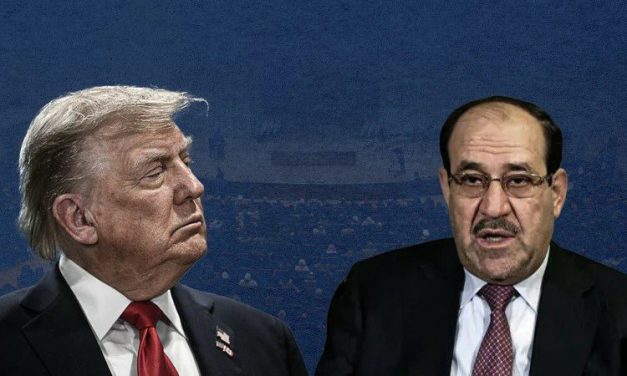
America’s Zero-Sum Game in Iraq

Online Strategic Council – Memoir: The swift selection of Nouri al-Maliki for the premiership constitutes a new phase in Iraq’s political sphere. Multiple factors have played a role in this process, the most important being the prevailing situation in Iraq and the region. Under such circumstances, Iraq requires a powerful and experienced prime minister who can keep the country away from the dangers of wars and crises.

America’s Strategy for Creating Tension in the Asia-Pacific

Strategic Council Online – Opinion: Relations between some countries in the Asia-Pacific region, such as China and Japan or China and Australia, which were previously relatively normal, are trending towards deterioration, and the primary reason for this is the aggressive policies of the United States of America.

The Collapse of the European Security Illusion with the Continuation of the Ukraine War?

Strategic Council Online – Interview: The Ukraine war has become a new turning point in the political, security, and even commercial relations of allies on both sides of the Atlantic. While this war is nearing its fourth year, many questions still remain regarding its future and its consequences; among them, will the continuation of the Ukraine war lead to the collapse of the European security illusion?

Is Greenland Pushing Europe Toward China?

Strategic Council Online – Interview: A European affairs expert believes that the seizure of Greenland will certainly weaken America’s relations with Europe and its allies. Donald Trump’s view is that he does not need these countries, but if Europe faces significant pressure from the United States, it is natural for it to move toward China.

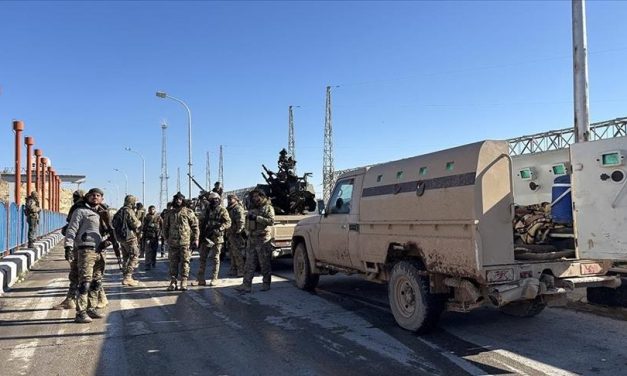
Alarm Bells Sound for ISIS Revival in Syria: Threat to Iraq and West Asia

Strategic Council Online – Opinion: Numerous documents and pieces of evidence indicate that ISIS, which in recent years has been the region’s biggest threat to security and stability after the Zionist regime, has once again in recent months become a focal point for political and security exploitation by American and Zionist regime security, intelligence, and political circles.

Afghanistan’s Effective Role in the Economy of Eurasia

Strategic Council Online – Interview: A regional affairs researcher stated: Despite projects such as the Khaf-Herat railway and the Herat-Balkh-Mazar-i-Sharif corridor being on the agenda, insecurity and the absence of an inclusive government remain the most significant obstacles to realizing transit corridors and Afghanistan playing an effective role in the economy of Eurasia.

Loading

Últimas publicaciones

America’s Zero-Sum Game in Iraq

Online Strategic Council – Memoir: The swift selection of Nouri al-Maliki for the premiership constitutes a new phase in Iraq’s political sphere. Multiple factors have played a role in this process, the most important being the prevailing situation in Iraq and the region. Under such circumstances, Iraq requires a powerful and experienced prime minister who can keep the country away from the dangers of wars and crises.

America’s Strategy for Creating Tension in the Asia-Pacific

Strategic Council Online – Opinion: Relations between some countries in the Asia-Pacific region, such as China and Japan or China and Australia, which were previously relatively normal, are trending towards deterioration, and the primary reason for this is the aggressive policies of the United States of America.

The Collapse of the European Security Illusion with the Continuation of the Ukraine War?

Strategic Council Online – Interview: The Ukraine war has become a new turning point in the political, security, and even commercial relations of allies on both sides of the Atlantic. While this war is nearing its fourth year, many questions still remain regarding its future and its consequences; among them, will the continuation of the Ukraine war lead to the collapse of the European security illusion?

Is Greenland Pushing Europe Toward China?

Strategic Council Online – Interview: A European affairs expert believes that the seizure of Greenland will certainly weaken America’s relations with Europe and its allies. Donald Trump’s view is that he does not need these countries, but if Europe faces significant pressure from the United States, it is natural for it to move toward China.

Alarm Bells Sound for ISIS Revival in Syria: Threat to Iraq and West Asia

Strategic Council Online – Opinion: Numerous documents and pieces of evidence indicate that ISIS, which in recent years has been the region’s biggest threat to security and stability after the Zionist regime, has once again in recent months become a focal point for political and security exploitation by American and Zionist regime security, intelligence, and political circles.

Afghanistan’s Effective Role in the Economy of Eurasia

Strategic Council Online – Interview: A regional affairs researcher stated: Despite projects such as the Khaf-Herat railway and the Herat-Balkh-Mazar-i-Sharif corridor being on the agenda, insecurity and the absence of an inclusive government remain the most significant obstacles to realizing transit corridors and Afghanistan playing an effective role in the economy of Eurasia.

Loading

DERNIER CONTENU

America’s Zero-Sum Game in Iraq

Online Strategic Council – Memoir: The swift selection of Nouri al-Maliki for the premiership constitutes a new phase in Iraq’s political sphere. Multiple factors have played a role in this process, the most important being the prevailing situation in Iraq and the region. Under such circumstances, Iraq requires a powerful and experienced prime minister who can keep the country away from the dangers of wars and crises.

America’s Strategy for Creating Tension in the Asia-Pacific

Strategic Council Online – Opinion: Relations between some countries in the Asia-Pacific region, such as China and Japan or China and Australia, which were previously relatively normal, are trending towards deterioration, and the primary reason for this is the aggressive policies of the United States of America.

The Collapse of the European Security Illusion with the Continuation of the Ukraine War?

Strategic Council Online – Interview: The Ukraine war has become a new turning point in the political, security, and even commercial relations of allies on both sides of the Atlantic. While this war is nearing its fourth year, many questions still remain regarding its future and its consequences; among them, will the continuation of the Ukraine war lead to the collapse of the European security illusion?

Is Greenland Pushing Europe Toward China?

Strategic Council Online – Interview: A European affairs expert believes that the seizure of Greenland will certainly weaken America’s relations with Europe and its allies. Donald Trump’s view is that he does not need these countries, but if Europe faces significant pressure from the United States, it is natural for it to move toward China.

Alarm Bells Sound for ISIS Revival in Syria: Threat to Iraq and West Asia

Strategic Council Online – Opinion: Numerous documents and pieces of evidence indicate that ISIS, which in recent years has been the region’s biggest threat to security and stability after the Zionist regime, has once again in recent months become a focal point for political and security exploitation by American and Zionist regime security, intelligence, and political circles.

Afghanistan’s Effective Role in the Economy of Eurasia

Strategic Council Online – Interview: A regional affairs researcher stated: Despite projects such as the Khaf-Herat railway and the Herat-Balkh-Mazar-i-Sharif corridor being on the agenda, insecurity and the absence of an inclusive government remain the most significant obstacles to realizing transit corridors and Afghanistan playing an effective role in the economy of Eurasia.

Loading