US Strategy in Post-Withdrawal from Afghanistan

2021/11/04 | Note, Politics, top news

Strategic Council Online - Opinion: The US withdrawal from Afghanistan is tantamount to the failure of policies that began with the country's military occupation in late 2001. Barsam Mohammadi – Analyst of international affairs

In the past 20 years, the United States has spent more than 2 trillion dollars in Afghanistan, but has failed to achieve the targets it pursued through direct military presence.

But such failure does not mean that Afghanistan’s case is excluded from the US regional and international policies. Afghanistan remains an “attractive” option for the US strategists and statesmen in order to advance the Asia-Pacific policies of that country.

Even the US President Joe Biden has already announced in a statement on the withdrawal of the troops of his country from Afghanistan that only the US military presence in Afghanistan has ended. On August 31, in an address at the White House he said the US mission in Afghanistan is not over, adding that they would continue to fight terrorism in Afghanistan and other countries without engaging in ground wars!

The point that why the United States continues to insist on acting in Afghanistan despite its 2 trillion dollars expense with no achievement is an important question that needs to be answered in terms of its geopolitical and geostrategic position in the US foreign policy doctrines. Even the Biden administration believes that the only place from where Washington’s big international rivals and enemies, that is to say Russia, China and Iran, can be kept busy is Afghanistan.

The US withdrawal from Afghanistan does not mean a change in its strategy, but only a change in method or tactics. The field and political developments of the past two decades in the West Asian region have shown that the United States pursues its national interests in three ways:

  • Proxy conflicts through creation of terrorist groups;
  • Consensus building and formation of intra-regional and extra-regional coalitions; and
  • Internal and regional destabilization.

As in recent weeks its signs and symptoms have been observed to a great extent, destabilization and fanning the flames of proxy conflicts is a key strategy of the US administration in the post-withdrawal period.

Revival of ISIS to contain China, Russia and Iran; a key aspect of US strategy in Afghanistan

“Revival of ISIS” is one of the main aspects of the said strategy. ISIS’s role is to help advance the long-term targets of controlling China, Russia and Iran, and thus maintaining a balance of power. However, Joe Biden in particular, and American Democrats in general, have a lot of experience and expertise in this field.

The ISIS which, for a time, deprived some countries in the region of political, psychological, and field security and stability, including Syria and Iraq, and went so far as to form the most terrorist state in modern history, is a phenomenon that was first created by the American Democrats.

Of course, the US use of terrorism as a means to secure its own interests dates back to the Cold War era. In this regard, William Adam, the head of the CIA during the presidency of Donald Reagan, writes in his memoirs that the United States has always used terrorism to advance its targets. Michael Flynn, the former head of the US Defense Intelligence Agency, has made an unprecedented revelation about the US role in creating Takfiri-terrorist groups, including the ISIS. He says that the Takfiri movements are not the product of policies based on ignorance and inexperience, but of the decisions that were made consciously, resolutely and decisively by Washington!

The United States seeks to “achieve outcome after the withdrawal” from Afghanistan. Withdrawal operations, in a way that provoked strong reactions inside the United States, has taken place, but controlling Russia, China and Iran has not been achieved.

Carrying out 36 terrorist operations in less than two months, that is to say the interval between the withdrawal of the US troops from Afghanistan and particularly the attack on worshipers in Kunduz and Kandahar, which the ISIS has claimed responsibility for, are not only the product of a policy based on ignorance or rivalry of the local ISIS with the Taliban over power, but completely “purposeful” measures that are definitely done with the awareness, determination and will of the White House in order to achieve the defined post-withdrawal targets.

Here, the ISIS is a “tool” to play the role of “building insecurity” and thus transfer insecurity to the peripheral environment in a country which, on the one hand, has long borders with Iran and, on the other hand, is directly or indirectly adjacent to China and Russia, the most important threat and strategic and military rival of the United States in the world.

Strengthening of ISIS-US alliance after withdrawal from Afghanistan

A Russian foreign ministry spokesman recently announced that Moscow had obtained important, detailed and complete evidence that the United States is collaborating with the ISIS in Afghanistan. This complicity with the withdrawal of the United States not only has not ceased, but has become stronger.

In fact, deployment of the ISIS by the White House is to prevent creation of a security balance in the interests of Russia, China and the Islamic Republic of Iran in Afghanistan. This is important when we know that the Taliban are also looking for mechanisms to strengthen bilateral relations and expand comprehensive cooperation with the three countries.

The balance that previously prevailed in Afghanistan was a “negative and destructive” security balance and of the type of American-Pakistani-Saudi nature. This balance has collapsed with the withdrawal of the United States.

The balance that is currently taking shape in Afghanistan is a “positive and stabilizing” security balance with the participation of China, Russia and Iran, which will also lead to regional cooperation.

The ISIS and US security and intelligence presence and influence in Afghanistan is the only US tool to counter the emerging security balance in Afghanistan. Meanwhile, cooperation with the United States is also a costly and problematic model for the Taliban, which seek to consolidate power and establish a government in Afghanistan.
0 Comments

Submit a Comment

Your email address will not be published. Required fields are marked *

LATEST CONTENT

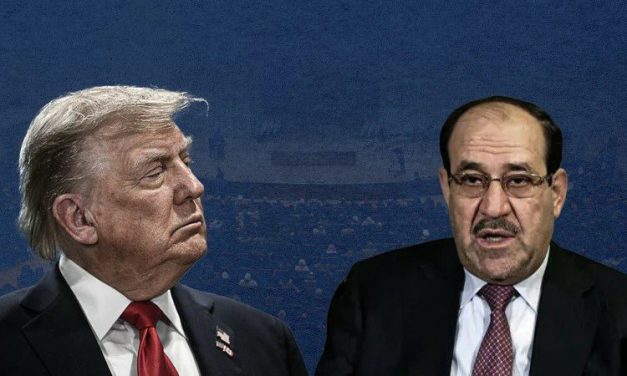
America’s Zero-Sum Game in Iraq

Online Strategic Council – Memoir: The swift selection of Nouri al-Maliki for the premiership constitutes a new phase in Iraq’s political sphere. Multiple factors have played a role in this process, the most important being the prevailing situation in Iraq and the region. Under such circumstances, Iraq requires a powerful and experienced prime minister who can keep the country away from the dangers of wars and crises.

America’s Strategy for Creating Tension in the Asia-Pacific

Strategic Council Online – Opinion: Relations between some countries in the Asia-Pacific region, such as China and Japan or China and Australia, which were previously relatively normal, are trending towards deterioration, and the primary reason for this is the aggressive policies of the United States of America.

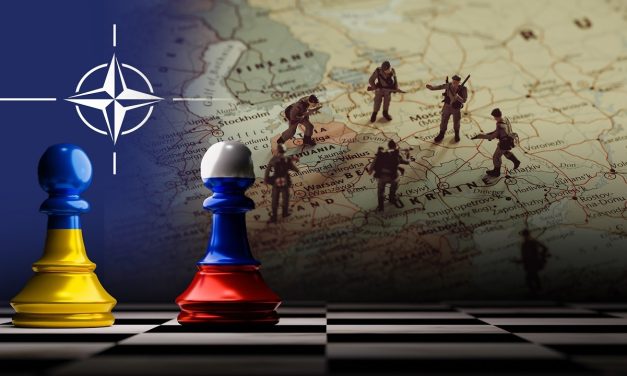
The Collapse of the European Security Illusion with the Continuation of the Ukraine War?

Strategic Council Online – Interview: The Ukraine war has become a new turning point in the political, security, and even commercial relations of allies on both sides of the Atlantic. While this war is nearing its fourth year, many questions still remain regarding its future and its consequences; among them, will the continuation of the Ukraine war lead to the collapse of the European security illusion?

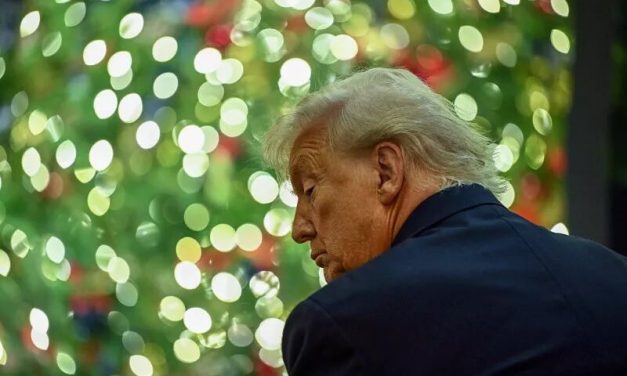
Is Greenland Pushing Europe Toward China?

Strategic Council Online – Interview: A European affairs expert believes that the seizure of Greenland will certainly weaken America’s relations with Europe and its allies. Donald Trump’s view is that he does not need these countries, but if Europe faces significant pressure from the United States, it is natural for it to move toward China.

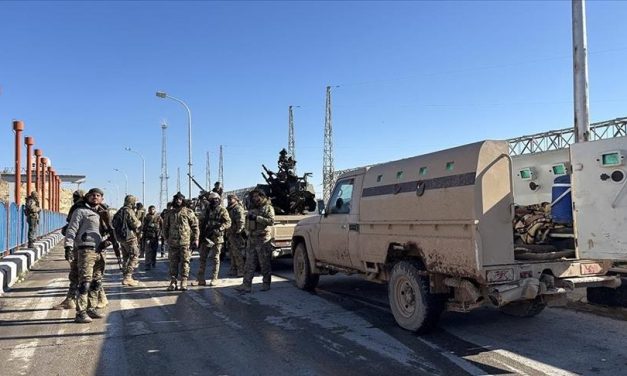
Alarm Bells Sound for ISIS Revival in Syria: Threat to Iraq and West Asia

Strategic Council Online – Opinion: Numerous documents and pieces of evidence indicate that ISIS, which in recent years has been the region’s biggest threat to security and stability after the Zionist regime, has once again in recent months become a focal point for political and security exploitation by American and Zionist regime security, intelligence, and political circles.

Afghanistan’s Effective Role in the Economy of Eurasia

Strategic Council Online – Interview: A regional affairs researcher stated: Despite projects such as the Khaf-Herat railway and the Herat-Balkh-Mazar-i-Sharif corridor being on the agenda, insecurity and the absence of an inclusive government remain the most significant obstacles to realizing transit corridors and Afghanistan playing an effective role in the economy of Eurasia.

Loading

Últimas publicaciones

America’s Zero-Sum Game in Iraq

Online Strategic Council – Memoir: The swift selection of Nouri al-Maliki for the premiership constitutes a new phase in Iraq’s political sphere. Multiple factors have played a role in this process, the most important being the prevailing situation in Iraq and the region. Under such circumstances, Iraq requires a powerful and experienced prime minister who can keep the country away from the dangers of wars and crises.

America’s Strategy for Creating Tension in the Asia-Pacific

Strategic Council Online – Opinion: Relations between some countries in the Asia-Pacific region, such as China and Japan or China and Australia, which were previously relatively normal, are trending towards deterioration, and the primary reason for this is the aggressive policies of the United States of America.

The Collapse of the European Security Illusion with the Continuation of the Ukraine War?

Strategic Council Online – Interview: The Ukraine war has become a new turning point in the political, security, and even commercial relations of allies on both sides of the Atlantic. While this war is nearing its fourth year, many questions still remain regarding its future and its consequences; among them, will the continuation of the Ukraine war lead to the collapse of the European security illusion?

Is Greenland Pushing Europe Toward China?

Strategic Council Online – Interview: A European affairs expert believes that the seizure of Greenland will certainly weaken America’s relations with Europe and its allies. Donald Trump’s view is that he does not need these countries, but if Europe faces significant pressure from the United States, it is natural for it to move toward China.

Alarm Bells Sound for ISIS Revival in Syria: Threat to Iraq and West Asia

Strategic Council Online – Opinion: Numerous documents and pieces of evidence indicate that ISIS, which in recent years has been the region’s biggest threat to security and stability after the Zionist regime, has once again in recent months become a focal point for political and security exploitation by American and Zionist regime security, intelligence, and political circles.

Afghanistan’s Effective Role in the Economy of Eurasia

Strategic Council Online – Interview: A regional affairs researcher stated: Despite projects such as the Khaf-Herat railway and the Herat-Balkh-Mazar-i-Sharif corridor being on the agenda, insecurity and the absence of an inclusive government remain the most significant obstacles to realizing transit corridors and Afghanistan playing an effective role in the economy of Eurasia.

Loading

DERNIER CONTENU

America’s Zero-Sum Game in Iraq

Online Strategic Council – Memoir: The swift selection of Nouri al-Maliki for the premiership constitutes a new phase in Iraq’s political sphere. Multiple factors have played a role in this process, the most important being the prevailing situation in Iraq and the region. Under such circumstances, Iraq requires a powerful and experienced prime minister who can keep the country away from the dangers of wars and crises.

America’s Strategy for Creating Tension in the Asia-Pacific

Strategic Council Online – Opinion: Relations between some countries in the Asia-Pacific region, such as China and Japan or China and Australia, which were previously relatively normal, are trending towards deterioration, and the primary reason for this is the aggressive policies of the United States of America.

The Collapse of the European Security Illusion with the Continuation of the Ukraine War?

Strategic Council Online – Interview: The Ukraine war has become a new turning point in the political, security, and even commercial relations of allies on both sides of the Atlantic. While this war is nearing its fourth year, many questions still remain regarding its future and its consequences; among them, will the continuation of the Ukraine war lead to the collapse of the European security illusion?

Is Greenland Pushing Europe Toward China?

Strategic Council Online – Interview: A European affairs expert believes that the seizure of Greenland will certainly weaken America’s relations with Europe and its allies. Donald Trump’s view is that he does not need these countries, but if Europe faces significant pressure from the United States, it is natural for it to move toward China.

Alarm Bells Sound for ISIS Revival in Syria: Threat to Iraq and West Asia

Strategic Council Online – Opinion: Numerous documents and pieces of evidence indicate that ISIS, which in recent years has been the region’s biggest threat to security and stability after the Zionist regime, has once again in recent months become a focal point for political and security exploitation by American and Zionist regime security, intelligence, and political circles.

Afghanistan’s Effective Role in the Economy of Eurasia

Strategic Council Online – Interview: A regional affairs researcher stated: Despite projects such as the Khaf-Herat railway and the Herat-Balkh-Mazar-i-Sharif corridor being on the agenda, insecurity and the absence of an inclusive government remain the most significant obstacles to realizing transit corridors and Afghanistan playing an effective role in the economy of Eurasia.

Loading