Blocking Afghanistan’s assets; humanitarian catastrophe and the responsibility of the international community

2021/10/25 | interview, Politics, top news

Strategic Council Online—Interview: An Afghan researcher and journalist says the international community should change its politico-social priorities in Afghanistan to economic priorities and help the continuity of the country's structure and prevents to total collapse of the social-economic system and emergence of civil war.

Seyyed Abbas Hosseini told the Strategic Council on Foreign Relations that blocking the assets of Afghanistan abroad would have negative impacts on the living of the Afghan people and has made the situation complicated and difficult, adding that the total collapse of the economic and social systems of Afghanistan is imminent even though the Taliban have been able to prevent the total collapse of the Afghan government and establishment in security and political terms.

Referring to the present draught in Afghanistan which has been unprecedented in the past 50 years, he said “more than 80 percent of the country’s population is farmers, and the drought has placed Afghanistan to the brink of famine as agricultural production declines, with more than half of Afghanistan’s population or about 18 million people in need of humanitarian assistance, according to UN reports, out of which, 14 million are at risk of starvation”.

This expert of Afghanistan issues said 72 percent of the population of Afghanistan are living with less than a dollar per day, saying that many people in cities have to sell their home appliances in very cheap prices to eat and stay alive.

Dependent economy on the presence of foreign forces

Hosseini said Afghanistan’s economic is dependent on the presence of foreign forces and this has inflicted a lot of problems for the Afghan people.

He added that unfortunately, US and NATO forces have operated in Afghanistan over the years in such a way that by creating a vicious cycle, the country’s economy has depended on their physical presence and the services they have provided or received, and with their irresponsible departure, tens of thousands of Afghans have fled. They suddenly became unemployed.

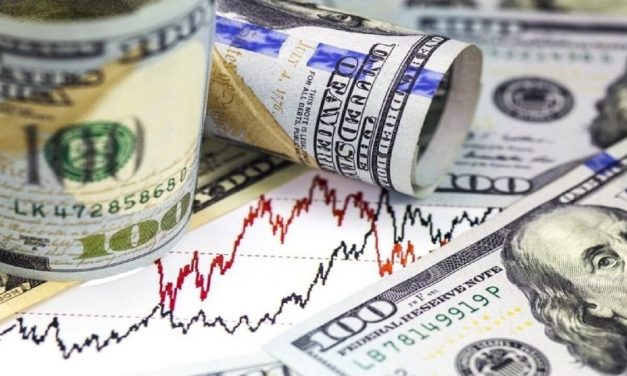
“After the Taliban came to power, the United States froze nearly 9.5 billion dollars of Afghanistan’s assets, of which 7 billion dollars are in the United States,” he said, adding that Afghan’s private sector do not have access to their money.

“The freezing of these assets, while Afghanistan’s monetary and banking system relied on the dollar, was another nail by the US in the coffin of Afghanistan’s economic, social and governmental systems. The United States signed an agreement with the Taliban two years ago, at that time the Taliban was not a terrorist group and was under sanctions! The US Secretary of State sat at a table with Mullah Baradar and was very happy and overjoyed with their agreement! What is happening now that comprehensive sanctions are being imposed on the same Taliban who came to power with the help of the United States! They have imposed financial and banking sanctions, especially when the lives of the Afghan people depend on these assets.”

The crisis of liquidity; the main and serious economic crisis in Afghanistan

Elaborating on the outcomes of the blocking of the assets and income of Afghani businesses on the life of ordinary people especially rising price of food and fuel, he said today, the main and serious economic crisis in Afghanistan is the liquidity crisis that has arisen following the freezing of assets.

He referred to a statement by a former member of the Supreme Council of the Central Bank of Afghanistan in the previous government that the international community should allow the Taliban limited access to Afghanistan’s foreign exchange reserves to pay government employees and save people from economic crisis and starvation.

“Apart from farmers’ livelihood problems, tens of thousands of Afghan government employees have not been paid for about four months,” he said.

Explaining the Taliban’s role in the economic and livelihood crisis in Afghanistan, the Afghan journalist described the Taliban’s talks with the European and American delegations in Qatar as constructive and intelligent, saying that the Taliban should not turn humanitarian aid and the release of Afghanistan’s foreign exchange reserves into leverage and score concessions and make excuses for the West.

Taliban’s understanding of the regional and international developments

Hosseini said that the Taliban have understood the regional and the international developments and are sending clear messages to the international community. The Taliban have also insisted that foreign exchange reserves be released under the supervision of global financial institutions and conditions announced by themselves and aid agencies so that they can help the people.

“We are witnessing transparency on the part of the Taliban in the management of the government’s financial resources and assets,” he said, referring to widespread corruption in the former Afghan government, looting of public property and misconduct.

“If the lives of Afghan people are important for international community, they should immediately put on their agenda, under a joint UN-sponsored program, freezing Afghan financial assets abroad under the supervision of global institutes and start humanitarian assistance before the arrival of the cold season even if they do not trust the Taliban and are not seeking excuses or concessions from the Taliban.”

Hosseini said “we see this expression of concern in the speeches of European officials in their appearance, but no practical steps have been taken to address this issue; While the United States and NATO effectively recognized the Taliban in the Doha Agreement, their statements today are a bitter irony that is unacceptable. If they did not recognize the Taliban, there would be no ground for the fall of the previous Afghan government.

He said that the United States and NATO, which are responsible for the current situation in Afghanistan, must guarantee, in addition to releasing their assets, that they will provide at least 50 percent of the Afghan government’s regular budget and reconstruction projects over the next decade or five years.
0 Comments

Submit a Comment

Your email address will not be published. Required fields are marked *

LATEST CONTENT

European Independence from the United States; From Dream to Reality

Strategic Council Online – Opinion: Europe has spoken of “strategic autonomy” for years, but each new crisis reveals that the gap between its aspiration for self-reliance and the reality of its security dependence on the United States remains significantly unbridged.

The Arctic; From Geographical Freezing to Geopolitical Boiling

Strategic Council Online – Opinion: The Arctic is no longer a frozen, remote periphery; it has become a live theater of great-power competition, where sea routes, port infrastructure, the law of the sea, and military deterrence are intertwined, shaping the future of maritime security.

The Zionist Regime’s Time Bomb Activated in the West Bank

Strategic Council Online – Opinion: In the midst of America’s military deployment to West Asia and the Persian Gulf, which has increased tensions at the regional and global levels, the Zionist regime has seized the opportunity and accelerated the advancement of its ambitious projects, including the process of the illegal annexation of the West Bank to the occupied territories.

Loading

Últimas publicaciones

European Independence from the United States; From Dream to Reality

Strategic Council Online – Opinion: Europe has spoken of “strategic autonomy” for years, but each new crisis reveals that the gap between its aspiration for self-reliance and the reality of its security dependence on the United States remains significantly unbridged.

The Arctic; From Geographical Freezing to Geopolitical Boiling

Strategic Council Online – Opinion: The Arctic is no longer a frozen, remote periphery; it has become a live theater of great-power competition, where sea routes, port infrastructure, the law of the sea, and military deterrence are intertwined, shaping the future of maritime security.

The Zionist Regime’s Time Bomb Activated in the West Bank

Strategic Council Online – Opinion: In the midst of America’s military deployment to West Asia and the Persian Gulf, which has increased tensions at the regional and global levels, the Zionist regime has seized the opportunity and accelerated the advancement of its ambitious projects, including the process of the illegal annexation of the West Bank to the occupied territories.

Loading

DERNIER CONTENU

European Independence from the United States; From Dream to Reality

Strategic Council Online – Opinion: Europe has spoken of “strategic autonomy” for years, but each new crisis reveals that the gap between its aspiration for self-reliance and the reality of its security dependence on the United States remains significantly unbridged.

The Arctic; From Geographical Freezing to Geopolitical Boiling

Strategic Council Online – Opinion: The Arctic is no longer a frozen, remote periphery; it has become a live theater of great-power competition, where sea routes, port infrastructure, the law of the sea, and military deterrence are intertwined, shaping the future of maritime security.

The Zionist Regime’s Time Bomb Activated in the West Bank

Strategic Council Online – Opinion: In the midst of America’s military deployment to West Asia and the Persian Gulf, which has increased tensions at the regional and global levels, the Zionist regime has seized the opportunity and accelerated the advancement of its ambitious projects, including the process of the illegal annexation of the West Bank to the occupied territories.

Loading

DERNIER CONTENU

European Independence from the United States; From Dream to Reality

Strategic Council Online – Opinion: Europe has spoken of “strategic autonomy” for years, but each new crisis reveals that the gap between its aspiration for self-reliance and the reality of its security dependence on the United States remains significantly unbridged.

The Arctic; From Geographical Freezing to Geopolitical Boiling

Strategic Council Online – Opinion: The Arctic is no longer a frozen, remote periphery; it has become a live theater of great-power competition, where sea routes, port infrastructure, the law of the sea, and military deterrence are intertwined, shaping the future of maritime security.

The Zionist Regime’s Time Bomb Activated in the West Bank

Strategic Council Online – Opinion: In the midst of America’s military deployment to West Asia and the Persian Gulf, which has increased tensions at the regional and global levels, the Zionist regime has seized the opportunity and accelerated the advancement of its ambitious projects, including the process of the illegal annexation of the West Bank to the occupied territories.

Loading

DERNIER CONTENU

European Independence from the United States; From Dream to Reality

Strategic Council Online – Opinion: Europe has spoken of “strategic autonomy” for years, but each new crisis reveals that the gap between its aspiration for self-reliance and the reality of its security dependence on the United States remains significantly unbridged.

The Arctic; From Geographical Freezing to Geopolitical Boiling

Strategic Council Online – Opinion: The Arctic is no longer a frozen, remote periphery; it has become a live theater of great-power competition, where sea routes, port infrastructure, the law of the sea, and military deterrence are intertwined, shaping the future of maritime security.

The Zionist Regime’s Time Bomb Activated in the West Bank

Strategic Council Online – Opinion: In the midst of America’s military deployment to West Asia and the Persian Gulf, which has increased tensions at the regional and global levels, the Zionist regime has seized the opportunity and accelerated the advancement of its ambitious projects, including the process of the illegal annexation of the West Bank to the occupied territories.

Loading