ISIS Goals behind Terrorist Operations against Shiites

2021/10/22 | interview, Politics, top news

Strategic Council Online - Interview: There are several behind-the-scene targets of the recent suicide operations in Afghanistan; but the main objective is definitely to pit Shiites and Sunnis in the country against one another.

Speaking in an interview with the website of the Strategic Council on Foreign Relations, Pir Mohammad Mollazehi referred to the deadly explosion at the oldest Shiite religious site in Kunduz Province and in northeast Afghanistan, which left hundreds dead and wounded, and said: Afghanistan’s problems are now much more complicated than before. As long as the Taliban were a group out of power, any kind of insecurity in Afghanistan would benefit them, but now, with the Taliban coming to power, Taliban’s interest is in consolidating that power.

He added: What happened recently is important for the Taliban from the point of view that they claim to maintain security and took power with that slogan, but in practice, in the same areas and in the same ways that operations were carried out before, operations are still taking place; therefore, the Taliban is in a difficult position now.

ISIS’s main target in Afghanistan; ethnic-religious tensions, instability, religious warfare

Regarding the perpetrators of the terrorist acts and their motives, the analyst of Afghanistan affairs said: The ISIS has accepted responsibility for the operations; if we consider the location of the operation, which is a Shiite mosque, and its objectives that are to create a Shiite-Sunni war in the region and in Afghanistan, it can be said that the main target of the ISIS is ethnic-religious tension and instability in Afghanistan and religious war in that country.

Mollazehi continued: In such circumstances, the ISIS has the opportunity to act in favor of the Sunnis and announce itself as their supporter and claim that the Taliban has made a deal in power in which the ISIS has not been seen. This target can create motivation for the ISIS suicide forces.

Emphasizing the importance of identifying the target community for the selection of ISIS forces in Afghanistan and how they are concentrated in that country, he explained: Those people are the ethnic and indigenous forces of the region; for example, they are the Chechens who are fighting for independence from Russia, or some members of the Hizb ut Tahrir and the Islamic Movement of Uzbekistan who are fighting to Islamize the country. Or they are members of the Ansar party, which broke away from the Islamic Movement of Tajikistan and joined the ISIS. The Uyghurs and members of the Islamic Movement of East Turkestan should also be considered as ISIS forces.

Saying that those forces are mainly based in Badakhshan, Mollazehi added: Previously, the Russians made a claim the authenticity of which is unknown. They claim that the Americans sent such forces to Afghanistan overnight with the support of Turkey and have settled them in the north of the country so that in future, there will be room for them to enter Central Asia, which is Russia’s security zone.

Possibility of work division between Taliban and ISIS

According to the analyst of Afghanistan affairs; if such information is taken seriously, it becomes clear that there is a kind of work division between the Taliban and the ISIS. If behind-the-scenes deals with the Taliban and the United States had taken place in Doha and the Russians’ claims are true, the developments should be analyzed differently. As one Sunni scholar has recently claimed, the text of the Doha Agreement is 400 pages and only four pages have been announced!

He continued: Another part of the ISIS, based in Nangarhar, claims to have formed an Islamic caliphate in that region, and we are witnessing a military conflict between them and the Taliban. It seems that the Taliban will fight with the ISIS where the Taliban do not want the territory in Afghanistan fall under the domination of the ISIS; because two governments cannot be put together. At the same time, the Taliban want the united Afghanistan for them.

Mollazehi said: In addition to the Taliban, there are about 22 to 23 armed groups in Afghanistan, mostly Afghan ethnic forces. Also, the Haqqani network, which holds part of the power in Kabul in the security and military sectors, had close ties with the ISIS in the past. The complexity of the issue is now whether it is the Haqqani network that is opening the space for the anti-Shiite operation of the ISIS or not!


Entangling Shiites-Sunnis, main target of anti-Shiite operations in Afghanistan

The analyst of subcontinent affairs referred to some expectations for Iran’s support for Shiite groups in Afghanistan and the possibility of trying to involve Iran in that country’s internal affairs and said: There are many behind-the-scenes targets of suicide operations in Afghanistan, but the main goal is definitely to entangle Shiites and Sunnis in Afghanistan.

Saying that the ISIS has between 4,000 to 5,000 troops in Afghanistan, most of whom are indigenous, he noted: Parts of the Taliban who were dissatisfied with the deal with the United States in Doha have also joined the ISIS. In addition, the ISIS can recruit members of the Afghan people and is supported by different groups in the region.

Mollazehi said: The ISIS is a motivated jihadist force in Afghanistan that will act against the West and the United States if it is established. But the ISIS appears to have made divisions based on the close and distant enemies. The close enemies are the Islamic countries and currently there is no plan for the distant enemies. Perhaps the Americans are helping and supporting the ISIS from this angle, and the Shiite-Sunni war is in the US favor.
0 Comments

Submit a Comment

Your email address will not be published. Required fields are marked *

LATEST CONTENT

America’s Zero-Sum Game in Iraq

Online Strategic Council – Memoir: The swift selection of Nouri al-Maliki for the premiership constitutes a new phase in Iraq’s political sphere. Multiple factors have played a role in this process, the most important being the prevailing situation in Iraq and the region. Under such circumstances, Iraq requires a powerful and experienced prime minister who can keep the country away from the dangers of wars and crises.

America’s Strategy for Creating Tension in the Asia-Pacific

Strategic Council Online – Opinion: Relations between some countries in the Asia-Pacific region, such as China and Japan or China and Australia, which were previously relatively normal, are trending towards deterioration, and the primary reason for this is the aggressive policies of the United States of America.

The Collapse of the European Security Illusion with the Continuation of the Ukraine War?

Strategic Council Online – Interview: The Ukraine war has become a new turning point in the political, security, and even commercial relations of allies on both sides of the Atlantic. While this war is nearing its fourth year, many questions still remain regarding its future and its consequences; among them, will the continuation of the Ukraine war lead to the collapse of the European security illusion?

Is Greenland Pushing Europe Toward China?

Strategic Council Online – Interview: A European affairs expert believes that the seizure of Greenland will certainly weaken America’s relations with Europe and its allies. Donald Trump’s view is that he does not need these countries, but if Europe faces significant pressure from the United States, it is natural for it to move toward China.

Alarm Bells Sound for ISIS Revival in Syria: Threat to Iraq and West Asia

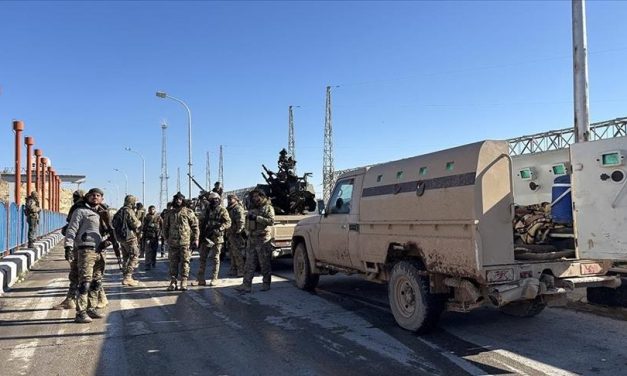
Strategic Council Online – Opinion: Numerous documents and pieces of evidence indicate that ISIS, which in recent years has been the region’s biggest threat to security and stability after the Zionist regime, has once again in recent months become a focal point for political and security exploitation by American and Zionist regime security, intelligence, and political circles.

Afghanistan’s Effective Role in the Economy of Eurasia

Strategic Council Online – Interview: A regional affairs researcher stated: Despite projects such as the Khaf-Herat railway and the Herat-Balkh-Mazar-i-Sharif corridor being on the agenda, insecurity and the absence of an inclusive government remain the most significant obstacles to realizing transit corridors and Afghanistan playing an effective role in the economy of Eurasia.

Loading

Últimas publicaciones

America’s Zero-Sum Game in Iraq

Online Strategic Council – Memoir: The swift selection of Nouri al-Maliki for the premiership constitutes a new phase in Iraq’s political sphere. Multiple factors have played a role in this process, the most important being the prevailing situation in Iraq and the region. Under such circumstances, Iraq requires a powerful and experienced prime minister who can keep the country away from the dangers of wars and crises.

America’s Strategy for Creating Tension in the Asia-Pacific

Strategic Council Online – Opinion: Relations between some countries in the Asia-Pacific region, such as China and Japan or China and Australia, which were previously relatively normal, are trending towards deterioration, and the primary reason for this is the aggressive policies of the United States of America.

The Collapse of the European Security Illusion with the Continuation of the Ukraine War?

Strategic Council Online – Interview: The Ukraine war has become a new turning point in the political, security, and even commercial relations of allies on both sides of the Atlantic. While this war is nearing its fourth year, many questions still remain regarding its future and its consequences; among them, will the continuation of the Ukraine war lead to the collapse of the European security illusion?

Is Greenland Pushing Europe Toward China?

Strategic Council Online – Interview: A European affairs expert believes that the seizure of Greenland will certainly weaken America’s relations with Europe and its allies. Donald Trump’s view is that he does not need these countries, but if Europe faces significant pressure from the United States, it is natural for it to move toward China.

Alarm Bells Sound for ISIS Revival in Syria: Threat to Iraq and West Asia

Strategic Council Online – Opinion: Numerous documents and pieces of evidence indicate that ISIS, which in recent years has been the region’s biggest threat to security and stability after the Zionist regime, has once again in recent months become a focal point for political and security exploitation by American and Zionist regime security, intelligence, and political circles.

Afghanistan’s Effective Role in the Economy of Eurasia

Strategic Council Online – Interview: A regional affairs researcher stated: Despite projects such as the Khaf-Herat railway and the Herat-Balkh-Mazar-i-Sharif corridor being on the agenda, insecurity and the absence of an inclusive government remain the most significant obstacles to realizing transit corridors and Afghanistan playing an effective role in the economy of Eurasia.

Loading

DERNIER CONTENU

America’s Zero-Sum Game in Iraq

Online Strategic Council – Memoir: The swift selection of Nouri al-Maliki for the premiership constitutes a new phase in Iraq’s political sphere. Multiple factors have played a role in this process, the most important being the prevailing situation in Iraq and the region. Under such circumstances, Iraq requires a powerful and experienced prime minister who can keep the country away from the dangers of wars and crises.

America’s Strategy for Creating Tension in the Asia-Pacific

Strategic Council Online – Opinion: Relations between some countries in the Asia-Pacific region, such as China and Japan or China and Australia, which were previously relatively normal, are trending towards deterioration, and the primary reason for this is the aggressive policies of the United States of America.

The Collapse of the European Security Illusion with the Continuation of the Ukraine War?

Strategic Council Online – Interview: The Ukraine war has become a new turning point in the political, security, and even commercial relations of allies on both sides of the Atlantic. While this war is nearing its fourth year, many questions still remain regarding its future and its consequences; among them, will the continuation of the Ukraine war lead to the collapse of the European security illusion?

Is Greenland Pushing Europe Toward China?

Strategic Council Online – Interview: A European affairs expert believes that the seizure of Greenland will certainly weaken America’s relations with Europe and its allies. Donald Trump’s view is that he does not need these countries, but if Europe faces significant pressure from the United States, it is natural for it to move toward China.

Alarm Bells Sound for ISIS Revival in Syria: Threat to Iraq and West Asia

Strategic Council Online – Opinion: Numerous documents and pieces of evidence indicate that ISIS, which in recent years has been the region’s biggest threat to security and stability after the Zionist regime, has once again in recent months become a focal point for political and security exploitation by American and Zionist regime security, intelligence, and political circles.

Afghanistan’s Effective Role in the Economy of Eurasia

Strategic Council Online – Interview: A regional affairs researcher stated: Despite projects such as the Khaf-Herat railway and the Herat-Balkh-Mazar-i-Sharif corridor being on the agenda, insecurity and the absence of an inclusive government remain the most significant obstacles to realizing transit corridors and Afghanistan playing an effective role in the economy of Eurasia.

Loading