A Glance at Moscow Meeting on Afghanistan

2021/10/20 | Note, Politics, top news

Strategic Council Online - Interview: A university professor, saying that if the Taliban do not fulfill their commitments, they should not expect other players to cooperate in different fields, stressed: At the Moscow meeting, efforts should be made to move the negotiations in a direction where the United States and the Taliban undertake commitments that are difficult to be ignored.

Speaking in an interview with the website of the Strategic Council on Foreign Relations, Dr. Nowzar Shafiei, referring to Russia’s decision to hold an extended troika meeting (Russia, US, China and Pakistan) on Afghanistan with the presence of representatives of the Taliban interim government, said: The prerequisite for resolving the Afghan crisis is that the Taliban, while respecting different ethnic and religious groups, form an inclusive government in which those groups nominate their representatives for being present in it; rather than the Taliban select people from ethnic and religious groups.

Emphasizing the Taliban’s responsibility for internal and border security, the university professor added: Basically, when the government, even though stationed temporarily in a country, has responsibilities that are generally referred to as ‘security’, in this regard, physical security and mental security should be considered. The interim government is expected to address the current threats which we are now witnessing in Afghanistan.

Need for cooperation and collective initiatives to ensure regional security

Shafiei continued: The interim government should either be able to provide such security alone or it should ask for help from others, especially its neighbors. If in doing so the Taliban have difficulty, they should allow a coalition of countries to counter with the terrorist groups based in Afghanistan alongside the Taliban. This is a commitment made by the Taliban to the United States, Iran, Russia and China.

Emphasizing the importance of bilateral cooperation between Iran and Afghanistan, the expert on Asia affairs said: Intelligence and security cooperation with the Taliban is very constructive in the current situation in order to confront with the ISIS.

Shafiei added: We are now witnessing the failure of the Taliban to fulfill its commitments undertaken in the talks with different countries, and in some cases they officially ignore those commitments that are unacceptable and unjustifiable.

Referring to some Western media instigations against Iran and the claim of covert aid to bring the Taliban to power and not supporting the will of the Afghan people to create a kind of psychological warfare, the university professor stressed: Iran should pay attention to multilateral initiatives so that the negative consequences of the conflict in Afghanistan are not unilaterally addressed to us. The good thing about the multilateral initiative is that countries cannot put “deception” on their agenda.

Emphasizing the need to pay attention to issues such as human rights, how to advance the education of citizens and the economic well-being of the Afghan people, he said: The Taliban should allow women to study and as a government, albeit temporarily, is responsible for such issues. Such issues are some of the most obvious principles that the Taliban must follow.

Importance of global initiative towards ISIS threat

Shafiei said the threat of the ISIS is addressed towards Iran, countries of the region and the world in the long run and reminded: In the current situation, countries are facing a global threat, dealing with which requires a global initiative.

Further elaborating; the former deputy of the Islamic Consultative Assembly added: If the Taliban address such concerns, they can receive benefits, including recognition of the group and humanitarian cooperation and the expansion of trade and economic exchanges.

Shafiei added: Countries in the region and neighboring countries of Afghanistan generally have common security concerns. Pakistan is now faced with problems with the Taliban and is unhappy with the centrality of Qatar and Turkey in the talks with the Taliban. For this reason, it has suspended its flights to Kabul and closed its borders. Certainly, such conditions can be a good start for regional cooperation.

He cited multilateral cooperation as a factor in line with the public interest of the region and thwarting the plans of trans-regional countries, especially the United States and added: Under such circumstances, the United States will no longer be the only player and cannot pose a threat to its rivals by making the region insecure.

The university professor referring to the remarks of the Russian president’s special envoy for Afghanistan who has said that it is not expected that any unprecedented progress be achieved at the Moscow meeting, added: The Taliban had already held talks with all parties that are scheduled now to hold talks in the Moscow meeting. The Taliban want a result that will help consolidate their rule. They should be notified that if they do not fulfill their obligations, they should not expect other players to cooperate in different fields.
0 Comments

Submit a Comment

Your email address will not be published. Required fields are marked *

LATEST CONTENT

Examining Political Developments Related to the Ukraine War

Strategic Council Online – Interview: An international affairs analyst stated: Today, Ukraine is facing a set of structural corruption, intra-European divisions, a shift in America’s approach, and a legitimacy crisis for Zelenskyy, which has propelled the course of the war and the future of the European Union and NATO into an entirely new phase.

Dr. Kharrazi Meets Delegation from Chinese Think Tanks: Emphasizes the Need for an Action Plan to Implement the Comprehensive Iran–China Cooperation Document

Strategic Council Online: The President of the Strategic Council on Foreign Relations stated, “Despite the signing of the 25-year Comprehensive Cooperation Agreement between Iran and China, a long path remains toward its full implementation. One key point both countries must observe is to move away from a project-based approach and instead adopt a program-oriented relationship by formulating a concrete action plan. This plan should be grounded in Iran’s national spatial planning framework and aligned with the mutual priorities of both nations as outlined in the 25-year Comprehensive Cooperation Document.”

An Analysis of the New U.S. National Security Strategy Document

Strategic Council Online – Opinion: The new U.S. National Security Strategy document, which emphasizes the slogan “America First,” indicates that Washington has moved away from many previous patterns and shifted its focus from external interventions to the preservation of domestic security and the preservation of the Western Hemisphere. This document redefines threats, priorities, and America’s global role.

Artificial Intelligence and the Intensification of Global Inequality

Strategic Council Online – Opinion: Although other revolutions have occurred between the Industrial Revolution and the artificial intelligence revolution, especially the ICT (Information and Communications Technology) revolution, and humanity has made remarkable progress along this path, in terms of fundamental transformations in the mode of production and social relations, it can be said that the transformations of artificial intelligence and the scope of its effects are perhaps similar to the Industrial Revolution but on a much larger scale. It is, in fact, a new revolution, much more profound and complex than the Industrial Revolution.

Reasons for Trump’s Attempt to Remove South Africa from the Upcoming G20 Summit

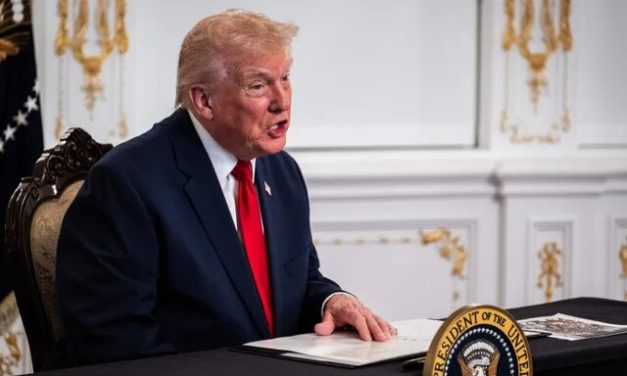
Strategic Council Online – Interview: Iran’s former ambassador to South Africa stated: “Trump’s decision to remove South Africa from the upcoming G20 summit is an irrational, reactionary decision lacking a legal basis. On one hand, it stems from Trump’s contemptuous and narcissistic outlook. On the other hand, it is a response to Pretoria’s prominent role in pursuing the legal case against the Israeli regime at the International Court of Justice.”

An Analysis of Iran’s Missile Capability

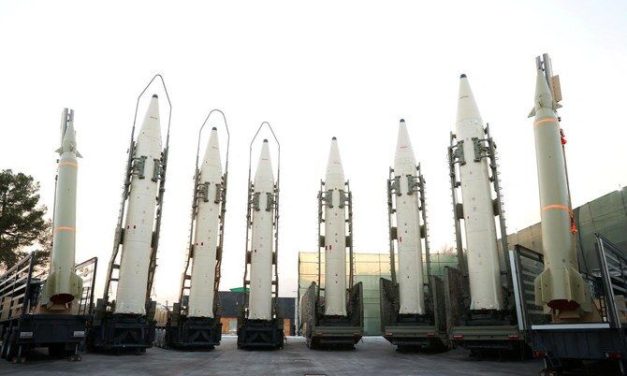
Strategic Council Online – Interview: A strategic affairs analyst said: Iran’s missile doctrine is not only part of its deterrent capability but also part of the security identity of the Islamic Republic of Iran and should not be weakened.

Japan-China Tensions Over Taiwan

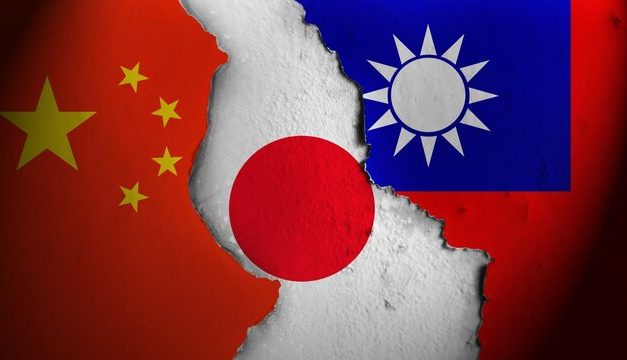
Strategic Council Online – Interview: An international affairs expert said that U.S. President Donald Trump, in a phone call this week with Sanae Takaichi, asked her not to further escalate disputes with China. Earlier this month, Takaichi created a rare tension with Beijing by stating that “a potential Chinese attack on Taiwan could lead to military action by Japan,” remarks that drew a sharp reaction from China. Beijing demanded that she retract these statements, but the Japanese Prime Minister has not done so thus far, and Tokyo has only emphasized that its policy regarding Taiwan has not changed.

A Look at bin Salman’s Recent Trip to America

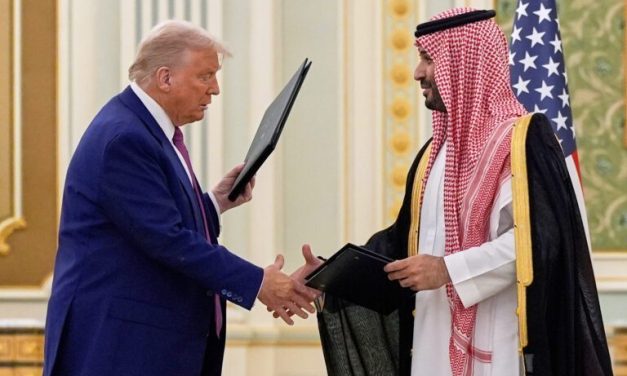
Strategic Council Online – Opinion: The recent trip of the Saudi Crown Prince to America was a targeted effort to solidify the strategic partnership with Washington, reduce political uncertainties, and strengthen Riyadh’s political role-playing.

Loading

Últimas publicaciones

Examining Political Developments Related to the Ukraine War

Strategic Council Online – Interview: An international affairs analyst stated: Today, Ukraine is facing a set of structural corruption, intra-European divisions, a shift in America’s approach, and a legitimacy crisis for Zelenskyy, which has propelled the course of the war and the future of the European Union and NATO into an entirely new phase.

Dr. Kharrazi Meets Delegation from Chinese Think Tanks: Emphasizes the Need for an Action Plan to Implement the Comprehensive Iran–China Cooperation Document

Strategic Council Online: The President of the Strategic Council on Foreign Relations stated, “Despite the signing of the 25-year Comprehensive Cooperation Agreement between Iran and China, a long path remains toward its full implementation. One key point both countries must observe is to move away from a project-based approach and instead adopt a program-oriented relationship by formulating a concrete action plan. This plan should be grounded in Iran’s national spatial planning framework and aligned with the mutual priorities of both nations as outlined in the 25-year Comprehensive Cooperation Document.”

An Analysis of the New U.S. National Security Strategy Document

Strategic Council Online – Opinion: The new U.S. National Security Strategy document, which emphasizes the slogan “America First,” indicates that Washington has moved away from many previous patterns and shifted its focus from external interventions to the preservation of domestic security and the preservation of the Western Hemisphere. This document redefines threats, priorities, and America’s global role.

Artificial Intelligence and the Intensification of Global Inequality

Strategic Council Online – Opinion: Although other revolutions have occurred between the Industrial Revolution and the artificial intelligence revolution, especially the ICT (Information and Communications Technology) revolution, and humanity has made remarkable progress along this path, in terms of fundamental transformations in the mode of production and social relations, it can be said that the transformations of artificial intelligence and the scope of its effects are perhaps similar to the Industrial Revolution but on a much larger scale. It is, in fact, a new revolution, much more profound and complex than the Industrial Revolution.

Reasons for Trump’s Attempt to Remove South Africa from the Upcoming G20 Summit

Strategic Council Online – Interview: Iran’s former ambassador to South Africa stated: “Trump’s decision to remove South Africa from the upcoming G20 summit is an irrational, reactionary decision lacking a legal basis. On one hand, it stems from Trump’s contemptuous and narcissistic outlook. On the other hand, it is a response to Pretoria’s prominent role in pursuing the legal case against the Israeli regime at the International Court of Justice.”

An Analysis of Iran’s Missile Capability

Strategic Council Online – Interview: A strategic affairs analyst said: Iran’s missile doctrine is not only part of its deterrent capability but also part of the security identity of the Islamic Republic of Iran and should not be weakened.

Japan-China Tensions Over Taiwan

Strategic Council Online – Interview: An international affairs expert said that U.S. President Donald Trump, in a phone call this week with Sanae Takaichi, asked her not to further escalate disputes with China. Earlier this month, Takaichi created a rare tension with Beijing by stating that “a potential Chinese attack on Taiwan could lead to military action by Japan,” remarks that drew a sharp reaction from China. Beijing demanded that she retract these statements, but the Japanese Prime Minister has not done so thus far, and Tokyo has only emphasized that its policy regarding Taiwan has not changed.

A Look at bin Salman’s Recent Trip to America

Strategic Council Online – Opinion: The recent trip of the Saudi Crown Prince to America was a targeted effort to solidify the strategic partnership with Washington, reduce political uncertainties, and strengthen Riyadh’s political role-playing.

Loading

DERNIER CONTENU

Examining Political Developments Related to the Ukraine War

Strategic Council Online – Interview: An international affairs analyst stated: Today, Ukraine is facing a set of structural corruption, intra-European divisions, a shift in America’s approach, and a legitimacy crisis for Zelenskyy, which has propelled the course of the war and the future of the European Union and NATO into an entirely new phase.

Dr. Kharrazi Meets Delegation from Chinese Think Tanks: Emphasizes the Need for an Action Plan to Implement the Comprehensive Iran–China Cooperation Document

Strategic Council Online: The President of the Strategic Council on Foreign Relations stated, “Despite the signing of the 25-year Comprehensive Cooperation Agreement between Iran and China, a long path remains toward its full implementation. One key point both countries must observe is to move away from a project-based approach and instead adopt a program-oriented relationship by formulating a concrete action plan. This plan should be grounded in Iran’s national spatial planning framework and aligned with the mutual priorities of both nations as outlined in the 25-year Comprehensive Cooperation Document.”

An Analysis of the New U.S. National Security Strategy Document

Strategic Council Online – Opinion: The new U.S. National Security Strategy document, which emphasizes the slogan “America First,” indicates that Washington has moved away from many previous patterns and shifted its focus from external interventions to the preservation of domestic security and the preservation of the Western Hemisphere. This document redefines threats, priorities, and America’s global role.

Artificial Intelligence and the Intensification of Global Inequality

Strategic Council Online – Opinion: Although other revolutions have occurred between the Industrial Revolution and the artificial intelligence revolution, especially the ICT (Information and Communications Technology) revolution, and humanity has made remarkable progress along this path, in terms of fundamental transformations in the mode of production and social relations, it can be said that the transformations of artificial intelligence and the scope of its effects are perhaps similar to the Industrial Revolution but on a much larger scale. It is, in fact, a new revolution, much more profound and complex than the Industrial Revolution.

Reasons for Trump’s Attempt to Remove South Africa from the Upcoming G20 Summit

Strategic Council Online – Interview: Iran’s former ambassador to South Africa stated: “Trump’s decision to remove South Africa from the upcoming G20 summit is an irrational, reactionary decision lacking a legal basis. On one hand, it stems from Trump’s contemptuous and narcissistic outlook. On the other hand, it is a response to Pretoria’s prominent role in pursuing the legal case against the Israeli regime at the International Court of Justice.”

An Analysis of Iran’s Missile Capability

Strategic Council Online – Interview: A strategic affairs analyst said: Iran’s missile doctrine is not only part of its deterrent capability but also part of the security identity of the Islamic Republic of Iran and should not be weakened.

Japan-China Tensions Over Taiwan

Strategic Council Online – Interview: An international affairs expert said that U.S. President Donald Trump, in a phone call this week with Sanae Takaichi, asked her not to further escalate disputes with China. Earlier this month, Takaichi created a rare tension with Beijing by stating that “a potential Chinese attack on Taiwan could lead to military action by Japan,” remarks that drew a sharp reaction from China. Beijing demanded that she retract these statements, but the Japanese Prime Minister has not done so thus far, and Tokyo has only emphasized that its policy regarding Taiwan has not changed.

A Look at bin Salman’s Recent Trip to America

Strategic Council Online – Opinion: The recent trip of the Saudi Crown Prince to America was a targeted effort to solidify the strategic partnership with Washington, reduce political uncertainties, and strengthen Riyadh’s political role-playing.

Loading