Strategic Targets, Consequences of Recent Unrest in Caucasus

2021/10/03 | Note, Politics, top news

Strategic Council Online - Opinion: In recent weeks, news of the harassment Azeri soldiers caused the Iranian transit vehicles passing through the disputed territories of Azerbaijan and the Republic of Armenia has been frequently published in the media. The question that arises in this regard is whether those behaviors are cross-sectional or a sign of the change in the approach that should be taken more seriously by the Islamic Republic of Iran and a solution should be considered to deal with them? Dr. Ehsan Movahedian - University professor and international relations researcher

Developments since the end of the 44-day war between Armenia and the Republic of Azerbaijan and the role played by some in the region, especially Turkey, Russia and the Zionist regime, show that they have long-term plans in place to secure their interests, some of which are in serious contrast with security, political and economic interests of the Islamic Republic of Iran and will create problems.

Based on the tripartite ceasefire agreement between Russia, Armenia and the Republic of Azerbaijan, the forces of Baku and Yerevan were to be stopped at the location of their last presence and refrain from further advances. However, the Republic of Azerbaijan has repeatedly made advances in the disputed areas, one of which has been the presence in the Goris-Kapan strategic transit route that created disturbances for the transit trucks and buses of Iran.

Motives of the Republic of Azerbaijan to block the transit road

The trend of the measures of the Republic of Azerbaijan on that road is aggressive and hostile. At first, the army of that country blocked the road for several hours and then reopened it during negotiations. In the next stage, the transit toll was received from Iranian vehicles by setting up checkpoints, and finally the measure led to the arrest and detention of two Iranian drivers, both of whom were Azeri, and one was traveling with his family members on that route. If the Republic of Azerbaijan intended to resolve the issue peacefully, it could set a deadline so that Armenia could take measure to widen, asphalt and complete the alternative route, and then resolve its differences with the Armenian side on this road; however, it seems that due to the procrastination and silence of the Armenian authorities in this regard and Iran’s slowness in reacting to this issue, the Azeri side has made a calculation error and thought that it could easily pursue its desires.

In order to prove its ownership of this road, the Republic of Azerbaijan relies on the documents of the internal and administrative divisions of the former Soviet Union, which rejects the criteria of the same documents of the former Soviet period to determine the legal regime of the Caspian Sea in order to gain more benefits. Baku authorities seem reluctant to rely on peaceful means in the field of international law. On the other hand, this contradictory practice of the authorities of the Republic of Azerbaijan has not received much attention from the authorities of countries such as Iran, Russia and Armenia.

In addition to disrupting Iran’s transit relations with Armenia and then Georgia and European countries, the country also insists on establishing a corridor between Nakhchivan and the Republic of Azerbaijan through Armenian territory. It is obvious that Iran opposes the creation of such a corridor that is against the interests of the Islamic Republic of Iran. Apparently, the Republic of Azerbaijan, by harassing Iranian citizens on the Goris-Kapan road, seeks to put pressure on the Islamic Republic to agree to the establishment of Zangezur corridor.

But some regional and trans-regional players also benefit from creating such a corridor and threatening Iran’s national interests, which they must accept responsibility for.

It should be noted that there are currently three routes for Iran’s land access to Europe via Armenia, the Republic of Azerbaijan and Turkey. The Republic of Azerbaijan and Turkey intend to completely exclude the use of this route from the agenda of Iran by making traffic from Armenia costly for Iran, and in this case provide suitable conditions for the construction of the Zangezur corridor. As a result, there will be two routes for Iran’s land access to Europe through Turkey and the Republic of Azerbaijan, which are currently using those transit routes to put pressure on Iran in various ways. On the one hand, the Republic of Azerbaijan stops Iranian trucks in various ways and imposes heavy customs duties, thus causing spoilage of food exports to Russia, and on the other hand, the Turkish government has repeatedly increased tariffs on Iranian drivers from this country and such developments indicate serious and long term risks for the long-term interests of Iran and Armenia.

But developments in the Caucasus do not jeopardize only the national interests of the Islamic Republic of Iran. Those developments, coupled with the Taliban gaining power in Afghanistan and increasing Pakistan’s involvement in that country as well as in the Caucasus region, could threaten the interests of China and Russia, which are in line with the US and NATO plans to weaken those emerging rivals. If the Zangezur corridor is established, there will be a safe and fast way to transfer the military forces of those countries and the Turkish-backed terrorists, as well as the Zionist, British and American affiliates to the Caucasus, and thus to the Chinese-Russian border, thus consultation with those countries and attracting their attention is necessary and important. With regard to what has been said, it should not be assumed that the construction of an alternative transit road between Iran and Armenia will solve such problems; because the issue is much more than a territorial dispute between Armenia and the Republic of Azerbaijan, and the target is to remove any obstacle to the establishment of the Zangezur corridor.

The concluding point is that it is necessary to talk to the Armenian government and complain about the unconstructive positions of some of their officials who consider Baku’s troubles for the Iranian trucks as a problem between the Republic of Azerbaijan and Iran, the importance of the issue should be justified for them and they should be reminded that it will, first of all, threaten the independence and territorial integrity of Armenia.
0 Comments

Submit a Comment

Your email address will not be published. Required fields are marked *

LATEST CONTENT

America’s Zero-Sum Game in Iraq

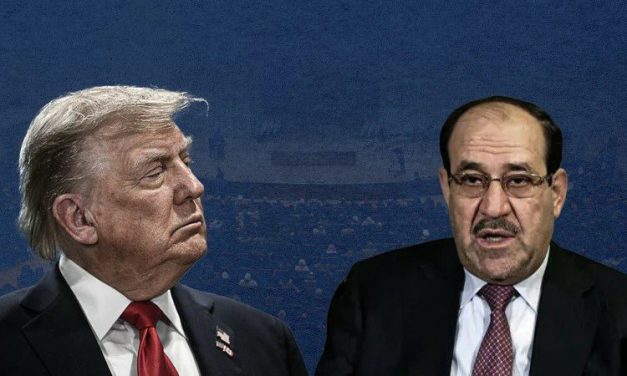
Online Strategic Council – Memoir: The swift selection of Nouri al-Maliki for the premiership constitutes a new phase in Iraq’s political sphere. Multiple factors have played a role in this process, the most important being the prevailing situation in Iraq and the region. Under such circumstances, Iraq requires a powerful and experienced prime minister who can keep the country away from the dangers of wars and crises.

America’s Strategy for Creating Tension in the Asia-Pacific

Strategic Council Online – Opinion: Relations between some countries in the Asia-Pacific region, such as China and Japan or China and Australia, which were previously relatively normal, are trending towards deterioration, and the primary reason for this is the aggressive policies of the United States of America.

The Collapse of the European Security Illusion with the Continuation of the Ukraine War?

Strategic Council Online – Interview: The Ukraine war has become a new turning point in the political, security, and even commercial relations of allies on both sides of the Atlantic. While this war is nearing its fourth year, many questions still remain regarding its future and its consequences; among them, will the continuation of the Ukraine war lead to the collapse of the European security illusion?

Is Greenland Pushing Europe Toward China?

Strategic Council Online – Interview: A European affairs expert believes that the seizure of Greenland will certainly weaken America’s relations with Europe and its allies. Donald Trump’s view is that he does not need these countries, but if Europe faces significant pressure from the United States, it is natural for it to move toward China.

Alarm Bells Sound for ISIS Revival in Syria: Threat to Iraq and West Asia

Strategic Council Online – Opinion: Numerous documents and pieces of evidence indicate that ISIS, which in recent years has been the region’s biggest threat to security and stability after the Zionist regime, has once again in recent months become a focal point for political and security exploitation by American and Zionist regime security, intelligence, and political circles.

Afghanistan’s Effective Role in the Economy of Eurasia

Strategic Council Online – Interview: A regional affairs researcher stated: Despite projects such as the Khaf-Herat railway and the Herat-Balkh-Mazar-i-Sharif corridor being on the agenda, insecurity and the absence of an inclusive government remain the most significant obstacles to realizing transit corridors and Afghanistan playing an effective role in the economy of Eurasia.

Loading

Últimas publicaciones

America’s Zero-Sum Game in Iraq

Online Strategic Council – Memoir: The swift selection of Nouri al-Maliki for the premiership constitutes a new phase in Iraq’s political sphere. Multiple factors have played a role in this process, the most important being the prevailing situation in Iraq and the region. Under such circumstances, Iraq requires a powerful and experienced prime minister who can keep the country away from the dangers of wars and crises.

America’s Strategy for Creating Tension in the Asia-Pacific

Strategic Council Online – Opinion: Relations between some countries in the Asia-Pacific region, such as China and Japan or China and Australia, which were previously relatively normal, are trending towards deterioration, and the primary reason for this is the aggressive policies of the United States of America.

The Collapse of the European Security Illusion with the Continuation of the Ukraine War?

Strategic Council Online – Interview: The Ukraine war has become a new turning point in the political, security, and even commercial relations of allies on both sides of the Atlantic. While this war is nearing its fourth year, many questions still remain regarding its future and its consequences; among them, will the continuation of the Ukraine war lead to the collapse of the European security illusion?

Is Greenland Pushing Europe Toward China?

Strategic Council Online – Interview: A European affairs expert believes that the seizure of Greenland will certainly weaken America’s relations with Europe and its allies. Donald Trump’s view is that he does not need these countries, but if Europe faces significant pressure from the United States, it is natural for it to move toward China.

Alarm Bells Sound for ISIS Revival in Syria: Threat to Iraq and West Asia

Strategic Council Online – Opinion: Numerous documents and pieces of evidence indicate that ISIS, which in recent years has been the region’s biggest threat to security and stability after the Zionist regime, has once again in recent months become a focal point for political and security exploitation by American and Zionist regime security, intelligence, and political circles.

Afghanistan’s Effective Role in the Economy of Eurasia

Strategic Council Online – Interview: A regional affairs researcher stated: Despite projects such as the Khaf-Herat railway and the Herat-Balkh-Mazar-i-Sharif corridor being on the agenda, insecurity and the absence of an inclusive government remain the most significant obstacles to realizing transit corridors and Afghanistan playing an effective role in the economy of Eurasia.

Loading

DERNIER CONTENU

America’s Zero-Sum Game in Iraq

Online Strategic Council – Memoir: The swift selection of Nouri al-Maliki for the premiership constitutes a new phase in Iraq’s political sphere. Multiple factors have played a role in this process, the most important being the prevailing situation in Iraq and the region. Under such circumstances, Iraq requires a powerful and experienced prime minister who can keep the country away from the dangers of wars and crises.

America’s Strategy for Creating Tension in the Asia-Pacific

Strategic Council Online – Opinion: Relations between some countries in the Asia-Pacific region, such as China and Japan or China and Australia, which were previously relatively normal, are trending towards deterioration, and the primary reason for this is the aggressive policies of the United States of America.

The Collapse of the European Security Illusion with the Continuation of the Ukraine War?

Strategic Council Online – Interview: The Ukraine war has become a new turning point in the political, security, and even commercial relations of allies on both sides of the Atlantic. While this war is nearing its fourth year, many questions still remain regarding its future and its consequences; among them, will the continuation of the Ukraine war lead to the collapse of the European security illusion?

Is Greenland Pushing Europe Toward China?

Strategic Council Online – Interview: A European affairs expert believes that the seizure of Greenland will certainly weaken America’s relations with Europe and its allies. Donald Trump’s view is that he does not need these countries, but if Europe faces significant pressure from the United States, it is natural for it to move toward China.

Alarm Bells Sound for ISIS Revival in Syria: Threat to Iraq and West Asia

Strategic Council Online – Opinion: Numerous documents and pieces of evidence indicate that ISIS, which in recent years has been the region’s biggest threat to security and stability after the Zionist regime, has once again in recent months become a focal point for political and security exploitation by American and Zionist regime security, intelligence, and political circles.

Afghanistan’s Effective Role in the Economy of Eurasia

Strategic Council Online – Interview: A regional affairs researcher stated: Despite projects such as the Khaf-Herat railway and the Herat-Balkh-Mazar-i-Sharif corridor being on the agenda, insecurity and the absence of an inclusive government remain the most significant obstacles to realizing transit corridors and Afghanistan playing an effective role in the economy of Eurasia.

Loading