Strategic goals and consequences of the misguided US policy in Afghanistan

2021/07/20 | interview, Politics, top news

Strategic Council Online—Interview: An expert of international issues says the United States irresponsible withdrawal of forces from Afghanistan has disrupted the relative stability in that country as the US is trying in addition to creating instability in the region, manage the Afghan crisis to create a threat for its rivals in the region.

Mohsen Roohisefat told the Strategic Council on Foreign Relations that the situation in Afghanistan, compared to 20 years ago when the US attacked that country, has not improved and there is no bright vision for the future of Afghanistan.

“There are signs which indicate that the conditions in Afghanistan are moving towards instability, insecurity and probably civil war and there is no ambiguity in this situation that the future of Afghanistan would be worse than its past.”

Referring to the conditions leading to the presence of the Taliban in Afghanistan in recent decades, he said “after the Bonn Conference, the modern Afghanistan was founded with principles such as republicanism, constitution, rights of minorities, women’s rights, civil society and election mechanisms for governance. Islam was also accepted as the official religion of Afghanistan.”

This analyst of international issues said “all these were signs of civil progress in Afghanistan. About 60 percent of them were realized. However, what failed to be realized was economic development and creation of industrial and agricultural infrastructure and improved welfare for the Afghan people which led to insecurity. When there is no job in Afghanistan, extremist groups recruit the unemployed people and this would eventually lead to insecurity.”

The United States is the agent of intensification of crisis in Afghanistan

Roohissefat said the US methods in Afghanistan were inefficient as the US in the past years was the absolute player in the scene of Afghanistan however its modus operandi led to the intensification of crises. For example, there are various reports that when the US conducted military operations against extremist groups, ordinary people were also killed! This issue raised the outcry of the public opinion and resulted in more recruitment for extremist groups.

He added that “when the US failed for realize its goal in eradicating extremist groups, it called for negotiations with them and proposed that the government of Afghanistan participate in these talks. The Taliban was opposed to the presence of the Afghan government in the negotiations and the US withdrew from its position. This issue sharply reduced the legitimacy of the central government increased the popularity of the Taliban among its supporters as a power that can negotiate with the United States.”

Roohisefat said the US was calling on the Taliban to accept ceasefire before the negotiations. However, the Taliban declined. The US accepted to negotiate under such circumstances. The US wanted the Taliban to be part of the power. But the Taliban opposed such a US call and the US again withdrew from its position.

Safe exit from Afghanistan is the main demand of the US in the Doha accord

According to this analyst of international issues, the Doha agreement was not in fact a peace accord but a guarantee for the US to save itself from the vice of the Taliban forces and the main US demand in the negotiations was for the Taliban to allow US forces leave Afghanistan safe and unhindered. The remaining issues were unimportant for the US.

He added that: under conditions when the US was acting as a balancing force in Afghanistan, the irresponsible withdrawal of the US from Afghanistan disrupted the balance of power and relative stability. On one hand, the misguided method in negotiations created the illusion of power for the Taliban and on the other hand the spirit of the Afghan government was weakened. After that, we witnessed the advancement of the Taliban after the withdrawal of forces in Afghanistan and various provinces were conquered.

Roohisefat emphasized that the Taliban used its 20-year experience and tried to portray itself as a soft and reconciliatory force. Using the experience of Daesh, the Taliban set up a propaganda machine in its own favor. With such measures, the goals the Taliban was pursuing through war were realized with propaganda. The cities which had not been conquered were declared conquered in a tweet with a photo in the gate of the city. This created intimidation among the people and government forces and boosted the morale of the Taliban forces and sympathizers without participating in a military operation.

He said the Taliban are only part of the people of Afghanistan and not all Afghans are the Taliban. When the United States entered Afghanistan 20 years ago, it was seeking absolute hegemony over Afghanistan. However, after the US failed to do so, it is not prepared for Afghanistan to convert into a sphere of influence for the US rivals such as China, Russia and Iran. Therefore, the US is seeking instability in this region in this respect.

Making the region instable is the goal of the US

Roohisefat said Afghanistan was instable during the past twenty years. But the situation will get more complicated and escalated in the future.

“The goal of the US is to create instability in the region through crisis management and the US is trying to manage this crisis to create a threat for China and Putin’s Russia and instigate Turkmenistan. The US is actually seeking to Ukrainize Afghanistan so that Central Asian countries would have conflict of interest with Russia and Moscow is weakened.”

This analyst of international issues underlined that there should be a strong central government in Afghanistan and this is important for Iran.

“Absence of a government in Afghanistan is to the interest of the US so that Washington could exploit the situation and advance its goals and move Daesh through Afghanistan to Central Asia. A strong central government should be formed in Afghanistan for the establishment of relative stability in that country and people from all stratifications and ethnicities should have active presence in Afghanistan and all should call for reform.”

Asked about the strategic outcomes of the irresponsible withdrawal of the US from Afghanistan and the vacuum of power created there, he said emergence of border insecurity, flock of migrants from Afghanistan, economic pressure on neighbors, social outcomes of mixing societies, unemployment and health issues are the first probable problems for Afghanistan’s neighbors especially for Iran.

He said under such conditions, regional competitions would increase and this will incur costs on the countries as they would neutralize each other efforts to pursue their own interests and in fact instead of being in peace and tranquility, they compete with each other and destroy their efforts.
0 Comments

LATEST CONTENT

America’s Zero-Sum Game in Iraq

Online Strategic Council – Memoir: The swift selection of Nouri al-Maliki for the premiership constitutes a new phase in Iraq’s political sphere. Multiple factors have played a role in this process, the most important being the prevailing situation in Iraq and the region. Under such circumstances, Iraq requires a powerful and experienced prime minister who can keep the country away from the dangers of wars and crises.

America’s Strategy for Creating Tension in the Asia-Pacific

Strategic Council Online – Opinion: Relations between some countries in the Asia-Pacific region, such as China and Japan or China and Australia, which were previously relatively normal, are trending towards deterioration, and the primary reason for this is the aggressive policies of the United States of America.

The Collapse of the European Security Illusion with the Continuation of the Ukraine War?

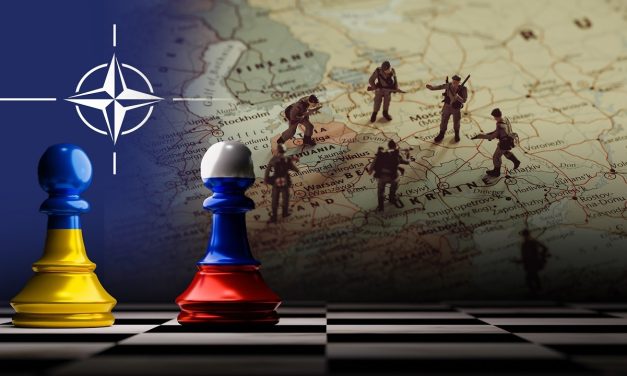
Strategic Council Online – Interview: The Ukraine war has become a new turning point in the political, security, and even commercial relations of allies on both sides of the Atlantic. While this war is nearing its fourth year, many questions still remain regarding its future and its consequences; among them, will the continuation of the Ukraine war lead to the collapse of the European security illusion?

Is Greenland Pushing Europe Toward China?

Strategic Council Online – Interview: A European affairs expert believes that the seizure of Greenland will certainly weaken America’s relations with Europe and its allies. Donald Trump’s view is that he does not need these countries, but if Europe faces significant pressure from the United States, it is natural for it to move toward China.

Alarm Bells Sound for ISIS Revival in Syria: Threat to Iraq and West Asia

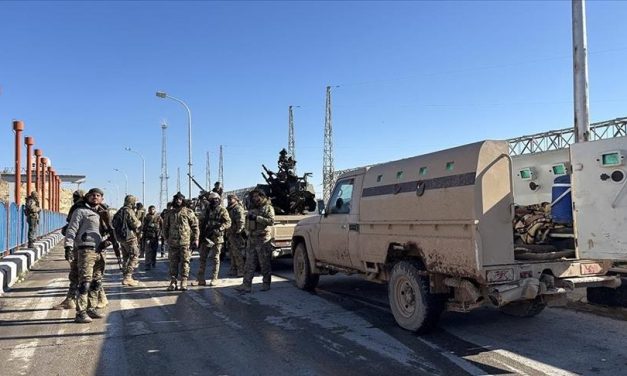
Strategic Council Online – Opinion: Numerous documents and pieces of evidence indicate that ISIS, which in recent years has been the region’s biggest threat to security and stability after the Zionist regime, has once again in recent months become a focal point for political and security exploitation by American and Zionist regime security, intelligence, and political circles.

Afghanistan’s Effective Role in the Economy of Eurasia

Strategic Council Online – Interview: A regional affairs researcher stated: Despite projects such as the Khaf-Herat railway and the Herat-Balkh-Mazar-i-Sharif corridor being on the agenda, insecurity and the absence of an inclusive government remain the most significant obstacles to realizing transit corridors and Afghanistan playing an effective role in the economy of Eurasia.

Loading

Últimas publicaciones

America’s Zero-Sum Game in Iraq

Online Strategic Council – Memoir: The swift selection of Nouri al-Maliki for the premiership constitutes a new phase in Iraq’s political sphere. Multiple factors have played a role in this process, the most important being the prevailing situation in Iraq and the region. Under such circumstances, Iraq requires a powerful and experienced prime minister who can keep the country away from the dangers of wars and crises.

America’s Strategy for Creating Tension in the Asia-Pacific

Strategic Council Online – Opinion: Relations between some countries in the Asia-Pacific region, such as China and Japan or China and Australia, which were previously relatively normal, are trending towards deterioration, and the primary reason for this is the aggressive policies of the United States of America.

The Collapse of the European Security Illusion with the Continuation of the Ukraine War?

Strategic Council Online – Interview: The Ukraine war has become a new turning point in the political, security, and even commercial relations of allies on both sides of the Atlantic. While this war is nearing its fourth year, many questions still remain regarding its future and its consequences; among them, will the continuation of the Ukraine war lead to the collapse of the European security illusion?

Is Greenland Pushing Europe Toward China?

Strategic Council Online – Interview: A European affairs expert believes that the seizure of Greenland will certainly weaken America’s relations with Europe and its allies. Donald Trump’s view is that he does not need these countries, but if Europe faces significant pressure from the United States, it is natural for it to move toward China.

Alarm Bells Sound for ISIS Revival in Syria: Threat to Iraq and West Asia

Strategic Council Online – Opinion: Numerous documents and pieces of evidence indicate that ISIS, which in recent years has been the region’s biggest threat to security and stability after the Zionist regime, has once again in recent months become a focal point for political and security exploitation by American and Zionist regime security, intelligence, and political circles.

Afghanistan’s Effective Role in the Economy of Eurasia

Strategic Council Online – Interview: A regional affairs researcher stated: Despite projects such as the Khaf-Herat railway and the Herat-Balkh-Mazar-i-Sharif corridor being on the agenda, insecurity and the absence of an inclusive government remain the most significant obstacles to realizing transit corridors and Afghanistan playing an effective role in the economy of Eurasia.

Loading

DERNIER CONTENU

America’s Zero-Sum Game in Iraq

Online Strategic Council – Memoir: The swift selection of Nouri al-Maliki for the premiership constitutes a new phase in Iraq’s political sphere. Multiple factors have played a role in this process, the most important being the prevailing situation in Iraq and the region. Under such circumstances, Iraq requires a powerful and experienced prime minister who can keep the country away from the dangers of wars and crises.

America’s Strategy for Creating Tension in the Asia-Pacific

Strategic Council Online – Opinion: Relations between some countries in the Asia-Pacific region, such as China and Japan or China and Australia, which were previously relatively normal, are trending towards deterioration, and the primary reason for this is the aggressive policies of the United States of America.

The Collapse of the European Security Illusion with the Continuation of the Ukraine War?

Strategic Council Online – Interview: The Ukraine war has become a new turning point in the political, security, and even commercial relations of allies on both sides of the Atlantic. While this war is nearing its fourth year, many questions still remain regarding its future and its consequences; among them, will the continuation of the Ukraine war lead to the collapse of the European security illusion?

Is Greenland Pushing Europe Toward China?

Strategic Council Online – Interview: A European affairs expert believes that the seizure of Greenland will certainly weaken America’s relations with Europe and its allies. Donald Trump’s view is that he does not need these countries, but if Europe faces significant pressure from the United States, it is natural for it to move toward China.

Alarm Bells Sound for ISIS Revival in Syria: Threat to Iraq and West Asia

Strategic Council Online – Opinion: Numerous documents and pieces of evidence indicate that ISIS, which in recent years has been the region’s biggest threat to security and stability after the Zionist regime, has once again in recent months become a focal point for political and security exploitation by American and Zionist regime security, intelligence, and political circles.

Afghanistan’s Effective Role in the Economy of Eurasia

Strategic Council Online – Interview: A regional affairs researcher stated: Despite projects such as the Khaf-Herat railway and the Herat-Balkh-Mazar-i-Sharif corridor being on the agenda, insecurity and the absence of an inclusive government remain the most significant obstacles to realizing transit corridors and Afghanistan playing an effective role in the economy of Eurasia.

Loading