47th G7 Summit; Drafting Supporters in Post-Corona World!

2021/06/22 | Note, Politics, top news

Strategic Council Online - The 47th summit of the seven industrialized countries of the world was held, and its sessions were devoted to topics such as the recovery of the world economy in the post-Corona era, renewable energy and other global challenges. At the end of the meeting, the G7 leaders agreed to allocate one billion doses of Corona vaccine to poor countries. However, they did not agree to provide 100 billion dollars to the International Monetary Fund to help poor countries overcome the Covid-19 epidemic crisis. The G7 Summit also addressed other issues, which are briefly described below. Reza Majidzadeh - Researcher of political economy of development

The Group of 7 did not agree on a timeline for the removal of coal from power generation. This disagreement shows that the pressure and determination to make the full transition from the age of fossil fuels to clean energy has not yet been established and such fuels will continue to be important. On the other hand, Joe Biden suggested that imposing a global minimum tax could provide the basis for global justice, and that a proposal to finance infrastructure projects in developing countries would prevent Chinese influence and be a “democratic alternative”. Biden emphasized the democratic system of government and hoped that his first foreign trip would demonstrate that democracy could solve some of the world’s most important challenges. In addition, the final communiqué of the meeting emphasized the need to take action against forced labor in the agricultural, solar and clothing sectors, and stressed the need to increase supply chain flexibility and technology standards in order to align and support democracies. Meanwhile, the G7 leaders agreed to review international tax laws and ally themselves to prevent large multinational corporations from settling in tax havens. In fact, their goal is to end the corrupt tax competition and impose a minimum global tax.

Although geopolitical issues have been the main topic of discussion among the G7 leaders, the meeting did not focus on those issues and did not prioritize them. Russia’s absence from the meeting was one of the highlights of the latest G7 summit, which was previously held in the presence of Russia as the G8, but was not invited due to tensions over the Crimean peninsula; but the issue remains open, and Western powers appear to be uniting in opposition to Russia’s military, intelligence and political actions.

At the NATO summit, which followed the G7 summit, the secretary general said that China was not considered a rival or an enemy, but that its economic and political growth was the biggest security challenge. China seeks to establish its territorial claims in the South and East China Seas, in the Taiwan Strait and on its border with India, by exerting pressure through military and paramilitary forces and economic incentives. The G7 foreign ministers have previously argued that China’s actions are disrupting the world order, especially in the context of global values, rights and norms. The seven leaders have also taken an active approach, demonstrating their position on increasing engagement in India and the Pacific and cooperating with the Association of Southeast Asian Nations. An official present at the meeting said that three years ago, China was not mentioned at the G7 summit, but at this year’s meeting, one part of the meeting was China and the importance of coordination and response to non-market economic measures and human rights violations in China, including in Xinjiang and Hong Kong. Explicit confrontation with China means that Iran will also face more difficulties in a long-term agreement with China, and it may even be that, as in the past few years, much of the cost of dealing with China’s expansionism will be borne by Iran.

The above points and the text of the statement of that meeting show that the latest G7 meeting aimed at countering the increase of China’s economic and political influence and power has come to an end and could be the beginning of a period of bipolar monopoly in the field of international political economy; on the one hand, the Chinese version with allies such as Russia, with an emphasis on organizational and oligarchic power in the East, and on the other hand, an alliance of Western systems.
0 Comments

Submit a Comment

Your email address will not be published. Required fields are marked *

LATEST CONTENT

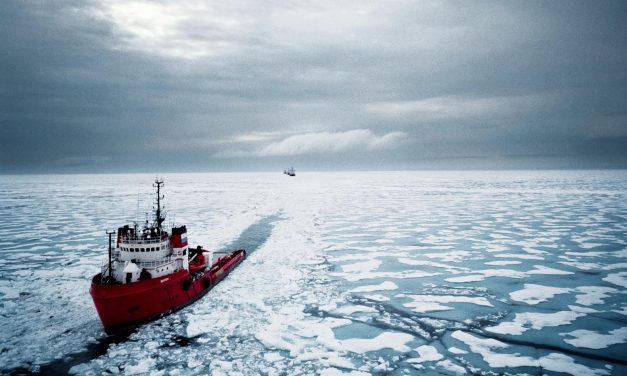
The Arctic; From Geographical Freezing to Geopolitical Boiling

Strategic Council Online – Opinion: The Arctic is no longer a frozen, remote periphery; it has become a live theater of great-power competition, where sea routes, port infrastructure, the law of the sea, and military deterrence are intertwined, shaping the future of maritime security.

The Zionist Regime’s Time Bomb Activated in the West Bank

Strategic Council Online – Opinion: In the midst of America’s military deployment to West Asia and the Persian Gulf, which has increased tensions at the regional and global levels, the Zionist regime has seized the opportunity and accelerated the advancement of its ambitious projects, including the process of the illegal annexation of the West Bank to the occupied territories.

With the End of New START, How Will the Future of Nuclear Security Be Shaped?

Strategic Council Online – Opinion: With the collapse of the last pillar of nuclear arms control between Washington and Moscow, the world stands on the threshold of a ruleless order that both carries the scent of unlimited competition and conceals within itself the possibility of new forms of bargaining.

Loading

Últimas publicaciones

The Arctic; From Geographical Freezing to Geopolitical Boiling

Strategic Council Online – Opinion: The Arctic is no longer a frozen, remote periphery; it has become a live theater of great-power competition, where sea routes, port infrastructure, the law of the sea, and military deterrence are intertwined, shaping the future of maritime security.

The Zionist Regime’s Time Bomb Activated in the West Bank

Strategic Council Online – Opinion: In the midst of America’s military deployment to West Asia and the Persian Gulf, which has increased tensions at the regional and global levels, the Zionist regime has seized the opportunity and accelerated the advancement of its ambitious projects, including the process of the illegal annexation of the West Bank to the occupied territories.

With the End of New START, How Will the Future of Nuclear Security Be Shaped?

Strategic Council Online – Opinion: With the collapse of the last pillar of nuclear arms control between Washington and Moscow, the world stands on the threshold of a ruleless order that both carries the scent of unlimited competition and conceals within itself the possibility of new forms of bargaining.

Loading

DERNIER CONTENU

The Arctic; From Geographical Freezing to Geopolitical Boiling

Strategic Council Online – Opinion: The Arctic is no longer a frozen, remote periphery; it has become a live theater of great-power competition, where sea routes, port infrastructure, the law of the sea, and military deterrence are intertwined, shaping the future of maritime security.

The Zionist Regime’s Time Bomb Activated in the West Bank

Strategic Council Online – Opinion: In the midst of America’s military deployment to West Asia and the Persian Gulf, which has increased tensions at the regional and global levels, the Zionist regime has seized the opportunity and accelerated the advancement of its ambitious projects, including the process of the illegal annexation of the West Bank to the occupied territories.

With the End of New START, How Will the Future of Nuclear Security Be Shaped?

Strategic Council Online – Opinion: With the collapse of the last pillar of nuclear arms control between Washington and Moscow, the world stands on the threshold of a ruleless order that both carries the scent of unlimited competition and conceals within itself the possibility of new forms of bargaining.

Loading

DERNIER CONTENU

The Arctic; From Geographical Freezing to Geopolitical Boiling

Strategic Council Online – Opinion: The Arctic is no longer a frozen, remote periphery; it has become a live theater of great-power competition, where sea routes, port infrastructure, the law of the sea, and military deterrence are intertwined, shaping the future of maritime security.

The Zionist Regime’s Time Bomb Activated in the West Bank

Strategic Council Online – Opinion: In the midst of America’s military deployment to West Asia and the Persian Gulf, which has increased tensions at the regional and global levels, the Zionist regime has seized the opportunity and accelerated the advancement of its ambitious projects, including the process of the illegal annexation of the West Bank to the occupied territories.

With the End of New START, How Will the Future of Nuclear Security Be Shaped?

Strategic Council Online – Opinion: With the collapse of the last pillar of nuclear arms control between Washington and Moscow, the world stands on the threshold of a ruleless order that both carries the scent of unlimited competition and conceals within itself the possibility of new forms of bargaining.

Loading

DERNIER CONTENU

The Arctic; From Geographical Freezing to Geopolitical Boiling

Strategic Council Online – Opinion: The Arctic is no longer a frozen, remote periphery; it has become a live theater of great-power competition, where sea routes, port infrastructure, the law of the sea, and military deterrence are intertwined, shaping the future of maritime security.

The Zionist Regime’s Time Bomb Activated in the West Bank

Strategic Council Online – Opinion: In the midst of America’s military deployment to West Asia and the Persian Gulf, which has increased tensions at the regional and global levels, the Zionist regime has seized the opportunity and accelerated the advancement of its ambitious projects, including the process of the illegal annexation of the West Bank to the occupied territories.

With the End of New START, How Will the Future of Nuclear Security Be Shaped?

Strategic Council Online – Opinion: With the collapse of the last pillar of nuclear arms control between Washington and Moscow, the world stands on the threshold of a ruleless order that both carries the scent of unlimited competition and conceals within itself the possibility of new forms of bargaining.

Loading