

In recent years, China’s rising power and the way other countries are reacting to such an increasing influence across of the world of China in economic, military and technological areas have turned into a new challenge for the two sides of the Atlantic. For instance, in the national security strategy of Barack Obama’s administration in 2015, constructive relationship with China was proposed and cooperation between the two countries was enhanced remarkably. However, Trump’s national security strategy in 2017 introduced China as a competitor and a reformist power that seeks to weaken America’s security and prosperity. This is suggestive of a change in attitude inside the United States. The public opinion is also following the approaches promoted by the American politicians. In an October 2020 opinion poll by the Chicago Global Affairs Council, the majority of the American citizens, for the first time after 2006, called for the adoption of policies to control the power of China and rejected engagement and cooperation with Beijing. In the long-term strategic perspective of the European Union concerning EU relations with China which was released in 2019, China has been described as an economic competitor and a systemic rival. Of course, such a stance is softer than that of the United States.
China’s challenges for NATO member countries
The 14-trillion-dollar economy of China is soon going to surpass that of the United States of America. China can impose sanctions on companies and even countries critic al of the policies of Beijing. It can also exploit its monetary tools against weak countries and purchase more vital infrastructure such as ports in Europe. This has raised concerns among NATO leaders as in the time of crisis and conflict, NATO cannot benefit from such infrastructure. The most important challenges China can impose on NATO member states include the following:
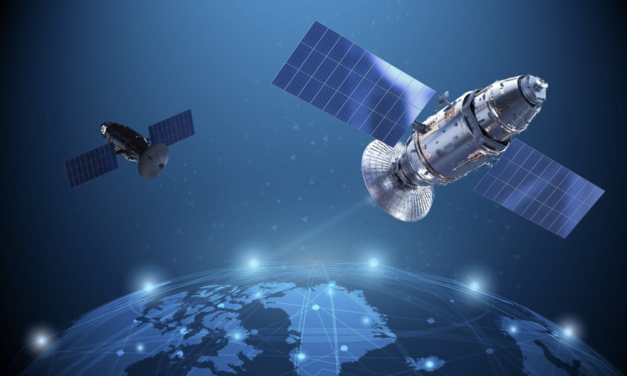
China is a serious challenge for the West in the area of technology such as the G5 technology, artificial intelligence, hypersonic weapons and quantum calculations. China’s cyber spy capabilities including its power of disinformation and misinformation pose a threat to the interest of the NATO member states.
The Army of China is the main pioneer of China’s technology supremacy as it is currently developing military capabilities and therefore influencing and expanding its power across the world. China is seeking to build a strong army to protect its interests globally and is making efforts to turn its army in the number on army of the world by 2049. China is turning into a global economic axis while renovating its armed forces. The strong presence of Chin in Africa and South Asia and its influence in space and cyberspace are considered a serious threat to the interests of the West. The activities of China’s Huawei in the NATO countries and Italy’s joining the One Belt One Road initiative constitute other challenges China pose to Western interests. China’s aggressive approach in the South China Sea, Beijing’s atomic program and heightened efforts by China to invest in European infrastructure would have in the views of NATO leaders serious security repercussions for the global peace and order. And China is also expanding its military cooperation with Russia.
NATO and the challenge of China
NATO member states in their December 2019 summit in London committed themselves for the first time to confronting the increasing influence of China and its offensive policies. The NATO Secretary General Jens Stolenberg called for a collective reaction in the London meeting to the rising power of China as a global powerhouse and said NATO should be vigilant of China’s getting close to it. Even though he declared that this does not mean NATO is not approaching South China Sea, it is important that China is approaching NATO in the north and Africa and has heavily invested in the European infrastructure. NATO leaders announced in the final statement of the London Summit that China has turned into a strategic focus for NATO. The NATO Secretary General was further mandated with preparing a report on the reasons behind the formation of this military alliance. Stolenberg in April 2020 obligated a working group to draft a report on the future of NATO. The report was published in November 2020 under the title of NATO 2030. The report says China is a full-fledged systematic rival and is no more a sole economic player or security actor in Asia. The power of China, its capabilities and global extension is a serious challenge for democratic societies especially when China is taking further steps towards more authority, power and territorial ambition. As against Russia, which is an immediate and close threat to the security of Europe, China in the long term can challenge the security of areas beyond the Atlantic. This report asks NATO to spend its political strengthen and concerted efforts to control the security challenges of China and invest more to boost the capabilities of NATO to monitor and defuse the activities of China so that it can defend its allies against China.
NATO challenges for the adoption of a coherent approach
One of the main challenges of NATO is to adopt a coherent and united approach and converge the different views of the NATO member countries in order to produce a united assessment of the status quo. For example, German Foreign Minister Heiko Maas said in April 2019 that China has turned into a challenge in all areas and a better understanding is needed for its consequences for NATO. In fact, under the present circumstances, there is no consensus among the US allies on how to interact with China. Secondly, the NATO members are not unanimous on issues related to the human rights, Hong Kong and Taiwan or the militarization of the South China Sea. For example, Germany’s ambassador to the United Nations issued a statement on 06 October 2020 to criticize cases of the violation of human rights in China. Even though 23 of the 30 member countries of NATO signed the statement, Turkey, Romania, Hungary and the Czech Republic refused to sign it and South Korea and Thailand adopted silence. Third, the economic dependency of the European countries of European countries has somehow presented restrictions for China. And this dependency will become stronger in the following years. For example, China and the European Union entered into a comprehensive investment agreement in December 2020 while Biden had won the 2020 US presidential elections. Fourth, the public opinion in all the NATO member countries is not negative towards China. For example, in Italy and Poland, people have positive views towards China. Fifth, the Covid-19 has negatively impacted on defense budgets and government expenditure. And therefore, it is not possible to invest more on the defense sector. And ultimately, there is no consensus on how to criticize China and maintain trade cooperation with that country.
Conclusion
Although NATO, in the past ten years, has had sufficient time to examine how it wants to interact with China, it has been more engaged in controlling Russia and its activities and actions in Ukraine and Crimea and have ignored China’s increasing ambitions. However, it can be mentioned that NATO’s reaction to the rising power of China will be a two-dimensional approach of defense-deterrence and dialog-cooperation. Of course, there is no sign that China is seeking confrontation with the NATO member states or is imposing the threat of nuclear or conventional weapons on them. Contrary to Russia, China is not seeking to use military force to change the borders of Europe. NATO, given the marine capabilities of China to renovate its fleet, would update its marine strategy. Furthermore, NATO would exert pressure on China for pursuing international norms and principles especially the provisions of the Convention on the Law of the Seas as well as weapons control agreements, clarifying the status of atomic and conventional weapons and the activities and military objectives and defense budget. Also, NATO will be seeking practical cooperation and systematic talks with China. NATO wants to hear the approaches of China on nuclear deterrence and disarmament, the status of North Korea, cyber norms and marine security. The status of NATO in Afghanistan, the security of energy and the fight against terrorism are issues of interest to China. It is also probable that NATO and China would reach an agreement on taking confidence building measures in areas of mutual interest. In conclusion, it can be said that China will not be a NATO partner in the mid- and long-term so as NATO could easily interact with it as Beijing is not accommodating Western ideas of democracy, human rights and issues related to the East Asia.







0 Comments