Inefficiency of Minsk Group and Unclear Prospects of Karabakh Peace Deal

2020/12/12 | interview, Politics, top news

Strategic Council Online - An expert on international affairs said: The most important challenge of the Karabakh crisis is that, despite the recent peace agreement, its future status is still ambiguous and unclear, and this could be the source and the beginning of a renewed conflict between Azerbaijan and Armenia.

Referring to the history of the Karabakh crisis, Reza Mirtaher said in an interview with the website of the Strategic Council on Foreign Relations that after the outbreak of the conflict in Karabakh in 1988 and in the aftermath of the collapse of the Soviet Union in 1991, the conflict between Armenia and the Republic of Azerbaijan was turned into a war that lasted until 1994 when a ceasefire was announced. But, the truce was never sustainable, and the fighting continued until recently, ostensibly ending with a Russian-mediated peace agreement, but developments after the agreement, including a recent claim by the president of Azerbaijan for compensation, can rekindle the ashes of this war.

Mirtaher, referring to the recent visit of the President of the Republic of Azerbaijan to the territories taken back from Armenia and his claim that he intends to seek compensation from Yerevan in international courts for the damage caused to the buildings in the Kalbajar region, he noted: Basically, the realization of such activities and demands depends on the strength of one of the parties and the pressures that are imposed on the other side. At present, Azerbaijan considers itself the absolute victor of the recent war in Karabakh, and we are witnessing that President of Azerbaijan Ilham Aliyev mocked the Armenians in his recent speech. This indicates that the Azeri side considers itself very superior. Therefore, under the unequal circumstances, it has demanded compensation from the Armenian side.

He added: But the realization of this issue under the status quo will be very difficult and the future situation will determine whether the Armenians and Armenia will be willing to pay compensation to the Republic of Azerbaijan or will refuse to do so.

As for the possible challenges in the Karabakh issue facing Armenia and Azerbaijan, he said: The most important challenge is that the future of Karabakh remains unclear and ambiguous despite the recent peace agreement, and this could be considered as a source of tension between the two sides. Another point that may become problematic is Azerbaijan’s financial demands from Armenia. Because during the past three decades seven cities of Azerbaijan have been under the occupation of Armenia and massive destruction has taken place there. Also, more than one and a half million people in the area were forced to leave their homes and for their return grounds should be prepared. Reconstruction of those areas will require billions of dollars, and this issue should be considered in the context of Baku’s request to Yerevan for compensation. Therefore, until a solution is found between the two parties and a solution that the people of Karabakh, with the Armenian majority, are not satisfied with it is not reached, the Karabakh issue will remain unresolved and is like fire under the ashes, while international organizations and groups, including the Minsk Group, have failed to resolve the crisis.

Reasons for Inefficiency of Minsk Group in Resolving Karabakh Crisis

Referring to the Minsk Group’s inability in resolving the Karabakh crisis, the expert on international affairs said: In 1992, a group was formed called the Minsk Group which composed of the United States, France and Russia as the key members with an aim of paving the way for finding a political solution to the Karabakh crisis. Meanwhile, through exchanges of views, talks and negotiations with the Azeri and Armenian sides, the group could be able to find a solution in this regard.

As for the performance of the group, Mirtaher said: In fact, over the past 30 years, the group has failed to realize its goal, and we have been witnessing that the Karabakh crisis has finally reached its current state through the military means; in other words, with the invasion of the Republic of Azerbaijan under the strong support of Turkey, the Azeris were finally able to force the Armenians to withdraw from the seven cities around Karabakh. However, the fate of the Karabakh region itself is still in a state of ambiguity.

Mirtaher continued by pointing to the reasons for the failure of the Minsk Group in resolving the crisis and said: The reason for the failure of the Minsk Group in the first place is related to the perception of the parties of the conflict. In other words, Armenia saw itself as the winner and thought that Azerbaijan would not be able to take effective action to change the military situation in the Karabakh region. Especially, given the defeats of the Azeri forces in the wars of the early 1990s, this perception of the Armenians was dominant.

Mirtaher cited another reason for the Minsk Group’s inefficiency as lack of a political will on the part of the parties to the conflict, especially Armenia, for finding a political solution with an aim of putting an end to the crisis.

He concluded by saying: But the more important issue is that basically the Minsk Group lacked the necessary means to exert influence and leave an impact on the parties to this conflict, and despite several rounds of bilateral and multilateral negotiations, this issue caused no change in the unresolved situation in Karabakh.
0 Comments

Submit a Comment

Your email address will not be published. Required fields are marked *

LATEST CONTENT

Examining Political Developments Related to the Ukraine War

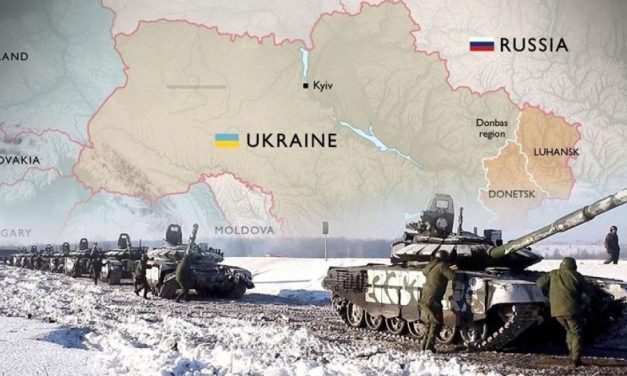
Strategic Council Online – Interview: An international affairs analyst stated: Today, Ukraine is facing a set of structural corruption, intra-European divisions, a shift in America’s approach, and a legitimacy crisis for Zelenskyy, which has propelled the course of the war and the future of the European Union and NATO into an entirely new phase.

Dr. Kharrazi Meets Delegation from Chinese Think Tanks: Emphasizes the Need for an Action Plan to Implement the Comprehensive Iran–China Cooperation Document

Strategic Council Online: The President of the Strategic Council on Foreign Relations stated, “Despite the signing of the 25-year Comprehensive Cooperation Agreement between Iran and China, a long path remains toward its full implementation. One key point both countries must observe is to move away from a project-based approach and instead adopt a program-oriented relationship by formulating a concrete action plan. This plan should be grounded in Iran’s national spatial planning framework and aligned with the mutual priorities of both nations as outlined in the 25-year Comprehensive Cooperation Document.”

An Analysis of the New U.S. National Security Strategy Document

Strategic Council Online – Opinion: The new U.S. National Security Strategy document, which emphasizes the slogan “America First,” indicates that Washington has moved away from many previous patterns and shifted its focus from external interventions to the preservation of domestic security and the preservation of the Western Hemisphere. This document redefines threats, priorities, and America’s global role.

Artificial Intelligence and the Intensification of Global Inequality

Strategic Council Online – Opinion: Although other revolutions have occurred between the Industrial Revolution and the artificial intelligence revolution, especially the ICT (Information and Communications Technology) revolution, and humanity has made remarkable progress along this path, in terms of fundamental transformations in the mode of production and social relations, it can be said that the transformations of artificial intelligence and the scope of its effects are perhaps similar to the Industrial Revolution but on a much larger scale. It is, in fact, a new revolution, much more profound and complex than the Industrial Revolution.

Reasons for Trump’s Attempt to Remove South Africa from the Upcoming G20 Summit

Strategic Council Online – Interview: Iran’s former ambassador to South Africa stated: “Trump’s decision to remove South Africa from the upcoming G20 summit is an irrational, reactionary decision lacking a legal basis. On one hand, it stems from Trump’s contemptuous and narcissistic outlook. On the other hand, it is a response to Pretoria’s prominent role in pursuing the legal case against the Israeli regime at the International Court of Justice.”

An Analysis of Iran’s Missile Capability

Strategic Council Online – Interview: A strategic affairs analyst said: Iran’s missile doctrine is not only part of its deterrent capability but also part of the security identity of the Islamic Republic of Iran and should not be weakened.

Japan-China Tensions Over Taiwan

Strategic Council Online – Interview: An international affairs expert said that U.S. President Donald Trump, in a phone call this week with Sanae Takaichi, asked her not to further escalate disputes with China. Earlier this month, Takaichi created a rare tension with Beijing by stating that “a potential Chinese attack on Taiwan could lead to military action by Japan,” remarks that drew a sharp reaction from China. Beijing demanded that she retract these statements, but the Japanese Prime Minister has not done so thus far, and Tokyo has only emphasized that its policy regarding Taiwan has not changed.

A Look at bin Salman’s Recent Trip to America

Strategic Council Online – Opinion: The recent trip of the Saudi Crown Prince to America was a targeted effort to solidify the strategic partnership with Washington, reduce political uncertainties, and strengthen Riyadh’s political role-playing.

Loading

Últimas publicaciones

Examining Political Developments Related to the Ukraine War

Strategic Council Online – Interview: An international affairs analyst stated: Today, Ukraine is facing a set of structural corruption, intra-European divisions, a shift in America’s approach, and a legitimacy crisis for Zelenskyy, which has propelled the course of the war and the future of the European Union and NATO into an entirely new phase.

Dr. Kharrazi Meets Delegation from Chinese Think Tanks: Emphasizes the Need for an Action Plan to Implement the Comprehensive Iran–China Cooperation Document

Strategic Council Online: The President of the Strategic Council on Foreign Relations stated, “Despite the signing of the 25-year Comprehensive Cooperation Agreement between Iran and China, a long path remains toward its full implementation. One key point both countries must observe is to move away from a project-based approach and instead adopt a program-oriented relationship by formulating a concrete action plan. This plan should be grounded in Iran’s national spatial planning framework and aligned with the mutual priorities of both nations as outlined in the 25-year Comprehensive Cooperation Document.”

An Analysis of the New U.S. National Security Strategy Document

Strategic Council Online – Opinion: The new U.S. National Security Strategy document, which emphasizes the slogan “America First,” indicates that Washington has moved away from many previous patterns and shifted its focus from external interventions to the preservation of domestic security and the preservation of the Western Hemisphere. This document redefines threats, priorities, and America’s global role.

Artificial Intelligence and the Intensification of Global Inequality

Strategic Council Online – Opinion: Although other revolutions have occurred between the Industrial Revolution and the artificial intelligence revolution, especially the ICT (Information and Communications Technology) revolution, and humanity has made remarkable progress along this path, in terms of fundamental transformations in the mode of production and social relations, it can be said that the transformations of artificial intelligence and the scope of its effects are perhaps similar to the Industrial Revolution but on a much larger scale. It is, in fact, a new revolution, much more profound and complex than the Industrial Revolution.

Reasons for Trump’s Attempt to Remove South Africa from the Upcoming G20 Summit

Strategic Council Online – Interview: Iran’s former ambassador to South Africa stated: “Trump’s decision to remove South Africa from the upcoming G20 summit is an irrational, reactionary decision lacking a legal basis. On one hand, it stems from Trump’s contemptuous and narcissistic outlook. On the other hand, it is a response to Pretoria’s prominent role in pursuing the legal case against the Israeli regime at the International Court of Justice.”

An Analysis of Iran’s Missile Capability

Strategic Council Online – Interview: A strategic affairs analyst said: Iran’s missile doctrine is not only part of its deterrent capability but also part of the security identity of the Islamic Republic of Iran and should not be weakened.

Japan-China Tensions Over Taiwan

Strategic Council Online – Interview: An international affairs expert said that U.S. President Donald Trump, in a phone call this week with Sanae Takaichi, asked her not to further escalate disputes with China. Earlier this month, Takaichi created a rare tension with Beijing by stating that “a potential Chinese attack on Taiwan could lead to military action by Japan,” remarks that drew a sharp reaction from China. Beijing demanded that she retract these statements, but the Japanese Prime Minister has not done so thus far, and Tokyo has only emphasized that its policy regarding Taiwan has not changed.

A Look at bin Salman’s Recent Trip to America

Strategic Council Online – Opinion: The recent trip of the Saudi Crown Prince to America was a targeted effort to solidify the strategic partnership with Washington, reduce political uncertainties, and strengthen Riyadh’s political role-playing.

Loading

DERNIER CONTENU

Examining Political Developments Related to the Ukraine War

Strategic Council Online – Interview: An international affairs analyst stated: Today, Ukraine is facing a set of structural corruption, intra-European divisions, a shift in America’s approach, and a legitimacy crisis for Zelenskyy, which has propelled the course of the war and the future of the European Union and NATO into an entirely new phase.

Dr. Kharrazi Meets Delegation from Chinese Think Tanks: Emphasizes the Need for an Action Plan to Implement the Comprehensive Iran–China Cooperation Document

Strategic Council Online: The President of the Strategic Council on Foreign Relations stated, “Despite the signing of the 25-year Comprehensive Cooperation Agreement between Iran and China, a long path remains toward its full implementation. One key point both countries must observe is to move away from a project-based approach and instead adopt a program-oriented relationship by formulating a concrete action plan. This plan should be grounded in Iran’s national spatial planning framework and aligned with the mutual priorities of both nations as outlined in the 25-year Comprehensive Cooperation Document.”

An Analysis of the New U.S. National Security Strategy Document

Strategic Council Online – Opinion: The new U.S. National Security Strategy document, which emphasizes the slogan “America First,” indicates that Washington has moved away from many previous patterns and shifted its focus from external interventions to the preservation of domestic security and the preservation of the Western Hemisphere. This document redefines threats, priorities, and America’s global role.

Artificial Intelligence and the Intensification of Global Inequality

Strategic Council Online – Opinion: Although other revolutions have occurred between the Industrial Revolution and the artificial intelligence revolution, especially the ICT (Information and Communications Technology) revolution, and humanity has made remarkable progress along this path, in terms of fundamental transformations in the mode of production and social relations, it can be said that the transformations of artificial intelligence and the scope of its effects are perhaps similar to the Industrial Revolution but on a much larger scale. It is, in fact, a new revolution, much more profound and complex than the Industrial Revolution.

Reasons for Trump’s Attempt to Remove South Africa from the Upcoming G20 Summit

Strategic Council Online – Interview: Iran’s former ambassador to South Africa stated: “Trump’s decision to remove South Africa from the upcoming G20 summit is an irrational, reactionary decision lacking a legal basis. On one hand, it stems from Trump’s contemptuous and narcissistic outlook. On the other hand, it is a response to Pretoria’s prominent role in pursuing the legal case against the Israeli regime at the International Court of Justice.”

An Analysis of Iran’s Missile Capability

Strategic Council Online – Interview: A strategic affairs analyst said: Iran’s missile doctrine is not only part of its deterrent capability but also part of the security identity of the Islamic Republic of Iran and should not be weakened.

Japan-China Tensions Over Taiwan

Strategic Council Online – Interview: An international affairs expert said that U.S. President Donald Trump, in a phone call this week with Sanae Takaichi, asked her not to further escalate disputes with China. Earlier this month, Takaichi created a rare tension with Beijing by stating that “a potential Chinese attack on Taiwan could lead to military action by Japan,” remarks that drew a sharp reaction from China. Beijing demanded that she retract these statements, but the Japanese Prime Minister has not done so thus far, and Tokyo has only emphasized that its policy regarding Taiwan has not changed.

A Look at bin Salman’s Recent Trip to America

Strategic Council Online – Opinion: The recent trip of the Saudi Crown Prince to America was a targeted effort to solidify the strategic partnership with Washington, reduce political uncertainties, and strengthen Riyadh’s political role-playing.

Loading