China’s Trump Cards in Competition with US

2020/08/24 | Note, Politics, top news

Strategic Council Online - The Americans hope that with the cooperation of India they will be able to implement the India-Pacific project and stop China; but China has opposed the India-Pacific project, meaning it wants to focus from the Pacific to the Indian Ocean. Pir Mohammad Mollazehi - Asia Affairs Expert

The attainment of “global hegemonic power” in the 21st century is considered one of the most important reasons for the current confrontation between the United States and China. The United States has come to the conclusion that China is gradually becoming the world’s number one power, given its set of economic, political, and military conditions, and that it will overtake the United States; So the United States is trying to prevent China from gaining more power. China, meanwhile, has a major advantage over the United States; that is to say, it can obtain relatively cheap fuel in the Persian Gulf region and from other places and develop its industries; because production in China is very high and the cost of production is lower than in the United States; Therefore, we naturally see that Beijing is capturing the world’s consumer markets. This is a problem for American industry and the ruling liberal democratic system.

In such a situation, the Americans hope that with the cooperation of India, they can implement the India-Pacific project and stop China’s progress, but China has proposed the India-Pacific project, that is, it wants to focus from the Pacific to the Indian Ocean; Therefore, the main competition in this region seems to be in the Indian Ocean, and more specifically, this competition is on the Makran Coast with an area of ​​1500 km, part of which is in the hands of Iran and another part in the hands of Pakistan.

Two ports are very important in this area; the first is the port of Chabahar, which is located in Iran and India is making constructions building with the positive reaction of the United States, and the second is the port of Gwadar, which is located in Baluchestan, Pakistan, where the Chinese are present. China has a major project called One-Road One-Belt, which includes a land section that runs from Kasha to Gwadar, where a highway and then a railway line are to be built. The other part includes the oil and gas pipeline, which is to run from the port of Gwadar to China’s Xinjiang province and supply fuel to the western part of China. In this space, the Chinese seem to feel superior and therefore more focused on at least two countries; First, Pakistan, where they are pursuing the C-Pack project, which includes Chinese investment in mining, underground reserves, communications and industry. About $46 billion is expected to be invested by China in Pakistan.

The second is the 25 year comprehensive cooperation between Iran and China, the draft of which has been announced at the moment and it is not clear where it will be launched. The Chinese are using this cooperation as a trump card to implement the design of a one-road one-belt. In this regard, some American politicians have criticized Trump’s policy of maximum pressure against Iran, believing that pursuing this policy will bring Tehran closer to Beijing and thus increase China’s presence in the Persian Gulf, in addition to the Pacific Ocean and this will cause the Sino-US rivalry to become more serious in the Persian Gulf.

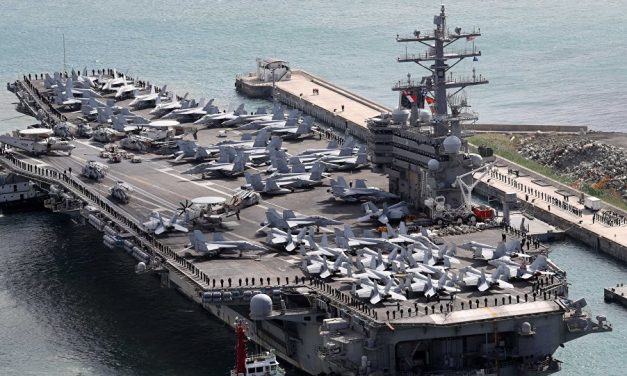
Of course, the United States is not idle in the meantime, and the recent agreement between the United Arab Emirates and Israel and the revelation of bilateral relations means that the United States wants to expand its presence in the Arab countries of the Persian Gulf. The US navies are based in Qatar, Kuwait, Bahrain, Oman and Saudi Arabia, indicating that the Strait of Hormuz is somehow under US control. However, Iran is also making great efforts to secure this strait.

In terms of influence and role-playing in the Persian Gulf and the Middle East, it may be said that China is incapable of confronting the United States; In fact, it will take time for China to invest and turn the port of Gwadar into an important port, but the Americans are already in the region. Washington will use the military option to maintain its presence in the region if it deems it necessary.

But in the case of the trade war between Beijing and Washington, it seems that China will win this battle because China’s economy is very aggressive and has been able to capture most of the world’s markets, while US power in the economy due to their internal problems and widespread military presence is declining. Their military is declining in many parts of the world. Yet Americans still hope to curb China’s political and economic influence in the world. In the meantime, there is a debate that countries such as China, Russia and Iran should form a security centre against NATO. If that happens then we will probably see a new kind of Cold War in the world.
0 Comments

Submit a Comment

Your email address will not be published. Required fields are marked *

LATEST CONTENT

America’s Zero-Sum Game in Iraq

Online Strategic Council – Memoir: The swift selection of Nouri al-Maliki for the premiership constitutes a new phase in Iraq’s political sphere. Multiple factors have played a role in this process, the most important being the prevailing situation in Iraq and the region. Under such circumstances, Iraq requires a powerful and experienced prime minister who can keep the country away from the dangers of wars and crises.

America’s Strategy for Creating Tension in the Asia-Pacific

Strategic Council Online – Opinion: Relations between some countries in the Asia-Pacific region, such as China and Japan or China and Australia, which were previously relatively normal, are trending towards deterioration, and the primary reason for this is the aggressive policies of the United States of America.

The Collapse of the European Security Illusion with the Continuation of the Ukraine War?

Strategic Council Online – Interview: The Ukraine war has become a new turning point in the political, security, and even commercial relations of allies on both sides of the Atlantic. While this war is nearing its fourth year, many questions still remain regarding its future and its consequences; among them, will the continuation of the Ukraine war lead to the collapse of the European security illusion?

Is Greenland Pushing Europe Toward China?

Strategic Council Online – Interview: A European affairs expert believes that the seizure of Greenland will certainly weaken America’s relations with Europe and its allies. Donald Trump’s view is that he does not need these countries, but if Europe faces significant pressure from the United States, it is natural for it to move toward China.

Alarm Bells Sound for ISIS Revival in Syria: Threat to Iraq and West Asia

Strategic Council Online – Opinion: Numerous documents and pieces of evidence indicate that ISIS, which in recent years has been the region’s biggest threat to security and stability after the Zionist regime, has once again in recent months become a focal point for political and security exploitation by American and Zionist regime security, intelligence, and political circles.

Afghanistan’s Effective Role in the Economy of Eurasia

Strategic Council Online – Interview: A regional affairs researcher stated: Despite projects such as the Khaf-Herat railway and the Herat-Balkh-Mazar-i-Sharif corridor being on the agenda, insecurity and the absence of an inclusive government remain the most significant obstacles to realizing transit corridors and Afghanistan playing an effective role in the economy of Eurasia.

Loading

Últimas publicaciones

America’s Zero-Sum Game in Iraq

Online Strategic Council – Memoir: The swift selection of Nouri al-Maliki for the premiership constitutes a new phase in Iraq’s political sphere. Multiple factors have played a role in this process, the most important being the prevailing situation in Iraq and the region. Under such circumstances, Iraq requires a powerful and experienced prime minister who can keep the country away from the dangers of wars and crises.

America’s Strategy for Creating Tension in the Asia-Pacific

Strategic Council Online – Opinion: Relations between some countries in the Asia-Pacific region, such as China and Japan or China and Australia, which were previously relatively normal, are trending towards deterioration, and the primary reason for this is the aggressive policies of the United States of America.

The Collapse of the European Security Illusion with the Continuation of the Ukraine War?

Strategic Council Online – Interview: The Ukraine war has become a new turning point in the political, security, and even commercial relations of allies on both sides of the Atlantic. While this war is nearing its fourth year, many questions still remain regarding its future and its consequences; among them, will the continuation of the Ukraine war lead to the collapse of the European security illusion?

Is Greenland Pushing Europe Toward China?

Strategic Council Online – Interview: A European affairs expert believes that the seizure of Greenland will certainly weaken America’s relations with Europe and its allies. Donald Trump’s view is that he does not need these countries, but if Europe faces significant pressure from the United States, it is natural for it to move toward China.

Alarm Bells Sound for ISIS Revival in Syria: Threat to Iraq and West Asia

Strategic Council Online – Opinion: Numerous documents and pieces of evidence indicate that ISIS, which in recent years has been the region’s biggest threat to security and stability after the Zionist regime, has once again in recent months become a focal point for political and security exploitation by American and Zionist regime security, intelligence, and political circles.

Afghanistan’s Effective Role in the Economy of Eurasia

Strategic Council Online – Interview: A regional affairs researcher stated: Despite projects such as the Khaf-Herat railway and the Herat-Balkh-Mazar-i-Sharif corridor being on the agenda, insecurity and the absence of an inclusive government remain the most significant obstacles to realizing transit corridors and Afghanistan playing an effective role in the economy of Eurasia.

Loading

DERNIER CONTENU

America’s Zero-Sum Game in Iraq

Online Strategic Council – Memoir: The swift selection of Nouri al-Maliki for the premiership constitutes a new phase in Iraq’s political sphere. Multiple factors have played a role in this process, the most important being the prevailing situation in Iraq and the region. Under such circumstances, Iraq requires a powerful and experienced prime minister who can keep the country away from the dangers of wars and crises.

America’s Strategy for Creating Tension in the Asia-Pacific

Strategic Council Online – Opinion: Relations between some countries in the Asia-Pacific region, such as China and Japan or China and Australia, which were previously relatively normal, are trending towards deterioration, and the primary reason for this is the aggressive policies of the United States of America.

The Collapse of the European Security Illusion with the Continuation of the Ukraine War?

Strategic Council Online – Interview: The Ukraine war has become a new turning point in the political, security, and even commercial relations of allies on both sides of the Atlantic. While this war is nearing its fourth year, many questions still remain regarding its future and its consequences; among them, will the continuation of the Ukraine war lead to the collapse of the European security illusion?

Is Greenland Pushing Europe Toward China?

Strategic Council Online – Interview: A European affairs expert believes that the seizure of Greenland will certainly weaken America’s relations with Europe and its allies. Donald Trump’s view is that he does not need these countries, but if Europe faces significant pressure from the United States, it is natural for it to move toward China.

Alarm Bells Sound for ISIS Revival in Syria: Threat to Iraq and West Asia

Strategic Council Online – Opinion: Numerous documents and pieces of evidence indicate that ISIS, which in recent years has been the region’s biggest threat to security and stability after the Zionist regime, has once again in recent months become a focal point for political and security exploitation by American and Zionist regime security, intelligence, and political circles.

Afghanistan’s Effective Role in the Economy of Eurasia

Strategic Council Online – Interview: A regional affairs researcher stated: Despite projects such as the Khaf-Herat railway and the Herat-Balkh-Mazar-i-Sharif corridor being on the agenda, insecurity and the absence of an inclusive government remain the most significant obstacles to realizing transit corridors and Afghanistan playing an effective role in the economy of Eurasia.

Loading