The Challenge Between Europe and America Over Greenland

2025/09/22 | Economy, interview, top news

Strategic Council Online – Interview: An international affairs expert, referring to the ongoing dispute between Europe and America over Greenland, stated that Europe’s policy is based on increasing political, diplomatic, and even economic support for Denmark and Greenland, and it certainly will not move towards escalating tensions with America.

Hassan Beheshtipour, in an interview with the website of the Strategic Council on Foreign Relations, stated: After World War II, the United States attempted to propose the theory of globalization and ultimately a unipolar world, and it was also imagined that disagreements among countries over unipolarity and multilateralism would persist. However, when Trump became president of the United States in 2016, he raised the slogan “America First,” believing that many countries, including its allies, were exploiting America, and that this trend needed to be ended as quickly as possible.
He added: Therefore, Trump’s raising of issues such as Greenland, Canada, the Gulf of Mexico, and other matters should be viewed within this framework. This American approach is not necessarily limited to Greenland; it also encompasses other issues. Trump had also said that Canada, which is larger in area than America, should become one of the states of America. Trump imagines that Greenland is like Alaska, which can be bought or its owners can somehow be forced to give it to America.
This international affairs expert emphasized that Greenland is one of the strategic regions in Europe, and America is attempting to establish its position in this region in the future, competing with Russia and China, in an effort to enhance the country’s deterrent power.
Regarding the European Union’s reaction to the continuation of Trump’s dispute over this region, Beheshtipour said: The Europeans still do not have a policy of severe confrontation with America over the issue of Greenland, as with the issue of Ukraine, and it is unlikely that the American side would strategically want to engage with Europe over this issue and increase tensions between the two sides.
He added that Trump is trying to expand the policy of expansionism and establish it globally. Empires have always pursued territorial expansionism, and now America has returned to the same expansionist approaches of the early 1900s. Trump and his like-minded individuals in the Republican Party aim to return America to a time when it was expanding its sphere of influence in various fields, particularly in territorial issues and the extraction of mines and underground resources. However, with only three years left, it is unlikely that this issue will gain traction in America. Therefore, this policy has no strategic place in America’s foreign policy decisions and should be considered solely as stemming from Trump’s desire and character.
This international affairs expert, referring to the formation of a bipolarity within the American Republican Party, stated: Some, like the Bush wing, still support the globalization approach, but others who support Trump want to return to the previous powerful America, which was more defined by hard power. This approach only accepts America’s centrality in the world and wants to make all countries satellites of America.
In response to the question of how likely it is that tensions over Greenland will lead to strategic challenges in America-Europe relations, he said: Just as Europe endured America for Trump’s first four years, it will pursue a policy of appeasement with America for another period and will not allow its relations to move towards crisis in this regard. In fact, Europe’s strategic policy towards Trump’s America regarding the issue of Greenland is “appeasement and accommodation.”
Beheshtipour, in response to whether Europe would still follow the same policy if America’s positions in the periods after Trump, in case of a Republican victory, continue to be pursued, said: Even if Pence, Trump’s current vice president, comes to power in the next term, he will not pursue this policy. Although many believe Pence’s positions are more extreme than Trump’s, his record does not show such an approach. What has caused the policy of territorial acquisition to be raised in this way by America is due to Trump’s personality and his ideological wing, which is anti-globalization and emphasizes “America First.”
He continued: Trump’s policies have caused confusion and disorder among the world’s allies, or at least it must be said that they have cooled the relations of these countries with America. Even a country like India, which has made significant investments in America and has many common interests with this country, is now forced to lean towards China and Russia due to tariff disputes and improve its relations with Beijing.
This international affairs expert emphasized that, overall, Europeans will not enter into tension with America over the issue of Greenland, because they are familiar with the playing field in relation to America. Europe’s policy is based on expanding its political, diplomatic, or even economic support for Denmark and Greenland, and always supporting Greenland politically without leaving this country alone. But it will certainly not strategically place the policy of escalating tensions with America on its agenda in this regard.

0 Comments

LATEST CONTENT

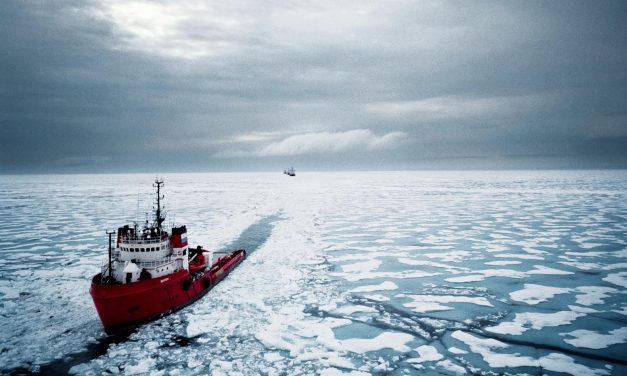
The Arctic; From Geographical Freezing to Geopolitical Boiling

Strategic Council Online – Opinion: The Arctic is no longer a frozen, remote periphery; it has become a live theater of great-power competition, where sea routes, port infrastructure, the law of the sea, and military deterrence are intertwined, shaping the future of maritime security.

The Zionist Regime’s Time Bomb Activated in the West Bank

Strategic Council Online – Opinion: In the midst of America’s military deployment to West Asia and the Persian Gulf, which has increased tensions at the regional and global levels, the Zionist regime has seized the opportunity and accelerated the advancement of its ambitious projects, including the process of the illegal annexation of the West Bank to the occupied territories.

With the End of New START, How Will the Future of Nuclear Security Be Shaped?

Strategic Council Online – Opinion: With the collapse of the last pillar of nuclear arms control between Washington and Moscow, the world stands on the threshold of a ruleless order that both carries the scent of unlimited competition and conceals within itself the possibility of new forms of bargaining.

Loading

Últimas publicaciones

The Arctic; From Geographical Freezing to Geopolitical Boiling

Strategic Council Online – Opinion: The Arctic is no longer a frozen, remote periphery; it has become a live theater of great-power competition, where sea routes, port infrastructure, the law of the sea, and military deterrence are intertwined, shaping the future of maritime security.

The Zionist Regime’s Time Bomb Activated in the West Bank

Strategic Council Online – Opinion: In the midst of America’s military deployment to West Asia and the Persian Gulf, which has increased tensions at the regional and global levels, the Zionist regime has seized the opportunity and accelerated the advancement of its ambitious projects, including the process of the illegal annexation of the West Bank to the occupied territories.

With the End of New START, How Will the Future of Nuclear Security Be Shaped?

Strategic Council Online – Opinion: With the collapse of the last pillar of nuclear arms control between Washington and Moscow, the world stands on the threshold of a ruleless order that both carries the scent of unlimited competition and conceals within itself the possibility of new forms of bargaining.

Loading

DERNIER CONTENU

The Arctic; From Geographical Freezing to Geopolitical Boiling

Strategic Council Online – Opinion: The Arctic is no longer a frozen, remote periphery; it has become a live theater of great-power competition, where sea routes, port infrastructure, the law of the sea, and military deterrence are intertwined, shaping the future of maritime security.

The Zionist Regime’s Time Bomb Activated in the West Bank

Strategic Council Online – Opinion: In the midst of America’s military deployment to West Asia and the Persian Gulf, which has increased tensions at the regional and global levels, the Zionist regime has seized the opportunity and accelerated the advancement of its ambitious projects, including the process of the illegal annexation of the West Bank to the occupied territories.

With the End of New START, How Will the Future of Nuclear Security Be Shaped?

Strategic Council Online – Opinion: With the collapse of the last pillar of nuclear arms control between Washington and Moscow, the world stands on the threshold of a ruleless order that both carries the scent of unlimited competition and conceals within itself the possibility of new forms of bargaining.

Loading

DERNIER CONTENU

The Arctic; From Geographical Freezing to Geopolitical Boiling

Strategic Council Online – Opinion: The Arctic is no longer a frozen, remote periphery; it has become a live theater of great-power competition, where sea routes, port infrastructure, the law of the sea, and military deterrence are intertwined, shaping the future of maritime security.

The Zionist Regime’s Time Bomb Activated in the West Bank

Strategic Council Online – Opinion: In the midst of America’s military deployment to West Asia and the Persian Gulf, which has increased tensions at the regional and global levels, the Zionist regime has seized the opportunity and accelerated the advancement of its ambitious projects, including the process of the illegal annexation of the West Bank to the occupied territories.

With the End of New START, How Will the Future of Nuclear Security Be Shaped?

Strategic Council Online – Opinion: With the collapse of the last pillar of nuclear arms control between Washington and Moscow, the world stands on the threshold of a ruleless order that both carries the scent of unlimited competition and conceals within itself the possibility of new forms of bargaining.

Loading

DERNIER CONTENU

The Arctic; From Geographical Freezing to Geopolitical Boiling

Strategic Council Online – Opinion: The Arctic is no longer a frozen, remote periphery; it has become a live theater of great-power competition, where sea routes, port infrastructure, the law of the sea, and military deterrence are intertwined, shaping the future of maritime security.

The Zionist Regime’s Time Bomb Activated in the West Bank

Strategic Council Online – Opinion: In the midst of America’s military deployment to West Asia and the Persian Gulf, which has increased tensions at the regional and global levels, the Zionist regime has seized the opportunity and accelerated the advancement of its ambitious projects, including the process of the illegal annexation of the West Bank to the occupied territories.

With the End of New START, How Will the Future of Nuclear Security Be Shaped?

Strategic Council Online – Opinion: With the collapse of the last pillar of nuclear arms control between Washington and Moscow, the world stands on the threshold of a ruleless order that both carries the scent of unlimited competition and conceals within itself the possibility of new forms of bargaining.

Loading