
Omid Choopankareh – West Asia Affairs Expert
In fact, they have well understood that, in the event of a threat or military attack against Iran, the resistance groups will respond and pose serious challenges, imposing costs on them.
Hezbollah endured blows over the past year, and part of its defensive and military capabilities suffered damage and challenges. However, over the past few months, it has been able to restore part of that lost capability.
The reorganization of forces and changes within part of the command structure are part of this rebuilding, which indicates Hezbollah’s determination to confront future challenges and threats.
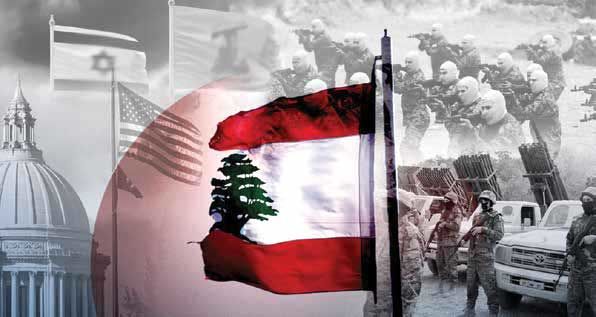
In 2024, the Lebanese government had agreements with the West, particularly America and the Israeli regime, one clause of which was the disarmament of Hezbollah. Of course, Hezbollah did not accept it, and to this day, this matter is consistently stated in the positions of Sheikh Naim Qassem, Hezbollah’s Secretary-General.
In his most recent speech, the Secretary-General of Hezbollah described the party’s weapons as a guarantor of security for the country and people of Lebanon, as well as a guarantor of security for the region and the countries of the Resistance Axis. He believes that the weapons of the resistance are a strategic issue for Hezbollah and are in no way acceptable, especially under pressure from the West and the Zionist regime.
The intensification of the Zionist regime’s attacks on southern Lebanon under pretexts such as the presence of Hezbollah forces or the deployment of their military equipment in these areas aims to exert additional pressure on the Lebanese government and people to disarm Hezbollah.
In reality, the Zionist regime expects that increasing pressure will lead to Hezbollah’s acceptance of disarmament. This objective has not been achieved so far due to resistance and the intelligent management of its commanders. Regarding the continuation of this regime’s aggressions against Lebanon, it seems Tel Aviv is pursuing three scenarios:
Scenario One: The intensification of the Zionist regime’s attacks on southern Lebanon leads to a reaction from Hezbollah, and subsequently, this regime, by launching an all-out war against Hezbollah, attempts to eliminate the rebuilt capabilities of Hezbollah once again.
Scenario Two: Weakening the Lebanese government through internal political conflicts is another probable plan of the Zionist regime. On the one hand, internal groups, the government, and parliament disagree with each other; on the other hand, they face challenges from Hezbollah. Disagreements that could lead to changes at the political level, weaken the incumbent government, and ultimately result in the election of a new government in Lebanon.
Scenario Three: With the continuation of military attacks alongside political pressure from America and France, and offering incentives such as economic packages to the Lebanese government, Hezbollah is forced to accept the condition of handing over weapons step by step. However, given the existing security conditions and the threats from the Zionist regime, and Hezbollah’s commitment to the security of the Lebanese people, this plan seems somewhat less practical than the two previous ones.
Overall, the Zionist regime and America imagine that weakening resistance groups, especially Hezbollah of Lebanon, will lead to the weakening of Iran. However, the 12-Day Sacred Defense clearly showed that Iran, battle-hardened, knows well how to emerge victorious from difficult battlefields.
This text was translated using artificial intelligence and may contain errors. If you notice an apparent mistake that makes the text incomprehensible, please inform the website editors.




0 Comments