Hidden Objectives of U.S. Military Threats Against Venezuela

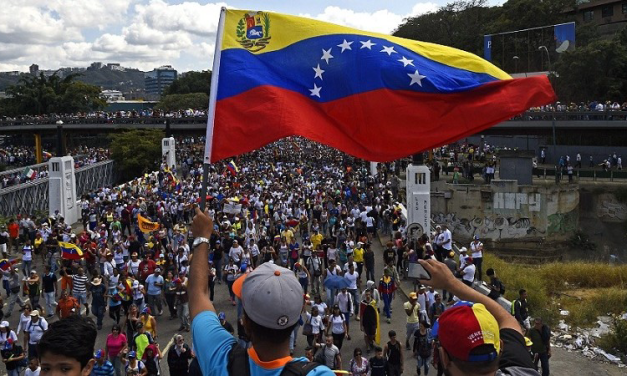
Strategic Council Online - Interview: An American affairs expert stated that in recent weeks, U.S. policy toward Venezuela has undergone a distinct redefinition, shifting toward hard power tools. According to media reports, during Donald Trump's presidency, the White House reviewed options for military operations "against drug cartels". It even introduced a deadly attack on a suspected boat leaving Venezuelan waters as the beginning of a new phase of its campaign. This approach has been reinforced by the deployment of significant military assets to the Caribbean periphery, including cruisers equipped with cruise missiles and attack submarines, as well as the stationing of F-35 fighter jets in Puerto Rico. It is complemented by labeling Nicolás Maduro a "narcoterrorist" and doubling the bounty for his capture. Although Trump, when asked about "regime change," said, "We're not discussing that," by linking Venezuela to the anti-drug mission, he has effectively redefined the "maximum pressure" strategy within a security-military framework. At the regional level, the resurgence of the old concept of "gunboat diplomacy" in America's backyard sends a deterrent message to Caracas and its allies on one hand, while increasing the risk of sliding into proxy and attritional conflicts on the other. At the structural level, the merging of U.S. domestic considerations, including the "crackdown on drug trafficking" agenda, with geopolitical calculations to control energy resources and routes of influence, indicates that the Venezuela issue is not merely a criminal-security matter but rather a reflection of great power competition and a test of the resilience of the Latin American regional order—an order that, with each crisis escalation, simultaneously creates opportunities and threats for both extra-regional and regional actors.

Foad Izadi, in an interview with the website of the Strategic Council on Foreign Relations, stated: “The return of the Venezuela issue to the top of Washington’s agenda is not accidental; because Venezuela is a country with vast oil reserves, gold mines, and other mineral resources, abundant water, and fertile land, which has consistently attracted the attention of the United States over the past century.” From the perspective of this American affairs analyst, this abundance of resources has turned Venezuela into a perpetual target for containment and influence policies. Whenever Washington’s political or economic projects have failed, military and security tools have been proposed as alternative options.

Izadi recalls that “U.S. administrations have repeatedly tried to force Caracas into compliance through multi-layered pressures, from sanctions and psychological warfare to support for internal opponents, but successive failures in altering the internal balance have led to the ‘fight against drugs’ becoming a convenient cover for intensifying pressure.” According to this university professor, “If the real goal were to curb drug trafficking, obviously the focus should be on the Mexican border, the main route for drugs entering the U.S., not a country thousands of kilometers away from U.S. soil that is not the primary trafficking route.”

From this American affairs expert’s viewpoint, “Latin American history is replete with examples where intentional crisis-making by the United States has become a tool for geopolitical exploitation.” He sees the reuse of the “gunboat diplomacy” model as a sign that Washington is trying to disrupt Caracas’s calculations and tighten the pressure loop by demonstrating naval and air power in the Caribbean. The deployment of advanced vessels and aircraft near Venezuela, even under the guise of combating cartels, serves a political function in practice: sending a firm message to Maduro and his allies and testing the capacity for internal resistance in the country.

Probable Scenarios
According to Foad Izadi, concerns about the “spillover of the crisis” from Venezuela’s borders into the Latin American region are not merely a theoretical warning. His reference to the Colombian president’s warning about a repeat of the “Syrian experience” in Latin America shows that peripheral actors are also sensitive to the unintended consequences of intensified military pressure. This American affairs analyst emphasizes that “although Washington does not officially speak of regime change, linking Venezuela to drug terrorism and demonstrating power in the Caribbean could deepen internal divisions and push the country toward polarization and violent conflicts.”

On the other hand, Izadi, recalling the stance of John Bolton, former U.S. National Security Advisor, highlights the proposition that “the oil issue is at the heart of the calculations.” According to him, “When a senior U.S. official openly says, ‘Why shouldn’t all that Venezuelan oil be in the hands of American companies?’ it means that the economic layer is a powerful motivation for sustaining pressure.” However, the American affairs analyst emphasizes that “Washington’s previous projects to overthrow the Venezuelan government have not succeeded, and it is unclear whether militarizing the issue can yield sustainable gains; the human, economic, and political costs of such an option could outweigh the alleged benefits.”

In Izadi’s analysis, the current U.S. strategy is a series of “tests”; from psychological and media warfare to limited field actions aimed at gauging the tolerance threshold of Caracas and its allies. He says: “A pattern of limited, targeted operations against objectives labeled as cartels might be pursued to create a deterrent effect without incurring the costs of a large-scale war.” However, the American affairs expert warns that even limited strikes could lead, through miscalculation, to a cycle of action and reaction that is difficult to control.”

Foad Izadi also considers the regional dimension of the issue important and emphasizes: “In an environment where some governments are concerned about destabilizing consequences, every move by Washington will have repercussions beyond Venezuela’s borders.” In his view, “Although regional actors may verbally support the fight against drug trafficking, in practice they are cautious about escalating military tensions in their neighborhood, because the interconnected economies of Latin America have limited resilience to security shocks.”

Izadi sees Caracas’s room for maneuver at the international level as dependent on a network of economic and political relations that could neutralize some of the pressures. This American affairs analyst emphasizes that “increasing bilateral and multilateral cooperation, from energy and basic goods to technical services, could buy time and breathing space for Venezuela.” In his opinion, “strengthening exchange infrastructures, payment routes, and logistical links reduces the costs of sanctions and pressure and prevents the crisis from turning into social collapse.”

From the perspective of opportunities, Foad Izadi stresses that the current situation, with all its difficulties, could provide a platform for deepening cooperation between independent countries and Caracas. This university professor believes that “any assistance to the resilience of the Venezuelan people and government—from transferring experience and technology to humanitarian cooperation—ultimately contributes to regional stability and reduces the dangerous pattern of ‘engineered regime change.'”
0 Comments

LATEST CONTENT

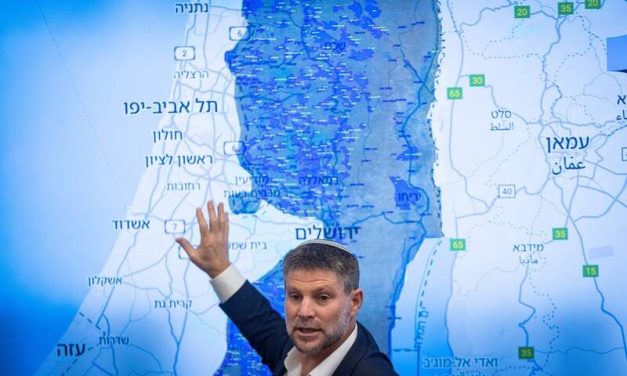
The Zionist Regime’s Time Bomb Activated in the West Bank

Strategic Council Online – Opinion: In the midst of America’s military deployment to West Asia and the Persian Gulf, which has increased tensions at the regional and global levels, the Zionist regime has seized the opportunity and accelerated the advancement of its ambitious projects, including the process of the illegal annexation of the West Bank to the occupied territories.

With the End of New START, How Will the Future of Nuclear Security Be Shaped?

Strategic Council Online – Opinion: With the collapse of the last pillar of nuclear arms control between Washington and Moscow, the world stands on the threshold of a ruleless order that both carries the scent of unlimited competition and conceals within itself the possibility of new forms of bargaining.

Loading

Últimas publicaciones

The Zionist Regime’s Time Bomb Activated in the West Bank

Strategic Council Online – Opinion: In the midst of America’s military deployment to West Asia and the Persian Gulf, which has increased tensions at the regional and global levels, the Zionist regime has seized the opportunity and accelerated the advancement of its ambitious projects, including the process of the illegal annexation of the West Bank to the occupied territories.

With the End of New START, How Will the Future of Nuclear Security Be Shaped?

Strategic Council Online – Opinion: With the collapse of the last pillar of nuclear arms control between Washington and Moscow, the world stands on the threshold of a ruleless order that both carries the scent of unlimited competition and conceals within itself the possibility of new forms of bargaining.

Loading

DERNIER CONTENU

The Zionist Regime’s Time Bomb Activated in the West Bank

Strategic Council Online – Opinion: In the midst of America’s military deployment to West Asia and the Persian Gulf, which has increased tensions at the regional and global levels, the Zionist regime has seized the opportunity and accelerated the advancement of its ambitious projects, including the process of the illegal annexation of the West Bank to the occupied territories.

With the End of New START, How Will the Future of Nuclear Security Be Shaped?

Strategic Council Online – Opinion: With the collapse of the last pillar of nuclear arms control between Washington and Moscow, the world stands on the threshold of a ruleless order that both carries the scent of unlimited competition and conceals within itself the possibility of new forms of bargaining.

Loading

DERNIER CONTENU

The Zionist Regime’s Time Bomb Activated in the West Bank

Strategic Council Online – Opinion: In the midst of America’s military deployment to West Asia and the Persian Gulf, which has increased tensions at the regional and global levels, the Zionist regime has seized the opportunity and accelerated the advancement of its ambitious projects, including the process of the illegal annexation of the West Bank to the occupied territories.

With the End of New START, How Will the Future of Nuclear Security Be Shaped?

Strategic Council Online – Opinion: With the collapse of the last pillar of nuclear arms control between Washington and Moscow, the world stands on the threshold of a ruleless order that both carries the scent of unlimited competition and conceals within itself the possibility of new forms of bargaining.

Loading

DERNIER CONTENU

The Zionist Regime’s Time Bomb Activated in the West Bank

Strategic Council Online – Opinion: In the midst of America’s military deployment to West Asia and the Persian Gulf, which has increased tensions at the regional and global levels, the Zionist regime has seized the opportunity and accelerated the advancement of its ambitious projects, including the process of the illegal annexation of the West Bank to the occupied territories.

With the End of New START, How Will the Future of Nuclear Security Be Shaped?

Strategic Council Online – Opinion: With the collapse of the last pillar of nuclear arms control between Washington and Moscow, the world stands on the threshold of a ruleless order that both carries the scent of unlimited competition and conceals within itself the possibility of new forms of bargaining.

Loading