Europe’s New Security Strategy Aimed at Defense Self-Sufficiency

Strategic Council Online – Opinion: On June 2, 2025, the Council of the European Union took an unprecedented step toward strengthening Europe’s military self-sufficiency by officially approving a new defense fund worth 150 billion euros. This decision, made after decades of institutional debate and effort in common security policy, is now regarded not merely as a technical or budgetary initiative but as a reflection of a paradigm shift in Europe’s strategic outlook on its security future.

Abed Akbari – European Affairs Researcher
In addition to aiming for defense synergy, the new fund signifies a systematic effort to reduce strategic reliance on the United States, against the backdrop of emerging geopolitical developments and political shifts on both sides of the Atlantic.

The Revival of Defense Self-Sufficiency Amid Resurgent Threats

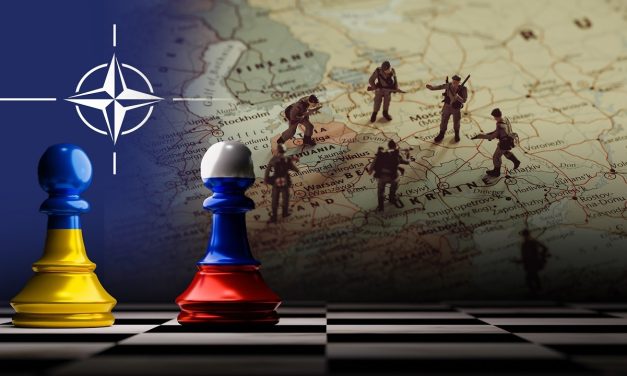
Europe’s efforts to establish an independent defense structure date back to the 1950s. Despite initiatives such as the failed European Defense Community (EDC) and the subsequent formation of the Common Security and Defense Policy (CSDP), NATO has always been dominant in shaping the continent’s security order. However, recent developments, particularly the Ukraine war, have served as a turning point in redefining traditional threats, leading to a new discourse on defense self-sufficiency in Europe.
For the first time in decades, a conventional war involving heavy weaponry has erupted in the heart of Europe, driving a significant increase in military budgets across EU member states since 2022. Notably, Poland, the Baltic states, and Scandinavia have seen defense spending surges exceeding two percent of their GDP.
However, before the establishment of the new fund, this increase was largely fragmented, incoherent, and, in some cases, wasteful. The structure of the new defense fund is designed to address this issue by creating a comprehensive mechanism for coordinated investment, preventing redundant arms procurement, enhancing joint capabilities, and developing emerging technologies in areas such as artificial intelligence, counter-drone systems, and cybersecurity. According to the European Commission, the fund’s resources will come from a combination of EU budget allocations, voluntary member contributions, and joint borrowing—a model similar to the post-pandemic recovery fund.

Erosion of Strategic Trust in the U.S.: A Key Driver of Change

The second key factor behind the fund’s creation is the declining trust in the United States as the ultimate guarantor of the continent’s security. The first term of Donald Trump’s presidency (2017–2021), marked by repeated threats to withdraw from NATO or condition member states’ defense, sounded the first alarm for Europe. His return to the U.S. political stage has reignited these doubts, this time translating them into concrete European policy decisions.
Studies by think tanks such as Bruegel and CEPS indicate that European public opinion and strategic elites are more skeptical than ever about long-term reliance on the “American security umbrella.” Core countries like Germany and France are now outlining the contours of an independent yet complementary defense policy. While no European power seeks a complete break from NATO, the necessity of developing indigenous capabilities for rapid response to regional crises, logistical support, border management, and operations within Europe’s direct sphere of influence has gradually become an unspoken consensus among European policymakers.

Domestic Defense Industries and the Need for Financial Stability

The third element is the growing pressure from European defense industries for stable and predictable funding. Companies such as Airbus, Leonardo, and Rheinmetall, key players in Europe’s arms sector, have repeatedly warned recently about their inability to compete with the American and Israeli defense industries. The lack of investment horizons, uncertainty over sustained government orders, and the absence of integrated collective procurement mechanisms have hindered the development of domestic industries. The new fund, by establishing a coordinated financial-operational framework at the EU level, aims to address this gap and bring European defense industries back into the mainstream.

Challenges and Prospects

Despite its ambitious strategic objectives, this initiative is not without challenges. First, allocating the fund’s resources will likely be a point of contention among member states. Smaller countries fear the bulk of the economic and technological benefits will disproportionately favor major industrial powers like Germany, France, or Italy. Second, some Eastern European nations, such as Poland, Estonia, and Lithuania, which still heavily rely on the U.S. military presence on their soil, view any independent European defense initiative with caution or even opposition.
Third, the lack of strategic consensus on shared threats—from China and Russia to developments in West Asia and North Africa—could hinder the formation of a unified European military doctrine.
Fourth, the EU’s experience managing shared resources, particularly through structural or support funds, has often been criticized for financial opacity, allocation inefficiency, and weak oversight.

Nevertheless, establishing this fund is a milestone in the EU’s transformation from an economic actor into a geopolitical player. If implemented effectively, Europe will achieve a degree of operational independence in defense and carve out a more autonomous and influential role in the global security order.
In a world where traditional security guarantees are eroding and emerging actors are redefining spheres of influence, Europe has taken its first step toward shaping its 21st-century security architecture by creating this new defense fund. More than a response to today’s crises, this move is an investment in a future where military self-sufficiency is not a distant ideal but a necessity for survival.
0 Comments

LATEST CONTENT

America’s Zero-Sum Game in Iraq

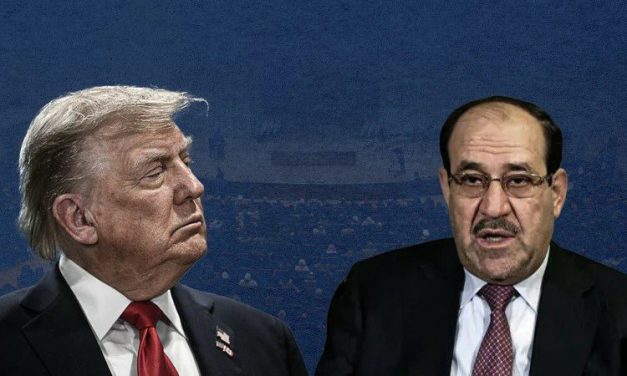
Online Strategic Council – Memoir: The swift selection of Nouri al-Maliki for the premiership constitutes a new phase in Iraq’s political sphere. Multiple factors have played a role in this process, the most important being the prevailing situation in Iraq and the region. Under such circumstances, Iraq requires a powerful and experienced prime minister who can keep the country away from the dangers of wars and crises.

America’s Strategy for Creating Tension in the Asia-Pacific

Strategic Council Online – Opinion: Relations between some countries in the Asia-Pacific region, such as China and Japan or China and Australia, which were previously relatively normal, are trending towards deterioration, and the primary reason for this is the aggressive policies of the United States of America.

The Collapse of the European Security Illusion with the Continuation of the Ukraine War?

Strategic Council Online – Interview: The Ukraine war has become a new turning point in the political, security, and even commercial relations of allies on both sides of the Atlantic. While this war is nearing its fourth year, many questions still remain regarding its future and its consequences; among them, will the continuation of the Ukraine war lead to the collapse of the European security illusion?

Is Greenland Pushing Europe Toward China?

Strategic Council Online – Interview: A European affairs expert believes that the seizure of Greenland will certainly weaken America’s relations with Europe and its allies. Donald Trump’s view is that he does not need these countries, but if Europe faces significant pressure from the United States, it is natural for it to move toward China.

Alarm Bells Sound for ISIS Revival in Syria: Threat to Iraq and West Asia

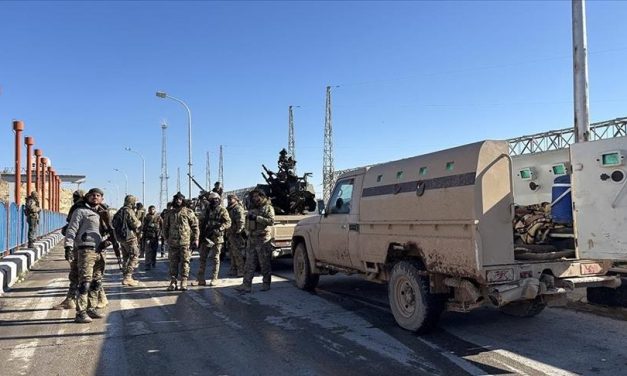
Strategic Council Online – Opinion: Numerous documents and pieces of evidence indicate that ISIS, which in recent years has been the region’s biggest threat to security and stability after the Zionist regime, has once again in recent months become a focal point for political and security exploitation by American and Zionist regime security, intelligence, and political circles.

Afghanistan’s Effective Role in the Economy of Eurasia

Strategic Council Online – Interview: A regional affairs researcher stated: Despite projects such as the Khaf-Herat railway and the Herat-Balkh-Mazar-i-Sharif corridor being on the agenda, insecurity and the absence of an inclusive government remain the most significant obstacles to realizing transit corridors and Afghanistan playing an effective role in the economy of Eurasia.

Loading

Últimas publicaciones

America’s Zero-Sum Game in Iraq

Online Strategic Council – Memoir: The swift selection of Nouri al-Maliki for the premiership constitutes a new phase in Iraq’s political sphere. Multiple factors have played a role in this process, the most important being the prevailing situation in Iraq and the region. Under such circumstances, Iraq requires a powerful and experienced prime minister who can keep the country away from the dangers of wars and crises.

America’s Strategy for Creating Tension in the Asia-Pacific

Strategic Council Online – Opinion: Relations between some countries in the Asia-Pacific region, such as China and Japan or China and Australia, which were previously relatively normal, are trending towards deterioration, and the primary reason for this is the aggressive policies of the United States of America.

The Collapse of the European Security Illusion with the Continuation of the Ukraine War?

Strategic Council Online – Interview: The Ukraine war has become a new turning point in the political, security, and even commercial relations of allies on both sides of the Atlantic. While this war is nearing its fourth year, many questions still remain regarding its future and its consequences; among them, will the continuation of the Ukraine war lead to the collapse of the European security illusion?

Is Greenland Pushing Europe Toward China?

Strategic Council Online – Interview: A European affairs expert believes that the seizure of Greenland will certainly weaken America’s relations with Europe and its allies. Donald Trump’s view is that he does not need these countries, but if Europe faces significant pressure from the United States, it is natural for it to move toward China.

Alarm Bells Sound for ISIS Revival in Syria: Threat to Iraq and West Asia

Strategic Council Online – Opinion: Numerous documents and pieces of evidence indicate that ISIS, which in recent years has been the region’s biggest threat to security and stability after the Zionist regime, has once again in recent months become a focal point for political and security exploitation by American and Zionist regime security, intelligence, and political circles.

Afghanistan’s Effective Role in the Economy of Eurasia

Strategic Council Online – Interview: A regional affairs researcher stated: Despite projects such as the Khaf-Herat railway and the Herat-Balkh-Mazar-i-Sharif corridor being on the agenda, insecurity and the absence of an inclusive government remain the most significant obstacles to realizing transit corridors and Afghanistan playing an effective role in the economy of Eurasia.

Loading

DERNIER CONTENU

America’s Zero-Sum Game in Iraq

Online Strategic Council – Memoir: The swift selection of Nouri al-Maliki for the premiership constitutes a new phase in Iraq’s political sphere. Multiple factors have played a role in this process, the most important being the prevailing situation in Iraq and the region. Under such circumstances, Iraq requires a powerful and experienced prime minister who can keep the country away from the dangers of wars and crises.

America’s Strategy for Creating Tension in the Asia-Pacific

Strategic Council Online – Opinion: Relations between some countries in the Asia-Pacific region, such as China and Japan or China and Australia, which were previously relatively normal, are trending towards deterioration, and the primary reason for this is the aggressive policies of the United States of America.

The Collapse of the European Security Illusion with the Continuation of the Ukraine War?

Strategic Council Online – Interview: The Ukraine war has become a new turning point in the political, security, and even commercial relations of allies on both sides of the Atlantic. While this war is nearing its fourth year, many questions still remain regarding its future and its consequences; among them, will the continuation of the Ukraine war lead to the collapse of the European security illusion?

Is Greenland Pushing Europe Toward China?

Strategic Council Online – Interview: A European affairs expert believes that the seizure of Greenland will certainly weaken America’s relations with Europe and its allies. Donald Trump’s view is that he does not need these countries, but if Europe faces significant pressure from the United States, it is natural for it to move toward China.

Alarm Bells Sound for ISIS Revival in Syria: Threat to Iraq and West Asia

Strategic Council Online – Opinion: Numerous documents and pieces of evidence indicate that ISIS, which in recent years has been the region’s biggest threat to security and stability after the Zionist regime, has once again in recent months become a focal point for political and security exploitation by American and Zionist regime security, intelligence, and political circles.

Afghanistan’s Effective Role in the Economy of Eurasia

Strategic Council Online – Interview: A regional affairs researcher stated: Despite projects such as the Khaf-Herat railway and the Herat-Balkh-Mazar-i-Sharif corridor being on the agenda, insecurity and the absence of an inclusive government remain the most significant obstacles to realizing transit corridors and Afghanistan playing an effective role in the economy of Eurasia.

Loading