Factors and Consequences of the Spread of Security Threats in the West Bank

Strategic Council Online – Opinion: Amid the Zionist regime's crimes in the Gaza Strip, the West Bank is also experiencing "unstable conditions" so that in recent months and parallel to the intensification of the Zionist attacks against Gaza, the tensions in this sensitive area have witnessed an exponential trend and " "security threats" against the Zionist regime have been escalated so much that it has greatly worried security and intelligence circles.

Barsam Mohammadi – regional issues expert

Developments in the field and the war fronts in Gaza, the adoption of the position of “negative neutrality” by the self-governing organizations against the genocide of the people in Gaza and Rafah, the intensification of the operations of the occupier army in the West Bank, the encouragement and assistance of the Islamic Resistance Front, especially Hamas and Islamic Jihad, to the residents of the West Bank to fight against the Zionist regime and ultimately the arming of the Zionist settlers in the West Bank are five “effective factors” in expanding the depth and scope of security threats in this region.

Regarding the war in Gaza, the story is noticeable Because a significant part of today’s security and military issues and problems of the Zionists in the West Bank are caused by the crimes they commit in the Gaza Strip.

The second factor is the “passive” and sometimes “inhibitory” policies of the Palestinian Authority in the face of the Gaza war. The adoption of such policies and behaviors, which sometimes strengthen the position of the Zionist regime, has further intensified the process of “divergence” of the residents of this region with the self-governing organizations and further “convergence” with the Islamic resistance and Hamas.

The third factor is the “intensification of military operations” of the Zionist army against the residents of the West Bank. There is evidence that shows that the Zionist regime, which has failed in Gaza, is trying to move the “center of gravity” of its operations from Gaza to the West Bank. This issue has caused the Islamic Jihad to state all Palestinians living in the West Bank to rise against the Zionists in the occupied West Bank against the “forced migration plan and genocide of the Palestinian nation.”

The fourth factor is the “aids of the Islamic Resistance Front.” After years of witnessing the organization of Hamas’s military infrastructure and the production of its short-range missiles, it has become more evident, clearly indicating the depth of the security threats against the Zionist regime from this area.

The fifth factor is the violence caused by the “arming of the settlers” by the Zionists. The arming of the settlers started last year by order of “Itamar Ben Goyer,” the Minister of Internal Security of the Zionist regime.

According to official statistics, since the beginning of the Gaza war, more than 330,000 requests for weapons permits have been submitted. In this regard, 140,000 permits have been handed over to Zionist applicants, including those who live in West Bank settlements.

In the past ten months, settler violence and cabinet-sponsored demolition frenzy in the West Bank have displaced around 1,260 Palestinians from their homes in Bedouin villages such as Umm al-Khair. This is while 1,250 attacks have been recorded by settlers in the West Bank since the beginning of the Gaza war, which is an average of four attacks per day.

According to statistics, about 120 of these attacks resulted in the death or injury of Palestinians, and about 1,000 of them caused damage to Palestinian property.

The increase in the process of arming extremist settlers, which has caused “violent attacks” on Palestinians, is done with the aim of “creating terror” among civilians and “displacing them” to “occupy Palestinian lands.” However, the field and security developments show that this issue has not only not achieved its set goals and objectives but has made the security situation in the West Bank more complicated and has put the Zionists in a “difficult situation.”

Even though the leaders of the Zionist regime thought that by arming the settlers and forming an “informal army” that would play the role of the army’s infantry, they could use them as an auxiliary arm of the military forces when the main army is engaged in a massive war with the Palestinians in Gaza, and security in the West Bank and put the residents of this area in a tight spot, still, in practice, they have faced the opposite results and harmful consequences.

Of course, it was already predictable that no matter how much the Zionist regime insisted on arming the Zionist settlers in the West Bank and continued this policy, it would face many problems and threats.

The mentioned factors have caused the West Bank to be on the verge of a “big explosion.” So, the political and security circles of the Zionist regime publicly warned about the occurrence of the “Third Intifada” or the “Repeat of Al-Aqsa Storm” in another form in this region.

Despite the actions of the Zionist regime to prevent the occurrence of terrible security incidents, if the war in Gaza does not stop and the settlers and the army of the criminal regime continue their attacks and engage in violence, the situation in the West Bank can deteriorate rapidly and become a “serious strategic challenge” for the Zionist regime.
0 Comments

LATEST CONTENT

An Analysis of Iran’s Missile Capability

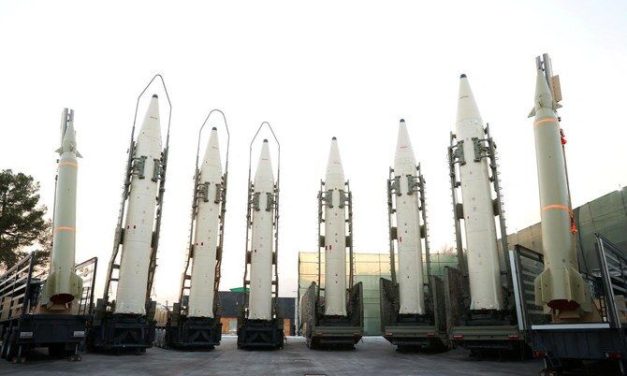
Strategic Council Online – Interview: A strategic affairs analyst said: Iran’s missile doctrine is not only part of its deterrent capability but also part of the security identity of the Islamic Republic of Iran and should not be weakened.

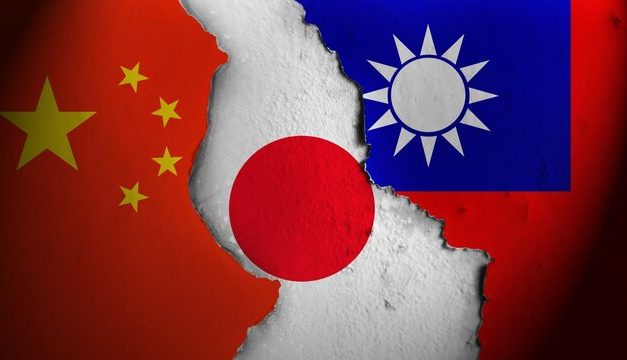
Japan-China Tensions Over Taiwan

Strategic Council Online – Interview: An international affairs expert said that U.S. President Donald Trump, in a phone call this week with Sanae Takaichi, asked her not to further escalate disputes with China. Earlier this month, Takaichi created a rare tension with Beijing by stating that “a potential Chinese attack on Taiwan could lead to military action by Japan,” remarks that drew a sharp reaction from China. Beijing demanded that she retract these statements, but the Japanese Prime Minister has not done so thus far, and Tokyo has only emphasized that its policy regarding Taiwan has not changed.

A Look at bin Salman’s Recent Trip to America

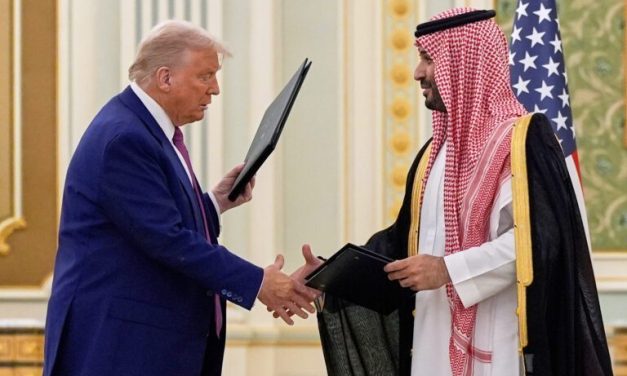
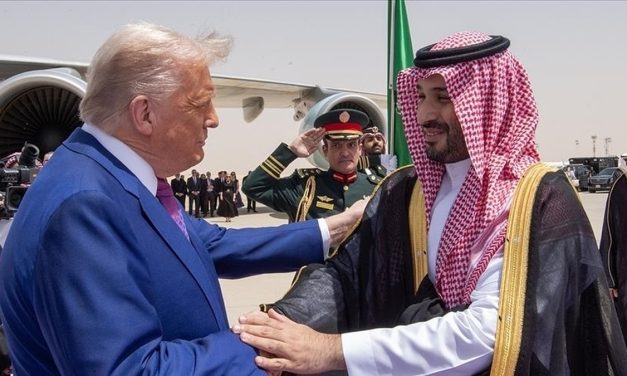
Strategic Council Online – Opinion: The recent trip of the Saudi Crown Prince to America was a targeted effort to solidify the strategic partnership with Washington, reduce political uncertainties, and strengthen Riyadh’s political role-playing.

Creating the Right Narrative: A Principled Strategy for Countering the Enemy’s Soft War

Strategic Council Online – Interview: A media expert stated: Given the intensification of the West’s soft war and psychological operations against Iran, our country’s primary strategy must be based on public education, strengthening national cohesion, developing international media, and countering the distortion of history through creating the right narrative.

F-35 Sale to Saudi Arabia: From Promise to Reality

Strategic Council Online – Interview: An international affairs analyst said: The issue of selling the F-35 to Saudi Arabia is not merely a military case, but rather part of a regional engineering that Washington is trying to advance.

Caspian Sea Water Level Drop; A Geopolitical Harm for Coastal Countries

Strategic Council Online – Interview: An expert in geopolitics stated, “The unprecedented drop in the Caspian Sea water level is not only an environmental threat but also a geopolitical alarm bell for Iran and the coastal countries, requiring urgent multilateral cooperation.”

Loading

Últimas publicaciones

An Analysis of Iran’s Missile Capability

Strategic Council Online – Interview: A strategic affairs analyst said: Iran’s missile doctrine is not only part of its deterrent capability but also part of the security identity of the Islamic Republic of Iran and should not be weakened.

Japan-China Tensions Over Taiwan

Strategic Council Online – Interview: An international affairs expert said that U.S. President Donald Trump, in a phone call this week with Sanae Takaichi, asked her not to further escalate disputes with China. Earlier this month, Takaichi created a rare tension with Beijing by stating that “a potential Chinese attack on Taiwan could lead to military action by Japan,” remarks that drew a sharp reaction from China. Beijing demanded that she retract these statements, but the Japanese Prime Minister has not done so thus far, and Tokyo has only emphasized that its policy regarding Taiwan has not changed.

A Look at bin Salman’s Recent Trip to America

Strategic Council Online – Opinion: The recent trip of the Saudi Crown Prince to America was a targeted effort to solidify the strategic partnership with Washington, reduce political uncertainties, and strengthen Riyadh’s political role-playing.

Creating the Right Narrative: A Principled Strategy for Countering the Enemy’s Soft War

Strategic Council Online – Interview: A media expert stated: Given the intensification of the West’s soft war and psychological operations against Iran, our country’s primary strategy must be based on public education, strengthening national cohesion, developing international media, and countering the distortion of history through creating the right narrative.

F-35 Sale to Saudi Arabia: From Promise to Reality

Strategic Council Online – Interview: An international affairs analyst said: The issue of selling the F-35 to Saudi Arabia is not merely a military case, but rather part of a regional engineering that Washington is trying to advance.

Caspian Sea Water Level Drop; A Geopolitical Harm for Coastal Countries

Strategic Council Online – Interview: An expert in geopolitics stated, “The unprecedented drop in the Caspian Sea water level is not only an environmental threat but also a geopolitical alarm bell for Iran and the coastal countries, requiring urgent multilateral cooperation.”

Loading

DERNIER CONTENU

An Analysis of Iran’s Missile Capability

Strategic Council Online – Interview: A strategic affairs analyst said: Iran’s missile doctrine is not only part of its deterrent capability but also part of the security identity of the Islamic Republic of Iran and should not be weakened.

Japan-China Tensions Over Taiwan

Strategic Council Online – Interview: An international affairs expert said that U.S. President Donald Trump, in a phone call this week with Sanae Takaichi, asked her not to further escalate disputes with China. Earlier this month, Takaichi created a rare tension with Beijing by stating that “a potential Chinese attack on Taiwan could lead to military action by Japan,” remarks that drew a sharp reaction from China. Beijing demanded that she retract these statements, but the Japanese Prime Minister has not done so thus far, and Tokyo has only emphasized that its policy regarding Taiwan has not changed.

A Look at bin Salman’s Recent Trip to America

Strategic Council Online – Opinion: The recent trip of the Saudi Crown Prince to America was a targeted effort to solidify the strategic partnership with Washington, reduce political uncertainties, and strengthen Riyadh’s political role-playing.

Creating the Right Narrative: A Principled Strategy for Countering the Enemy’s Soft War

Strategic Council Online – Interview: A media expert stated: Given the intensification of the West’s soft war and psychological operations against Iran, our country’s primary strategy must be based on public education, strengthening national cohesion, developing international media, and countering the distortion of history through creating the right narrative.

F-35 Sale to Saudi Arabia: From Promise to Reality

Strategic Council Online – Interview: An international affairs analyst said: The issue of selling the F-35 to Saudi Arabia is not merely a military case, but rather part of a regional engineering that Washington is trying to advance.

Caspian Sea Water Level Drop; A Geopolitical Harm for Coastal Countries

Strategic Council Online – Interview: An expert in geopolitics stated, “The unprecedented drop in the Caspian Sea water level is not only an environmental threat but also a geopolitical alarm bell for Iran and the coastal countries, requiring urgent multilateral cooperation.”

Loading