Iran’s Defense Diplomacy, Marine Security Belt Exercise 2023

Strategic Council Online - Interview: The commander of the strategic naval forces of the army said that the 2023 marine security belt joint exercise would help to develop cooperation between the naval forces of Iran, China, and Russia, as well as increase the readiness to provide maritime security and safety jointly in line with creating peace and regional stability, announced the efforts being made to have the countries of the region participate in a marine belt exercise as well as the cooperation of the commanders of the Indian Ocean Naval Forces Symposium (IONS) for the following year.

In an interview with the website of the Strategic Council on Foreign Relations, Admiral Shahram Irani referred to the 2023 maritime security belt joint exercise, with the presence of the strategic navy of the army and the Islamic Revolutionary Guard Corps of Iran, the Russian navy and the Chinese navy, adding: The Strategic Navy of the Islamic Republic of Iran has a permanent presence in the international arena due to its operational capabilities, and holding exercises is also a part of the defense diplomacy defined by Iran.

While explaining the importance of Iran’s political geography, he continued: Because we have the advantage of access, we always try to play our role in this area. Considering the political conditions of the region and the Supreme Commander-in-Chief’s order to establish sincerity and friendship with all countries, especially the region, and with the priority of neighboring, Muslim and brotherly countries as well as countries that respect mutual interests, we have tried to take measures in line with the implementation of this order.

The commander of the strategic navy of the army emphasized: Iran, by holding the exercise, has tried to show that it has an independent presence in the region, and besides this independent presence, it welcomes other countries to accompany us to ensure regional security together. This was our first goal; in line with that, we invited all the region’s nations.

Recalling that countries usually participate in the exercises as observers, and in the next exercise, they bring floating units into the scene, Admiral Irani explained: We also removed the restrictions on the presence of countries in the south of Iran. We invited countries north of Iran and the Caspian Sea region to participate in the exercise, and we witnessed the observer’s presence from Kazakhstan. In the next round, we can play host to forces from other countries who can receive training and join our units to observe the activities closely and gain experience.

While explaining the messages of Iran’s joint naval exercise, he noted: Iran, Russia, and China, by standing alongside each other, independently establish maritime security for the economic artery of the countries, put their ships under escort, and provide their security from place of origin to destination. The coming together of these independent countries emphasizes that we are not niggard in helping others, and we help them with our capabilities.

The commander of the strategic naval forces of the army, saying that today Iran has a high rank in the northern Indian Ocean and is considered a significant power, said: China and Russia have an essential position in the Pacific Ocean and Russia in the Atlantic Ocean; therefore, the three oceanic powers are standing next to each other in a situation where they emphasize that their priority is the security of the world community and the international economy.

Admiral Irani emphasized: that Iran’s effort has always been to play its humanitarian role in the international scene, as it has done throughout history, and despite conspiracies, sanctions, and threats, it has raised the flag of freedom derived from its religious and cultural teachings. Over time, we see this message and its essential role being received by other countries.

He stated: In a situation where we are witnessing shifts in the geometry of power, Iran plays a crucial role. The countries next to us are also leading role-playing capabilities worldwide. It is essential for the countries of the region that there is a country in their region that has been able to stand upright and be successful in such scenes despite all the pressures.

The commander of the strategic naval forces of the army stated that in the 2023 combined exercises, the destroyers “Jamaran” and “Sahand” were present as the two important defense achievements of Iran, and continued: The exercises will develop cooperation among the naval forces of the participating countries and also increase preparation for providing maritime security and safety jointly in line with establishing regional peace and stability. We hope that all countries in the region that are connected to the sea will use this capacity and join it.

Rear Amir Irani referred to the efforts being made for the participation of the countries of the region in the sea belt exercise and also the cooperation of the commanders of the Indian Ocean Naval Symposium (IONS) for the next year and said: We hope to be able to altogether remove from the region the forces that endanger its security; because they only care about their interests, and regional and global interests are not vital to them, and they have proven this in practice to the whole world. Today, the region’s countries have correctly realized how arrogance seeks to continue its one-sided role in an insulting and humiliating manner.

Emphasizing that nations should know that they can stand on their own feet, he said: Iran has always insisted on the necessity of regional cooperation and the expansion of political and economic relations with all countries in the region, and there is a good prospect for the participation of regional governments in naval exercises. We have received signs of the desire of the countries in the region and even friendly transregional countries to participate in these joint exercises.

The commander of the strategic navy of the army pointed to the statements of the American officials that they were monitoring the exercise so that it did not threaten the interests of the United States and its allies and stated: The US is trying to show itself as an ally and a friend of the countries in the region, but it is a burden on the shoulders of those countries. The region’s people have understood this, and the politicians gradually realize this issue. We have witnessed this issue regarding the behavior of the West towards the recent earthquakes in the region’s countries.

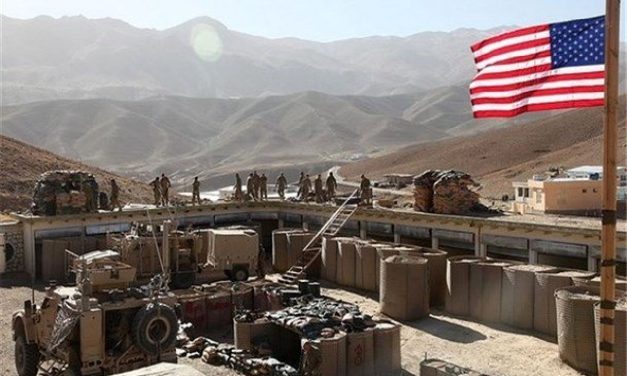
Reminding that the Resistance Front is being strengthened against arrogance daily, caused by the deep-rooted religious, Islamic, and Iranian thinking, Admiral Irani said: The strategies on Iran’s agenda today are precious, and the US efforts to recruit allies are customary. We also monitor the US and its movements. Our flying units and vessels have observed in these few days that what they announced remained only on paper or was limited to displaying the flag. They are also watching our movements, and what we say is being implemented with precision and high capability by relying on our internal power.
0 Comments

Submit a Comment

Your email address will not be published. Required fields are marked *

LATEST CONTENT

The Security Equation of Southern Lebanon for the Zionist Regime

Strategic Council Online – Opinion: American-Zionist objectives in the region are not limited to weakening Hezbollah. Efforts to disarm Iraqi resistance groups such as Kata’ib Hezbollah and the Popular Mobilization Forces are also part of their subsequent plans.

Commercial Exploitation of Peace; The Gaza Committee in Confrontation with International Legitimacy

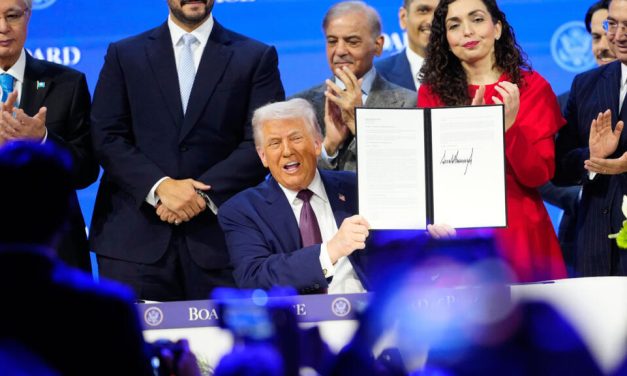
Strategic Council Online – Report: While the second phase of the implementation of the Gaza ceasefire has begun, the establishment of the “Peace Board” chaired by Donald Trump on the sidelines of the Davos meeting (22 January 2026) has become more than a technical mechanism for reconstruction and has turned into a test for the future of the international order.
Despite the signing of the charter by 22 out of 60 invited countries, the limited presence of global leaders at the Davos ceremony and the non-acceptance of this body by the European Union and key Western countries indicate a deep divide in global perceptions of the legitimacy of this mechanism.
In this report, drawing on the analysis of Hadi Borhani, a regional affairs expert, and international data, three strategic questions are addressed: Is the Peace Board an instrument for implementing UN Security Council Resolution 2803 or a substitute for the United Nations? How does the hierarchical architecture of this committee intensify executive challenges in Gaza? And finally, can this body create sustainable peace without the cooperation of Palestinians and with the concentration of power in the hands of a single individual?

America’s Zero-Sum Game in Iraq

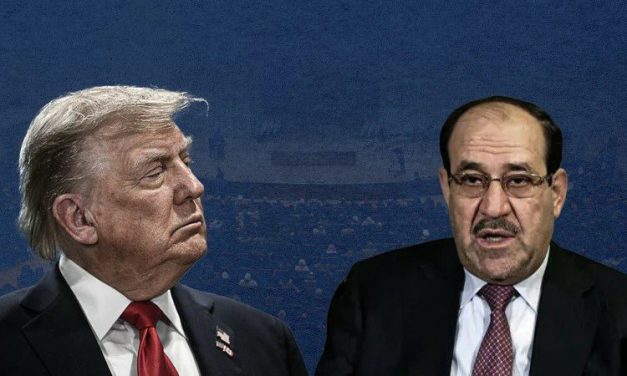
Online Strategic Council – Memoir: The swift selection of Nouri al-Maliki for the premiership constitutes a new phase in Iraq’s political sphere. Multiple factors have played a role in this process, the most important being the prevailing situation in Iraq and the region. Under such circumstances, Iraq requires a powerful and experienced prime minister who can keep the country away from the dangers of wars and crises.

America’s Strategy for Creating Tension in the Asia-Pacific

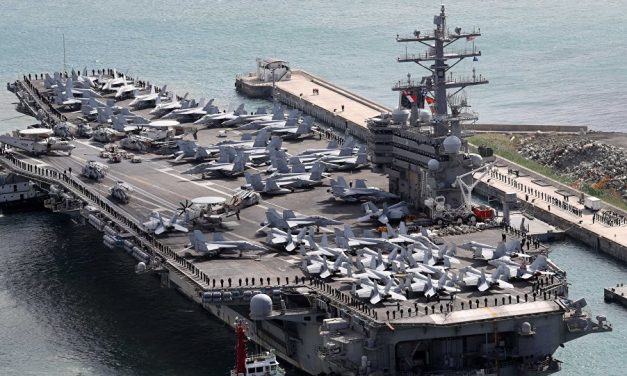
Strategic Council Online – Opinion: Relations between some countries in the Asia-Pacific region, such as China and Japan or China and Australia, which were previously relatively normal, are trending towards deterioration, and the primary reason for this is the aggressive policies of the United States of America.

Loading

Últimas publicaciones

The Security Equation of Southern Lebanon for the Zionist Regime

Strategic Council Online – Opinion: American-Zionist objectives in the region are not limited to weakening Hezbollah. Efforts to disarm Iraqi resistance groups such as Kata’ib Hezbollah and the Popular Mobilization Forces are also part of their subsequent plans.

Commercial Exploitation of Peace; The Gaza Committee in Confrontation with International Legitimacy

Strategic Council Online – Report: While the second phase of the implementation of the Gaza ceasefire has begun, the establishment of the “Peace Board” chaired by Donald Trump on the sidelines of the Davos meeting (22 January 2026) has become more than a technical mechanism for reconstruction and has turned into a test for the future of the international order.
Despite the signing of the charter by 22 out of 60 invited countries, the limited presence of global leaders at the Davos ceremony and the non-acceptance of this body by the European Union and key Western countries indicate a deep divide in global perceptions of the legitimacy of this mechanism.
In this report, drawing on the analysis of Hadi Borhani, a regional affairs expert, and international data, three strategic questions are addressed: Is the Peace Board an instrument for implementing UN Security Council Resolution 2803 or a substitute for the United Nations? How does the hierarchical architecture of this committee intensify executive challenges in Gaza? And finally, can this body create sustainable peace without the cooperation of Palestinians and with the concentration of power in the hands of a single individual?

America’s Zero-Sum Game in Iraq

Online Strategic Council – Memoir: The swift selection of Nouri al-Maliki for the premiership constitutes a new phase in Iraq’s political sphere. Multiple factors have played a role in this process, the most important being the prevailing situation in Iraq and the region. Under such circumstances, Iraq requires a powerful and experienced prime minister who can keep the country away from the dangers of wars and crises.

America’s Strategy for Creating Tension in the Asia-Pacific

Strategic Council Online – Opinion: Relations between some countries in the Asia-Pacific region, such as China and Japan or China and Australia, which were previously relatively normal, are trending towards deterioration, and the primary reason for this is the aggressive policies of the United States of America.

Loading

DERNIER CONTENU

The Security Equation of Southern Lebanon for the Zionist Regime

Strategic Council Online – Opinion: American-Zionist objectives in the region are not limited to weakening Hezbollah. Efforts to disarm Iraqi resistance groups such as Kata’ib Hezbollah and the Popular Mobilization Forces are also part of their subsequent plans.

Commercial Exploitation of Peace; The Gaza Committee in Confrontation with International Legitimacy

Strategic Council Online – Report: While the second phase of the implementation of the Gaza ceasefire has begun, the establishment of the “Peace Board” chaired by Donald Trump on the sidelines of the Davos meeting (22 January 2026) has become more than a technical mechanism for reconstruction and has turned into a test for the future of the international order.
Despite the signing of the charter by 22 out of 60 invited countries, the limited presence of global leaders at the Davos ceremony and the non-acceptance of this body by the European Union and key Western countries indicate a deep divide in global perceptions of the legitimacy of this mechanism.
In this report, drawing on the analysis of Hadi Borhani, a regional affairs expert, and international data, three strategic questions are addressed: Is the Peace Board an instrument for implementing UN Security Council Resolution 2803 or a substitute for the United Nations? How does the hierarchical architecture of this committee intensify executive challenges in Gaza? And finally, can this body create sustainable peace without the cooperation of Palestinians and with the concentration of power in the hands of a single individual?

America’s Zero-Sum Game in Iraq

Online Strategic Council – Memoir: The swift selection of Nouri al-Maliki for the premiership constitutes a new phase in Iraq’s political sphere. Multiple factors have played a role in this process, the most important being the prevailing situation in Iraq and the region. Under such circumstances, Iraq requires a powerful and experienced prime minister who can keep the country away from the dangers of wars and crises.

America’s Strategy for Creating Tension in the Asia-Pacific

Strategic Council Online – Opinion: Relations between some countries in the Asia-Pacific region, such as China and Japan or China and Australia, which were previously relatively normal, are trending towards deterioration, and the primary reason for this is the aggressive policies of the United States of America.

Loading

DERNIER CONTENU

The Security Equation of Southern Lebanon for the Zionist Regime

Strategic Council Online – Opinion: American-Zionist objectives in the region are not limited to weakening Hezbollah. Efforts to disarm Iraqi resistance groups such as Kata’ib Hezbollah and the Popular Mobilization Forces are also part of their subsequent plans.

Commercial Exploitation of Peace; The Gaza Committee in Confrontation with International Legitimacy

Strategic Council Online – Report: While the second phase of the implementation of the Gaza ceasefire has begun, the establishment of the “Peace Board” chaired by Donald Trump on the sidelines of the Davos meeting (22 January 2026) has become more than a technical mechanism for reconstruction and has turned into a test for the future of the international order.
Despite the signing of the charter by 22 out of 60 invited countries, the limited presence of global leaders at the Davos ceremony and the non-acceptance of this body by the European Union and key Western countries indicate a deep divide in global perceptions of the legitimacy of this mechanism.
In this report, drawing on the analysis of Hadi Borhani, a regional affairs expert, and international data, three strategic questions are addressed: Is the Peace Board an instrument for implementing UN Security Council Resolution 2803 or a substitute for the United Nations? How does the hierarchical architecture of this committee intensify executive challenges in Gaza? And finally, can this body create sustainable peace without the cooperation of Palestinians and with the concentration of power in the hands of a single individual?

America’s Zero-Sum Game in Iraq

Online Strategic Council – Memoir: The swift selection of Nouri al-Maliki for the premiership constitutes a new phase in Iraq’s political sphere. Multiple factors have played a role in this process, the most important being the prevailing situation in Iraq and the region. Under such circumstances, Iraq requires a powerful and experienced prime minister who can keep the country away from the dangers of wars and crises.

America’s Strategy for Creating Tension in the Asia-Pacific

Strategic Council Online – Opinion: Relations between some countries in the Asia-Pacific region, such as China and Japan or China and Australia, which were previously relatively normal, are trending towards deterioration, and the primary reason for this is the aggressive policies of the United States of America.

Loading

DERNIER CONTENU

The Security Equation of Southern Lebanon for the Zionist Regime

Strategic Council Online – Opinion: American-Zionist objectives in the region are not limited to weakening Hezbollah. Efforts to disarm Iraqi resistance groups such as Kata’ib Hezbollah and the Popular Mobilization Forces are also part of their subsequent plans.

Commercial Exploitation of Peace; The Gaza Committee in Confrontation with International Legitimacy

Strategic Council Online – Report: While the second phase of the implementation of the Gaza ceasefire has begun, the establishment of the “Peace Board” chaired by Donald Trump on the sidelines of the Davos meeting (22 January 2026) has become more than a technical mechanism for reconstruction and has turned into a test for the future of the international order.
Despite the signing of the charter by 22 out of 60 invited countries, the limited presence of global leaders at the Davos ceremony and the non-acceptance of this body by the European Union and key Western countries indicate a deep divide in global perceptions of the legitimacy of this mechanism.
In this report, drawing on the analysis of Hadi Borhani, a regional affairs expert, and international data, three strategic questions are addressed: Is the Peace Board an instrument for implementing UN Security Council Resolution 2803 or a substitute for the United Nations? How does the hierarchical architecture of this committee intensify executive challenges in Gaza? And finally, can this body create sustainable peace without the cooperation of Palestinians and with the concentration of power in the hands of a single individual?

America’s Zero-Sum Game in Iraq

Online Strategic Council – Memoir: The swift selection of Nouri al-Maliki for the premiership constitutes a new phase in Iraq’s political sphere. Multiple factors have played a role in this process, the most important being the prevailing situation in Iraq and the region. Under such circumstances, Iraq requires a powerful and experienced prime minister who can keep the country away from the dangers of wars and crises.

America’s Strategy for Creating Tension in the Asia-Pacific

Strategic Council Online – Opinion: Relations between some countries in the Asia-Pacific region, such as China and Japan or China and Australia, which were previously relatively normal, are trending towards deterioration, and the primary reason for this is the aggressive policies of the United States of America.

Loading