Objectives, Message of North Korea’s Intensified Missile Tests

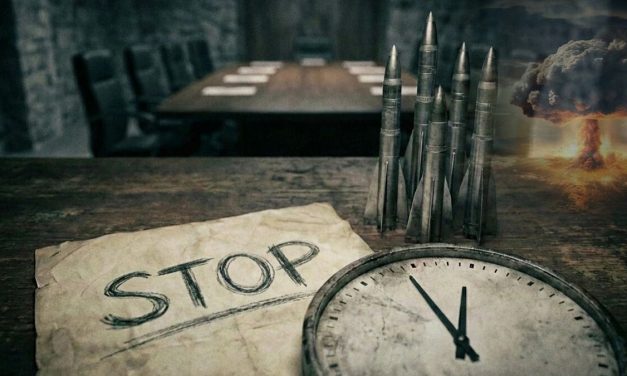
Strategic Council Online - Opinion: Following Joe Biden’s recent visit to Asia, North Korea conducted three missile tests on May 24, which observers say included two short-range ballistic missiles and one intercontinental missile. The tests are considered as the seventeenth round of tests in that country in 2022. The latest intercontinental ballistic missile test, if confirmed, is the second since March. Such developments show that North Korea is breaking away from the “self-imposed suspension” from 2018. Mohammad Javad Ghahremani – Expert on Asia affairs

Several factors appear to have contributed to the escalation of North Korea’s missile tests; those include the ineffectiveness of the US approach to negotiations in recent years. In this regard, at the party’s eighth congress in January 2021, Kim Jong-un emphasized the development of North Korea’s missile and nuclear capabilities. In Pyongyang’s view, those tests, in addition to enhancing and diversifying missile capabilities, would likely make North Korea’s hand full in any diplomatic bargaining.

In addition to North Korea’s actions, the reaction of others has exacerbated the deteriorating situation on the peninsula. During Biden’s visit to South Korea and Japan, and at the Quad summit, one of the topics discussed was countering North Korea’s measures. Following Pyongyang’s recent tests, the United States and its two Asian allies, South Korea and Japan, also held joint military exercises. In this regard, in a conversation between US National Security Adviser Jake Sullivan and his Korean counterpart in Seoul, the two sides blamed North Korea’s measures and reaffirmed their commitment to working closely together.

In this complex situation, to explain the future developments of the peninsula, a few points should be taken into consideration:

The first point is North Korea’s view of external developments and perception of the threat. Military capability, which revolves primarily around nuclear and missile activities, has become part of North Korea’s defense identity, and concerns about the external environment make Pyongyang reluctant to seriously change its foreign policy course.

Another point is Seoul’s attitude towards the developments on the peninsula. Although Moon Jae-in, the former South Korean president, made efforts to achieve the desired result through talks with North Korea (and this led to criticizing him at home), he eventually proved that the situation on the peninsula has become very difficult. However, the new president of South Korea, Yoon Suk-yeol, who has been in power since May 10, has announced his determination to prioritize the development of relations with the United States. In the wake of North Korea’s recent missile test, the South Korean president’s office said in a statement that it could only lead to a stronger and faster combined US-South Korea deterrence and to deepen North Korea’s isolation.

On the other hand, the Biden administration’s foreign policy toward North Korea is significant. Although Trump has agreed to hold direct talks with Kim three times without confidence in Kim’s intentions, the Biden administration has said it is willing to move the negotiations forward, subject to practical action by Pyongyang. Even following the assumption that the Ukraine crisis has shifted the US focus to Europe, Biden’s trip to Asia sent the message that Washington has not overlooked this strategic region and its opportunities and challenges.

Another factor that can affect the future of the peninsula is the competition that has started between the big powers and can show itself well in the situation of the peninsula. Russia and China, for example, vetoed a US-backed resolution in the Security Council calling for new sanctions against North Korea. This shows that as the rivalry between those powers increases, it becomes more difficult for the United States to reach a consensus on various issues. This may also have some negative effects on the successful imposition of sanctions on Pyongyang.

Taken together, the above factors do not seem to suggest that the current trend pursued by Pyongyang, the policies of other actors and their attitudes towards the developments on the peninsula, as well as the overall state of the international system, can lead to stability and tranquility on the peninsula. Especially it should be noted that Pyongyang is preparing for its seventh nuclear test, as some reports and images have confirmed.
0 Comments

Submit a Comment

Your email address will not be published. Required fields are marked *

LATEST CONTENT

America’s Zero-Sum Game in Iraq

Online Strategic Council – Memoir: The swift selection of Nouri al-Maliki for the premiership constitutes a new phase in Iraq’s political sphere. Multiple factors have played a role in this process, the most important being the prevailing situation in Iraq and the region. Under such circumstances, Iraq requires a powerful and experienced prime minister who can keep the country away from the dangers of wars and crises.

America’s Strategy for Creating Tension in the Asia-Pacific

Strategic Council Online – Opinion: Relations between some countries in the Asia-Pacific region, such as China and Japan or China and Australia, which were previously relatively normal, are trending towards deterioration, and the primary reason for this is the aggressive policies of the United States of America.

The Collapse of the European Security Illusion with the Continuation of the Ukraine War?

Strategic Council Online – Interview: The Ukraine war has become a new turning point in the political, security, and even commercial relations of allies on both sides of the Atlantic. While this war is nearing its fourth year, many questions still remain regarding its future and its consequences; among them, will the continuation of the Ukraine war lead to the collapse of the European security illusion?

Is Greenland Pushing Europe Toward China?

Strategic Council Online – Interview: A European affairs expert believes that the seizure of Greenland will certainly weaken America’s relations with Europe and its allies. Donald Trump’s view is that he does not need these countries, but if Europe faces significant pressure from the United States, it is natural for it to move toward China.

Alarm Bells Sound for ISIS Revival in Syria: Threat to Iraq and West Asia

Strategic Council Online – Opinion: Numerous documents and pieces of evidence indicate that ISIS, which in recent years has been the region’s biggest threat to security and stability after the Zionist regime, has once again in recent months become a focal point for political and security exploitation by American and Zionist regime security, intelligence, and political circles.

Afghanistan’s Effective Role in the Economy of Eurasia

Strategic Council Online – Interview: A regional affairs researcher stated: Despite projects such as the Khaf-Herat railway and the Herat-Balkh-Mazar-i-Sharif corridor being on the agenda, insecurity and the absence of an inclusive government remain the most significant obstacles to realizing transit corridors and Afghanistan playing an effective role in the economy of Eurasia.

Loading

Últimas publicaciones

America’s Zero-Sum Game in Iraq

Online Strategic Council – Memoir: The swift selection of Nouri al-Maliki for the premiership constitutes a new phase in Iraq’s political sphere. Multiple factors have played a role in this process, the most important being the prevailing situation in Iraq and the region. Under such circumstances, Iraq requires a powerful and experienced prime minister who can keep the country away from the dangers of wars and crises.

America’s Strategy for Creating Tension in the Asia-Pacific

Strategic Council Online – Opinion: Relations between some countries in the Asia-Pacific region, such as China and Japan or China and Australia, which were previously relatively normal, are trending towards deterioration, and the primary reason for this is the aggressive policies of the United States of America.

The Collapse of the European Security Illusion with the Continuation of the Ukraine War?

Strategic Council Online – Interview: The Ukraine war has become a new turning point in the political, security, and even commercial relations of allies on both sides of the Atlantic. While this war is nearing its fourth year, many questions still remain regarding its future and its consequences; among them, will the continuation of the Ukraine war lead to the collapse of the European security illusion?

Is Greenland Pushing Europe Toward China?

Strategic Council Online – Interview: A European affairs expert believes that the seizure of Greenland will certainly weaken America’s relations with Europe and its allies. Donald Trump’s view is that he does not need these countries, but if Europe faces significant pressure from the United States, it is natural for it to move toward China.

Alarm Bells Sound for ISIS Revival in Syria: Threat to Iraq and West Asia

Strategic Council Online – Opinion: Numerous documents and pieces of evidence indicate that ISIS, which in recent years has been the region’s biggest threat to security and stability after the Zionist regime, has once again in recent months become a focal point for political and security exploitation by American and Zionist regime security, intelligence, and political circles.

Afghanistan’s Effective Role in the Economy of Eurasia

Strategic Council Online – Interview: A regional affairs researcher stated: Despite projects such as the Khaf-Herat railway and the Herat-Balkh-Mazar-i-Sharif corridor being on the agenda, insecurity and the absence of an inclusive government remain the most significant obstacles to realizing transit corridors and Afghanistan playing an effective role in the economy of Eurasia.

Loading

DERNIER CONTENU

America’s Zero-Sum Game in Iraq

Online Strategic Council – Memoir: The swift selection of Nouri al-Maliki for the premiership constitutes a new phase in Iraq’s political sphere. Multiple factors have played a role in this process, the most important being the prevailing situation in Iraq and the region. Under such circumstances, Iraq requires a powerful and experienced prime minister who can keep the country away from the dangers of wars and crises.

America’s Strategy for Creating Tension in the Asia-Pacific

Strategic Council Online – Opinion: Relations between some countries in the Asia-Pacific region, such as China and Japan or China and Australia, which were previously relatively normal, are trending towards deterioration, and the primary reason for this is the aggressive policies of the United States of America.

The Collapse of the European Security Illusion with the Continuation of the Ukraine War?

Strategic Council Online – Interview: The Ukraine war has become a new turning point in the political, security, and even commercial relations of allies on both sides of the Atlantic. While this war is nearing its fourth year, many questions still remain regarding its future and its consequences; among them, will the continuation of the Ukraine war lead to the collapse of the European security illusion?

Is Greenland Pushing Europe Toward China?

Strategic Council Online – Interview: A European affairs expert believes that the seizure of Greenland will certainly weaken America’s relations with Europe and its allies. Donald Trump’s view is that he does not need these countries, but if Europe faces significant pressure from the United States, it is natural for it to move toward China.

Alarm Bells Sound for ISIS Revival in Syria: Threat to Iraq and West Asia

Strategic Council Online – Opinion: Numerous documents and pieces of evidence indicate that ISIS, which in recent years has been the region’s biggest threat to security and stability after the Zionist regime, has once again in recent months become a focal point for political and security exploitation by American and Zionist regime security, intelligence, and political circles.

Afghanistan’s Effective Role in the Economy of Eurasia

Strategic Council Online – Interview: A regional affairs researcher stated: Despite projects such as the Khaf-Herat railway and the Herat-Balkh-Mazar-i-Sharif corridor being on the agenda, insecurity and the absence of an inclusive government remain the most significant obstacles to realizing transit corridors and Afghanistan playing an effective role in the economy of Eurasia.

Loading