Dimensions, Consequences of China-Saudi Missile Cooperation

Strategic Council Online - Opinion: CNN recently reported that Saudi Arabia is actively cooperating with China to develop ballistic missiles. According to satellite images obtained by CNN from its sources, Saudi Arabia is producing ballistic missiles at least in one base. Kamran Karami - Researcher on Saudi Arabia affairs

The history of China-Saudi Arabia missile cooperation dates back to the end of the Cold War, when Riyadh purchased long-range DF-3 ballistic missiles capable of carrying nuclear warheads. In 2006, such collaborations led to the purchase of a new generation of short-range DF-21 missiles, and in 2019, and then more recently in late December 2021, it was revealed that such collaborations had reached the domestic production of missile engines. Therefore, in the process of such missile cooperation, Riyadh seeks defensive targets and offensive deterrence, which is due to the dynamics and changing regional and international conditions that have shaped the actor’s perception of the current trends. Such measures should also be considered as part of the diversification of arms purchase baskets by Saudi Arabia, which will pave the way for achieving the targets of the vision document monitoring domestic arms production from 2% in 2016 to 50% in 2030.

In the case of correctness of the cooperation of Saudi Arabia and China in the production of ballistic missiles and their mass production in the forward perspective, it should be said that this model of weapons is important in terms of missile deterrence, especially against Iran’s capabilities and threats of Resistance groups, especially in Yemen and does not necessarily have a special offensive capability, such as buying fighter planes, for countries. In fact, parallel with the Saudi involvement in the regional crises, escalation of tensions and the threat to Saudi Arabia’s vital infrastructure, the ground will be prepared for the use of such missiles, and generally Riyadh will be able to manage the war in places like Yemen with more confidence.

Meanwhile, as Jeffrey Lewis, an arms expert and professor at the Middlebury Institute for International Studies, has said, Saudi Arabia’s plan to build ballistic missiles will complicate regional equations; because in addition to being a regional rival to Iran, it also shares the approach of the United States, Europe, the Zionist regime and other Persian Gulf emirates to control Iran.

Naturally, part of Saudi Arabia and the UAE’s attitude toward China stems from changes in the US strategy in the Middle East and its strategic focus on China, which has made America’s traditional Arab allies worried and uncertain with regard to the vast commitments the United States has made for their security over the past decades. In addition, the realities of China’s power elements and the expansion of its role in the regional and global arenas have encouraged actors such as Riyadh and Abu Dhabi to take advantage of Beijing’s role in the geoeconomic and geostrategic equations. In particular, diversifying international partners and striking a soft balance with the United States could pave the way for potential concessions from Washington in the changing regional context. For example, the Saudi game with the S400 system and the UAE game with the F35 fighters are part of the subtleties of the two countries scoring points from the great powers.

In this way, China is trying to promote economic and military cooperation with many regional actors and benefit from the capacities of various actors in the form of the Belt and Road strategy. Therefore, despite the Saudi-Chinese missile cooperation, which is considered as an action against Iran and to compensate for it, China is expected to put the advancement of strategic cooperation with Iran more seriously on the agenda, especially that the lifting of sanctions on Iran will provide a very favorable atmosphere for more active cooperation of China.

0 Comments

Submit a Comment

Your email address will not be published. Required fields are marked *

LATEST CONTENT

The Strategic Consequences of U.S.-China Competition in the Field of Artificial Intelligence

Strategic Council Online – Opinion: The continuation of competition between the United States and China in the cyber and artificial intelligence domains without common frameworks, transparency, and normative constraints will not result in the victory of one over the other, but will instead lead to the erosion of global trust in the technology domain. A world where every platform is suspect, every algorithm is a potential weapon, and every piece of data can be considered a threat.

The Security Equation of Southern Lebanon for the Zionist Regime

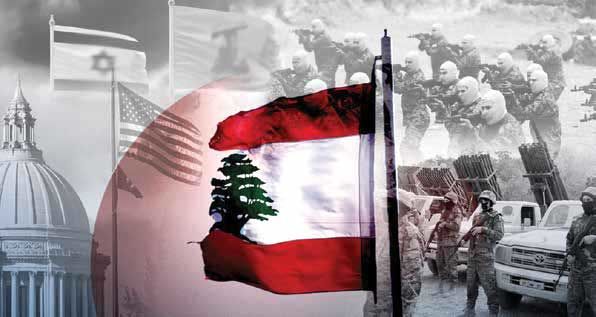
Strategic Council Online – Opinion: American-Zionist objectives in the region are not limited to weakening Hezbollah. Efforts to disarm Iraqi resistance groups such as Kata’ib Hezbollah and the Popular Mobilization Forces are also part of their subsequent plans.

Commercial Exploitation of Peace; The Gaza Committee in Confrontation with International Legitimacy

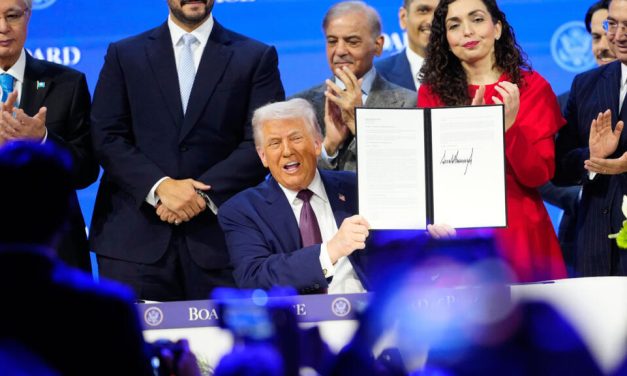
Strategic Council Online – Report: While the second phase of the implementation of the Gaza ceasefire has begun, the establishment of the “Peace Board” chaired by Donald Trump on the sidelines of the Davos meeting (22 January 2026) has become more than a technical mechanism for reconstruction and has turned into a test for the future of the international order.
Despite the signing of the charter by 22 out of 60 invited countries, the limited presence of global leaders at the Davos ceremony and the non-acceptance of this body by the European Union and key Western countries indicate a deep divide in global perceptions of the legitimacy of this mechanism.
In this report, drawing on the analysis of Hadi Borhani, a regional affairs expert, and international data, three strategic questions are addressed: Is the Peace Board an instrument for implementing UN Security Council Resolution 2803 or a substitute for the United Nations? How does the hierarchical architecture of this committee intensify executive challenges in Gaza? And finally, can this body create sustainable peace without the cooperation of Palestinians and with the concentration of power in the hands of a single individual?

America’s Zero-Sum Game in Iraq

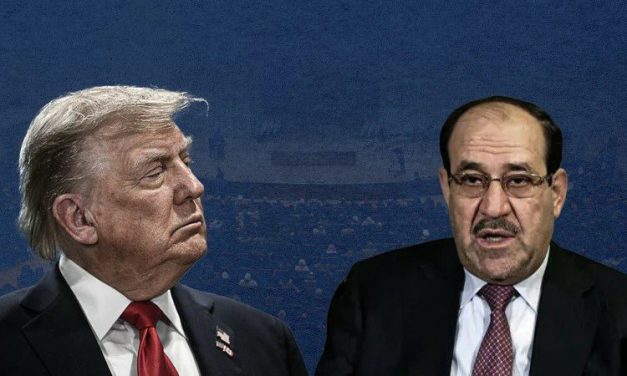
Online Strategic Council – Memoir: The swift selection of Nouri al-Maliki for the premiership constitutes a new phase in Iraq’s political sphere. Multiple factors have played a role in this process, the most important being the prevailing situation in Iraq and the region. Under such circumstances, Iraq requires a powerful and experienced prime minister who can keep the country away from the dangers of wars and crises.

Loading

Últimas publicaciones

The Strategic Consequences of U.S.-China Competition in the Field of Artificial Intelligence

Strategic Council Online – Opinion: The continuation of competition between the United States and China in the cyber and artificial intelligence domains without common frameworks, transparency, and normative constraints will not result in the victory of one over the other, but will instead lead to the erosion of global trust in the technology domain. A world where every platform is suspect, every algorithm is a potential weapon, and every piece of data can be considered a threat.

The Security Equation of Southern Lebanon for the Zionist Regime

Strategic Council Online – Opinion: American-Zionist objectives in the region are not limited to weakening Hezbollah. Efforts to disarm Iraqi resistance groups such as Kata’ib Hezbollah and the Popular Mobilization Forces are also part of their subsequent plans.

Commercial Exploitation of Peace; The Gaza Committee in Confrontation with International Legitimacy

Strategic Council Online – Report: While the second phase of the implementation of the Gaza ceasefire has begun, the establishment of the “Peace Board” chaired by Donald Trump on the sidelines of the Davos meeting (22 January 2026) has become more than a technical mechanism for reconstruction and has turned into a test for the future of the international order.
Despite the signing of the charter by 22 out of 60 invited countries, the limited presence of global leaders at the Davos ceremony and the non-acceptance of this body by the European Union and key Western countries indicate a deep divide in global perceptions of the legitimacy of this mechanism.
In this report, drawing on the analysis of Hadi Borhani, a regional affairs expert, and international data, three strategic questions are addressed: Is the Peace Board an instrument for implementing UN Security Council Resolution 2803 or a substitute for the United Nations? How does the hierarchical architecture of this committee intensify executive challenges in Gaza? And finally, can this body create sustainable peace without the cooperation of Palestinians and with the concentration of power in the hands of a single individual?

America’s Zero-Sum Game in Iraq

Online Strategic Council – Memoir: The swift selection of Nouri al-Maliki for the premiership constitutes a new phase in Iraq’s political sphere. Multiple factors have played a role in this process, the most important being the prevailing situation in Iraq and the region. Under such circumstances, Iraq requires a powerful and experienced prime minister who can keep the country away from the dangers of wars and crises.

Loading

DERNIER CONTENU

The Strategic Consequences of U.S.-China Competition in the Field of Artificial Intelligence

Strategic Council Online – Opinion: The continuation of competition between the United States and China in the cyber and artificial intelligence domains without common frameworks, transparency, and normative constraints will not result in the victory of one over the other, but will instead lead to the erosion of global trust in the technology domain. A world where every platform is suspect, every algorithm is a potential weapon, and every piece of data can be considered a threat.

The Security Equation of Southern Lebanon for the Zionist Regime

Strategic Council Online – Opinion: American-Zionist objectives in the region are not limited to weakening Hezbollah. Efforts to disarm Iraqi resistance groups such as Kata’ib Hezbollah and the Popular Mobilization Forces are also part of their subsequent plans.

Commercial Exploitation of Peace; The Gaza Committee in Confrontation with International Legitimacy

Strategic Council Online – Report: While the second phase of the implementation of the Gaza ceasefire has begun, the establishment of the “Peace Board” chaired by Donald Trump on the sidelines of the Davos meeting (22 January 2026) has become more than a technical mechanism for reconstruction and has turned into a test for the future of the international order.
Despite the signing of the charter by 22 out of 60 invited countries, the limited presence of global leaders at the Davos ceremony and the non-acceptance of this body by the European Union and key Western countries indicate a deep divide in global perceptions of the legitimacy of this mechanism.
In this report, drawing on the analysis of Hadi Borhani, a regional affairs expert, and international data, three strategic questions are addressed: Is the Peace Board an instrument for implementing UN Security Council Resolution 2803 or a substitute for the United Nations? How does the hierarchical architecture of this committee intensify executive challenges in Gaza? And finally, can this body create sustainable peace without the cooperation of Palestinians and with the concentration of power in the hands of a single individual?

America’s Zero-Sum Game in Iraq

Online Strategic Council – Memoir: The swift selection of Nouri al-Maliki for the premiership constitutes a new phase in Iraq’s political sphere. Multiple factors have played a role in this process, the most important being the prevailing situation in Iraq and the region. Under such circumstances, Iraq requires a powerful and experienced prime minister who can keep the country away from the dangers of wars and crises.

Loading

DERNIER CONTENU

The Strategic Consequences of U.S.-China Competition in the Field of Artificial Intelligence

Strategic Council Online – Opinion: The continuation of competition between the United States and China in the cyber and artificial intelligence domains without common frameworks, transparency, and normative constraints will not result in the victory of one over the other, but will instead lead to the erosion of global trust in the technology domain. A world where every platform is suspect, every algorithm is a potential weapon, and every piece of data can be considered a threat.

The Security Equation of Southern Lebanon for the Zionist Regime

Strategic Council Online – Opinion: American-Zionist objectives in the region are not limited to weakening Hezbollah. Efforts to disarm Iraqi resistance groups such as Kata’ib Hezbollah and the Popular Mobilization Forces are also part of their subsequent plans.

Commercial Exploitation of Peace; The Gaza Committee in Confrontation with International Legitimacy

Strategic Council Online – Report: While the second phase of the implementation of the Gaza ceasefire has begun, the establishment of the “Peace Board” chaired by Donald Trump on the sidelines of the Davos meeting (22 January 2026) has become more than a technical mechanism for reconstruction and has turned into a test for the future of the international order.
Despite the signing of the charter by 22 out of 60 invited countries, the limited presence of global leaders at the Davos ceremony and the non-acceptance of this body by the European Union and key Western countries indicate a deep divide in global perceptions of the legitimacy of this mechanism.
In this report, drawing on the analysis of Hadi Borhani, a regional affairs expert, and international data, three strategic questions are addressed: Is the Peace Board an instrument for implementing UN Security Council Resolution 2803 or a substitute for the United Nations? How does the hierarchical architecture of this committee intensify executive challenges in Gaza? And finally, can this body create sustainable peace without the cooperation of Palestinians and with the concentration of power in the hands of a single individual?

America’s Zero-Sum Game in Iraq

Online Strategic Council – Memoir: The swift selection of Nouri al-Maliki for the premiership constitutes a new phase in Iraq’s political sphere. Multiple factors have played a role in this process, the most important being the prevailing situation in Iraq and the region. Under such circumstances, Iraq requires a powerful and experienced prime minister who can keep the country away from the dangers of wars and crises.

Loading

DERNIER CONTENU

The Strategic Consequences of U.S.-China Competition in the Field of Artificial Intelligence

Strategic Council Online – Opinion: The continuation of competition between the United States and China in the cyber and artificial intelligence domains without common frameworks, transparency, and normative constraints will not result in the victory of one over the other, but will instead lead to the erosion of global trust in the technology domain. A world where every platform is suspect, every algorithm is a potential weapon, and every piece of data can be considered a threat.

The Security Equation of Southern Lebanon for the Zionist Regime

Strategic Council Online – Opinion: American-Zionist objectives in the region are not limited to weakening Hezbollah. Efforts to disarm Iraqi resistance groups such as Kata’ib Hezbollah and the Popular Mobilization Forces are also part of their subsequent plans.

Commercial Exploitation of Peace; The Gaza Committee in Confrontation with International Legitimacy

Strategic Council Online – Report: While the second phase of the implementation of the Gaza ceasefire has begun, the establishment of the “Peace Board” chaired by Donald Trump on the sidelines of the Davos meeting (22 January 2026) has become more than a technical mechanism for reconstruction and has turned into a test for the future of the international order.
Despite the signing of the charter by 22 out of 60 invited countries, the limited presence of global leaders at the Davos ceremony and the non-acceptance of this body by the European Union and key Western countries indicate a deep divide in global perceptions of the legitimacy of this mechanism.
In this report, drawing on the analysis of Hadi Borhani, a regional affairs expert, and international data, three strategic questions are addressed: Is the Peace Board an instrument for implementing UN Security Council Resolution 2803 or a substitute for the United Nations? How does the hierarchical architecture of this committee intensify executive challenges in Gaza? And finally, can this body create sustainable peace without the cooperation of Palestinians and with the concentration of power in the hands of a single individual?

America’s Zero-Sum Game in Iraq

Online Strategic Council – Memoir: The swift selection of Nouri al-Maliki for the premiership constitutes a new phase in Iraq’s political sphere. Multiple factors have played a role in this process, the most important being the prevailing situation in Iraq and the region. Under such circumstances, Iraq requires a powerful and experienced prime minister who can keep the country away from the dangers of wars and crises.

Loading