North Korea’s Riddle in Game of Powers

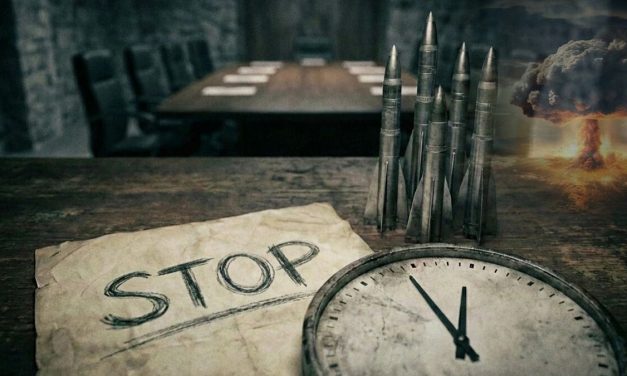
Strategic Council Online - Interview: A senior international affairs researcher, commenting on the targets of North Korea’s new missile test, said: North Korea’s nuclear policy is basically a scoring policy. In that sense, North Korea insists that as far as it is possible it would expand its nuclear technology and build bombs and missiles so that the United States would come to the negotiating table and make concessions.

Dr. Rahman Ghahremanpour, in an interview with the website of the Strategic Council on Foreign Relations, stated: North Korea is seeking the privilege that the United States recognized this country for interaction; because North Korea is a remote island and a besieged country, and China’s firm policy there is that North Korea should not be under external pressure and should not move towards an alliance with South Korea.

Regarding China’s policy towards Pyongyang, he said: China’s differences with South Korea and Japan is one of the reasons for such policy, meaning that if North and South Korea unite, they will be two serious regional rivals for China alongside Japan. Especially since part of China’s advanced technology is supplied through South Korea. Now, if South Korea with such an advanced technology unites with North Korea which possesses nuclear bomb, it will not be a good opportunity for China.

Ghahremanpour, saying that South Korea, like Germany, is looking for an alliance, but does not announce it, added: That country was also seeking to build a nuclear weapon at some point and had a dispute with the International Atomic Energy Agency. Therefore, china does not at all wants that South Korea’s technical and economic power to merge with North Korea’s military power and become a serious competitor and concern for Beijing.

The researcher stressed that China has always stood up against North Korea’s sanctions resolutions in the Security Council.

According to the expert, in this case we are witnessing that despite the fact that North Korea has tested nuclear bombs and intercontinental ballistic missiles, the number of resolutions issued against that country is far less than that of Iran.

Meanwhile, he said: North Korea, because being basically a very weak country economically, does not have much economic relations with the world and sometimes suffers from famine. Therefore, the international system does not have many tools to influence such trends of North Korea.

As for the consequences of North Korea’s missile and nuclear tests, the expert said: The main concern is with Japan; Japan is deeply concerned about North Korea’s missile and nuclear tests because it has a historic rivalry with South Korea and the Korean Peninsula, and therefore Japan, like China, is deeply concerned with the unity of the two Koreas and the fact that in its neighborhood have a nuclear power. While Japan itself is on the verge of becoming nuclear, it is not building a nuclear bomb; because Japan, like Germany after the Second World War, has pursued a policy of military and nuclear restraint.

He continued: Japan, like Germany, is concerned that developments in the international system will force it to abandon its traditional policy and that its development and economic welfare policy will be affected by this issue. As North Korea increases its nuclear activities and becomes a vital threat to Japan, it will force the country to reconsider its policy of military restraint.

The expert added: Unlike Japan, China does not seek a serious confrontation with North Korea.

He also commented on Washington’s policy toward North Korea and said: Although there was a direct meeting between US and North Korean leaders during Trump term of office, in the United States, the definitive policy of presidents has always been to refrain meeting with the North Korean leader.

Ghahremanpour continued: The denuclearization of North Korea is a precondition for any negotiations by the United States. However, Trump deviated from this policy. The main issue today is that with the developments occurred in North Korea, it is no longer practically possible to denuclearize the Korean Peninsula, and we have to see whether the United States and the international community will change their policy towards North Korea or not.

Regarding Joe Biden’s view on the North Korean issue, he said: Like Obama, Bill Clinton and George W. Bush, Biden is committed to traditional American policy, and they have stated that the president will not have a direct meeting with the North Korean leader unless the peninsula becomes non-nuclear.

The senior researcher of international affairs continued by saying that today we are witnessing changes in world nuclear equations, adding: The INF, for example, has not been renewed, and in the START 1 debate, the United States wants China to join the disarmament or arms control talks. That is to say, in addition to the United States and Russia, China should also enter into such negotiations, but Beijing is completely opposed to this. But in general, given the changes that are taking place in the international system and at the level of the countries’ nuclear strategy, the great powers may take a new approach to North Korea.

At the same time Ghahremanpour stressed: Such conditions do not necessarily mean the disarmament of North Korea as the case of that country has gone beyond disarmament. Because, according to credible reports, North Korea has produced several plutonium bombs and has intercontinental ballistic missiles capable of carrying nuclear warheads; therefore the policy of nuclear disarmament against Pyongyang does not work, and the international community must decide whether to return the country to the NPT or the IAEA, or even choose another method.

In response to the question that under such circumstances what would be China’s reaction, he said: If China is placed in such a situation, it may redefine its approach.
0 Comments

Submit a Comment

Your email address will not be published. Required fields are marked *

LATEST CONTENT

America’s Zero-Sum Game in Iraq

Online Strategic Council – Memoir: The swift selection of Nouri al-Maliki for the premiership constitutes a new phase in Iraq’s political sphere. Multiple factors have played a role in this process, the most important being the prevailing situation in Iraq and the region. Under such circumstances, Iraq requires a powerful and experienced prime minister who can keep the country away from the dangers of wars and crises.

America’s Strategy for Creating Tension in the Asia-Pacific

Strategic Council Online – Opinion: Relations between some countries in the Asia-Pacific region, such as China and Japan or China and Australia, which were previously relatively normal, are trending towards deterioration, and the primary reason for this is the aggressive policies of the United States of America.

The Collapse of the European Security Illusion with the Continuation of the Ukraine War?

Strategic Council Online – Interview: The Ukraine war has become a new turning point in the political, security, and even commercial relations of allies on both sides of the Atlantic. While this war is nearing its fourth year, many questions still remain regarding its future and its consequences; among them, will the continuation of the Ukraine war lead to the collapse of the European security illusion?

Is Greenland Pushing Europe Toward China?

Strategic Council Online – Interview: A European affairs expert believes that the seizure of Greenland will certainly weaken America’s relations with Europe and its allies. Donald Trump’s view is that he does not need these countries, but if Europe faces significant pressure from the United States, it is natural for it to move toward China.

Alarm Bells Sound for ISIS Revival in Syria: Threat to Iraq and West Asia

Strategic Council Online – Opinion: Numerous documents and pieces of evidence indicate that ISIS, which in recent years has been the region’s biggest threat to security and stability after the Zionist regime, has once again in recent months become a focal point for political and security exploitation by American and Zionist regime security, intelligence, and political circles.

Afghanistan’s Effective Role in the Economy of Eurasia

Strategic Council Online – Interview: A regional affairs researcher stated: Despite projects such as the Khaf-Herat railway and the Herat-Balkh-Mazar-i-Sharif corridor being on the agenda, insecurity and the absence of an inclusive government remain the most significant obstacles to realizing transit corridors and Afghanistan playing an effective role in the economy of Eurasia.

Loading

Últimas publicaciones

America’s Zero-Sum Game in Iraq

Online Strategic Council – Memoir: The swift selection of Nouri al-Maliki for the premiership constitutes a new phase in Iraq’s political sphere. Multiple factors have played a role in this process, the most important being the prevailing situation in Iraq and the region. Under such circumstances, Iraq requires a powerful and experienced prime minister who can keep the country away from the dangers of wars and crises.

America’s Strategy for Creating Tension in the Asia-Pacific

Strategic Council Online – Opinion: Relations between some countries in the Asia-Pacific region, such as China and Japan or China and Australia, which were previously relatively normal, are trending towards deterioration, and the primary reason for this is the aggressive policies of the United States of America.

The Collapse of the European Security Illusion with the Continuation of the Ukraine War?

Strategic Council Online – Interview: The Ukraine war has become a new turning point in the political, security, and even commercial relations of allies on both sides of the Atlantic. While this war is nearing its fourth year, many questions still remain regarding its future and its consequences; among them, will the continuation of the Ukraine war lead to the collapse of the European security illusion?

Is Greenland Pushing Europe Toward China?

Strategic Council Online – Interview: A European affairs expert believes that the seizure of Greenland will certainly weaken America’s relations with Europe and its allies. Donald Trump’s view is that he does not need these countries, but if Europe faces significant pressure from the United States, it is natural for it to move toward China.

Alarm Bells Sound for ISIS Revival in Syria: Threat to Iraq and West Asia

Strategic Council Online – Opinion: Numerous documents and pieces of evidence indicate that ISIS, which in recent years has been the region’s biggest threat to security and stability after the Zionist regime, has once again in recent months become a focal point for political and security exploitation by American and Zionist regime security, intelligence, and political circles.

Afghanistan’s Effective Role in the Economy of Eurasia

Strategic Council Online – Interview: A regional affairs researcher stated: Despite projects such as the Khaf-Herat railway and the Herat-Balkh-Mazar-i-Sharif corridor being on the agenda, insecurity and the absence of an inclusive government remain the most significant obstacles to realizing transit corridors and Afghanistan playing an effective role in the economy of Eurasia.

Loading

DERNIER CONTENU

America’s Zero-Sum Game in Iraq

Online Strategic Council – Memoir: The swift selection of Nouri al-Maliki for the premiership constitutes a new phase in Iraq’s political sphere. Multiple factors have played a role in this process, the most important being the prevailing situation in Iraq and the region. Under such circumstances, Iraq requires a powerful and experienced prime minister who can keep the country away from the dangers of wars and crises.

America’s Strategy for Creating Tension in the Asia-Pacific

Strategic Council Online – Opinion: Relations between some countries in the Asia-Pacific region, such as China and Japan or China and Australia, which were previously relatively normal, are trending towards deterioration, and the primary reason for this is the aggressive policies of the United States of America.

The Collapse of the European Security Illusion with the Continuation of the Ukraine War?

Strategic Council Online – Interview: The Ukraine war has become a new turning point in the political, security, and even commercial relations of allies on both sides of the Atlantic. While this war is nearing its fourth year, many questions still remain regarding its future and its consequences; among them, will the continuation of the Ukraine war lead to the collapse of the European security illusion?

Is Greenland Pushing Europe Toward China?

Strategic Council Online – Interview: A European affairs expert believes that the seizure of Greenland will certainly weaken America’s relations with Europe and its allies. Donald Trump’s view is that he does not need these countries, but if Europe faces significant pressure from the United States, it is natural for it to move toward China.

Alarm Bells Sound for ISIS Revival in Syria: Threat to Iraq and West Asia

Strategic Council Online – Opinion: Numerous documents and pieces of evidence indicate that ISIS, which in recent years has been the region’s biggest threat to security and stability after the Zionist regime, has once again in recent months become a focal point for political and security exploitation by American and Zionist regime security, intelligence, and political circles.

Afghanistan’s Effective Role in the Economy of Eurasia

Strategic Council Online – Interview: A regional affairs researcher stated: Despite projects such as the Khaf-Herat railway and the Herat-Balkh-Mazar-i-Sharif corridor being on the agenda, insecurity and the absence of an inclusive government remain the most significant obstacles to realizing transit corridors and Afghanistan playing an effective role in the economy of Eurasia.

Loading