Future of Yemen War after Recent Developments in Aden

Strategic Council Online: Both the UAE and Saudi Arabia are facing difficult and complicated conditions at the regional level, and the signs that are reflected outside the region and elsewhere in other countries indicate emergence of a passive state that has faced them with serious doubts as whether continue the Yemen war or not.

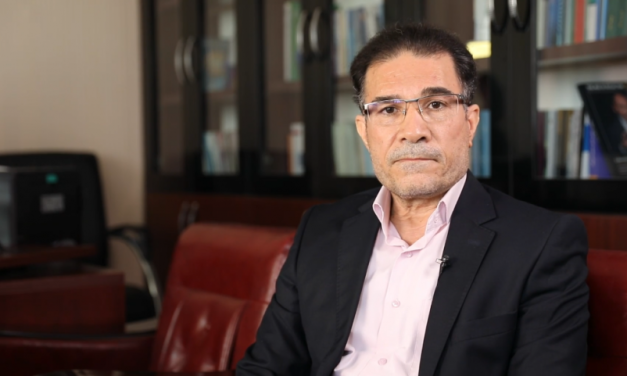
Middle East expert Jafar Ghanadbashi, speaking to the website of the Strategic Council on Foreign Relations, reviewed the latest developments in Aden, saying that any conflict in the southern parts would undermine Saudi and UAE affiliated forces and remove the obstacles in the way of Ansarullah, as well as the army and popular forces in the fight against the common military and political policies of the regional reactionary states and the West.

Q: Recently, armed elements under the command of the UAE succeeded in taking control of the city of Aden by ousting elements affiliated with Saudi Arabia and Yemen’s ousted government from al-Maasheeq Palace. What is the current situation in Aden?

After the bloody clashes between the puppet groups under the command of Saudi Arabia and the United Arab Emirates in Aden, the situation in the city and its surrounding areas continues to be affected by fierce disputes that will probably not be resolved quickly and may even lead to new military conflicts. This is while, Saudi Arabia, after several days of delay, directly bombed the positions of opposition forces in a show of support for its puppet groups in Aden. Nonetheless, the airstrikes failed to change the situation in Saudi favor, but reports suggest the situation in Aden and the surroundings remains volatile.

This is while, both the UAE and Saudi Arabia are facing difficult and complicated conditions at the regional level, and the signs that are reflected outside the region and elsewhere in other countries indicate emergence of a passive state that has faced them with serious doubts whether to continue the Yemen war.

Q: How does the war between the forces under the command of the UAE and Saudi Arabia affect their war against Ansarullah and the Houthis in Aden?

Undoubtedly, any conflict in the southern parts would undermine Saudi and UAE affiliated forces and remove the obstacles in the way of Ansarullah, as well as the army and popular forces in the fight against the common military and political policies of the regional reactionary states and the West.

The conflict, on the other hand, will diminish the number of troops and supporters of the armed groups and greatly reduce the hopes that these groups will have for the victory in the southern regions. This means weakening the secessionist and separatist currents in southern Yemen.

Q: What was the reason of the sudden UAE policy shift on Yemen, and does this change have anything to do with UAE-Iran relations?

According to leaked news, the outward and the prevailing conditions on the Yemeni conflict fronts indicate the UAE’s apparent withdrawal from the region. The main reason for the withdrawal, of course, comes from the weakness of the UAE and the heavy costs of the war. Another reason is the severe vulnerabilities the UAE has with its trade policy. In this regard, the UAE authorities acknowledged that Abu Dhabi is currently unable to bear the costs of the Yemeni war and must abandon the conflict.

Of course, the UAE authorities prefer to pretend that their withdrawal from Yemen and the cessation of their military operations there is the outcome of a deal with the Islamic Republic of Iran and want the media not to cover their weaknesses that have led to this troop pullout.

Q: What are the conditions of the Houthis now and is it true that the Houthis have said they will not attack the positions of the UAE-backed forces?

The Houthis have always emphasized the need for an end to the war as a first condition, and have constantly called for an end to the invasion of Yemen before any further action. Therefore, when the UAE is inclined to backtrack and end the war in Yemen, it is natural that the Ansarullah movement will also end its military operation against the Emirates-backed forces based on its general and principled strategy.

Q: The war in Yemeni has left behind many stages and we are now witnessing a proxy war between the UAE and Saudi Arabia in Yemen. Why are the forces supporting Riyadh and Abu Dhabi fighting each other?

It should be noted that Saudi Arabia and the United Arab Emirates adopted a wrong approach towards Yemen from the beginning as they sought to establish a government that was in line with their policies and coordinated with the West. Therefore, in order to bring such a government to power, they created and reinforced various armed groups in Yemen, none of which had the authority to acquire weapons and participate in the formation of the government. It was therefore foreseeable that these armed groups would diverge deeply in the course of their activities and inadvertently interfere with the interests of their sponsors, the UAE and Saudi Arabia. In other words, what is currently going on in Yemen, especially in the southern part of the country, is the direct or indirect result of the wrong policies the UAE and Saudi Arabia have pursued, and by creating these armed groups fomented various military and political conflicts in the southern Yemeni provinces.
0 Comments

Submit a Comment

Your email address will not be published. Required fields are marked *

LATEST CONTENT

An Analysis of Europe’s Approach Towards Iran

Strategic Council Online – Opinion: The sanctions imposed by the European Union against the Islamic Republic of Iran before the activation of the snapback mechanism represent an effort to exert additional political and economic pressure on our country to change the system’s behavior regarding regional developments.

The Outlook for Ukraine Peace Negotiations

Strategic Council Online – Opinion: After nearly four years of conflict, the outlook for Ukraine-Russia peace negotiations remains unclear; not due to a lack of initiatives, but because of deep conflicts of interest, Russia’s strategy of exploiting the battlefield situation politically, and European confusion and lack of consensus. Achieving a lasting peace seems out of reach.

Review of the 2026 budget of the Zionist regime

Strategic Council Online – Opinion: It appears that the primary focus of the 2026 budget of the Israeli regime is on simultaneously managing war pressures, social discontent, and political ambiguities; even if this approach leads to the postponement of structural reforms and increases financial risks in the medium-term horizon.

The Implications of the United States’ New National Security Strategy on Global Order

Strategic Council Online – Opinion: The United States’ 2025 National Security Strategy (NSS 2025) is not merely a revision of Washington’s foreign policy, but an official declaration redefining its interests, sphere of influence, and the framework of international relations. This change could shake the foundations of the post-Cold War order and place Europe and NATO in a difficult position.

The goals of the Israeli regime in its military attacks on Syria

Strategic Council Online – Interview: A West Asian affairs expert said: One of the main objectives of the recent attacks by the Israeli regime on Syria is to prevent the establishment of a strong central authority or government in Syria. Therefore, it is trying to prevent the comprehensive rule of the new government under the name of Ahmad al-Sharaa or al-Julani by attacking and invading southern Syria and various regions of the country, even Damascus.

China’s Strategy to Become a Global Military Power

Strategic Council Online – Opinion: With its large arsenal of hypersonic missiles, advanced cyber capabilities, extensive satellite network, and survivable nuclear triad, China has become a serious competitor to the United States. Nevertheless, in strategic documents, including the 2025 National Security Document, China describes itself as a development-oriented power committed to the international order, whose path to rise does not pass through war.

Loading

Últimas publicaciones

An Analysis of Europe’s Approach Towards Iran

Strategic Council Online – Opinion: The sanctions imposed by the European Union against the Islamic Republic of Iran before the activation of the snapback mechanism represent an effort to exert additional political and economic pressure on our country to change the system’s behavior regarding regional developments.

The Outlook for Ukraine Peace Negotiations

Strategic Council Online – Opinion: After nearly four years of conflict, the outlook for Ukraine-Russia peace negotiations remains unclear; not due to a lack of initiatives, but because of deep conflicts of interest, Russia’s strategy of exploiting the battlefield situation politically, and European confusion and lack of consensus. Achieving a lasting peace seems out of reach.

Review of the 2026 budget of the Zionist regime

Strategic Council Online – Opinion: It appears that the primary focus of the 2026 budget of the Israeli regime is on simultaneously managing war pressures, social discontent, and political ambiguities; even if this approach leads to the postponement of structural reforms and increases financial risks in the medium-term horizon.

The Implications of the United States’ New National Security Strategy on Global Order

Strategic Council Online – Opinion: The United States’ 2025 National Security Strategy (NSS 2025) is not merely a revision of Washington’s foreign policy, but an official declaration redefining its interests, sphere of influence, and the framework of international relations. This change could shake the foundations of the post-Cold War order and place Europe and NATO in a difficult position.

The goals of the Israeli regime in its military attacks on Syria

Strategic Council Online – Interview: A West Asian affairs expert said: One of the main objectives of the recent attacks by the Israeli regime on Syria is to prevent the establishment of a strong central authority or government in Syria. Therefore, it is trying to prevent the comprehensive rule of the new government under the name of Ahmad al-Sharaa or al-Julani by attacking and invading southern Syria and various regions of the country, even Damascus.

China’s Strategy to Become a Global Military Power

Strategic Council Online – Opinion: With its large arsenal of hypersonic missiles, advanced cyber capabilities, extensive satellite network, and survivable nuclear triad, China has become a serious competitor to the United States. Nevertheless, in strategic documents, including the 2025 National Security Document, China describes itself as a development-oriented power committed to the international order, whose path to rise does not pass through war.

Loading

DERNIER CONTENU

An Analysis of Europe’s Approach Towards Iran

Strategic Council Online – Opinion: The sanctions imposed by the European Union against the Islamic Republic of Iran before the activation of the snapback mechanism represent an effort to exert additional political and economic pressure on our country to change the system’s behavior regarding regional developments.

The Outlook for Ukraine Peace Negotiations

Strategic Council Online – Opinion: After nearly four years of conflict, the outlook for Ukraine-Russia peace negotiations remains unclear; not due to a lack of initiatives, but because of deep conflicts of interest, Russia’s strategy of exploiting the battlefield situation politically, and European confusion and lack of consensus. Achieving a lasting peace seems out of reach.

Review of the 2026 budget of the Zionist regime

Strategic Council Online – Opinion: It appears that the primary focus of the 2026 budget of the Israeli regime is on simultaneously managing war pressures, social discontent, and political ambiguities; even if this approach leads to the postponement of structural reforms and increases financial risks in the medium-term horizon.

The Implications of the United States’ New National Security Strategy on Global Order

Strategic Council Online – Opinion: The United States’ 2025 National Security Strategy (NSS 2025) is not merely a revision of Washington’s foreign policy, but an official declaration redefining its interests, sphere of influence, and the framework of international relations. This change could shake the foundations of the post-Cold War order and place Europe and NATO in a difficult position.

The goals of the Israeli regime in its military attacks on Syria

Strategic Council Online – Interview: A West Asian affairs expert said: One of the main objectives of the recent attacks by the Israeli regime on Syria is to prevent the establishment of a strong central authority or government in Syria. Therefore, it is trying to prevent the comprehensive rule of the new government under the name of Ahmad al-Sharaa or al-Julani by attacking and invading southern Syria and various regions of the country, even Damascus.

China’s Strategy to Become a Global Military Power

Strategic Council Online – Opinion: With its large arsenal of hypersonic missiles, advanced cyber capabilities, extensive satellite network, and survivable nuclear triad, China has become a serious competitor to the United States. Nevertheless, in strategic documents, including the 2025 National Security Document, China describes itself as a development-oriented power committed to the international order, whose path to rise does not pass through war.

Loading