Venezuela Crisis and US Interventionist Strategy in Latin America

2025/09/01 | interview, Politics, top news

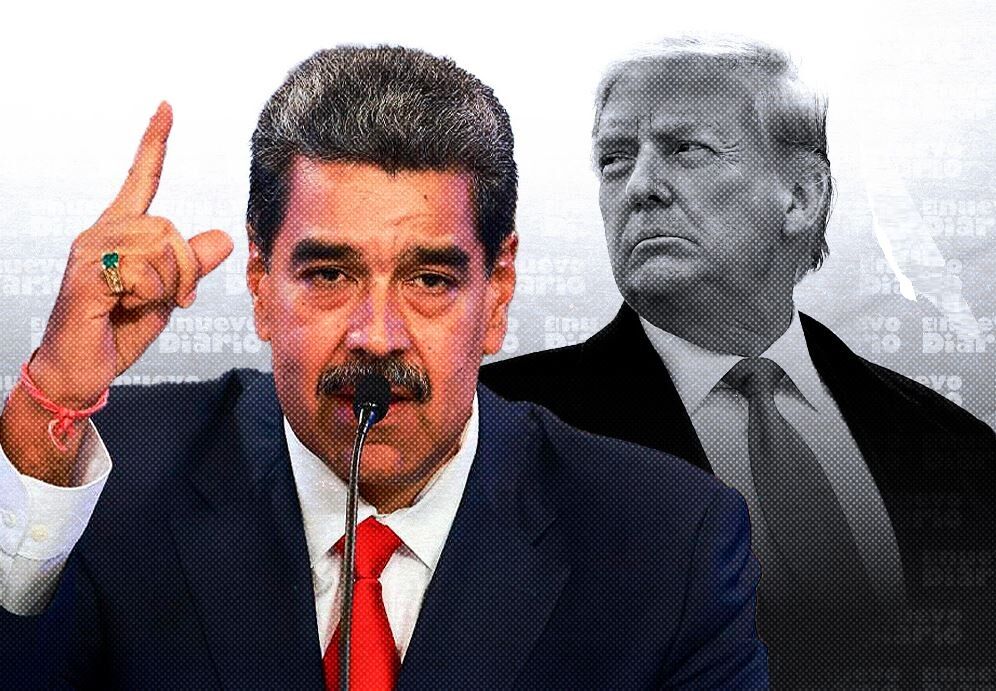
Strategic Council Online - Interview: A senior Latin American affairs analyst stated that the Trump administration's view of South America is fundamentally defined by ideological pessimism and hostility towards socialist systems. Just as the United States pursued a policy of regime change in Cuba, Nicaragua, and Chile over the past decades, it is following the same approach in Venezuela.

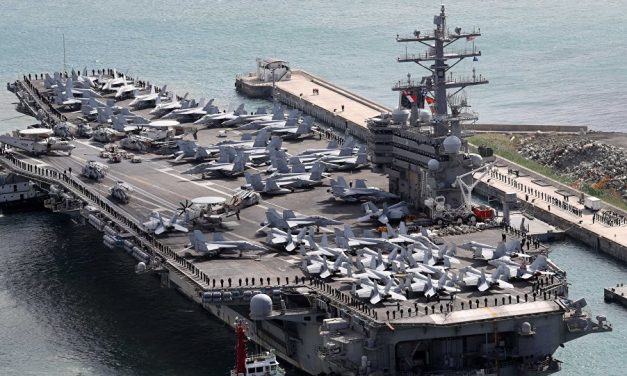
The US Department of Justice’s announcement of a $50 million reward for the capture of Venezuelan President Nicolas Maduro, coinciding with the deployment of warships to Caribbean waters, has once again heightened the shadow of a military and security crisis over Latin America. By making allegations about Maduro’s links to drug cartels, Washington is trying to build a security-terrorist narrative of the Venezuela crisis; a narrative that could provide the necessary legal and political groundwork for direct US intervention in South America. This move has been met with opposition not only from the Venezuelan government but also with warnings from some governments in the region, including Colombia, whose president has explicitly stated that a military attack on Venezuela would be a repetition of the Syrian disaster in Latin America.

Security Interventions Under the Guise of the War on Drugs

Hadi Alami Fariman, in an interview with the website of the Strategic Council on Foreign Relations, stated: “Although Donald Trump’s recent policy-making towards Venezuela is ostensibly presented with the slogan of fighting drug trafficking, in reality, it is a cover for intensifying US security and military interventions throughout the Latin American region.” According to this expert, “Trump, both in his first and second terms in power, has always had a security-oriented view of the southern border, considering illegal immigration and drug trafficking as a direct threat against America. For this reason, Washington, by highlighting the threat of cartels and accusing Nicolas Maduro of having links with these cartels, has created a platform for applying more severe pressures, from economic sanctions to military threats.”

According to the South American affairs researcher, “Increasing the reward for Maduro’s arrest to $50 million is more an effort to weaken the political legitimacy of the Venezuelan government internationally than a judicial action. This move, alongside extensive sanctions and economic restrictions, is part of Washington’s strategy for regime change and support for right-wing forces within Venezuela.”

From Cuba to Venezuela: The Continuation of Overthrow Policies in Latin America

The Latin American affairs analyst notes that “the Trump administration’s view of Latin America is fundamentally defined by ideological pessimism and hostility towards socialist systems. Just as the United States pursued a policy of regime change in Cuba, Nicaragua, and Chile over the past decades, it is following the same approach in Venezuela.” According to this analyst, “The role of some Cuban-American politicians in Trump’s second administration and the US Congress, including Marco Rubio, the US Secretary of State, is notable in intensifying the White House’s aggressive policies against the governments of Cuba, Venezuela, and the entire Latin American region.”

According to Fariman, “This political current, with Marco Rubio playing a central role, strongly insists on continuing pressures to weaken socialist governments and tries to advance the strategy of overthrow through economic pressure, diplomatic isolation, and discrediting the legitimacy of governments.” The South American affairs researcher also emphasizes that “Although the deployment of warships to the Caribbean is ostensibly announced to combat drug trafficking, its main goal is to increase psychological and political pressure against Caracas and strengthen scenarios of soft overthrow.” From this researcher’s perspective, “There is still no sign of Washington’s willingness to enter a full-scale war; rather, the United States prefers to use indirect tools to place the Maduro government in a fragile position.”

The senior Latin American affairs analyst further notes that “Although during Joe Biden’s presidency, space for limited engagement with Venezuela opened up to some extent, and even licenses for energy companies to operate were issued, with Trump’s return to the presidency, the same strict and sanctioning policies were applied.” According to Fariman, “The main problem goes back to Trump’s fundamental understanding of the region. The former US president fundamentally has an ideological problem with socialist systems and, from this perspective, does not take negotiation and political dialogue very seriously. While Maduro has repeatedly shown his willingness to negotiate with Washington, these messages went unanswered during the Trump period.”

The South American affairs analyst believes that “Trump’s strategy is based on two pillars; first, intensifying economic sanctions aimed at closing the breathing channels of the Venezuelan economy, and second, using security and intelligence tools to support internal opponents and gradually destabilize the government. In this framework, setting a large reward for Maduro’s arrest is not only a propaganda action but also a step towards discrediting the legitimate government of Venezuela in the international community.”

Future of Latin America Under the Shadow of the Intervention Scenario

Fariman, in the final part of his assessment, warns that “Any direct US attack on Venezuela could have consequences similar to the Syrian crisis for Latin America.” According to this analyst, “Although Maduro has declared defensive readiness by mobilizing 4.5 million militia forces, experience has shown that Washington is more interested in stimulating internal elements of the army for a coup than direct entry into war. However, the extensive presence of militia forces in Venezuela’s political and security structure has created a complex situation for the country; a model in which layered popular armed forces permeate all pillars of the state.”

The South American affairs researcher emphasizes that “In the event of a military crisis, political and diplomatic divisions in Latin America will increase. Some governments have maintained their economic relations with the United States and, for this reason, will not be willing to engage in direct confrontation, while others warn of the danger of foreign intervention. Ultimately, the future of this region depends on the ability of Latin American governments to adopt a unified and coordinated approach against Washington’s pressures, because any passivity or division will pave the way for the continuation of interventionism and a threat to the independence of this continent.”
0 Comments

LATEST CONTENT

The Security Equation of Southern Lebanon for the Zionist Regime

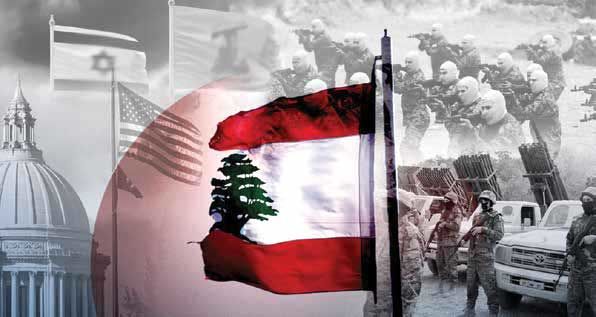
Strategic Council Online – Opinion: American-Zionist objectives in the region are not limited to weakening Hezbollah. Efforts to disarm Iraqi resistance groups such as Kata’ib Hezbollah and the Popular Mobilization Forces are also part of their subsequent plans.

Commercial Exploitation of Peace; The Gaza Committee in Confrontation with International Legitimacy

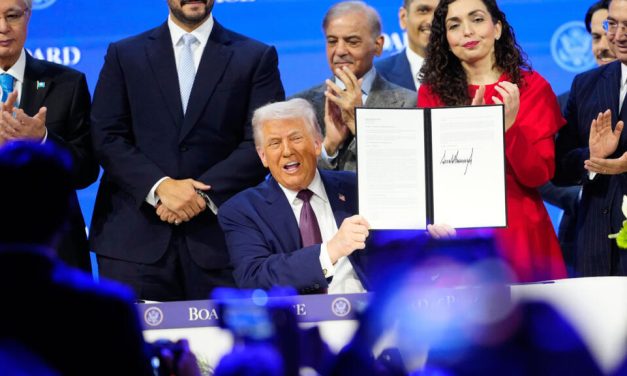
Strategic Council Online – Report: While the second phase of the implementation of the Gaza ceasefire has begun, the establishment of the “Peace Board” chaired by Donald Trump on the sidelines of the Davos meeting (22 January 2026) has become more than a technical mechanism for reconstruction and has turned into a test for the future of the international order.
Despite the signing of the charter by 22 out of 60 invited countries, the limited presence of global leaders at the Davos ceremony and the non-acceptance of this body by the European Union and key Western countries indicate a deep divide in global perceptions of the legitimacy of this mechanism.
In this report, drawing on the analysis of Hadi Borhani, a regional affairs expert, and international data, three strategic questions are addressed: Is the Peace Board an instrument for implementing UN Security Council Resolution 2803 or a substitute for the United Nations? How does the hierarchical architecture of this committee intensify executive challenges in Gaza? And finally, can this body create sustainable peace without the cooperation of Palestinians and with the concentration of power in the hands of a single individual?

America’s Zero-Sum Game in Iraq

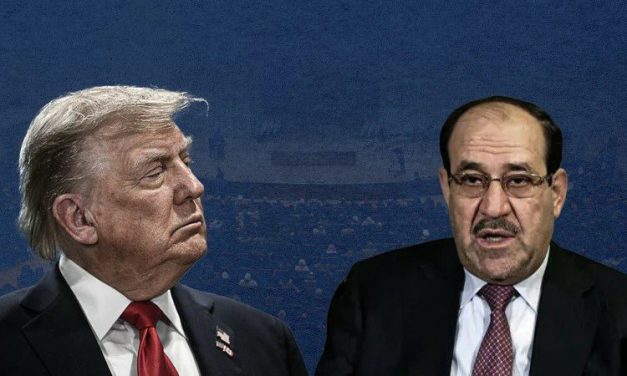
Online Strategic Council – Memoir: The swift selection of Nouri al-Maliki for the premiership constitutes a new phase in Iraq’s political sphere. Multiple factors have played a role in this process, the most important being the prevailing situation in Iraq and the region. Under such circumstances, Iraq requires a powerful and experienced prime minister who can keep the country away from the dangers of wars and crises.

America’s Strategy for Creating Tension in the Asia-Pacific

Strategic Council Online – Opinion: Relations between some countries in the Asia-Pacific region, such as China and Japan or China and Australia, which were previously relatively normal, are trending towards deterioration, and the primary reason for this is the aggressive policies of the United States of America.

Loading

Últimas publicaciones

The Security Equation of Southern Lebanon for the Zionist Regime

Strategic Council Online – Opinion: American-Zionist objectives in the region are not limited to weakening Hezbollah. Efforts to disarm Iraqi resistance groups such as Kata’ib Hezbollah and the Popular Mobilization Forces are also part of their subsequent plans.

Commercial Exploitation of Peace; The Gaza Committee in Confrontation with International Legitimacy

Strategic Council Online – Report: While the second phase of the implementation of the Gaza ceasefire has begun, the establishment of the “Peace Board” chaired by Donald Trump on the sidelines of the Davos meeting (22 January 2026) has become more than a technical mechanism for reconstruction and has turned into a test for the future of the international order.
Despite the signing of the charter by 22 out of 60 invited countries, the limited presence of global leaders at the Davos ceremony and the non-acceptance of this body by the European Union and key Western countries indicate a deep divide in global perceptions of the legitimacy of this mechanism.
In this report, drawing on the analysis of Hadi Borhani, a regional affairs expert, and international data, three strategic questions are addressed: Is the Peace Board an instrument for implementing UN Security Council Resolution 2803 or a substitute for the United Nations? How does the hierarchical architecture of this committee intensify executive challenges in Gaza? And finally, can this body create sustainable peace without the cooperation of Palestinians and with the concentration of power in the hands of a single individual?

America’s Zero-Sum Game in Iraq

Online Strategic Council – Memoir: The swift selection of Nouri al-Maliki for the premiership constitutes a new phase in Iraq’s political sphere. Multiple factors have played a role in this process, the most important being the prevailing situation in Iraq and the region. Under such circumstances, Iraq requires a powerful and experienced prime minister who can keep the country away from the dangers of wars and crises.

America’s Strategy for Creating Tension in the Asia-Pacific

Strategic Council Online – Opinion: Relations between some countries in the Asia-Pacific region, such as China and Japan or China and Australia, which were previously relatively normal, are trending towards deterioration, and the primary reason for this is the aggressive policies of the United States of America.

Loading

DERNIER CONTENU

The Security Equation of Southern Lebanon for the Zionist Regime

Strategic Council Online – Opinion: American-Zionist objectives in the region are not limited to weakening Hezbollah. Efforts to disarm Iraqi resistance groups such as Kata’ib Hezbollah and the Popular Mobilization Forces are also part of their subsequent plans.

Commercial Exploitation of Peace; The Gaza Committee in Confrontation with International Legitimacy

Strategic Council Online – Report: While the second phase of the implementation of the Gaza ceasefire has begun, the establishment of the “Peace Board” chaired by Donald Trump on the sidelines of the Davos meeting (22 January 2026) has become more than a technical mechanism for reconstruction and has turned into a test for the future of the international order.
Despite the signing of the charter by 22 out of 60 invited countries, the limited presence of global leaders at the Davos ceremony and the non-acceptance of this body by the European Union and key Western countries indicate a deep divide in global perceptions of the legitimacy of this mechanism.
In this report, drawing on the analysis of Hadi Borhani, a regional affairs expert, and international data, three strategic questions are addressed: Is the Peace Board an instrument for implementing UN Security Council Resolution 2803 or a substitute for the United Nations? How does the hierarchical architecture of this committee intensify executive challenges in Gaza? And finally, can this body create sustainable peace without the cooperation of Palestinians and with the concentration of power in the hands of a single individual?

America’s Zero-Sum Game in Iraq

Online Strategic Council – Memoir: The swift selection of Nouri al-Maliki for the premiership constitutes a new phase in Iraq’s political sphere. Multiple factors have played a role in this process, the most important being the prevailing situation in Iraq and the region. Under such circumstances, Iraq requires a powerful and experienced prime minister who can keep the country away from the dangers of wars and crises.

America’s Strategy for Creating Tension in the Asia-Pacific

Strategic Council Online – Opinion: Relations between some countries in the Asia-Pacific region, such as China and Japan or China and Australia, which were previously relatively normal, are trending towards deterioration, and the primary reason for this is the aggressive policies of the United States of America.

Loading

DERNIER CONTENU

The Security Equation of Southern Lebanon for the Zionist Regime

Strategic Council Online – Opinion: American-Zionist objectives in the region are not limited to weakening Hezbollah. Efforts to disarm Iraqi resistance groups such as Kata’ib Hezbollah and the Popular Mobilization Forces are also part of their subsequent plans.

Commercial Exploitation of Peace; The Gaza Committee in Confrontation with International Legitimacy

Strategic Council Online – Report: While the second phase of the implementation of the Gaza ceasefire has begun, the establishment of the “Peace Board” chaired by Donald Trump on the sidelines of the Davos meeting (22 January 2026) has become more than a technical mechanism for reconstruction and has turned into a test for the future of the international order.
Despite the signing of the charter by 22 out of 60 invited countries, the limited presence of global leaders at the Davos ceremony and the non-acceptance of this body by the European Union and key Western countries indicate a deep divide in global perceptions of the legitimacy of this mechanism.
In this report, drawing on the analysis of Hadi Borhani, a regional affairs expert, and international data, three strategic questions are addressed: Is the Peace Board an instrument for implementing UN Security Council Resolution 2803 or a substitute for the United Nations? How does the hierarchical architecture of this committee intensify executive challenges in Gaza? And finally, can this body create sustainable peace without the cooperation of Palestinians and with the concentration of power in the hands of a single individual?

America’s Zero-Sum Game in Iraq

Online Strategic Council – Memoir: The swift selection of Nouri al-Maliki for the premiership constitutes a new phase in Iraq’s political sphere. Multiple factors have played a role in this process, the most important being the prevailing situation in Iraq and the region. Under such circumstances, Iraq requires a powerful and experienced prime minister who can keep the country away from the dangers of wars and crises.

America’s Strategy for Creating Tension in the Asia-Pacific

Strategic Council Online – Opinion: Relations between some countries in the Asia-Pacific region, such as China and Japan or China and Australia, which were previously relatively normal, are trending towards deterioration, and the primary reason for this is the aggressive policies of the United States of America.

Loading

DERNIER CONTENU

The Security Equation of Southern Lebanon for the Zionist Regime

Strategic Council Online – Opinion: American-Zionist objectives in the region are not limited to weakening Hezbollah. Efforts to disarm Iraqi resistance groups such as Kata’ib Hezbollah and the Popular Mobilization Forces are also part of their subsequent plans.

Commercial Exploitation of Peace; The Gaza Committee in Confrontation with International Legitimacy

Strategic Council Online – Report: While the second phase of the implementation of the Gaza ceasefire has begun, the establishment of the “Peace Board” chaired by Donald Trump on the sidelines of the Davos meeting (22 January 2026) has become more than a technical mechanism for reconstruction and has turned into a test for the future of the international order.
Despite the signing of the charter by 22 out of 60 invited countries, the limited presence of global leaders at the Davos ceremony and the non-acceptance of this body by the European Union and key Western countries indicate a deep divide in global perceptions of the legitimacy of this mechanism.
In this report, drawing on the analysis of Hadi Borhani, a regional affairs expert, and international data, three strategic questions are addressed: Is the Peace Board an instrument for implementing UN Security Council Resolution 2803 or a substitute for the United Nations? How does the hierarchical architecture of this committee intensify executive challenges in Gaza? And finally, can this body create sustainable peace without the cooperation of Palestinians and with the concentration of power in the hands of a single individual?

America’s Zero-Sum Game in Iraq

Online Strategic Council – Memoir: The swift selection of Nouri al-Maliki for the premiership constitutes a new phase in Iraq’s political sphere. Multiple factors have played a role in this process, the most important being the prevailing situation in Iraq and the region. Under such circumstances, Iraq requires a powerful and experienced prime minister who can keep the country away from the dangers of wars and crises.

America’s Strategy for Creating Tension in the Asia-Pacific

Strategic Council Online – Opinion: Relations between some countries in the Asia-Pacific region, such as China and Japan or China and Australia, which were previously relatively normal, are trending towards deterioration, and the primary reason for this is the aggressive policies of the United States of America.

Loading