Decoding the Israeli Regime’s Narrative-Building in the Gaza War

Strategic Council Online - Interview: A senior Palestinian affairs analyst stated: To justify its crimes in Gaza, the Zionist regime employs two main strategies: using military censorship regarding the publication of operational details and presenting an official narrative by military spokespersons in Hebrew and Arabic. By relying on selective images and information, it attempts to make its military actions in Gaza seem believable. While Benjamin Netanyahu, the Prime Minister of the Israeli regime, has announced readiness to expand military operations in Gaza and claimed that Palestinians would be allowed to leave the area, international criticism of this regime's actions under the accusation of ethnic cleansing has intensified. By controlling Gaza's borders, the Israeli regime's military has restricted the exit of Palestinians and simultaneously carried out extensive bombings in the residential areas of Zeitoun and Sabra, which, according to the Hamas Civil Defense Organization, resulted in at least 33 deaths and widespread destruction. The European Union, the United Kingdom, Australia, Canada, and Japan, in a joint statement, have warned of an impending famine in Gaza and called for a halt to the use of lethal force near aid distribution sites. The World Health Organization has also emphasized the necessity of medical equipment entering Gaza, but the Israeli regime continues to prevent sufficient humanitarian aid from being sent.

Israeli Regime’s Media Strategies for Legitimizing Military Actions

Mohsen Fayyazi, in an interview with the website of the Strategic Council on Foreign Relations, stated: “The Zionist regime uses two main strategies to justify its military actions in Gaza. First, the use of military censorship, which limits the publication of operational details, including objectives and weapons used. For example, in attacks on schools that were sheltering displaced people, key information is not published without military authorization. This approach allows the Israeli regime to present its desired narrative.”

From the perspective of this senior Palestinian affairs analyst, “The second strategy involves presenting an official narrative by military spokespersons in Hebrew and Arabic, which, by relying on selective images and information, attempts to make the military actions believable.” According to him, the Israeli regime’s military emphasizes keywords such as “intelligence dominance,” “operational precision,” “human shielding of targets,” and “military ethics.” These keywords, alongside media marginalization, such as the incident of the pagers’ explosion in Lebanon, are designed to divert attention from the core actions, like mass killings. This approach overshadows the main story with secondary issues and helps legitimize the military operations.

Role of Western Support in the Continuation of the Israeli Regime’s Inhumane Policies

Mohsen Fayyazi believes that “Western powers’ support for the Israeli regime is manifested more in negative approaches than in positive actions.” In his view, “The lack of effective diplomatic actions and the control of mainstream media flows in the West have allowed the Israeli regime to continue its policies in Gaza, including killings and creating famine, without serious obstacles. Although critical statements are issued by Western officials or the European Union, due to the absence of practical actions, these criticisms practically give Tel Aviv the opportunity to continue its path.”

This Palestinian affairs analyst notes that “The West’s implicit coordination in refraining from applying effective and decisive pressure, such as sanctions or cutting military support, has allowed the Israeli regime to continue its operations with ease. For instance, while the United Nations has reported the killing of over 1,300 Palestinians near aid distribution sites, the West, instead of taking practical action, has contented itself with issuing condemnatory statements.” This approach, in Fayyazi’s opinion, “amounts to a green light for the continuation of the Israeli regime’s policies in Gaza.”

Ineffectiveness of International Criticism on the Israeli Regime’s Decision-Making

The senior Palestinian affairs analyst believes that “international criticism, including accusations of ethnic cleansing, has had little impact on the Israeli regime’s strategies. Developments after October 7, 2023, such as the attack on Rafah and the starvation campaigns, show that these criticisms have failed to change Tel Aviv’s policies.” Therefore, Fayyazi emphasizes that “The Israeli regime manages international pressures by using media justifications and marginal actions, such as apparent plans to reduce starvation. For example, in response to the global campaign against famine in Gaza, the Israeli regime proposed ideas like creating safe corridors for aid distribution. Still, these measures are designed within the framework of the main strategy of causing social collapse in Gaza and weakening Hamas.” According to Fayyazi, “Even internal criticism within the Israeli military regarding these approaches, which have dangerous political and social consequences for the future of this regime, has failed to bring about a significant change in policies. Consequently, the Israeli regime, relying on implicit Western support and media management, continues on its current path.”
0 Comments

LATEST CONTENT

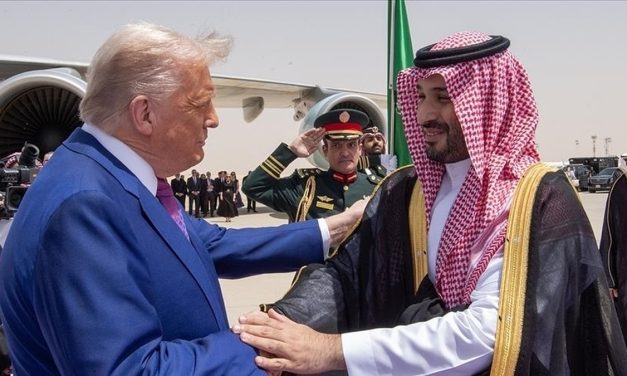
A Look at bin Salman’s Recent Trip to America

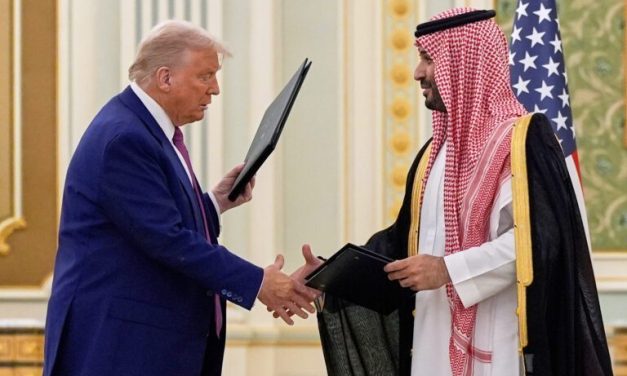
Strategic Council Online – Opinion: The recent trip of the Saudi Crown Prince to America was a targeted effort to solidify the strategic partnership with Washington, reduce political uncertainties, and strengthen Riyadh’s political role-playing.

Creating the Right Narrative: A Principled Strategy for Countering the Enemy’s Soft War

Strategic Council Online – Interview: A media expert stated: Given the intensification of the West’s soft war and psychological operations against Iran, our country’s primary strategy must be based on public education, strengthening national cohesion, developing international media, and countering the distortion of history through creating the right narrative.

F-35 Sale to Saudi Arabia: From Promise to Reality

Strategic Council Online – Interview: An international affairs analyst said: The issue of selling the F-35 to Saudi Arabia is not merely a military case, but rather part of a regional engineering that Washington is trying to advance.

Caspian Sea Water Level Drop; A Geopolitical Harm for Coastal Countries

Strategic Council Online – Interview: An expert in geopolitics stated, “The unprecedented drop in the Caspian Sea water level is not only an environmental threat but also a geopolitical alarm bell for Iran and the coastal countries, requiring urgent multilateral cooperation.”

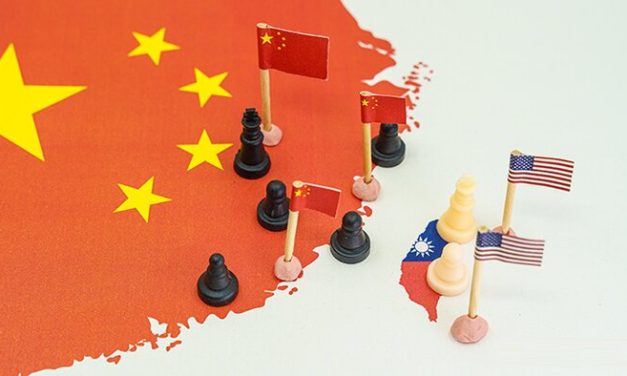
China’s Strategy to Counter the U.S. Effort to Escalate the Taiwan Crisis

Strategic Council Online – Interview: “Any miscalculated move could lead to escalating tensions and uncontrollable crises, but Beijing’s prudence and precise strategies have so far prevented the Taiwan issue from escalating into a crisis similar to that of Ukraine,” said an East Asia analyst.

Iran in the New Eurasian Order

Strategic Council Online – Interview: A geostrategic affairs analyst said: The emerging Eurasian order is not merely an economic plan, but an effort to redefine the global order based on independence, multilateralism, and regional convergence.

Loading

Últimas publicaciones

A Look at bin Salman’s Recent Trip to America

Strategic Council Online – Opinion: The recent trip of the Saudi Crown Prince to America was a targeted effort to solidify the strategic partnership with Washington, reduce political uncertainties, and strengthen Riyadh’s political role-playing.

Creating the Right Narrative: A Principled Strategy for Countering the Enemy’s Soft War

Strategic Council Online – Interview: A media expert stated: Given the intensification of the West’s soft war and psychological operations against Iran, our country’s primary strategy must be based on public education, strengthening national cohesion, developing international media, and countering the distortion of history through creating the right narrative.

F-35 Sale to Saudi Arabia: From Promise to Reality

Strategic Council Online – Interview: An international affairs analyst said: The issue of selling the F-35 to Saudi Arabia is not merely a military case, but rather part of a regional engineering that Washington is trying to advance.

Caspian Sea Water Level Drop; A Geopolitical Harm for Coastal Countries

Strategic Council Online – Interview: An expert in geopolitics stated, “The unprecedented drop in the Caspian Sea water level is not only an environmental threat but also a geopolitical alarm bell for Iran and the coastal countries, requiring urgent multilateral cooperation.”

China’s Strategy to Counter the U.S. Effort to Escalate the Taiwan Crisis

Strategic Council Online – Interview: “Any miscalculated move could lead to escalating tensions and uncontrollable crises, but Beijing’s prudence and precise strategies have so far prevented the Taiwan issue from escalating into a crisis similar to that of Ukraine,” said an East Asia analyst.

Iran in the New Eurasian Order

Strategic Council Online – Interview: A geostrategic affairs analyst said: The emerging Eurasian order is not merely an economic plan, but an effort to redefine the global order based on independence, multilateralism, and regional convergence.

Loading

DERNIER CONTENU

A Look at bin Salman’s Recent Trip to America

Strategic Council Online – Opinion: The recent trip of the Saudi Crown Prince to America was a targeted effort to solidify the strategic partnership with Washington, reduce political uncertainties, and strengthen Riyadh’s political role-playing.

Creating the Right Narrative: A Principled Strategy for Countering the Enemy’s Soft War

Strategic Council Online – Interview: A media expert stated: Given the intensification of the West’s soft war and psychological operations against Iran, our country’s primary strategy must be based on public education, strengthening national cohesion, developing international media, and countering the distortion of history through creating the right narrative.

F-35 Sale to Saudi Arabia: From Promise to Reality

Strategic Council Online – Interview: An international affairs analyst said: The issue of selling the F-35 to Saudi Arabia is not merely a military case, but rather part of a regional engineering that Washington is trying to advance.

Caspian Sea Water Level Drop; A Geopolitical Harm for Coastal Countries

Strategic Council Online – Interview: An expert in geopolitics stated, “The unprecedented drop in the Caspian Sea water level is not only an environmental threat but also a geopolitical alarm bell for Iran and the coastal countries, requiring urgent multilateral cooperation.”

China’s Strategy to Counter the U.S. Effort to Escalate the Taiwan Crisis

Strategic Council Online – Interview: “Any miscalculated move could lead to escalating tensions and uncontrollable crises, but Beijing’s prudence and precise strategies have so far prevented the Taiwan issue from escalating into a crisis similar to that of Ukraine,” said an East Asia analyst.

Iran in the New Eurasian Order

Strategic Council Online – Interview: A geostrategic affairs analyst said: The emerging Eurasian order is not merely an economic plan, but an effort to redefine the global order based on independence, multilateralism, and regional convergence.

Loading