An Analysis of the Gaza Ceasefire

2025/01/27 | Note, Politics, top news

Strategic Council Online – Opinion: The continuation of the Gaza war had become an unbearable issue for Netanyahu, which ultimately forced him to retreat from all war positions and accept a ceasefire under pressure from Trump.

Hamid Khoshayand – Regional Affairs Expert


There are significant points regarding the Gaza ceasefire, the most important of which are discussed below:

One; Two categories of factors, “field” and “political,” were effective in achieving the ceasefire in Gaza. In the field, although the Israeli regime had the most hardware and software capabilities, its declared goals were ultimately not achieved. However, in the political arena, the role of America, especially “Trump,” in imposing a ceasefire on Netanyahu should not be ignored.

America’s role in the beginning and end of the Gaza war is “determinative.” The Zionist regime could not have survived in any way against Hamas without American support. The United States incurred significant economic, military, and political costs to ensure the regime would not lose the war; the costs were unprecedented in the nation’s history.

Trump is well aware of the costs of the Gaza war and its consequences for the United States. In recent weeks, to free his government from the financial, political, military, etc. burden of the Gaza war, which he had no hope of winning, and to protect his government from its challenges, he made many “open and secret movements” to end the war, which ultimately led to the signing of a ceasefire agreement.

Therefore, the cessation of the war, before being the result of the efforts of the Biden administration, is affected by the efforts of the Trump administration. In other words, the role the Trump administration played in stopping the war in Gaza is more significant than that of the Biden administration.

Two; Stopping the war in Gaza means the “defeat” of the Zionist regime in this war. The regime agreed to the ceasefire agreement out of “coercion.” The German Chancellor’s statement in this regard, describing the agreement with Hamas as painful for the Israeli regime, is worth considering.

Itamar Ben-Gvir, the Israeli Minister of Internal Security, who resigned in reaction to the ceasefire agreement, stated: “The current agreement with Hamas means Israel’s disgraceful defeat in the war. This ceasefire is a disgrace and betrayal and overshadows all achievements.”

Gideon Sa’ar, the Israeli Minister of Education, also wrote on his X account: “I voted in favor of the agreement with Hamas to release the hostages, but it was a complicated decision that came with high costs.”

Three; The ceasefire and cessation of the war before the victory desired and declared by Netanyahu had no place in the Israeli regime’s strategies and plans in the Gaza war. None of the operational documents for the Gaza war mentioned stopping the war without achieving its goals.

The Israeli regime attacked Gaza with clearly defined and outlined goals; The destruction of Hamas, the release of prisoners, the relocation of the people of Gaza to the Sinai Desert, the permanent occupation of the Netzarim and Philadelphia axis, the occupation of the Gaza Strip and the construction of settlements in its north were among the goals of this regime in its attack on Gaza.

The Zionist regime agreed to the ceasefire while not achieving any of its “declared” goals. All the successes of the Israeli regime in the Gaza war were “temporary and fragile,” which were also destroyed by the ceasefire agreement.

After 15 months, the Israeli regime was forced to enter into negotiations with the Hamas movement it sought to destroy for the release of prisoners that it had been bombing Gaza for 15 months to find, which was a great achievement for Hamas and the Palestinian Resistance.

On December 20, 2024, Netanyahu emphasized in an interview with an American media outlet, “I will not end the war in Gaza without destroying Hamas.” He recently wrote in a note published in the Jerusalem Post: “Until Hamas is destroyed, the prisoners are returned, and Gaza is demilitarized, there will be no complete victory.”

Four; While war was always a “way out” for Netanyahu to escape the “crisis,” after a while it became clear that continuing the war was a “serious threat” to his political survival. The widespread disagreements between military officials and political officials in the Israeli regime in managing the war crisis had placed Netanyahu in a complex and difficult situation so that in addition to Gallant’s dismissal, the harsh criticism of Netanyahu by Lapid, Benny Gantz, Naftali Bennett, Ben-Gower, and Smotrich had increased in recent weeks.

The continuation of the status quo had become an unbearable issue for Netanyahu. Finally, under pressure from Trump, he was forced to retreat from all his war positions and accept a ceasefire.

Five; The continuation of the war against Gaza, which was considered an “asymmetric war,” had become an issue beyond the military, political, economic, and especially geopolitical capabilities of the Zionist regime. The domestic circles of the United States had also concluded that the regime could not win this war.

The Zionist regime must now curb its arrogance and its threatening language. A regime that surrenders to Hamas will certainly not be able to withstand the other pillars of Islamic Resistance in the region, which are much more powerful and larger.

The final point is that the ceasefire is a good opportunity to pursue the arrest and “punishment” of Zionist criminals. An arrest warrant has been issued for Netanyahu, but this alone is not enough, and all the leaders of this criminal gang must be punished. This issue must be seriously pursued as a demand by Islamic countries in international institutions.

0 Comments

LATEST CONTENT

Commercial Exploitation of Peace; The Gaza Committee in Confrontation with International Legitimacy

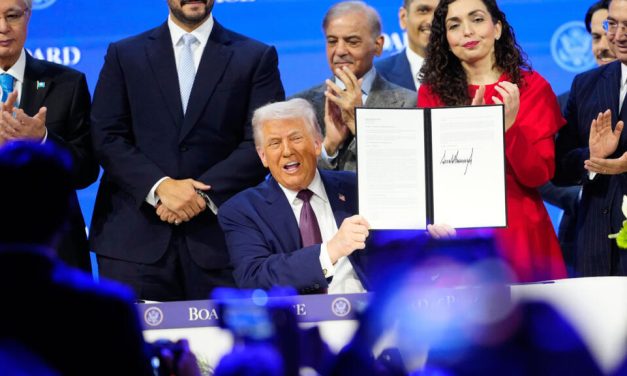
Strategic Council Online – Report: While the second phase of the implementation of the Gaza ceasefire has begun, the establishment of the “Peace Board” chaired by Donald Trump on the sidelines of the Davos meeting (22 January 2026) has become more than a technical mechanism for reconstruction and has turned into a test for the future of the international order.
Despite the signing of the charter by 22 out of 60 invited countries, the limited presence of global leaders at the Davos ceremony and the non-acceptance of this body by the European Union and key Western countries indicate a deep divide in global perceptions of the legitimacy of this mechanism.
In this report, drawing on the analysis of Hadi Borhani, a regional affairs expert, and international data, three strategic questions are addressed: Is the Peace Board an instrument for implementing UN Security Council Resolution 2803 or a substitute for the United Nations? How does the hierarchical architecture of this committee intensify executive challenges in Gaza? And finally, can this body create sustainable peace without the cooperation of Palestinians and with the concentration of power in the hands of a single individual?

America’s Zero-Sum Game in Iraq

Online Strategic Council – Memoir: The swift selection of Nouri al-Maliki for the premiership constitutes a new phase in Iraq’s political sphere. Multiple factors have played a role in this process, the most important being the prevailing situation in Iraq and the region. Under such circumstances, Iraq requires a powerful and experienced prime minister who can keep the country away from the dangers of wars and crises.

America’s Strategy for Creating Tension in the Asia-Pacific

Strategic Council Online – Opinion: Relations between some countries in the Asia-Pacific region, such as China and Japan or China and Australia, which were previously relatively normal, are trending towards deterioration, and the primary reason for this is the aggressive policies of the United States of America.

The Collapse of the European Security Illusion with the Continuation of the Ukraine War?

Strategic Council Online – Interview: The Ukraine war has become a new turning point in the political, security, and even commercial relations of allies on both sides of the Atlantic. While this war is nearing its fourth year, many questions still remain regarding its future and its consequences; among them, will the continuation of the Ukraine war lead to the collapse of the European security illusion?

Loading

Últimas publicaciones

Commercial Exploitation of Peace; The Gaza Committee in Confrontation with International Legitimacy

Strategic Council Online – Report: While the second phase of the implementation of the Gaza ceasefire has begun, the establishment of the “Peace Board” chaired by Donald Trump on the sidelines of the Davos meeting (22 January 2026) has become more than a technical mechanism for reconstruction and has turned into a test for the future of the international order.
Despite the signing of the charter by 22 out of 60 invited countries, the limited presence of global leaders at the Davos ceremony and the non-acceptance of this body by the European Union and key Western countries indicate a deep divide in global perceptions of the legitimacy of this mechanism.
In this report, drawing on the analysis of Hadi Borhani, a regional affairs expert, and international data, three strategic questions are addressed: Is the Peace Board an instrument for implementing UN Security Council Resolution 2803 or a substitute for the United Nations? How does the hierarchical architecture of this committee intensify executive challenges in Gaza? And finally, can this body create sustainable peace without the cooperation of Palestinians and with the concentration of power in the hands of a single individual?

America’s Zero-Sum Game in Iraq

Online Strategic Council – Memoir: The swift selection of Nouri al-Maliki for the premiership constitutes a new phase in Iraq’s political sphere. Multiple factors have played a role in this process, the most important being the prevailing situation in Iraq and the region. Under such circumstances, Iraq requires a powerful and experienced prime minister who can keep the country away from the dangers of wars and crises.

America’s Strategy for Creating Tension in the Asia-Pacific

Strategic Council Online – Opinion: Relations between some countries in the Asia-Pacific region, such as China and Japan or China and Australia, which were previously relatively normal, are trending towards deterioration, and the primary reason for this is the aggressive policies of the United States of America.

The Collapse of the European Security Illusion with the Continuation of the Ukraine War?

Strategic Council Online – Interview: The Ukraine war has become a new turning point in the political, security, and even commercial relations of allies on both sides of the Atlantic. While this war is nearing its fourth year, many questions still remain regarding its future and its consequences; among them, will the continuation of the Ukraine war lead to the collapse of the European security illusion?

Loading

DERNIER CONTENU

Commercial Exploitation of Peace; The Gaza Committee in Confrontation with International Legitimacy

Strategic Council Online – Report: While the second phase of the implementation of the Gaza ceasefire has begun, the establishment of the “Peace Board” chaired by Donald Trump on the sidelines of the Davos meeting (22 January 2026) has become more than a technical mechanism for reconstruction and has turned into a test for the future of the international order.
Despite the signing of the charter by 22 out of 60 invited countries, the limited presence of global leaders at the Davos ceremony and the non-acceptance of this body by the European Union and key Western countries indicate a deep divide in global perceptions of the legitimacy of this mechanism.
In this report, drawing on the analysis of Hadi Borhani, a regional affairs expert, and international data, three strategic questions are addressed: Is the Peace Board an instrument for implementing UN Security Council Resolution 2803 or a substitute for the United Nations? How does the hierarchical architecture of this committee intensify executive challenges in Gaza? And finally, can this body create sustainable peace without the cooperation of Palestinians and with the concentration of power in the hands of a single individual?

America’s Zero-Sum Game in Iraq

Online Strategic Council – Memoir: The swift selection of Nouri al-Maliki for the premiership constitutes a new phase in Iraq’s political sphere. Multiple factors have played a role in this process, the most important being the prevailing situation in Iraq and the region. Under such circumstances, Iraq requires a powerful and experienced prime minister who can keep the country away from the dangers of wars and crises.

America’s Strategy for Creating Tension in the Asia-Pacific

Strategic Council Online – Opinion: Relations between some countries in the Asia-Pacific region, such as China and Japan or China and Australia, which were previously relatively normal, are trending towards deterioration, and the primary reason for this is the aggressive policies of the United States of America.

The Collapse of the European Security Illusion with the Continuation of the Ukraine War?

Strategic Council Online – Interview: The Ukraine war has become a new turning point in the political, security, and even commercial relations of allies on both sides of the Atlantic. While this war is nearing its fourth year, many questions still remain regarding its future and its consequences; among them, will the continuation of the Ukraine war lead to the collapse of the European security illusion?

Loading

DERNIER CONTENU

Commercial Exploitation of Peace; The Gaza Committee in Confrontation with International Legitimacy

Strategic Council Online – Report: While the second phase of the implementation of the Gaza ceasefire has begun, the establishment of the “Peace Board” chaired by Donald Trump on the sidelines of the Davos meeting (22 January 2026) has become more than a technical mechanism for reconstruction and has turned into a test for the future of the international order.
Despite the signing of the charter by 22 out of 60 invited countries, the limited presence of global leaders at the Davos ceremony and the non-acceptance of this body by the European Union and key Western countries indicate a deep divide in global perceptions of the legitimacy of this mechanism.
In this report, drawing on the analysis of Hadi Borhani, a regional affairs expert, and international data, three strategic questions are addressed: Is the Peace Board an instrument for implementing UN Security Council Resolution 2803 or a substitute for the United Nations? How does the hierarchical architecture of this committee intensify executive challenges in Gaza? And finally, can this body create sustainable peace without the cooperation of Palestinians and with the concentration of power in the hands of a single individual?

America’s Zero-Sum Game in Iraq

Online Strategic Council – Memoir: The swift selection of Nouri al-Maliki for the premiership constitutes a new phase in Iraq’s political sphere. Multiple factors have played a role in this process, the most important being the prevailing situation in Iraq and the region. Under such circumstances, Iraq requires a powerful and experienced prime minister who can keep the country away from the dangers of wars and crises.

America’s Strategy for Creating Tension in the Asia-Pacific

Strategic Council Online – Opinion: Relations between some countries in the Asia-Pacific region, such as China and Japan or China and Australia, which were previously relatively normal, are trending towards deterioration, and the primary reason for this is the aggressive policies of the United States of America.

The Collapse of the European Security Illusion with the Continuation of the Ukraine War?

Strategic Council Online – Interview: The Ukraine war has become a new turning point in the political, security, and even commercial relations of allies on both sides of the Atlantic. While this war is nearing its fourth year, many questions still remain regarding its future and its consequences; among them, will the continuation of the Ukraine war lead to the collapse of the European security illusion?

Loading

DERNIER CONTENU

Commercial Exploitation of Peace; The Gaza Committee in Confrontation with International Legitimacy

Strategic Council Online – Report: While the second phase of the implementation of the Gaza ceasefire has begun, the establishment of the “Peace Board” chaired by Donald Trump on the sidelines of the Davos meeting (22 January 2026) has become more than a technical mechanism for reconstruction and has turned into a test for the future of the international order.
Despite the signing of the charter by 22 out of 60 invited countries, the limited presence of global leaders at the Davos ceremony and the non-acceptance of this body by the European Union and key Western countries indicate a deep divide in global perceptions of the legitimacy of this mechanism.
In this report, drawing on the analysis of Hadi Borhani, a regional affairs expert, and international data, three strategic questions are addressed: Is the Peace Board an instrument for implementing UN Security Council Resolution 2803 or a substitute for the United Nations? How does the hierarchical architecture of this committee intensify executive challenges in Gaza? And finally, can this body create sustainable peace without the cooperation of Palestinians and with the concentration of power in the hands of a single individual?

America’s Zero-Sum Game in Iraq

Online Strategic Council – Memoir: The swift selection of Nouri al-Maliki for the premiership constitutes a new phase in Iraq’s political sphere. Multiple factors have played a role in this process, the most important being the prevailing situation in Iraq and the region. Under such circumstances, Iraq requires a powerful and experienced prime minister who can keep the country away from the dangers of wars and crises.

America’s Strategy for Creating Tension in the Asia-Pacific

Strategic Council Online – Opinion: Relations between some countries in the Asia-Pacific region, such as China and Japan or China and Australia, which were previously relatively normal, are trending towards deterioration, and the primary reason for this is the aggressive policies of the United States of America.

The Collapse of the European Security Illusion with the Continuation of the Ukraine War?

Strategic Council Online – Interview: The Ukraine war has become a new turning point in the political, security, and even commercial relations of allies on both sides of the Atlantic. While this war is nearing its fourth year, many questions still remain regarding its future and its consequences; among them, will the continuation of the Ukraine war lead to the collapse of the European security illusion?

Loading