Practical Support from Intl. Community, UNSC for Palestinians Imperative

2022/01/08 | interview, Politics, top news

Strategic Council Online - Interview: An expert on West Asia affairs, stating that the international community has shown that it is still opposed to the Zionist regime’s settlement policy, said: With the continuation and expansion of adventurisms and development of settlements in the Golan Heights and the Occupied Palestinian Territories, the international community seeks to curb the Zionist regime and prevent development of settlements..

Hassan Hanizadeh, in an interview with the website of the Strategic Council on Foreign Relations, referring to the adoption of a resolution on the “rule of the Palestinians and the Arab inhabitants of the occupied Golan Heights over their natural resources in the Zionist-occupied territories by the UN General Assembly”, said: The resolution had been previously presented to the Second Committee of the General Assembly by the Group of 77, in addition to China, and approved by the Committee. In passing this resolution, which is in favor of Syria and Palestine, 156 countries voted in favor, with only the United States, the Zionist regime, Canada, Nairobi, Micronesia, the Marshall Islands and Palau opposing it, while 15 countries abstained.

He pointed to the significant consensus created against the United States and the Zionist regime and for the resolution and cooperation of small and weak actors with the United States, and added: Significant cooperation of the countries with the Palestinian people, while leaving the United States alone during ratification of the resolution, reaffirms the legitimacy of the Palestinian people in dominating and managing their natural resources.

The analyst of West Asia affairs further added: This sovereignty and the right to exercise will over those resources is in accordance with international law and the Fourth Geneva Convention, and in addition to recognizing the right of the Palestinian people to receive compensation from the Zionist regime, it is a necessary condition for sustainable development in Palestine.

Stating that the usurper Zionist regime is trying to change the status, nature and composition of the population, the structure and legal status of the Syrian Golan, as well as the settlement in the region, Hanizadeh continued: The Israeli regime’s measures in those areas are a clear violation of international principles and laws, the rules of the Human Rights Council and the Geneva Conventions. In particular, in recent weeks, the Israeli regime has made some moves to implement plans to use the Golan Heights to destroy its economic resources and use it to the benefit of its economic growth and development.

He pointed to the approval of the plan to establish 3,300 new housing units in new settlements to be built in the next five years, as well as establishment of 4,000 housing units in existing settlements in order to increase the number of settlers, adding: Such measures of the Zionist regime are in violation of all the approved resolutions and international laws..

Noting that the UN General Assembly had in fact endorsed the Arab nature of the occupied Syrian Golan, the right of the Palestinian and Syrian peoples to the sovereignty over their territories, and their right to enjoy its natural resources in accordance with international resolutions, Hanizadeh added: Relocation of the settlers to the Occupied Territories is a violation of legal principles and is prohibited and regarded as misdeed under the Fourth Geneva Convention.

The expert on West Asia affairs said: The international community should take binding measures to pressure the Zionist regime to implement international resolutions, especially Security Council Resolution 242 in 1967, Resolution 338 in 1973 and Resolution 497 in 1981, as well as the UN General Assembly resolutions, because such resolutions emphasize the need for the regime to withdraw completely from all the occupied Palestinian and Arab territories, including the occupied Syrian Golan.

Explaining the dimensions and issues addressed in the resolution, including the emphasis on the inalienable right of the Palestinian people and the Arab population in the occupied Golan over their natural resources, including land, water and energy, the West Asia analyst continued: The resolution also calls on the Zionist regime for an end to threats to the health of the people under occupation, destruction of vital infrastructure such as power lines, water pipelines, sewage networks, demolition and confiscation of Palestinian homes, agricultural land and water wells.

Saying that construction of a buffer wall by the Zionist regime and settlements in the West Bank, including East Qods, has been banned under this resolution and announced as violation of international law and stressed that such measures deprive the Palestinian people of their natural resources, Hanizadeh added: The Secretary General of the United Nations shall report to the General Assembly in its forthcoming session on the implementation of that resolution.

The expert on West Asia affairs said that the victory of the Democrats in the US elections was a factor in reducing the position of the Zionist lobby in US foreign policy, adding: The US can no longer afford to pay for the Zionist regime’s adventures in terms of prestige and politics. Biden’s team has repeatedly warned against the dangers posed by the expansion of settlements, and now the international community has shown that it continues to oppose the Zionist regime’s settlement policy.

Mentioning that the United States has so far vetoed 85 resolutions in favor of the Zionist regime over the past seven decades, he stressed: Now it seems that with the continuation and expansion of adventures and development of settlements in the Golan Heights and the Occupied Palestinian Territories, the international community seeks to restrain the Zionist regime and prevent development of the settlements, and this measure of the General Assembly is considered as a political blow to the regime.

Stressing that the Zionist regime is now in severe political isolation and cannot influence US policies as before, Hanizadeh said: Unfortunately, the Zionist regime has shown that it does not adhere to international law and by relying on some international support continues to develop settlements and its destructive measures in violation of regulations in various fields.

However, he reminded: Unfortunately, although those resolutions have a prestige and credibility aspect, they lack executive support, and the Zionist regime does not pay much attention to them, and continues its destructive policies in the Occupied Territories. The Security Council should be actively involved in that matter and use its executive power to prevent Israeli settlements in the occupied territories and Golan Heights and its destructive measures.
0 Comments

Submit a Comment

Your email address will not be published. Required fields are marked *

LATEST CONTENT

The Security Equation of Southern Lebanon for the Zionist Regime

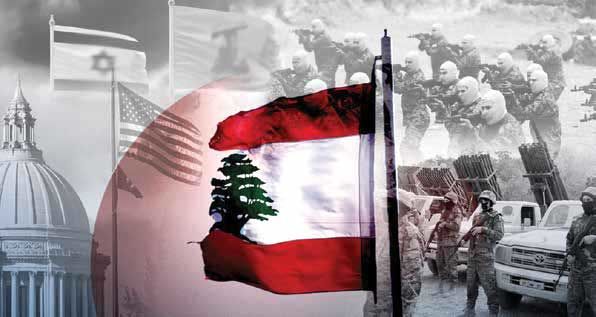
Strategic Council Online – Opinion: American-Zionist objectives in the region are not limited to weakening Hezbollah. Efforts to disarm Iraqi resistance groups such as Kata’ib Hezbollah and the Popular Mobilization Forces are also part of their subsequent plans.

Commercial Exploitation of Peace; The Gaza Committee in Confrontation with International Legitimacy

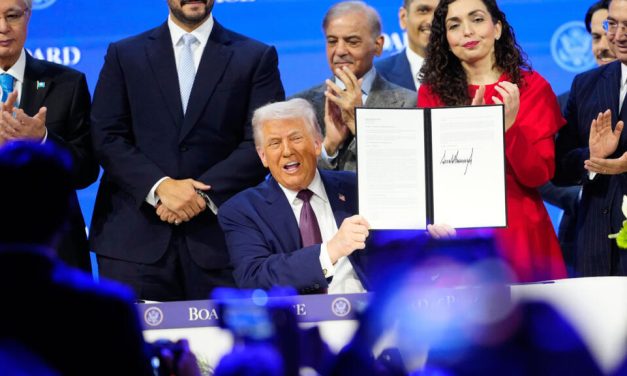
Strategic Council Online – Report: While the second phase of the implementation of the Gaza ceasefire has begun, the establishment of the “Peace Board” chaired by Donald Trump on the sidelines of the Davos meeting (22 January 2026) has become more than a technical mechanism for reconstruction and has turned into a test for the future of the international order.
Despite the signing of the charter by 22 out of 60 invited countries, the limited presence of global leaders at the Davos ceremony and the non-acceptance of this body by the European Union and key Western countries indicate a deep divide in global perceptions of the legitimacy of this mechanism.
In this report, drawing on the analysis of Hadi Borhani, a regional affairs expert, and international data, three strategic questions are addressed: Is the Peace Board an instrument for implementing UN Security Council Resolution 2803 or a substitute for the United Nations? How does the hierarchical architecture of this committee intensify executive challenges in Gaza? And finally, can this body create sustainable peace without the cooperation of Palestinians and with the concentration of power in the hands of a single individual?

America’s Zero-Sum Game in Iraq

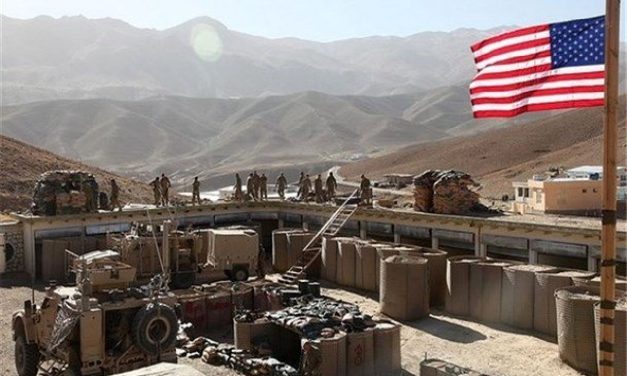
Online Strategic Council – Memoir: The swift selection of Nouri al-Maliki for the premiership constitutes a new phase in Iraq’s political sphere. Multiple factors have played a role in this process, the most important being the prevailing situation in Iraq and the region. Under such circumstances, Iraq requires a powerful and experienced prime minister who can keep the country away from the dangers of wars and crises.

America’s Strategy for Creating Tension in the Asia-Pacific

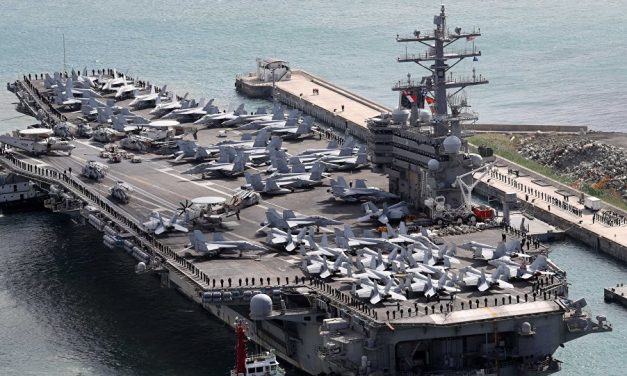
Strategic Council Online – Opinion: Relations between some countries in the Asia-Pacific region, such as China and Japan or China and Australia, which were previously relatively normal, are trending towards deterioration, and the primary reason for this is the aggressive policies of the United States of America.

Loading

Últimas publicaciones

The Security Equation of Southern Lebanon for the Zionist Regime

Strategic Council Online – Opinion: American-Zionist objectives in the region are not limited to weakening Hezbollah. Efforts to disarm Iraqi resistance groups such as Kata’ib Hezbollah and the Popular Mobilization Forces are also part of their subsequent plans.

Commercial Exploitation of Peace; The Gaza Committee in Confrontation with International Legitimacy

Strategic Council Online – Report: While the second phase of the implementation of the Gaza ceasefire has begun, the establishment of the “Peace Board” chaired by Donald Trump on the sidelines of the Davos meeting (22 January 2026) has become more than a technical mechanism for reconstruction and has turned into a test for the future of the international order.
Despite the signing of the charter by 22 out of 60 invited countries, the limited presence of global leaders at the Davos ceremony and the non-acceptance of this body by the European Union and key Western countries indicate a deep divide in global perceptions of the legitimacy of this mechanism.
In this report, drawing on the analysis of Hadi Borhani, a regional affairs expert, and international data, three strategic questions are addressed: Is the Peace Board an instrument for implementing UN Security Council Resolution 2803 or a substitute for the United Nations? How does the hierarchical architecture of this committee intensify executive challenges in Gaza? And finally, can this body create sustainable peace without the cooperation of Palestinians and with the concentration of power in the hands of a single individual?

America’s Zero-Sum Game in Iraq

Online Strategic Council – Memoir: The swift selection of Nouri al-Maliki for the premiership constitutes a new phase in Iraq’s political sphere. Multiple factors have played a role in this process, the most important being the prevailing situation in Iraq and the region. Under such circumstances, Iraq requires a powerful and experienced prime minister who can keep the country away from the dangers of wars and crises.

America’s Strategy for Creating Tension in the Asia-Pacific

Strategic Council Online – Opinion: Relations between some countries in the Asia-Pacific region, such as China and Japan or China and Australia, which were previously relatively normal, are trending towards deterioration, and the primary reason for this is the aggressive policies of the United States of America.

Loading

DERNIER CONTENU

The Security Equation of Southern Lebanon for the Zionist Regime

Strategic Council Online – Opinion: American-Zionist objectives in the region are not limited to weakening Hezbollah. Efforts to disarm Iraqi resistance groups such as Kata’ib Hezbollah and the Popular Mobilization Forces are also part of their subsequent plans.

Commercial Exploitation of Peace; The Gaza Committee in Confrontation with International Legitimacy

Strategic Council Online – Report: While the second phase of the implementation of the Gaza ceasefire has begun, the establishment of the “Peace Board” chaired by Donald Trump on the sidelines of the Davos meeting (22 January 2026) has become more than a technical mechanism for reconstruction and has turned into a test for the future of the international order.
Despite the signing of the charter by 22 out of 60 invited countries, the limited presence of global leaders at the Davos ceremony and the non-acceptance of this body by the European Union and key Western countries indicate a deep divide in global perceptions of the legitimacy of this mechanism.
In this report, drawing on the analysis of Hadi Borhani, a regional affairs expert, and international data, three strategic questions are addressed: Is the Peace Board an instrument for implementing UN Security Council Resolution 2803 or a substitute for the United Nations? How does the hierarchical architecture of this committee intensify executive challenges in Gaza? And finally, can this body create sustainable peace without the cooperation of Palestinians and with the concentration of power in the hands of a single individual?

America’s Zero-Sum Game in Iraq

Online Strategic Council – Memoir: The swift selection of Nouri al-Maliki for the premiership constitutes a new phase in Iraq’s political sphere. Multiple factors have played a role in this process, the most important being the prevailing situation in Iraq and the region. Under such circumstances, Iraq requires a powerful and experienced prime minister who can keep the country away from the dangers of wars and crises.

America’s Strategy for Creating Tension in the Asia-Pacific

Strategic Council Online – Opinion: Relations between some countries in the Asia-Pacific region, such as China and Japan or China and Australia, which were previously relatively normal, are trending towards deterioration, and the primary reason for this is the aggressive policies of the United States of America.

Loading

DERNIER CONTENU

The Security Equation of Southern Lebanon for the Zionist Regime

Strategic Council Online – Opinion: American-Zionist objectives in the region are not limited to weakening Hezbollah. Efforts to disarm Iraqi resistance groups such as Kata’ib Hezbollah and the Popular Mobilization Forces are also part of their subsequent plans.

Commercial Exploitation of Peace; The Gaza Committee in Confrontation with International Legitimacy

Strategic Council Online – Report: While the second phase of the implementation of the Gaza ceasefire has begun, the establishment of the “Peace Board” chaired by Donald Trump on the sidelines of the Davos meeting (22 January 2026) has become more than a technical mechanism for reconstruction and has turned into a test for the future of the international order.
Despite the signing of the charter by 22 out of 60 invited countries, the limited presence of global leaders at the Davos ceremony and the non-acceptance of this body by the European Union and key Western countries indicate a deep divide in global perceptions of the legitimacy of this mechanism.
In this report, drawing on the analysis of Hadi Borhani, a regional affairs expert, and international data, three strategic questions are addressed: Is the Peace Board an instrument for implementing UN Security Council Resolution 2803 or a substitute for the United Nations? How does the hierarchical architecture of this committee intensify executive challenges in Gaza? And finally, can this body create sustainable peace without the cooperation of Palestinians and with the concentration of power in the hands of a single individual?

America’s Zero-Sum Game in Iraq

Online Strategic Council – Memoir: The swift selection of Nouri al-Maliki for the premiership constitutes a new phase in Iraq’s political sphere. Multiple factors have played a role in this process, the most important being the prevailing situation in Iraq and the region. Under such circumstances, Iraq requires a powerful and experienced prime minister who can keep the country away from the dangers of wars and crises.

America’s Strategy for Creating Tension in the Asia-Pacific

Strategic Council Online – Opinion: Relations between some countries in the Asia-Pacific region, such as China and Japan or China and Australia, which were previously relatively normal, are trending towards deterioration, and the primary reason for this is the aggressive policies of the United States of America.

Loading

DERNIER CONTENU

The Security Equation of Southern Lebanon for the Zionist Regime

Strategic Council Online – Opinion: American-Zionist objectives in the region are not limited to weakening Hezbollah. Efforts to disarm Iraqi resistance groups such as Kata’ib Hezbollah and the Popular Mobilization Forces are also part of their subsequent plans.

Commercial Exploitation of Peace; The Gaza Committee in Confrontation with International Legitimacy

Strategic Council Online – Report: While the second phase of the implementation of the Gaza ceasefire has begun, the establishment of the “Peace Board” chaired by Donald Trump on the sidelines of the Davos meeting (22 January 2026) has become more than a technical mechanism for reconstruction and has turned into a test for the future of the international order.
Despite the signing of the charter by 22 out of 60 invited countries, the limited presence of global leaders at the Davos ceremony and the non-acceptance of this body by the European Union and key Western countries indicate a deep divide in global perceptions of the legitimacy of this mechanism.
In this report, drawing on the analysis of Hadi Borhani, a regional affairs expert, and international data, three strategic questions are addressed: Is the Peace Board an instrument for implementing UN Security Council Resolution 2803 or a substitute for the United Nations? How does the hierarchical architecture of this committee intensify executive challenges in Gaza? And finally, can this body create sustainable peace without the cooperation of Palestinians and with the concentration of power in the hands of a single individual?

America’s Zero-Sum Game in Iraq

Online Strategic Council – Memoir: The swift selection of Nouri al-Maliki for the premiership constitutes a new phase in Iraq’s political sphere. Multiple factors have played a role in this process, the most important being the prevailing situation in Iraq and the region. Under such circumstances, Iraq requires a powerful and experienced prime minister who can keep the country away from the dangers of wars and crises.

America’s Strategy for Creating Tension in the Asia-Pacific

Strategic Council Online – Opinion: Relations between some countries in the Asia-Pacific region, such as China and Japan or China and Australia, which were previously relatively normal, are trending towards deterioration, and the primary reason for this is the aggressive policies of the United States of America.

Loading