Secret links with the Zionist regime; the isolation of the Saudi regime among the Muslim Ummah

2020/11/26 | interview, Politics, top news

Online Strategic Council—Interview: An expert of Middle Eastern affairs says the recent visits by the US Foreign Secretary Mike Pompeo to the occupied Palestine, Saudi Arabia, Qatar and the United Arab Emirates are merely aiming to create a united Arab front against the Islamic Republic of Iran and the resistance front in the Middle East.

Hassan Hanizadeh told the Strategic Council on Foreign Relations that Pompeo, during his visit to the occupied Palestine, violated the United Nations Security Council resolutions 242 and 338 by visiting the Syrian Golan Heights, adding that the Zionist regime has been urged by the international community to withdraw from occupied Syrian Golan Heights as well as all the territories it has occupied since 1967.


“However, the Zionist regime refuses to withdraw its troops from the occupied Syrian Golan Heights and has instead constructed the most sophisticated surveillance, eavesdropping and spying equipment there,” he said, reiterating that Pompeo’s visit of the occupied Syrian Golan Heights also aimed at giving spirits to Benjamin Netanyahu the prime minister of the Israeli regime as he along with Saudi officials are losing their staunch ally in the White House.


Hanizadeh said the Israeli and Saudi regimes are seriously concerned with the defeat of Donald Trump in the US presidential elections as they will lose their support umbrella in the United States.


Referring to the determination of Joe Biden to open a lot of files against Saudi Arabia when he assumes the office of the presidency of the United States in January, he said Saudi authorities are involved in the murder of journalist Jamal Khashoggi, bribing Donald Trump with hundreds of billions of dollars, attacking and killing the defenseless civilians in Yemen and bankrolling Takfiri terrorist groups.


Hanizadeh said the issue of human rights in Saudi Arabia would be also top on the agenda of the Democrats during Biden’s administration, adding that Biden would make efforts to depose Crown Prince Mohammad bin Salman of power and replace him with Prince Mohammad bin Nayef who is closely linked with the Democrats.


Asked about Netanyahu and his efforts during the past four years to bring Riyadh closer to the Trump administration, he said the prime minister of the Zionist regime will face during Biden’s administration with numerous cases such as financial corruption, illegal expansion of Jewish settlements in occupied territories and making efforts to occupy more areas belonging to the West Bank and the Jordan Valley.


“Therefore, it seems that Mohammad bin Salman, the Saudi Crown Prince, and Netanyahu would experience a common fate in the near future when Biden enters the Oval Office and therefore Pompeo, the US foreign secretary, wanted to give them morals by visiting the region.”


Referring to the secret visit by Netanyahu to Saudi Arabia in the company of Pompeo, Hanizadeh said Netanyahu and Pompeo spent five hours in a meeting with Mohammad bin Salman in the presence of Mossad chief.


“Reports suggest that they have agreed on one point to form an Arab-Zionist front against Iran and the resistance movement in the region. There are even reports which indicate that Netanyahu and bin Salman have asked Donald Trump to take a military action against Iran in the next two months he remains in office”.


He said the fate of Netanyahu and bin Salman would enter a new climate which could ultimately force them out of the cycle of power when Biden takes office next January, adding that Biden administration is highly likely to cut all the Trump’s plans to support Saudi Arabia and stop its adventurism in the region.


“Saudi Arabia and the Zionist regime are worried about the return of Biden to the nuclear deal with Iran and the subsequent lifting of sanctions imposed illegally on Iran during the Trump administration. If this happens, it will result in stronger regional role for Iran. Therefore, Riyadh and Tel Aviv are jointly trying to force the outgoing US president to take, during the next two months, a military action against Iran to weaken the economic and military capacities of the Islamic Republic of Iran.


Hanizadeh pointed to the ballistic missile fired by the Yemen’s Army and Ansarallah to Aramco oil facilities concurrent with the arrival of Netenyahu and Pompeo in Saudi Arabia, saying “this attack carried an important message for the vicious triangle of Israel, Saudi Arabia and the United States as Ansarallah believes that Riyadh is going to normalize its relations with the Zionist regime and provide Mossad with a military and intelligence gathering base near the common border of Saudi Arabia and Yemen which would pose a potential threat against the government of Yemen and the countries supporting the axis of resistance in the region.


He said recent secret visits by the Saudi and Zionist authorities are prelude to the probable normalization of relations between Riyadh and Tel Aviv.


“It should be mentioned that Riyadh is in fact trampling on all Islamic principles and ethical tenets by normalizing its relations with the Zionist regime and aligning itself with Israel against the Palestinian nation. Saudi Arabia will be taken out of the Islamic and Arabic radar and turn into a hated country among the Muslims and Arabs should it normalize relations with the Zionist regime. Saudi Arabia will be seriously isolated among the Muslim Ummah by keeping the present course of policies,” Hanizadeh concluded.
0 Comments

Submit a Comment

Your email address will not be published. Required fields are marked *

LATEST CONTENT

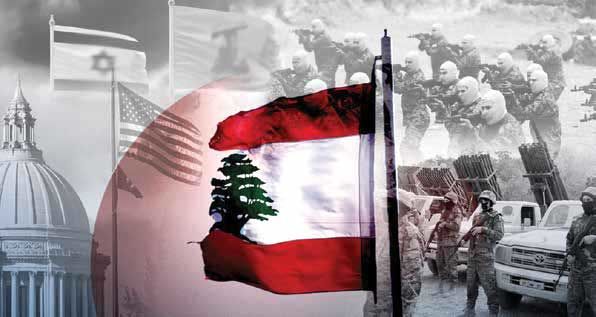
The Security Equation of Southern Lebanon for the Zionist Regime

Strategic Council Online – Opinion: American-Zionist objectives in the region are not limited to weakening Hezbollah. Efforts to disarm Iraqi resistance groups such as Kata’ib Hezbollah and the Popular Mobilization Forces are also part of their subsequent plans.

Commercial Exploitation of Peace; The Gaza Committee in Confrontation with International Legitimacy

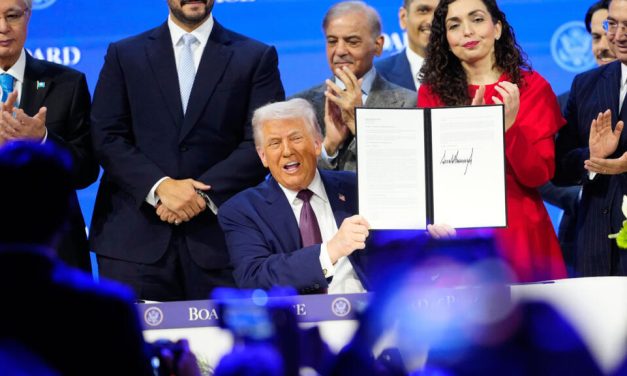
Strategic Council Online – Report: While the second phase of the implementation of the Gaza ceasefire has begun, the establishment of the “Peace Board” chaired by Donald Trump on the sidelines of the Davos meeting (22 January 2026) has become more than a technical mechanism for reconstruction and has turned into a test for the future of the international order.
Despite the signing of the charter by 22 out of 60 invited countries, the limited presence of global leaders at the Davos ceremony and the non-acceptance of this body by the European Union and key Western countries indicate a deep divide in global perceptions of the legitimacy of this mechanism.
In this report, drawing on the analysis of Hadi Borhani, a regional affairs expert, and international data, three strategic questions are addressed: Is the Peace Board an instrument for implementing UN Security Council Resolution 2803 or a substitute for the United Nations? How does the hierarchical architecture of this committee intensify executive challenges in Gaza? And finally, can this body create sustainable peace without the cooperation of Palestinians and with the concentration of power in the hands of a single individual?

America’s Zero-Sum Game in Iraq

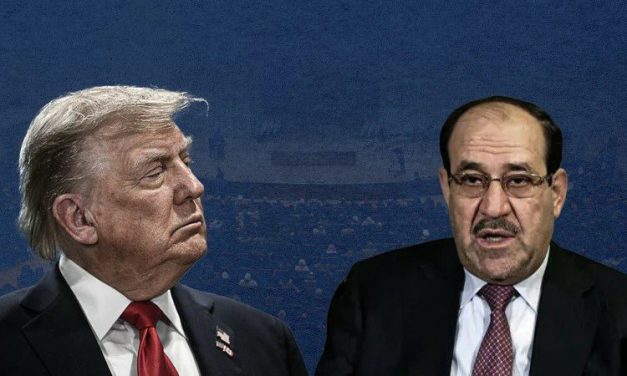
Online Strategic Council – Memoir: The swift selection of Nouri al-Maliki for the premiership constitutes a new phase in Iraq’s political sphere. Multiple factors have played a role in this process, the most important being the prevailing situation in Iraq and the region. Under such circumstances, Iraq requires a powerful and experienced prime minister who can keep the country away from the dangers of wars and crises.

America’s Strategy for Creating Tension in the Asia-Pacific

Strategic Council Online – Opinion: Relations between some countries in the Asia-Pacific region, such as China and Japan or China and Australia, which were previously relatively normal, are trending towards deterioration, and the primary reason for this is the aggressive policies of the United States of America.

Loading

Últimas publicaciones

The Security Equation of Southern Lebanon for the Zionist Regime

Strategic Council Online – Opinion: American-Zionist objectives in the region are not limited to weakening Hezbollah. Efforts to disarm Iraqi resistance groups such as Kata’ib Hezbollah and the Popular Mobilization Forces are also part of their subsequent plans.

Commercial Exploitation of Peace; The Gaza Committee in Confrontation with International Legitimacy

Strategic Council Online – Report: While the second phase of the implementation of the Gaza ceasefire has begun, the establishment of the “Peace Board” chaired by Donald Trump on the sidelines of the Davos meeting (22 January 2026) has become more than a technical mechanism for reconstruction and has turned into a test for the future of the international order.
Despite the signing of the charter by 22 out of 60 invited countries, the limited presence of global leaders at the Davos ceremony and the non-acceptance of this body by the European Union and key Western countries indicate a deep divide in global perceptions of the legitimacy of this mechanism.
In this report, drawing on the analysis of Hadi Borhani, a regional affairs expert, and international data, three strategic questions are addressed: Is the Peace Board an instrument for implementing UN Security Council Resolution 2803 or a substitute for the United Nations? How does the hierarchical architecture of this committee intensify executive challenges in Gaza? And finally, can this body create sustainable peace without the cooperation of Palestinians and with the concentration of power in the hands of a single individual?

America’s Zero-Sum Game in Iraq

Online Strategic Council – Memoir: The swift selection of Nouri al-Maliki for the premiership constitutes a new phase in Iraq’s political sphere. Multiple factors have played a role in this process, the most important being the prevailing situation in Iraq and the region. Under such circumstances, Iraq requires a powerful and experienced prime minister who can keep the country away from the dangers of wars and crises.

America’s Strategy for Creating Tension in the Asia-Pacific

Strategic Council Online – Opinion: Relations between some countries in the Asia-Pacific region, such as China and Japan or China and Australia, which were previously relatively normal, are trending towards deterioration, and the primary reason for this is the aggressive policies of the United States of America.

Loading

DERNIER CONTENU

The Security Equation of Southern Lebanon for the Zionist Regime

Strategic Council Online – Opinion: American-Zionist objectives in the region are not limited to weakening Hezbollah. Efforts to disarm Iraqi resistance groups such as Kata’ib Hezbollah and the Popular Mobilization Forces are also part of their subsequent plans.

Commercial Exploitation of Peace; The Gaza Committee in Confrontation with International Legitimacy

Strategic Council Online – Report: While the second phase of the implementation of the Gaza ceasefire has begun, the establishment of the “Peace Board” chaired by Donald Trump on the sidelines of the Davos meeting (22 January 2026) has become more than a technical mechanism for reconstruction and has turned into a test for the future of the international order.
Despite the signing of the charter by 22 out of 60 invited countries, the limited presence of global leaders at the Davos ceremony and the non-acceptance of this body by the European Union and key Western countries indicate a deep divide in global perceptions of the legitimacy of this mechanism.
In this report, drawing on the analysis of Hadi Borhani, a regional affairs expert, and international data, three strategic questions are addressed: Is the Peace Board an instrument for implementing UN Security Council Resolution 2803 or a substitute for the United Nations? How does the hierarchical architecture of this committee intensify executive challenges in Gaza? And finally, can this body create sustainable peace without the cooperation of Palestinians and with the concentration of power in the hands of a single individual?

America’s Zero-Sum Game in Iraq

Online Strategic Council – Memoir: The swift selection of Nouri al-Maliki for the premiership constitutes a new phase in Iraq’s political sphere. Multiple factors have played a role in this process, the most important being the prevailing situation in Iraq and the region. Under such circumstances, Iraq requires a powerful and experienced prime minister who can keep the country away from the dangers of wars and crises.

America’s Strategy for Creating Tension in the Asia-Pacific

Strategic Council Online – Opinion: Relations between some countries in the Asia-Pacific region, such as China and Japan or China and Australia, which were previously relatively normal, are trending towards deterioration, and the primary reason for this is the aggressive policies of the United States of America.

Loading

DERNIER CONTENU

The Security Equation of Southern Lebanon for the Zionist Regime

Strategic Council Online – Opinion: American-Zionist objectives in the region are not limited to weakening Hezbollah. Efforts to disarm Iraqi resistance groups such as Kata’ib Hezbollah and the Popular Mobilization Forces are also part of their subsequent plans.

Commercial Exploitation of Peace; The Gaza Committee in Confrontation with International Legitimacy

Strategic Council Online – Report: While the second phase of the implementation of the Gaza ceasefire has begun, the establishment of the “Peace Board” chaired by Donald Trump on the sidelines of the Davos meeting (22 January 2026) has become more than a technical mechanism for reconstruction and has turned into a test for the future of the international order.
Despite the signing of the charter by 22 out of 60 invited countries, the limited presence of global leaders at the Davos ceremony and the non-acceptance of this body by the European Union and key Western countries indicate a deep divide in global perceptions of the legitimacy of this mechanism.
In this report, drawing on the analysis of Hadi Borhani, a regional affairs expert, and international data, three strategic questions are addressed: Is the Peace Board an instrument for implementing UN Security Council Resolution 2803 or a substitute for the United Nations? How does the hierarchical architecture of this committee intensify executive challenges in Gaza? And finally, can this body create sustainable peace without the cooperation of Palestinians and with the concentration of power in the hands of a single individual?

America’s Zero-Sum Game in Iraq

Online Strategic Council – Memoir: The swift selection of Nouri al-Maliki for the premiership constitutes a new phase in Iraq’s political sphere. Multiple factors have played a role in this process, the most important being the prevailing situation in Iraq and the region. Under such circumstances, Iraq requires a powerful and experienced prime minister who can keep the country away from the dangers of wars and crises.

America’s Strategy for Creating Tension in the Asia-Pacific

Strategic Council Online – Opinion: Relations between some countries in the Asia-Pacific region, such as China and Japan or China and Australia, which were previously relatively normal, are trending towards deterioration, and the primary reason for this is the aggressive policies of the United States of America.

Loading

DERNIER CONTENU

The Security Equation of Southern Lebanon for the Zionist Regime

Strategic Council Online – Opinion: American-Zionist objectives in the region are not limited to weakening Hezbollah. Efforts to disarm Iraqi resistance groups such as Kata’ib Hezbollah and the Popular Mobilization Forces are also part of their subsequent plans.

Commercial Exploitation of Peace; The Gaza Committee in Confrontation with International Legitimacy

Strategic Council Online – Report: While the second phase of the implementation of the Gaza ceasefire has begun, the establishment of the “Peace Board” chaired by Donald Trump on the sidelines of the Davos meeting (22 January 2026) has become more than a technical mechanism for reconstruction and has turned into a test for the future of the international order.
Despite the signing of the charter by 22 out of 60 invited countries, the limited presence of global leaders at the Davos ceremony and the non-acceptance of this body by the European Union and key Western countries indicate a deep divide in global perceptions of the legitimacy of this mechanism.
In this report, drawing on the analysis of Hadi Borhani, a regional affairs expert, and international data, three strategic questions are addressed: Is the Peace Board an instrument for implementing UN Security Council Resolution 2803 or a substitute for the United Nations? How does the hierarchical architecture of this committee intensify executive challenges in Gaza? And finally, can this body create sustainable peace without the cooperation of Palestinians and with the concentration of power in the hands of a single individual?

America’s Zero-Sum Game in Iraq

Online Strategic Council – Memoir: The swift selection of Nouri al-Maliki for the premiership constitutes a new phase in Iraq’s political sphere. Multiple factors have played a role in this process, the most important being the prevailing situation in Iraq and the region. Under such circumstances, Iraq requires a powerful and experienced prime minister who can keep the country away from the dangers of wars and crises.

America’s Strategy for Creating Tension in the Asia-Pacific

Strategic Council Online – Opinion: Relations between some countries in the Asia-Pacific region, such as China and Japan or China and Australia, which were previously relatively normal, are trending towards deterioration, and the primary reason for this is the aggressive policies of the United States of America.

Loading