US Aim of Drawing China into Arms Talks

2020/05/02 | Note, Politics, top news

Strategic Council Online: Unlike Russia that is interested in arms negotiations with the Americans, the Chinese are not eager to enter into such a process in the current situation and accept restrictions against their missile programs. Shoaib Bahman - Russian Affairs Expert

American and Russian Foreign Ministers Mike Pompeo and Sergei Lavrov recently spoke by telephone about the next steps in the bilateral strategic security dialogue. Pompeo stressed that any future talks on arms control, based on Donald Trump’s views, should include a tripartite agreement on arms control with China and Russia.

It should be noted that since President Donald Trump on October 21, 2018, claimed that Washington will withdraw from the Intermediate-Range Nuclear Forces Treaty (INF) with the Soviet Union due to Moscow’s repeated violations of the INF and formally pulled out of the treaty on February 1, 2019, it was quite obvious that Washington had longer-term plans and goals on its agenda.

Apparently, in those circumstances, the main reason for the US withdrawal from the treaty was the accusations against Moscow that it was conducting covert missile tests and boosting its nuclear arsenal. But it was clear from the outset that this was not the only reason for the Americans to withdraw from the INF, and that they had other plans. At the same time, there were discussions about imposing restrictions on China, especially since the United States believed that in the past years, following the agreements reached between Moscow and Washington, the two countries had practically accepted restrictions, but other countries, including China, had been able to freely develop weapons and missiles capable of carrying nuclear warheads.

As a result of China’s containment, which is one of the long-term policies of the United States, has changed from economic domain to the military sphere and Washington is trying to prevent China’s ambitions and access to new weapons, or at least the proliferation of such weapons. For this reason, the Americans have now proposed that if they are to re-enter into a treaty, China should be one of the main parties.

The fact is that although the Americans may consider the goal of concluding the initial agreement with Russia and China, in their longer-term policies they are thinking of globalizing this limitation if they are supposed to accept it. That is to say, other countries that have been active in this field over the past years should be included in this agreement in some way. This means that even if they are not admitted as main members, they can create a mechanism that within the United Nations and through certain protocols they could bring other countries, including the Islamic Republic of Iran, under such treaties to “impose restrictions” on them.

The Americans believe that countries like Iran too have taken advantage of this opportunity to move forward with the development of their missile industry. As a result, the American plan is a long-term, more inclusive scheme. This means that in the long run it will cover more countries and will not be limited to China and Russia. However, the first step in this plan is to impose restrictions on Beijing and Moscow. Of course, in the current situation, Beijing is trying not to portray its missile power on par with those of the United States and Russia, and not to accept restrictions to continue its activities in this field.

So despite Russia’s willingness to negotiate with America in this regard, it is not in the best interests of the Chinese to enter into such a process in the current situation and to accept restrictions on their missile programs.

Finally, it should be noted that Moscow has repeatedly stated that it has no problem in holding new rounds of talks in this regard, as Russia is aware that US military and defence spending and budgets are not comparable to Russia’s. So if a new arms race is to take place, the Russians will certainly not have the upper hand. That’s why whenever the United States talks about negotiations, the Russians are ready and interested.

But what kind of conditions and restrictions they will accept and decide which actors will be in a new restrictive treaty is a matter that is likely to be debated between Moscow and Washington, as well as between Washington and Beijing. Meanwhile, the most likely scenario is that the United States will continue to insist on the membership of other countries, including China, in a new treaty, and until Washington’s goal of a tripartite agreement between China, Russia and the United States is reached, it is unlikely to strike an agreement with Moscow.
0 Comments

Submit a Comment

Your email address will not be published. Required fields are marked *

LATEST CONTENT

America’s Zero-Sum Game in Iraq

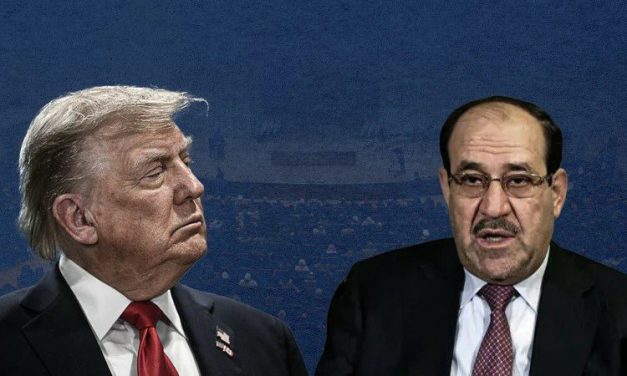
Online Strategic Council – Memoir: The swift selection of Nouri al-Maliki for the premiership constitutes a new phase in Iraq’s political sphere. Multiple factors have played a role in this process, the most important being the prevailing situation in Iraq and the region. Under such circumstances, Iraq requires a powerful and experienced prime minister who can keep the country away from the dangers of wars and crises.

America’s Strategy for Creating Tension in the Asia-Pacific

Strategic Council Online – Opinion: Relations between some countries in the Asia-Pacific region, such as China and Japan or China and Australia, which were previously relatively normal, are trending towards deterioration, and the primary reason for this is the aggressive policies of the United States of America.

The Collapse of the European Security Illusion with the Continuation of the Ukraine War?

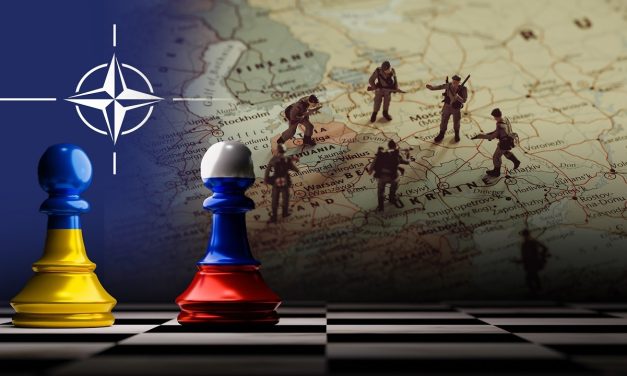
Strategic Council Online – Interview: The Ukraine war has become a new turning point in the political, security, and even commercial relations of allies on both sides of the Atlantic. While this war is nearing its fourth year, many questions still remain regarding its future and its consequences; among them, will the continuation of the Ukraine war lead to the collapse of the European security illusion?

Is Greenland Pushing Europe Toward China?

Strategic Council Online – Interview: A European affairs expert believes that the seizure of Greenland will certainly weaken America’s relations with Europe and its allies. Donald Trump’s view is that he does not need these countries, but if Europe faces significant pressure from the United States, it is natural for it to move toward China.

Alarm Bells Sound for ISIS Revival in Syria: Threat to Iraq and West Asia

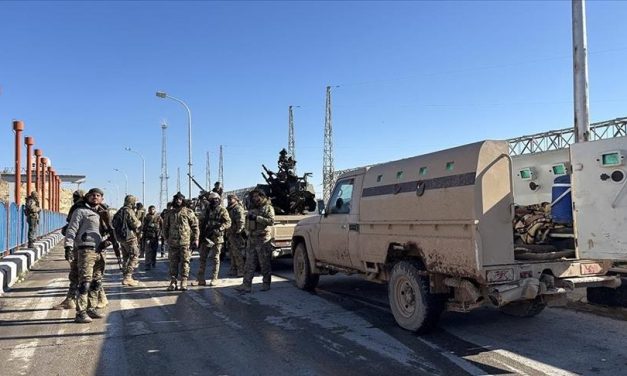
Strategic Council Online – Opinion: Numerous documents and pieces of evidence indicate that ISIS, which in recent years has been the region’s biggest threat to security and stability after the Zionist regime, has once again in recent months become a focal point for political and security exploitation by American and Zionist regime security, intelligence, and political circles.

Afghanistan’s Effective Role in the Economy of Eurasia

Strategic Council Online – Interview: A regional affairs researcher stated: Despite projects such as the Khaf-Herat railway and the Herat-Balkh-Mazar-i-Sharif corridor being on the agenda, insecurity and the absence of an inclusive government remain the most significant obstacles to realizing transit corridors and Afghanistan playing an effective role in the economy of Eurasia.

Loading

Últimas publicaciones

America’s Zero-Sum Game in Iraq

Online Strategic Council – Memoir: The swift selection of Nouri al-Maliki for the premiership constitutes a new phase in Iraq’s political sphere. Multiple factors have played a role in this process, the most important being the prevailing situation in Iraq and the region. Under such circumstances, Iraq requires a powerful and experienced prime minister who can keep the country away from the dangers of wars and crises.

America’s Strategy for Creating Tension in the Asia-Pacific

Strategic Council Online – Opinion: Relations between some countries in the Asia-Pacific region, such as China and Japan or China and Australia, which were previously relatively normal, are trending towards deterioration, and the primary reason for this is the aggressive policies of the United States of America.

The Collapse of the European Security Illusion with the Continuation of the Ukraine War?

Strategic Council Online – Interview: The Ukraine war has become a new turning point in the political, security, and even commercial relations of allies on both sides of the Atlantic. While this war is nearing its fourth year, many questions still remain regarding its future and its consequences; among them, will the continuation of the Ukraine war lead to the collapse of the European security illusion?

Is Greenland Pushing Europe Toward China?

Strategic Council Online – Interview: A European affairs expert believes that the seizure of Greenland will certainly weaken America’s relations with Europe and its allies. Donald Trump’s view is that he does not need these countries, but if Europe faces significant pressure from the United States, it is natural for it to move toward China.

Alarm Bells Sound for ISIS Revival in Syria: Threat to Iraq and West Asia

Strategic Council Online – Opinion: Numerous documents and pieces of evidence indicate that ISIS, which in recent years has been the region’s biggest threat to security and stability after the Zionist regime, has once again in recent months become a focal point for political and security exploitation by American and Zionist regime security, intelligence, and political circles.

Afghanistan’s Effective Role in the Economy of Eurasia

Strategic Council Online – Interview: A regional affairs researcher stated: Despite projects such as the Khaf-Herat railway and the Herat-Balkh-Mazar-i-Sharif corridor being on the agenda, insecurity and the absence of an inclusive government remain the most significant obstacles to realizing transit corridors and Afghanistan playing an effective role in the economy of Eurasia.

Loading

DERNIER CONTENU

America’s Zero-Sum Game in Iraq

Online Strategic Council – Memoir: The swift selection of Nouri al-Maliki for the premiership constitutes a new phase in Iraq’s political sphere. Multiple factors have played a role in this process, the most important being the prevailing situation in Iraq and the region. Under such circumstances, Iraq requires a powerful and experienced prime minister who can keep the country away from the dangers of wars and crises.

America’s Strategy for Creating Tension in the Asia-Pacific

Strategic Council Online – Opinion: Relations between some countries in the Asia-Pacific region, such as China and Japan or China and Australia, which were previously relatively normal, are trending towards deterioration, and the primary reason for this is the aggressive policies of the United States of America.

The Collapse of the European Security Illusion with the Continuation of the Ukraine War?

Strategic Council Online – Interview: The Ukraine war has become a new turning point in the political, security, and even commercial relations of allies on both sides of the Atlantic. While this war is nearing its fourth year, many questions still remain regarding its future and its consequences; among them, will the continuation of the Ukraine war lead to the collapse of the European security illusion?

Is Greenland Pushing Europe Toward China?

Strategic Council Online – Interview: A European affairs expert believes that the seizure of Greenland will certainly weaken America’s relations with Europe and its allies. Donald Trump’s view is that he does not need these countries, but if Europe faces significant pressure from the United States, it is natural for it to move toward China.

Alarm Bells Sound for ISIS Revival in Syria: Threat to Iraq and West Asia

Strategic Council Online – Opinion: Numerous documents and pieces of evidence indicate that ISIS, which in recent years has been the region’s biggest threat to security and stability after the Zionist regime, has once again in recent months become a focal point for political and security exploitation by American and Zionist regime security, intelligence, and political circles.

Afghanistan’s Effective Role in the Economy of Eurasia

Strategic Council Online – Interview: A regional affairs researcher stated: Despite projects such as the Khaf-Herat railway and the Herat-Balkh-Mazar-i-Sharif corridor being on the agenda, insecurity and the absence of an inclusive government remain the most significant obstacles to realizing transit corridors and Afghanistan playing an effective role in the economy of Eurasia.

Loading