جدیدترین مطالب

America’s Zero-Sum Game in Iraq

Online Strategic Council – Memoir: The swift selection of Nouri al-Maliki for the premiership constitutes a new phase in Iraq’s political sphere. Multiple factors have played a role in this process, the most important being the prevailing situation in Iraq and the region. Under such circumstances, Iraq requires a powerful and experienced prime minister who can keep the country away from the dangers of wars and crises.

America’s Strategy for Creating Tension in the Asia-Pacific

Strategic Council Online – Opinion: Relations between some countries in the Asia-Pacific region, such as China and Japan or China and Australia, which were previously relatively normal, are trending towards deterioration, and the primary reason for this is the aggressive policies of the United States of America.

The Collapse of the European Security Illusion with the Continuation of the Ukraine War?

Strategic Council Online – Interview: The Ukraine war has become a new turning point in the political, security, and even commercial relations of allies on both sides of the Atlantic. While this war is nearing its fourth year, many questions still remain regarding its future and its consequences; among them, will the continuation of the Ukraine war lead to the collapse of the European security illusion?

Is Greenland Pushing Europe Toward China?

Strategic Council Online – Interview: A European affairs expert believes that the seizure of Greenland will certainly weaken America’s relations with Europe and its allies. Donald Trump’s view is that he does not need these countries, but if Europe faces significant pressure from the United States, it is natural for it to move toward China.

Alarm Bells Sound for ISIS Revival in Syria: Threat to Iraq and West Asia

Strategic Council Online – Opinion: Numerous documents and pieces of evidence indicate that ISIS, which in recent years has been the region’s biggest threat to security and stability after the Zionist regime, has once again in recent months become a focal point for political and security exploitation by American and Zionist regime security, intelligence, and political circles.

Afghanistan’s Effective Role in the Economy of Eurasia

Strategic Council Online – Interview: A regional affairs researcher stated: Despite projects such as the Khaf-Herat railway and the Herat-Balkh-Mazar-i-Sharif corridor being on the agenda, insecurity and the absence of an inclusive government remain the most significant obstacles to realizing transit corridors and Afghanistan playing an effective role in the economy of Eurasia.

Loading

Hamas

The Axis of Resistance and Regional Developments

The Axis of Resistance and Regional Developments

Strategic Council Online – Interview: A West Asia affairs expert said: More than two years after the Al-Aqsa Storm, the question today is: What is the status of the Axis of Resistance, and has it collapsed?

The Plan to Recognize the State of Palestine: From Words to Action

The Plan to Recognize the State of Palestine: From Words to Action

Online Strategic Council – Interview: An international affairs analyst stated that the recent United Nations meeting, which centered on recognizing the state of Palestine and the two-state solution, has sparked a wave of international reactions. Supporters of this plan see it as a step towards peace. Still, critics view it with skepticism and believe that this move is more of a tool to deceive public opinion and solidify the existence of the Zionist regime than to resolve the crisis. The initiative by France and some European countries is being proposed while the genocide in Gaza continues, and the West has so far taken no effective action to stop it. Some analysts say the primary goal of this plan is not the establishment of an independent Palestinian state, but rather the disarmament of resistance groups and the isolation of Hamas—an action that, through superficial negotiations and apparent peace, paves the way for realizing the interests of the Israeli regime. Iran, by rejecting the two-state solution, presents a different narrative for the future of Palestine, based on a referendum involving all indigenous inhabitants of the land.

A Look at Recent UNSC Resolution Against the Israeli Regime’s Military Aggression on Qatar

A Look at Recent UNSC Resolution Against the Israeli Regime’s Military Aggression on Qatar

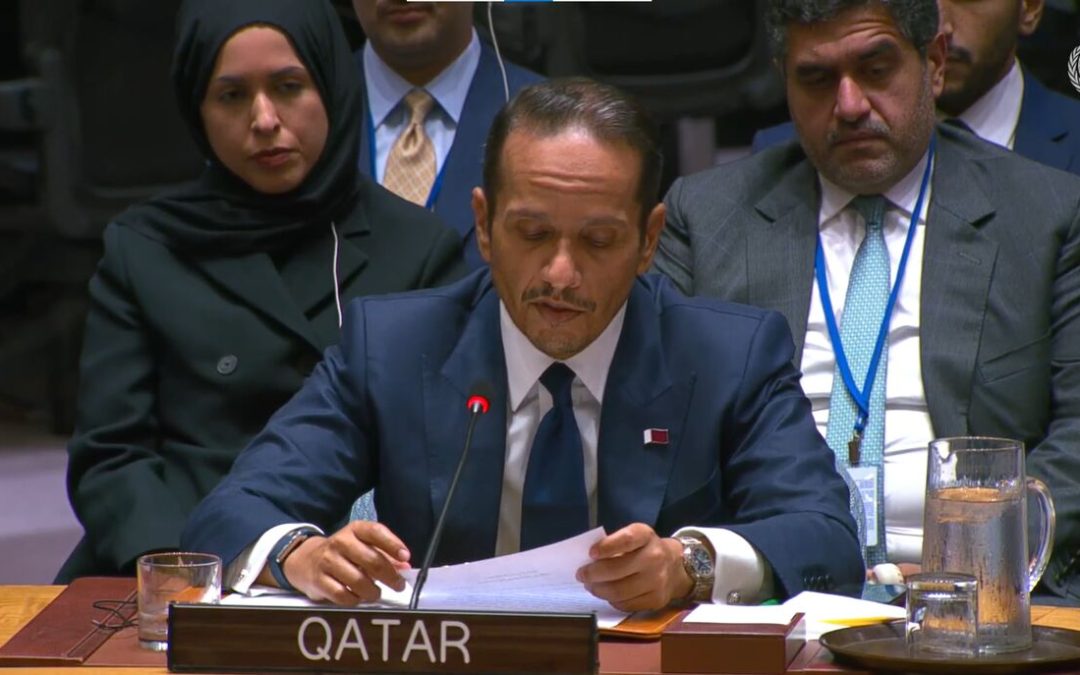
Strategic Council Online – Interview: An international affairs expert stated: The United Nations Security Council recently, in an emergency meeting, condemned the Israeli regime’s attack on Doha and, in a joint statement, called for an immediate cessation of tensions and full respect for Qatar’s national sovereignty. This statement, issued by consensus of all 15 Security Council members, while declaring solidarity with Qatar and speaking about the victimization of civilians and the necessity of a ceasefire in Gaza, did not mention the Israeli regime by name; a silence that itself carries contradictory messages. In other words, this statement was more of a political message to Tel Aviv than a legally binding instrument against the Israeli regime, stating that the international community considers attacking peace mediators a red line. However, currently, there is no will to exert practical pressure on this regime.

Objectives and Consequences of the Israeli Regime’s Military Attack on Qatar

Objectives and Consequences of the Israeli Regime’s Military Attack on Qatar

Strategic Council Online – Interview: A West Asia affairs expert stated that the Zionist regime’s airstrike on Doha, the capital of Qatar, aimed at assassinating senior Hamas leaders, once again revealed Tel Aviv’s brazen disregard for international law and the national sovereignty of countries. Benjamin Netanyahu, the Prime Minister of this regime, justified the operation by claiming to “eliminate an existential threat” and asserted that “Hamas leaders were targeted.” However, incoming reports indicate that this attack has failed. This aggression, carried out with the knowledge and consent of American officials, sparked a wave of anger and condemnation across the Arab and Islamic world. From the Arab League to Saudi Arabia, the UAE, Egypt, Iraq, Jordan, Kuwait, Lebanon, and even the Palestinian Authority, they deemed this action a clear violation of international law and a serious threat to regional security. Saudi Arabia warned that the continuation of such behavior could endanger the stability of West Asia, while the UAE described the security of Arab countries as “integral and indivisible.” However, regional observers believe that this wave of condemnations will likely remain at the level of diplomatic statements, with no serious practical action taken by Arab countries—a pattern previously observed in response to the Israeli regime’s repeated attacks on Gaza. Meanwhile, Tel Aviv, relying on American support and the inaction of regional countries, is attempting to manage its internal crisis and advance the “Greater Israel” project by creating successive crises; a project whose explosions are now heard as far as the heart of the Persian Gulf.

Failure of the Israeli Regime’s Assassination Policy in Containing the Resistance Front

Failure of the Israeli Regime’s Assassination Policy in Containing the Resistance Front

Strategic Council Online – Interview: A senior West Asia affairs analyst stated: By assassinating Yemeni executive officials, the Israeli regime has not only failed to achieve its military objectives, but its position has also been weakened in the diplomatic arena. In contrast, Yemen and the Resistance Front are continuing their path with greater cohesion, and the future outlook indicates that not only will their military capabilities not diminish, but their political standing will also be enhanced at the regional and global levels.

Decoding the Israeli Regime’s Narrative-Building in the Gaza War

Decoding the Israeli Regime’s Narrative-Building in the Gaza War

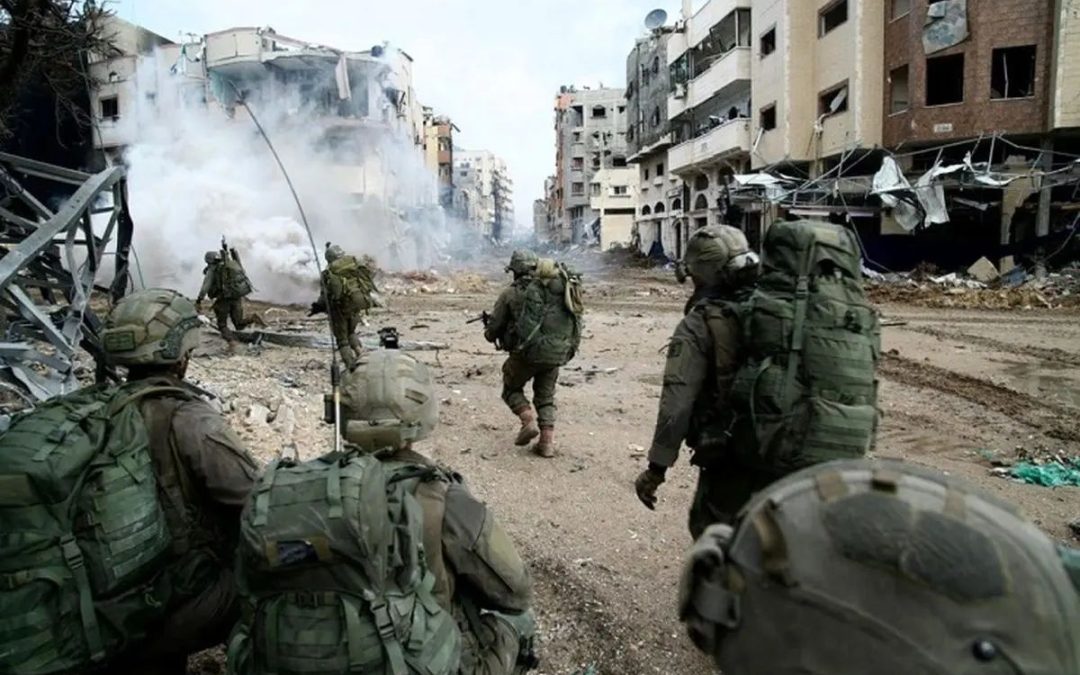
Strategic Council Online – Interview: A senior Palestinian affairs analyst stated: To justify its crimes in Gaza, the Zionist regime employs two main strategies: using military censorship regarding the publication of operational details and presenting an official narrative by military spokespersons in Hebrew and Arabic. By relying on selective images and information, it attempts to make its military actions in Gaza seem believable. While Benjamin Netanyahu, the Prime Minister of the Israeli regime, has announced readiness to expand military operations in Gaza and claimed that Palestinians would be allowed to leave the area, international criticism of this regime’s actions under the accusation of ethnic cleansing has intensified. By controlling Gaza’s borders, the Israeli regime’s military has restricted the exit of Palestinians and simultaneously carried out extensive bombings in the residential areas of Zeitoun and Sabra, which, according to the Hamas Civil Defense Organization, resulted in at least 33 deaths and widespread destruction. The European Union, the United Kingdom, Australia, Canada, and Japan, in a joint statement, have warned of an impending famine in Gaza and called for a halt to the use of lethal force near aid distribution sites. The World Health Organization has also emphasized the necessity of medical equipment entering Gaza, but the Israeli regime continues to prevent sufficient humanitarian aid from being sent.

Ambiguous Prospects of the Zionist Regime’s Strategy for the Occupation of Gaza

Ambiguous Prospects of the Zionist Regime’s Strategy for the Occupation of Gaza

Strategic Council Online – Opinion: Despite widespread disagreements between Netanyahu and the Chief of the General Staff of the Zionist regime’s army, Eyal Zamir, the main framework of the plan to occupy Gaza City was finally signed after the war cabinet agreed to seize Gaza City; a decision that could have extensive consequences in the Occupied Territories and the region.

Objectives of the Zionist Regime in Creating Famine in Gaza

Objectives of the Zionist Regime in Creating Famine in Gaza

Strategic Online Council – Interview: A West Asia affairs expert stated that the Zionist regime’s policy of creating famine for the Palestinians in the Gaza Strip is “deliberate.” This policy is not only an attempt to weaken the Palestinian resistance but also part of a long-term strategy to alter the demographic composition of the Strip. The recent warning by the World Food Program about an imminent famine in Gaza has once again drawn global attention to the humanitarian crisis in the region. United Nations reports also indicate that over two million people in Gaza face severe food insecurity, exacerbated by the Zionist regime’s obstruction of humanitarian aid.

The Outlook of Recent U.S. Agreements with Yemen’s Ansarullah and Hamas

The Outlook of Recent U.S. Agreements with Yemen’s Ansarullah and Hamas

Strategic Council Online – Opinion: A while ago, the Hamas movement announced direct negotiations with the U.S. government and an agreement to release Idan Alexander, a dual American-Israeli military prisoner. Later, a senior Hamas official confirmed the direct talks with the U.S. But what is the story behind this?

أحدث الوظائف

America’s Zero-Sum Game in Iraq

Online Strategic Council – Memoir: The swift selection of Nouri al-Maliki for the premiership constitutes a new phase in Iraq’s political sphere. Multiple factors have played a role in this process, the most important being the prevailing situation in Iraq and the region. Under such circumstances, Iraq requires a powerful and experienced prime minister who can keep the country away from the dangers of wars and crises.

America’s Strategy for Creating Tension in the Asia-Pacific

Strategic Council Online – Opinion: Relations between some countries in the Asia-Pacific region, such as China and Japan or China and Australia, which were previously relatively normal, are trending towards deterioration, and the primary reason for this is the aggressive policies of the United States of America.

The Collapse of the European Security Illusion with the Continuation of the Ukraine War?

Strategic Council Online – Interview: The Ukraine war has become a new turning point in the political, security, and even commercial relations of allies on both sides of the Atlantic. While this war is nearing its fourth year, many questions still remain regarding its future and its consequences; among them, will the continuation of the Ukraine war lead to the collapse of the European security illusion?

Is Greenland Pushing Europe Toward China?

Strategic Council Online – Interview: A European affairs expert believes that the seizure of Greenland will certainly weaken America’s relations with Europe and its allies. Donald Trump’s view is that he does not need these countries, but if Europe faces significant pressure from the United States, it is natural for it to move toward China.

Alarm Bells Sound for ISIS Revival in Syria: Threat to Iraq and West Asia

Strategic Council Online – Opinion: Numerous documents and pieces of evidence indicate that ISIS, which in recent years has been the region’s biggest threat to security and stability after the Zionist regime, has once again in recent months become a focal point for political and security exploitation by American and Zionist regime security, intelligence, and political circles.

Afghanistan’s Effective Role in the Economy of Eurasia

Strategic Council Online – Interview: A regional affairs researcher stated: Despite projects such as the Khaf-Herat railway and the Herat-Balkh-Mazar-i-Sharif corridor being on the agenda, insecurity and the absence of an inclusive government remain the most significant obstacles to realizing transit corridors and Afghanistan playing an effective role in the economy of Eurasia.

Loading

Hamas

The Axis of Resistance and Regional Developments

The Axis of Resistance and Regional Developments

Strategic Council Online – Interview: A West Asia affairs expert said: More than two years after the Al-Aqsa Storm, the question today is: What is the status of the Axis of Resistance, and has it collapsed?

The Plan to Recognize the State of Palestine: From Words to Action

The Plan to Recognize the State of Palestine: From Words to Action

Online Strategic Council – Interview: An international affairs analyst stated that the recent United Nations meeting, which centered on recognizing the state of Palestine and the two-state solution, has sparked a wave of international reactions. Supporters of this plan see it as a step towards peace. Still, critics view it with skepticism and believe that this move is more of a tool to deceive public opinion and solidify the existence of the Zionist regime than to resolve the crisis. The initiative by France and some European countries is being proposed while the genocide in Gaza continues, and the West has so far taken no effective action to stop it. Some analysts say the primary goal of this plan is not the establishment of an independent Palestinian state, but rather the disarmament of resistance groups and the isolation of Hamas—an action that, through superficial negotiations and apparent peace, paves the way for realizing the interests of the Israeli regime. Iran, by rejecting the two-state solution, presents a different narrative for the future of Palestine, based on a referendum involving all indigenous inhabitants of the land.

A Look at Recent UNSC Resolution Against the Israeli Regime’s Military Aggression on Qatar

A Look at Recent UNSC Resolution Against the Israeli Regime’s Military Aggression on Qatar

Strategic Council Online – Interview: An international affairs expert stated: The United Nations Security Council recently, in an emergency meeting, condemned the Israeli regime’s attack on Doha and, in a joint statement, called for an immediate cessation of tensions and full respect for Qatar’s national sovereignty. This statement, issued by consensus of all 15 Security Council members, while declaring solidarity with Qatar and speaking about the victimization of civilians and the necessity of a ceasefire in Gaza, did not mention the Israeli regime by name; a silence that itself carries contradictory messages. In other words, this statement was more of a political message to Tel Aviv than a legally binding instrument against the Israeli regime, stating that the international community considers attacking peace mediators a red line. However, currently, there is no will to exert practical pressure on this regime.

Objectives and Consequences of the Israeli Regime’s Military Attack on Qatar

Objectives and Consequences of the Israeli Regime’s Military Attack on Qatar

Strategic Council Online – Interview: A West Asia affairs expert stated that the Zionist regime’s airstrike on Doha, the capital of Qatar, aimed at assassinating senior Hamas leaders, once again revealed Tel Aviv’s brazen disregard for international law and the national sovereignty of countries. Benjamin Netanyahu, the Prime Minister of this regime, justified the operation by claiming to “eliminate an existential threat” and asserted that “Hamas leaders were targeted.” However, incoming reports indicate that this attack has failed. This aggression, carried out with the knowledge and consent of American officials, sparked a wave of anger and condemnation across the Arab and Islamic world. From the Arab League to Saudi Arabia, the UAE, Egypt, Iraq, Jordan, Kuwait, Lebanon, and even the Palestinian Authority, they deemed this action a clear violation of international law and a serious threat to regional security. Saudi Arabia warned that the continuation of such behavior could endanger the stability of West Asia, while the UAE described the security of Arab countries as “integral and indivisible.” However, regional observers believe that this wave of condemnations will likely remain at the level of diplomatic statements, with no serious practical action taken by Arab countries—a pattern previously observed in response to the Israeli regime’s repeated attacks on Gaza. Meanwhile, Tel Aviv, relying on American support and the inaction of regional countries, is attempting to manage its internal crisis and advance the “Greater Israel” project by creating successive crises; a project whose explosions are now heard as far as the heart of the Persian Gulf.

Failure of the Israeli Regime’s Assassination Policy in Containing the Resistance Front

Failure of the Israeli Regime’s Assassination Policy in Containing the Resistance Front

Strategic Council Online – Interview: A senior West Asia affairs analyst stated: By assassinating Yemeni executive officials, the Israeli regime has not only failed to achieve its military objectives, but its position has also been weakened in the diplomatic arena. In contrast, Yemen and the Resistance Front are continuing their path with greater cohesion, and the future outlook indicates that not only will their military capabilities not diminish, but their political standing will also be enhanced at the regional and global levels.

Decoding the Israeli Regime’s Narrative-Building in the Gaza War

Decoding the Israeli Regime’s Narrative-Building in the Gaza War

Strategic Council Online – Interview: A senior Palestinian affairs analyst stated: To justify its crimes in Gaza, the Zionist regime employs two main strategies: using military censorship regarding the publication of operational details and presenting an official narrative by military spokespersons in Hebrew and Arabic. By relying on selective images and information, it attempts to make its military actions in Gaza seem believable. While Benjamin Netanyahu, the Prime Minister of the Israeli regime, has announced readiness to expand military operations in Gaza and claimed that Palestinians would be allowed to leave the area, international criticism of this regime’s actions under the accusation of ethnic cleansing has intensified. By controlling Gaza’s borders, the Israeli regime’s military has restricted the exit of Palestinians and simultaneously carried out extensive bombings in the residential areas of Zeitoun and Sabra, which, according to the Hamas Civil Defense Organization, resulted in at least 33 deaths and widespread destruction. The European Union, the United Kingdom, Australia, Canada, and Japan, in a joint statement, have warned of an impending famine in Gaza and called for a halt to the use of lethal force near aid distribution sites. The World Health Organization has also emphasized the necessity of medical equipment entering Gaza, but the Israeli regime continues to prevent sufficient humanitarian aid from being sent.

Ambiguous Prospects of the Zionist Regime’s Strategy for the Occupation of Gaza

Ambiguous Prospects of the Zionist Regime’s Strategy for the Occupation of Gaza

Strategic Council Online – Opinion: Despite widespread disagreements between Netanyahu and the Chief of the General Staff of the Zionist regime’s army, Eyal Zamir, the main framework of the plan to occupy Gaza City was finally signed after the war cabinet agreed to seize Gaza City; a decision that could have extensive consequences in the Occupied Territories and the region.

Objectives of the Zionist Regime in Creating Famine in Gaza

Objectives of the Zionist Regime in Creating Famine in Gaza

Strategic Online Council – Interview: A West Asia affairs expert stated that the Zionist regime’s policy of creating famine for the Palestinians in the Gaza Strip is “deliberate.” This policy is not only an attempt to weaken the Palestinian resistance but also part of a long-term strategy to alter the demographic composition of the Strip. The recent warning by the World Food Program about an imminent famine in Gaza has once again drawn global attention to the humanitarian crisis in the region. United Nations reports also indicate that over two million people in Gaza face severe food insecurity, exacerbated by the Zionist regime’s obstruction of humanitarian aid.

The Outlook of Recent U.S. Agreements with Yemen’s Ansarullah and Hamas

The Outlook of Recent U.S. Agreements with Yemen’s Ansarullah and Hamas

Strategic Council Online – Opinion: A while ago, the Hamas movement announced direct negotiations with the U.S. government and an agreement to release Idan Alexander, a dual American-Israeli military prisoner. Later, a senior Hamas official confirmed the direct talks with the U.S. But what is the story behind this?

Hamas

The Axis of Resistance and Regional Developments

The Axis of Resistance and Regional Developments

Strategic Council Online – Interview: A West Asia affairs expert said: More than two years after the Al-Aqsa Storm, the question today is: What is the status of the Axis of Resistance, and has it collapsed?

The Plan to Recognize the State of Palestine: From Words to Action

The Plan to Recognize the State of Palestine: From Words to Action

Online Strategic Council – Interview: An international affairs analyst stated that the recent United Nations meeting, which centered on recognizing the state of Palestine and the two-state solution, has sparked a wave of international reactions. Supporters of this plan see it as a step towards peace. Still, critics view it with skepticism and believe that this move is more of a tool to deceive public opinion and solidify the existence of the Zionist regime than to resolve the crisis. The initiative by France and some European countries is being proposed while the genocide in Gaza continues, and the West has so far taken no effective action to stop it. Some analysts say the primary goal of this plan is not the establishment of an independent Palestinian state, but rather the disarmament of resistance groups and the isolation of Hamas—an action that, through superficial negotiations and apparent peace, paves the way for realizing the interests of the Israeli regime. Iran, by rejecting the two-state solution, presents a different narrative for the future of Palestine, based on a referendum involving all indigenous inhabitants of the land.

A Look at Recent UNSC Resolution Against the Israeli Regime’s Military Aggression on Qatar

A Look at Recent UNSC Resolution Against the Israeli Regime’s Military Aggression on Qatar

Strategic Council Online – Interview: An international affairs expert stated: The United Nations Security Council recently, in an emergency meeting, condemned the Israeli regime’s attack on Doha and, in a joint statement, called for an immediate cessation of tensions and full respect for Qatar’s national sovereignty. This statement, issued by consensus of all 15 Security Council members, while declaring solidarity with Qatar and speaking about the victimization of civilians and the necessity of a ceasefire in Gaza, did not mention the Israeli regime by name; a silence that itself carries contradictory messages. In other words, this statement was more of a political message to Tel Aviv than a legally binding instrument against the Israeli regime, stating that the international community considers attacking peace mediators a red line. However, currently, there is no will to exert practical pressure on this regime.

Objectives and Consequences of the Israeli Regime’s Military Attack on Qatar

Objectives and Consequences of the Israeli Regime’s Military Attack on Qatar

Strategic Council Online – Interview: A West Asia affairs expert stated that the Zionist regime’s airstrike on Doha, the capital of Qatar, aimed at assassinating senior Hamas leaders, once again revealed Tel Aviv’s brazen disregard for international law and the national sovereignty of countries. Benjamin Netanyahu, the Prime Minister of this regime, justified the operation by claiming to “eliminate an existential threat” and asserted that “Hamas leaders were targeted.” However, incoming reports indicate that this attack has failed. This aggression, carried out with the knowledge and consent of American officials, sparked a wave of anger and condemnation across the Arab and Islamic world. From the Arab League to Saudi Arabia, the UAE, Egypt, Iraq, Jordan, Kuwait, Lebanon, and even the Palestinian Authority, they deemed this action a clear violation of international law and a serious threat to regional security. Saudi Arabia warned that the continuation of such behavior could endanger the stability of West Asia, while the UAE described the security of Arab countries as “integral and indivisible.” However, regional observers believe that this wave of condemnations will likely remain at the level of diplomatic statements, with no serious practical action taken by Arab countries—a pattern previously observed in response to the Israeli regime’s repeated attacks on Gaza. Meanwhile, Tel Aviv, relying on American support and the inaction of regional countries, is attempting to manage its internal crisis and advance the “Greater Israel” project by creating successive crises; a project whose explosions are now heard as far as the heart of the Persian Gulf.

Failure of the Israeli Regime’s Assassination Policy in Containing the Resistance Front

Failure of the Israeli Regime’s Assassination Policy in Containing the Resistance Front

Strategic Council Online – Interview: A senior West Asia affairs analyst stated: By assassinating Yemeni executive officials, the Israeli regime has not only failed to achieve its military objectives, but its position has also been weakened in the diplomatic arena. In contrast, Yemen and the Resistance Front are continuing their path with greater cohesion, and the future outlook indicates that not only will their military capabilities not diminish, but their political standing will also be enhanced at the regional and global levels.

Decoding the Israeli Regime’s Narrative-Building in the Gaza War

Decoding the Israeli Regime’s Narrative-Building in the Gaza War

Strategic Council Online – Interview: A senior Palestinian affairs analyst stated: To justify its crimes in Gaza, the Zionist regime employs two main strategies: using military censorship regarding the publication of operational details and presenting an official narrative by military spokespersons in Hebrew and Arabic. By relying on selective images and information, it attempts to make its military actions in Gaza seem believable. While Benjamin Netanyahu, the Prime Minister of the Israeli regime, has announced readiness to expand military operations in Gaza and claimed that Palestinians would be allowed to leave the area, international criticism of this regime’s actions under the accusation of ethnic cleansing has intensified. By controlling Gaza’s borders, the Israeli regime’s military has restricted the exit of Palestinians and simultaneously carried out extensive bombings in the residential areas of Zeitoun and Sabra, which, according to the Hamas Civil Defense Organization, resulted in at least 33 deaths and widespread destruction. The European Union, the United Kingdom, Australia, Canada, and Japan, in a joint statement, have warned of an impending famine in Gaza and called for a halt to the use of lethal force near aid distribution sites. The World Health Organization has also emphasized the necessity of medical equipment entering Gaza, but the Israeli regime continues to prevent sufficient humanitarian aid from being sent.

Ambiguous Prospects of the Zionist Regime’s Strategy for the Occupation of Gaza

Ambiguous Prospects of the Zionist Regime’s Strategy for the Occupation of Gaza

Strategic Council Online – Opinion: Despite widespread disagreements between Netanyahu and the Chief of the General Staff of the Zionist regime’s army, Eyal Zamir, the main framework of the plan to occupy Gaza City was finally signed after the war cabinet agreed to seize Gaza City; a decision that could have extensive consequences in the Occupied Territories and the region.

Objectives of the Zionist Regime in Creating Famine in Gaza

Objectives of the Zionist Regime in Creating Famine in Gaza

Strategic Online Council – Interview: A West Asia affairs expert stated that the Zionist regime’s policy of creating famine for the Palestinians in the Gaza Strip is “deliberate.” This policy is not only an attempt to weaken the Palestinian resistance but also part of a long-term strategy to alter the demographic composition of the Strip. The recent warning by the World Food Program about an imminent famine in Gaza has once again drawn global attention to the humanitarian crisis in the region. United Nations reports also indicate that over two million people in Gaza face severe food insecurity, exacerbated by the Zionist regime’s obstruction of humanitarian aid.

The Outlook of Recent U.S. Agreements with Yemen’s Ansarullah and Hamas

The Outlook of Recent U.S. Agreements with Yemen’s Ansarullah and Hamas

Strategic Council Online – Opinion: A while ago, the Hamas movement announced direct negotiations with the U.S. government and an agreement to release Idan Alexander, a dual American-Israeli military prisoner. Later, a senior Hamas official confirmed the direct talks with the U.S. But what is the story behind this?

LATEST CONTENT

America’s Zero-Sum Game in Iraq

Online Strategic Council – Memoir: The swift selection of Nouri al-Maliki for the premiership constitutes a new phase in Iraq’s political sphere. Multiple factors have played a role in this process, the most important being the prevailing situation in Iraq and the region. Under such circumstances, Iraq requires a powerful and experienced prime minister who can keep the country away from the dangers of wars and crises.

America’s Strategy for Creating Tension in the Asia-Pacific

Strategic Council Online – Opinion: Relations between some countries in the Asia-Pacific region, such as China and Japan or China and Australia, which were previously relatively normal, are trending towards deterioration, and the primary reason for this is the aggressive policies of the United States of America.

The Collapse of the European Security Illusion with the Continuation of the Ukraine War?

Strategic Council Online – Interview: The Ukraine war has become a new turning point in the political, security, and even commercial relations of allies on both sides of the Atlantic. While this war is nearing its fourth year, many questions still remain regarding its future and its consequences; among them, will the continuation of the Ukraine war lead to the collapse of the European security illusion?

Is Greenland Pushing Europe Toward China?

Strategic Council Online – Interview: A European affairs expert believes that the seizure of Greenland will certainly weaken America’s relations with Europe and its allies. Donald Trump’s view is that he does not need these countries, but if Europe faces significant pressure from the United States, it is natural for it to move toward China.

Alarm Bells Sound for ISIS Revival in Syria: Threat to Iraq and West Asia

Strategic Council Online – Opinion: Numerous documents and pieces of evidence indicate that ISIS, which in recent years has been the region’s biggest threat to security and stability after the Zionist regime, has once again in recent months become a focal point for political and security exploitation by American and Zionist regime security, intelligence, and political circles.

Afghanistan’s Effective Role in the Economy of Eurasia

Strategic Council Online – Interview: A regional affairs researcher stated: Despite projects such as the Khaf-Herat railway and the Herat-Balkh-Mazar-i-Sharif corridor being on the agenda, insecurity and the absence of an inclusive government remain the most significant obstacles to realizing transit corridors and Afghanistan playing an effective role in the economy of Eurasia.

Loading

Hamas

The Axis of Resistance and Regional Developments

The Axis of Resistance and Regional Developments

Strategic Council Online – Interview: A West Asia affairs expert said: More than two years after the Al-Aqsa Storm, the question today is: What is the status of the Axis of Resistance, and has it collapsed?

The Plan to Recognize the State of Palestine: From Words to Action

The Plan to Recognize the State of Palestine: From Words to Action

Online Strategic Council – Interview: An international affairs analyst stated that the recent United Nations meeting, which centered on recognizing the state of Palestine and the two-state solution, has sparked a wave of international reactions. Supporters of this plan see it as a step towards peace. Still, critics view it with skepticism and believe that this move is more of a tool to deceive public opinion and solidify the existence of the Zionist regime than to resolve the crisis. The initiative by France and some European countries is being proposed while the genocide in Gaza continues, and the West has so far taken no effective action to stop it. Some analysts say the primary goal of this plan is not the establishment of an independent Palestinian state, but rather the disarmament of resistance groups and the isolation of Hamas—an action that, through superficial negotiations and apparent peace, paves the way for realizing the interests of the Israeli regime. Iran, by rejecting the two-state solution, presents a different narrative for the future of Palestine, based on a referendum involving all indigenous inhabitants of the land.

A Look at Recent UNSC Resolution Against the Israeli Regime’s Military Aggression on Qatar

A Look at Recent UNSC Resolution Against the Israeli Regime’s Military Aggression on Qatar

Strategic Council Online – Interview: An international affairs expert stated: The United Nations Security Council recently, in an emergency meeting, condemned the Israeli regime’s attack on Doha and, in a joint statement, called for an immediate cessation of tensions and full respect for Qatar’s national sovereignty. This statement, issued by consensus of all 15 Security Council members, while declaring solidarity with Qatar and speaking about the victimization of civilians and the necessity of a ceasefire in Gaza, did not mention the Israeli regime by name; a silence that itself carries contradictory messages. In other words, this statement was more of a political message to Tel Aviv than a legally binding instrument against the Israeli regime, stating that the international community considers attacking peace mediators a red line. However, currently, there is no will to exert practical pressure on this regime.

Objectives and Consequences of the Israeli Regime’s Military Attack on Qatar

Objectives and Consequences of the Israeli Regime’s Military Attack on Qatar

Strategic Council Online – Interview: A West Asia affairs expert stated that the Zionist regime’s airstrike on Doha, the capital of Qatar, aimed at assassinating senior Hamas leaders, once again revealed Tel Aviv’s brazen disregard for international law and the national sovereignty of countries. Benjamin Netanyahu, the Prime Minister of this regime, justified the operation by claiming to “eliminate an existential threat” and asserted that “Hamas leaders were targeted.” However, incoming reports indicate that this attack has failed. This aggression, carried out with the knowledge and consent of American officials, sparked a wave of anger and condemnation across the Arab and Islamic world. From the Arab League to Saudi Arabia, the UAE, Egypt, Iraq, Jordan, Kuwait, Lebanon, and even the Palestinian Authority, they deemed this action a clear violation of international law and a serious threat to regional security. Saudi Arabia warned that the continuation of such behavior could endanger the stability of West Asia, while the UAE described the security of Arab countries as “integral and indivisible.” However, regional observers believe that this wave of condemnations will likely remain at the level of diplomatic statements, with no serious practical action taken by Arab countries—a pattern previously observed in response to the Israeli regime’s repeated attacks on Gaza. Meanwhile, Tel Aviv, relying on American support and the inaction of regional countries, is attempting to manage its internal crisis and advance the “Greater Israel” project by creating successive crises; a project whose explosions are now heard as far as the heart of the Persian Gulf.

Failure of the Israeli Regime’s Assassination Policy in Containing the Resistance Front

Failure of the Israeli Regime’s Assassination Policy in Containing the Resistance Front

Strategic Council Online – Interview: A senior West Asia affairs analyst stated: By assassinating Yemeni executive officials, the Israeli regime has not only failed to achieve its military objectives, but its position has also been weakened in the diplomatic arena. In contrast, Yemen and the Resistance Front are continuing their path with greater cohesion, and the future outlook indicates that not only will their military capabilities not diminish, but their political standing will also be enhanced at the regional and global levels.

Decoding the Israeli Regime’s Narrative-Building in the Gaza War

Decoding the Israeli Regime’s Narrative-Building in the Gaza War

Strategic Council Online – Interview: A senior Palestinian affairs analyst stated: To justify its crimes in Gaza, the Zionist regime employs two main strategies: using military censorship regarding the publication of operational details and presenting an official narrative by military spokespersons in Hebrew and Arabic. By relying on selective images and information, it attempts to make its military actions in Gaza seem believable. While Benjamin Netanyahu, the Prime Minister of the Israeli regime, has announced readiness to expand military operations in Gaza and claimed that Palestinians would be allowed to leave the area, international criticism of this regime’s actions under the accusation of ethnic cleansing has intensified. By controlling Gaza’s borders, the Israeli regime’s military has restricted the exit of Palestinians and simultaneously carried out extensive bombings in the residential areas of Zeitoun and Sabra, which, according to the Hamas Civil Defense Organization, resulted in at least 33 deaths and widespread destruction. The European Union, the United Kingdom, Australia, Canada, and Japan, in a joint statement, have warned of an impending famine in Gaza and called for a halt to the use of lethal force near aid distribution sites. The World Health Organization has also emphasized the necessity of medical equipment entering Gaza, but the Israeli regime continues to prevent sufficient humanitarian aid from being sent.

Ambiguous Prospects of the Zionist Regime’s Strategy for the Occupation of Gaza

Ambiguous Prospects of the Zionist Regime’s Strategy for the Occupation of Gaza

Strategic Council Online – Opinion: Despite widespread disagreements between Netanyahu and the Chief of the General Staff of the Zionist regime’s army, Eyal Zamir, the main framework of the plan to occupy Gaza City was finally signed after the war cabinet agreed to seize Gaza City; a decision that could have extensive consequences in the Occupied Territories and the region.

Objectives of the Zionist Regime in Creating Famine in Gaza

Objectives of the Zionist Regime in Creating Famine in Gaza

Strategic Online Council – Interview: A West Asia affairs expert stated that the Zionist regime’s policy of creating famine for the Palestinians in the Gaza Strip is “deliberate.” This policy is not only an attempt to weaken the Palestinian resistance but also part of a long-term strategy to alter the demographic composition of the Strip. The recent warning by the World Food Program about an imminent famine in Gaza has once again drawn global attention to the humanitarian crisis in the region. United Nations reports also indicate that over two million people in Gaza face severe food insecurity, exacerbated by the Zionist regime’s obstruction of humanitarian aid.

The Outlook of Recent U.S. Agreements with Yemen’s Ansarullah and Hamas

The Outlook of Recent U.S. Agreements with Yemen’s Ansarullah and Hamas

Strategic Council Online – Opinion: A while ago, the Hamas movement announced direct negotiations with the U.S. government and an agreement to release Idan Alexander, a dual American-Israeli military prisoner. Later, a senior Hamas official confirmed the direct talks with the U.S. But what is the story behind this?

ÚLTIMAS PUBLICACIONES

America’s Zero-Sum Game in Iraq

Online Strategic Council – Memoir: The swift selection of Nouri al-Maliki for the premiership constitutes a new phase in Iraq’s political sphere. Multiple factors have played a role in this process, the most important being the prevailing situation in Iraq and the region. Under such circumstances, Iraq requires a powerful and experienced prime minister who can keep the country away from the dangers of wars and crises.

America’s Strategy for Creating Tension in the Asia-Pacific

Strategic Council Online – Opinion: Relations between some countries in the Asia-Pacific region, such as China and Japan or China and Australia, which were previously relatively normal, are trending towards deterioration, and the primary reason for this is the aggressive policies of the United States of America.

The Collapse of the European Security Illusion with the Continuation of the Ukraine War?

Strategic Council Online – Interview: The Ukraine war has become a new turning point in the political, security, and even commercial relations of allies on both sides of the Atlantic. While this war is nearing its fourth year, many questions still remain regarding its future and its consequences; among them, will the continuation of the Ukraine war lead to the collapse of the European security illusion?

Is Greenland Pushing Europe Toward China?

Strategic Council Online – Interview: A European affairs expert believes that the seizure of Greenland will certainly weaken America’s relations with Europe and its allies. Donald Trump’s view is that he does not need these countries, but if Europe faces significant pressure from the United States, it is natural for it to move toward China.

Alarm Bells Sound for ISIS Revival in Syria: Threat to Iraq and West Asia

Strategic Council Online – Opinion: Numerous documents and pieces of evidence indicate that ISIS, which in recent years has been the region’s biggest threat to security and stability after the Zionist regime, has once again in recent months become a focal point for political and security exploitation by American and Zionist regime security, intelligence, and political circles.

Afghanistan’s Effective Role in the Economy of Eurasia

Strategic Council Online – Interview: A regional affairs researcher stated: Despite projects such as the Khaf-Herat railway and the Herat-Balkh-Mazar-i-Sharif corridor being on the agenda, insecurity and the absence of an inclusive government remain the most significant obstacles to realizing transit corridors and Afghanistan playing an effective role in the economy of Eurasia.

Loading

Hamas

The Axis of Resistance and Regional Developments

The Axis of Resistance and Regional Developments

Strategic Council Online – Interview: A West Asia affairs expert said: More than two years after the Al-Aqsa Storm, the question today is: What is the status of the Axis of Resistance, and has it collapsed?

The Plan to Recognize the State of Palestine: From Words to Action

The Plan to Recognize the State of Palestine: From Words to Action

Online Strategic Council – Interview: An international affairs analyst stated that the recent United Nations meeting, which centered on recognizing the state of Palestine and the two-state solution, has sparked a wave of international reactions. Supporters of this plan see it as a step towards peace. Still, critics view it with skepticism and believe that this move is more of a tool to deceive public opinion and solidify the existence of the Zionist regime than to resolve the crisis. The initiative by France and some European countries is being proposed while the genocide in Gaza continues, and the West has so far taken no effective action to stop it. Some analysts say the primary goal of this plan is not the establishment of an independent Palestinian state, but rather the disarmament of resistance groups and the isolation of Hamas—an action that, through superficial negotiations and apparent peace, paves the way for realizing the interests of the Israeli regime. Iran, by rejecting the two-state solution, presents a different narrative for the future of Palestine, based on a referendum involving all indigenous inhabitants of the land.

A Look at Recent UNSC Resolution Against the Israeli Regime’s Military Aggression on Qatar

A Look at Recent UNSC Resolution Against the Israeli Regime’s Military Aggression on Qatar

Strategic Council Online – Interview: An international affairs expert stated: The United Nations Security Council recently, in an emergency meeting, condemned the Israeli regime’s attack on Doha and, in a joint statement, called for an immediate cessation of tensions and full respect for Qatar’s national sovereignty. This statement, issued by consensus of all 15 Security Council members, while declaring solidarity with Qatar and speaking about the victimization of civilians and the necessity of a ceasefire in Gaza, did not mention the Israeli regime by name; a silence that itself carries contradictory messages. In other words, this statement was more of a political message to Tel Aviv than a legally binding instrument against the Israeli regime, stating that the international community considers attacking peace mediators a red line. However, currently, there is no will to exert practical pressure on this regime.

Objectives and Consequences of the Israeli Regime’s Military Attack on Qatar

Objectives and Consequences of the Israeli Regime’s Military Attack on Qatar

Strategic Council Online – Interview: A West Asia affairs expert stated that the Zionist regime’s airstrike on Doha, the capital of Qatar, aimed at assassinating senior Hamas leaders, once again revealed Tel Aviv’s brazen disregard for international law and the national sovereignty of countries. Benjamin Netanyahu, the Prime Minister of this regime, justified the operation by claiming to “eliminate an existential threat” and asserted that “Hamas leaders were targeted.” However, incoming reports indicate that this attack has failed. This aggression, carried out with the knowledge and consent of American officials, sparked a wave of anger and condemnation across the Arab and Islamic world. From the Arab League to Saudi Arabia, the UAE, Egypt, Iraq, Jordan, Kuwait, Lebanon, and even the Palestinian Authority, they deemed this action a clear violation of international law and a serious threat to regional security. Saudi Arabia warned that the continuation of such behavior could endanger the stability of West Asia, while the UAE described the security of Arab countries as “integral and indivisible.” However, regional observers believe that this wave of condemnations will likely remain at the level of diplomatic statements, with no serious practical action taken by Arab countries—a pattern previously observed in response to the Israeli regime’s repeated attacks on Gaza. Meanwhile, Tel Aviv, relying on American support and the inaction of regional countries, is attempting to manage its internal crisis and advance the “Greater Israel” project by creating successive crises; a project whose explosions are now heard as far as the heart of the Persian Gulf.

Failure of the Israeli Regime’s Assassination Policy in Containing the Resistance Front

Failure of the Israeli Regime’s Assassination Policy in Containing the Resistance Front

Strategic Council Online – Interview: A senior West Asia affairs analyst stated: By assassinating Yemeni executive officials, the Israeli regime has not only failed to achieve its military objectives, but its position has also been weakened in the diplomatic arena. In contrast, Yemen and the Resistance Front are continuing their path with greater cohesion, and the future outlook indicates that not only will their military capabilities not diminish, but their political standing will also be enhanced at the regional and global levels.

Decoding the Israeli Regime’s Narrative-Building in the Gaza War

Decoding the Israeli Regime’s Narrative-Building in the Gaza War

Strategic Council Online – Interview: A senior Palestinian affairs analyst stated: To justify its crimes in Gaza, the Zionist regime employs two main strategies: using military censorship regarding the publication of operational details and presenting an official narrative by military spokespersons in Hebrew and Arabic. By relying on selective images and information, it attempts to make its military actions in Gaza seem believable. While Benjamin Netanyahu, the Prime Minister of the Israeli regime, has announced readiness to expand military operations in Gaza and claimed that Palestinians would be allowed to leave the area, international criticism of this regime’s actions under the accusation of ethnic cleansing has intensified. By controlling Gaza’s borders, the Israeli regime’s military has restricted the exit of Palestinians and simultaneously carried out extensive bombings in the residential areas of Zeitoun and Sabra, which, according to the Hamas Civil Defense Organization, resulted in at least 33 deaths and widespread destruction. The European Union, the United Kingdom, Australia, Canada, and Japan, in a joint statement, have warned of an impending famine in Gaza and called for a halt to the use of lethal force near aid distribution sites. The World Health Organization has also emphasized the necessity of medical equipment entering Gaza, but the Israeli regime continues to prevent sufficient humanitarian aid from being sent.

Ambiguous Prospects of the Zionist Regime’s Strategy for the Occupation of Gaza

Ambiguous Prospects of the Zionist Regime’s Strategy for the Occupation of Gaza

Strategic Council Online – Opinion: Despite widespread disagreements between Netanyahu and the Chief of the General Staff of the Zionist regime’s army, Eyal Zamir, the main framework of the plan to occupy Gaza City was finally signed after the war cabinet agreed to seize Gaza City; a decision that could have extensive consequences in the Occupied Territories and the region.

Objectives of the Zionist Regime in Creating Famine in Gaza

Objectives of the Zionist Regime in Creating Famine in Gaza

Strategic Online Council – Interview: A West Asia affairs expert stated that the Zionist regime’s policy of creating famine for the Palestinians in the Gaza Strip is “deliberate.” This policy is not only an attempt to weaken the Palestinian resistance but also part of a long-term strategy to alter the demographic composition of the Strip. The recent warning by the World Food Program about an imminent famine in Gaza has once again drawn global attention to the humanitarian crisis in the region. United Nations reports also indicate that over two million people in Gaza face severe food insecurity, exacerbated by the Zionist regime’s obstruction of humanitarian aid.

The Outlook of Recent U.S. Agreements with Yemen’s Ansarullah and Hamas

The Outlook of Recent U.S. Agreements with Yemen’s Ansarullah and Hamas

Strategic Council Online – Opinion: A while ago, the Hamas movement announced direct negotiations with the U.S. government and an agreement to release Idan Alexander, a dual American-Israeli military prisoner. Later, a senior Hamas official confirmed the direct talks with the U.S. But what is the story behind this?

ÚLTIMAS PUBLICACIONES

America’s Zero-Sum Game in Iraq

Online Strategic Council – Memoir: The swift selection of Nouri al-Maliki for the premiership constitutes a new phase in Iraq’s political sphere. Multiple factors have played a role in this process, the most important being the prevailing situation in Iraq and the region. Under such circumstances, Iraq requires a powerful and experienced prime minister who can keep the country away from the dangers of wars and crises.

America’s Strategy for Creating Tension in the Asia-Pacific

Strategic Council Online – Opinion: Relations between some countries in the Asia-Pacific region, such as China and Japan or China and Australia, which were previously relatively normal, are trending towards deterioration, and the primary reason for this is the aggressive policies of the United States of America.

The Collapse of the European Security Illusion with the Continuation of the Ukraine War?

Strategic Council Online – Interview: The Ukraine war has become a new turning point in the political, security, and even commercial relations of allies on both sides of the Atlantic. While this war is nearing its fourth year, many questions still remain regarding its future and its consequences; among them, will the continuation of the Ukraine war lead to the collapse of the European security illusion?

Is Greenland Pushing Europe Toward China?

Strategic Council Online – Interview: A European affairs expert believes that the seizure of Greenland will certainly weaken America’s relations with Europe and its allies. Donald Trump’s view is that he does not need these countries, but if Europe faces significant pressure from the United States, it is natural for it to move toward China.

Alarm Bells Sound for ISIS Revival in Syria: Threat to Iraq and West Asia

Strategic Council Online – Opinion: Numerous documents and pieces of evidence indicate that ISIS, which in recent years has been the region’s biggest threat to security and stability after the Zionist regime, has once again in recent months become a focal point for political and security exploitation by American and Zionist regime security, intelligence, and political circles.

Afghanistan’s Effective Role in the Economy of Eurasia

Strategic Council Online – Interview: A regional affairs researcher stated: Despite projects such as the Khaf-Herat railway and the Herat-Balkh-Mazar-i-Sharif corridor being on the agenda, insecurity and the absence of an inclusive government remain the most significant obstacles to realizing transit corridors and Afghanistan playing an effective role in the economy of Eurasia.

Loading