جدیدترین مطالب

The Inseparability of the Lebanese Front from the Axis of Resistance

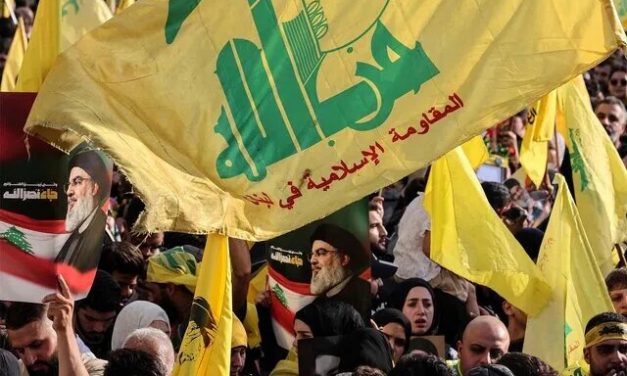
SCFR Online–Opinion: By providing an extensive network of social, healthcare, educational, and post-war reconstruction services, Hezbollah has established a strong social base for itself among Lebanon’s Shiites and Sunnis, and even beyond that, among other segments of Lebanese society, including Christians. Hezbollah has never been an external actor imposed upon Lebanon; rather, it is a phenomenon fundamentally born out of the occupation and crimes of the Zionist regime and itself influenced by popular resistance.

The Increasing Efforts of the Zionist Regime to Redefine Borders and the Regional Order and Its Consequences

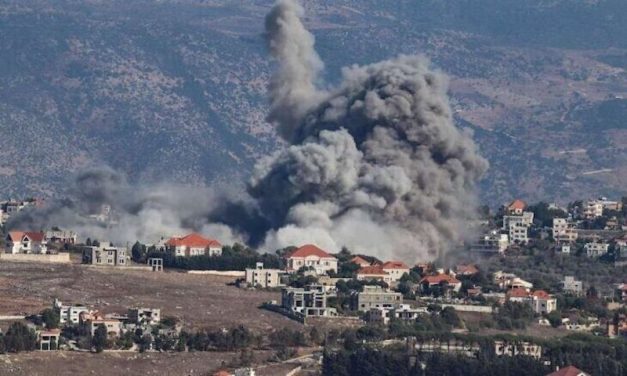
SCFR Online– Opinion: Security and military developments in the region over recent months indicate that the ongoing crises and wars in Gaza, southern Lebanon, and parts of Syrian territory encompass broader dimensions of geopolitical and geostrategic transformations. In this context, the increased military presence and control of the Zionist regime over parts of the territories of these areas, along with proposals regarding the creation of buffer zones or even the expansion of security borders, have raised serious questions about the future of the regional order and its consequences for the countries of West Asia.

The Components of Iran’s Deterrence Power

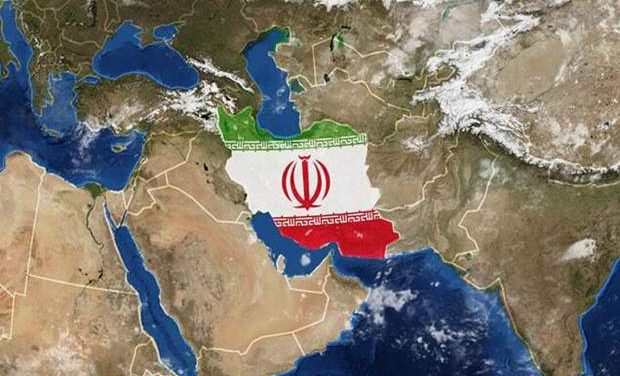
SCFR Online – Opinion: At a time when regional security equations have reached a sensitive stage under the influence of Iran’s strategic confrontation with the United States and the Zionist regime, the question of the nature of Tehran’s defensive power has gained greater significance than ever before. While Washington and Tel Aviv rely on their technological superiority, the Islamic Republic of Iran has presented a model of deterrence that extends beyond the material calculations of the world’s classical militaries. This power, rooted in the connection between “the field” and “the people,” has not only altered the balance of power in recent conflicts but has also disrupted adversaries’ calculations when confronting Iran’s strategic depth.

The Persian Gulf; A Cold Battlefield Between Beijing and Washington

SCFR Online – Opinion: The competition in recent years between the United States and China encompasses various geographical regions—including the Indo-Pacific, West Asia, the Arctic and Antarctic, and Africa—as well as multiple domains such as economics and technology. Within this context, a strategic competition has also emerged in the Persian Gulf region across economic, technological, and military spheres.

Europe’s Enduring Dependence on Persian Gulf Energy

SCFR Online – Opinion: The dominant discourse in the field of European energy security over the past two decades has revolved around diversification of supply sources and the gradual reduction of dependence on fossil fuels. This narrative, which gained particular momentum after the Ukraine gas crisis in 2006 and its intensification in 2014 and 2022, was based on the assumption that Europe could free itself from the geopolitical vulnerabilities arising from dependence on specific suppliers through investment in renewable energy, imports of liquefied natural gas from diversified sources, and the establishment of new infrastructure. However, a closer analysis of energy trade data and the structure of the global oil and gas supply chain presents a different picture. Europe has not only failed to meaningfully reduce its dependence on the Persian Gulf, but in some sectors — particularly in liquefied natural gas imports — this dependence has deepened. This reality, which is often overlooked in public discourse, raises fundamental questions about the sustainability of Europe’s energy security strategies and their impact on regional power equations.

Loading

Abraham Accords

America’s Endeavor to Rebuild Domination in West Asia Under the Guise of Peace Plans

America’s Endeavor to Rebuild Domination in West Asia Under the Guise of Peace Plans

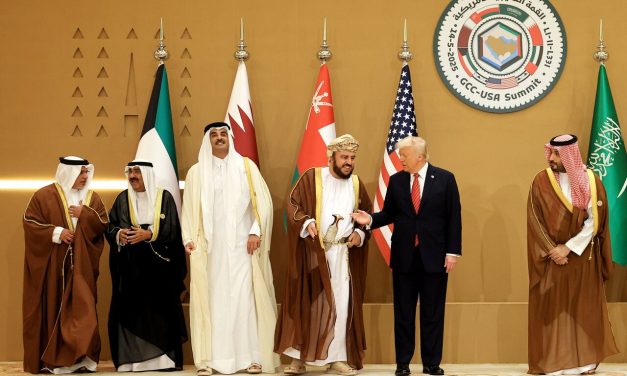
Strategic Council Online- Interview: An expert on West Asian issues stated: The developments following the Gaza war indicate that the U.S. strategy to redefine the West Asian order through the normalization of relations with the Israeli regime has reached a dead end. Therefore, the post-Gaza war developments have once again placed the U.S. security engineering strategy in West Asia at the center of analysts’ attention.

Formation of a New Regional Order Through Consolidation of Iran-Arab Relations

Formation of a New Regional Order Through Consolidation of Iran-Arab Relations

Strategic Council Online – Interview: A senior West Asia analyst stated that The Washington Post recently emphasized in a report that the attacks by the Zionist regime and the U.S. on Iran not only failed in their strategy to isolate Tehran but also altered the perspective of Persian Gulf countries regarding regional threats, identifying the Zionists as the primary destabilizing force in the region.

The strategy of the Israeli regime to get rid of the defeat in Gaza

The strategy of the Israeli regime to get rid of the defeat in Gaza

Strategic Council Online-Opinion: It has been about six months since the Israeli regime attacked the Gaza Strip in October 2023. In the initial weeks and months of the attack, many analysts believed that the Israeli regime, based on its usual practice in wars after the Palestinian intifada, would agree to a truce and end the war after inflicting multiple casualties and damages.
Mohammad Mehdi Mazaheri—University professor

Predictable Scenarios in US Elections and Iran’s Approach

Predictable Scenarios in US Elections and Iran’s Approach

Strategic Council Online- Opinion: While the Gaza crisis and Israel’s inhuman behavior in dealing with the people of the Strip cast a shadow over all international issues and has become the biggest challenge facing the world community, the type and nature of America’s relationship with the Israeli regime and the impact of its actions on the global level and in different regions have also made the upcoming US elections a key and important issue in 2024.
Dr. Mohammad Mehdi Mazaheri – university professor

Al-Aqsa Storm, Defeat of Misconceptions of Arab States about Normalization

Al-Aqsa Storm, Defeat of Misconceptions of Arab States about Normalization

Strategic Council Online – Interview: An expert on Israeli affairs, saying that the blow the Zionist regime has received from the “Al-Aqsa Storm” operation severely shattered the notion that the regime is an immutable reality that must be dealt with in the region noted: The crimes committed by the Zionist regime in Gaza will remain in the minds of the people of Islamic countries for a long time and will be a serious challenge for normalization.

Analysis of Targets, Prospects, and Strategic Consequences of Operation Al-Aqsa Storm

Analysis of Targets, Prospects, and Strategic Consequences of Operation Al-Aqsa Storm

Strategic Council Online – Opinion: Following the escalation of the Zionist regime’s racist and provocative measures against the Palestinian nation and the desecration of Al-Aqsa Mosque, Hamas and the Islamic Jihad movement carried out pre-emptive operations on the anniversary of the “Yom Kippur” war against the positions, centers, and strongholds of the Zionist regime, that has become the focus of the attention of the world.
Hamid Khoshayand – Expert on regional affairs

New East-West Corridor; First Operational Sign of Failed Abraham Accords

New East-West Corridor; First Operational Sign of Failed Abraham Accords

Strategic Council Online – Opinion: The idea of developing transportation routes to boost trade in the Persian Gulf and eliminate the need for the strategic Strait of Hormuz was formed among the Persian Gulf Cooperation Council member states some years ago. To realize the idea, the rail transport corridor along the Persian Gulf was started in 2016 by launching the Persian Gulf Cooperation Council rail network. According to the agreement signed among the member states of the Council, each of the countries was expected to build and complete their rail network independently. Finally, after completing all national lines, the Persian Gulf Cooperation Council network would be launched by connecting the national rail networks of those countries. In this way, an Arab railway network would be formed, connecting all six Persian Gulf Cooperation Council member countries through a railway line of 2177 kilometers.
Dr. Mohammad Mehdi Mazaheri – University professor

US Passivity, China’s Initiative Toward Palestine

US Passivity, China’s Initiative Toward Palestine

Strategic Council Online – Opinion: Almost eight years have passed since the last failure in establishing peace between Palestine and the Zionist regime at the United States of America initiative.
Hossein Sayyahi – Researcher of international politics

أحدث الوظائف

The Inseparability of the Lebanese Front from the Axis of Resistance

SCFR Online–Opinion: By providing an extensive network of social, healthcare, educational, and post-war reconstruction services, Hezbollah has established a strong social base for itself among Lebanon’s Shiites and Sunnis, and even beyond that, among other segments of Lebanese society, including Christians. Hezbollah has never been an external actor imposed upon Lebanon; rather, it is a phenomenon fundamentally born out of the occupation and crimes of the Zionist regime and itself influenced by popular resistance.

The Increasing Efforts of the Zionist Regime to Redefine Borders and the Regional Order and Its Consequences

SCFR Online– Opinion: Security and military developments in the region over recent months indicate that the ongoing crises and wars in Gaza, southern Lebanon, and parts of Syrian territory encompass broader dimensions of geopolitical and geostrategic transformations. In this context, the increased military presence and control of the Zionist regime over parts of the territories of these areas, along with proposals regarding the creation of buffer zones or even the expansion of security borders, have raised serious questions about the future of the regional order and its consequences for the countries of West Asia.

The Components of Iran’s Deterrence Power

SCFR Online – Opinion: At a time when regional security equations have reached a sensitive stage under the influence of Iran’s strategic confrontation with the United States and the Zionist regime, the question of the nature of Tehran’s defensive power has gained greater significance than ever before. While Washington and Tel Aviv rely on their technological superiority, the Islamic Republic of Iran has presented a model of deterrence that extends beyond the material calculations of the world’s classical militaries. This power, rooted in the connection between “the field” and “the people,” has not only altered the balance of power in recent conflicts but has also disrupted adversaries’ calculations when confronting Iran’s strategic depth.

The Persian Gulf; A Cold Battlefield Between Beijing and Washington

SCFR Online – Opinion: The competition in recent years between the United States and China encompasses various geographical regions—including the Indo-Pacific, West Asia, the Arctic and Antarctic, and Africa—as well as multiple domains such as economics and technology. Within this context, a strategic competition has also emerged in the Persian Gulf region across economic, technological, and military spheres.

Europe’s Enduring Dependence on Persian Gulf Energy

SCFR Online – Opinion: The dominant discourse in the field of European energy security over the past two decades has revolved around diversification of supply sources and the gradual reduction of dependence on fossil fuels. This narrative, which gained particular momentum after the Ukraine gas crisis in 2006 and its intensification in 2014 and 2022, was based on the assumption that Europe could free itself from the geopolitical vulnerabilities arising from dependence on specific suppliers through investment in renewable energy, imports of liquefied natural gas from diversified sources, and the establishment of new infrastructure. However, a closer analysis of energy trade data and the structure of the global oil and gas supply chain presents a different picture. Europe has not only failed to meaningfully reduce its dependence on the Persian Gulf, but in some sectors — particularly in liquefied natural gas imports — this dependence has deepened. This reality, which is often overlooked in public discourse, raises fundamental questions about the sustainability of Europe’s energy security strategies and their impact on regional power equations.

Loading

Abraham Accords

America’s Endeavor to Rebuild Domination in West Asia Under the Guise of Peace Plans

America’s Endeavor to Rebuild Domination in West Asia Under the Guise of Peace Plans

Strategic Council Online- Interview: An expert on West Asian issues stated: The developments following the Gaza war indicate that the U.S. strategy to redefine the West Asian order through the normalization of relations with the Israeli regime has reached a dead end. Therefore, the post-Gaza war developments have once again placed the U.S. security engineering strategy in West Asia at the center of analysts’ attention.

Formation of a New Regional Order Through Consolidation of Iran-Arab Relations

Formation of a New Regional Order Through Consolidation of Iran-Arab Relations

Strategic Council Online – Interview: A senior West Asia analyst stated that The Washington Post recently emphasized in a report that the attacks by the Zionist regime and the U.S. on Iran not only failed in their strategy to isolate Tehran but also altered the perspective of Persian Gulf countries regarding regional threats, identifying the Zionists as the primary destabilizing force in the region.

The strategy of the Israeli regime to get rid of the defeat in Gaza

The strategy of the Israeli regime to get rid of the defeat in Gaza

Strategic Council Online-Opinion: It has been about six months since the Israeli regime attacked the Gaza Strip in October 2023. In the initial weeks and months of the attack, many analysts believed that the Israeli regime, based on its usual practice in wars after the Palestinian intifada, would agree to a truce and end the war after inflicting multiple casualties and damages.
Mohammad Mehdi Mazaheri—University professor

Predictable Scenarios in US Elections and Iran’s Approach

Predictable Scenarios in US Elections and Iran’s Approach

Strategic Council Online- Opinion: While the Gaza crisis and Israel’s inhuman behavior in dealing with the people of the Strip cast a shadow over all international issues and has become the biggest challenge facing the world community, the type and nature of America’s relationship with the Israeli regime and the impact of its actions on the global level and in different regions have also made the upcoming US elections a key and important issue in 2024.
Dr. Mohammad Mehdi Mazaheri – university professor

Al-Aqsa Storm, Defeat of Misconceptions of Arab States about Normalization

Al-Aqsa Storm, Defeat of Misconceptions of Arab States about Normalization

Strategic Council Online – Interview: An expert on Israeli affairs, saying that the blow the Zionist regime has received from the “Al-Aqsa Storm” operation severely shattered the notion that the regime is an immutable reality that must be dealt with in the region noted: The crimes committed by the Zionist regime in Gaza will remain in the minds of the people of Islamic countries for a long time and will be a serious challenge for normalization.

Analysis of Targets, Prospects, and Strategic Consequences of Operation Al-Aqsa Storm

Analysis of Targets, Prospects, and Strategic Consequences of Operation Al-Aqsa Storm

Strategic Council Online – Opinion: Following the escalation of the Zionist regime’s racist and provocative measures against the Palestinian nation and the desecration of Al-Aqsa Mosque, Hamas and the Islamic Jihad movement carried out pre-emptive operations on the anniversary of the “Yom Kippur” war against the positions, centers, and strongholds of the Zionist regime, that has become the focus of the attention of the world.
Hamid Khoshayand – Expert on regional affairs

New East-West Corridor; First Operational Sign of Failed Abraham Accords

New East-West Corridor; First Operational Sign of Failed Abraham Accords

Strategic Council Online – Opinion: The idea of developing transportation routes to boost trade in the Persian Gulf and eliminate the need for the strategic Strait of Hormuz was formed among the Persian Gulf Cooperation Council member states some years ago. To realize the idea, the rail transport corridor along the Persian Gulf was started in 2016 by launching the Persian Gulf Cooperation Council rail network. According to the agreement signed among the member states of the Council, each of the countries was expected to build and complete their rail network independently. Finally, after completing all national lines, the Persian Gulf Cooperation Council network would be launched by connecting the national rail networks of those countries. In this way, an Arab railway network would be formed, connecting all six Persian Gulf Cooperation Council member countries through a railway line of 2177 kilometers.
Dr. Mohammad Mehdi Mazaheri – University professor

US Passivity, China’s Initiative Toward Palestine

US Passivity, China’s Initiative Toward Palestine

Strategic Council Online – Opinion: Almost eight years have passed since the last failure in establishing peace between Palestine and the Zionist regime at the United States of America initiative.
Hossein Sayyahi – Researcher of international politics

Abraham Accords

America’s Endeavor to Rebuild Domination in West Asia Under the Guise of Peace Plans

America’s Endeavor to Rebuild Domination in West Asia Under the Guise of Peace Plans

Strategic Council Online- Interview: An expert on West Asian issues stated: The developments following the Gaza war indicate that the U.S. strategy to redefine the West Asian order through the normalization of relations with the Israeli regime has reached a dead end. Therefore, the post-Gaza war developments have once again placed the U.S. security engineering strategy in West Asia at the center of analysts’ attention.

Formation of a New Regional Order Through Consolidation of Iran-Arab Relations

Formation of a New Regional Order Through Consolidation of Iran-Arab Relations

Strategic Council Online – Interview: A senior West Asia analyst stated that The Washington Post recently emphasized in a report that the attacks by the Zionist regime and the U.S. on Iran not only failed in their strategy to isolate Tehran but also altered the perspective of Persian Gulf countries regarding regional threats, identifying the Zionists as the primary destabilizing force in the region.

The strategy of the Israeli regime to get rid of the defeat in Gaza

The strategy of the Israeli regime to get rid of the defeat in Gaza

Strategic Council Online-Opinion: It has been about six months since the Israeli regime attacked the Gaza Strip in October 2023. In the initial weeks and months of the attack, many analysts believed that the Israeli regime, based on its usual practice in wars after the Palestinian intifada, would agree to a truce and end the war after inflicting multiple casualties and damages.
Mohammad Mehdi Mazaheri—University professor

Predictable Scenarios in US Elections and Iran’s Approach

Predictable Scenarios in US Elections and Iran’s Approach

Strategic Council Online- Opinion: While the Gaza crisis and Israel’s inhuman behavior in dealing with the people of the Strip cast a shadow over all international issues and has become the biggest challenge facing the world community, the type and nature of America’s relationship with the Israeli regime and the impact of its actions on the global level and in different regions have also made the upcoming US elections a key and important issue in 2024.
Dr. Mohammad Mehdi Mazaheri – university professor

Al-Aqsa Storm, Defeat of Misconceptions of Arab States about Normalization

Al-Aqsa Storm, Defeat of Misconceptions of Arab States about Normalization

Strategic Council Online – Interview: An expert on Israeli affairs, saying that the blow the Zionist regime has received from the “Al-Aqsa Storm” operation severely shattered the notion that the regime is an immutable reality that must be dealt with in the region noted: The crimes committed by the Zionist regime in Gaza will remain in the minds of the people of Islamic countries for a long time and will be a serious challenge for normalization.

Analysis of Targets, Prospects, and Strategic Consequences of Operation Al-Aqsa Storm

Analysis of Targets, Prospects, and Strategic Consequences of Operation Al-Aqsa Storm

Strategic Council Online – Opinion: Following the escalation of the Zionist regime’s racist and provocative measures against the Palestinian nation and the desecration of Al-Aqsa Mosque, Hamas and the Islamic Jihad movement carried out pre-emptive operations on the anniversary of the “Yom Kippur” war against the positions, centers, and strongholds of the Zionist regime, that has become the focus of the attention of the world.
Hamid Khoshayand – Expert on regional affairs

New East-West Corridor; First Operational Sign of Failed Abraham Accords

New East-West Corridor; First Operational Sign of Failed Abraham Accords

Strategic Council Online – Opinion: The idea of developing transportation routes to boost trade in the Persian Gulf and eliminate the need for the strategic Strait of Hormuz was formed among the Persian Gulf Cooperation Council member states some years ago. To realize the idea, the rail transport corridor along the Persian Gulf was started in 2016 by launching the Persian Gulf Cooperation Council rail network. According to the agreement signed among the member states of the Council, each of the countries was expected to build and complete their rail network independently. Finally, after completing all national lines, the Persian Gulf Cooperation Council network would be launched by connecting the national rail networks of those countries. In this way, an Arab railway network would be formed, connecting all six Persian Gulf Cooperation Council member countries through a railway line of 2177 kilometers.
Dr. Mohammad Mehdi Mazaheri – University professor

US Passivity, China’s Initiative Toward Palestine

US Passivity, China’s Initiative Toward Palestine

Strategic Council Online – Opinion: Almost eight years have passed since the last failure in establishing peace between Palestine and the Zionist regime at the United States of America initiative.
Hossein Sayyahi – Researcher of international politics

LATEST CONTENT

The Inseparability of the Lebanese Front from the Axis of Resistance

SCFR Online–Opinion: By providing an extensive network of social, healthcare, educational, and post-war reconstruction services, Hezbollah has established a strong social base for itself among Lebanon’s Shiites and Sunnis, and even beyond that, among other segments of Lebanese society, including Christians. Hezbollah has never been an external actor imposed upon Lebanon; rather, it is a phenomenon fundamentally born out of the occupation and crimes of the Zionist regime and itself influenced by popular resistance.

The Increasing Efforts of the Zionist Regime to Redefine Borders and the Regional Order and Its Consequences

SCFR Online– Opinion: Security and military developments in the region over recent months indicate that the ongoing crises and wars in Gaza, southern Lebanon, and parts of Syrian territory encompass broader dimensions of geopolitical and geostrategic transformations. In this context, the increased military presence and control of the Zionist regime over parts of the territories of these areas, along with proposals regarding the creation of buffer zones or even the expansion of security borders, have raised serious questions about the future of the regional order and its consequences for the countries of West Asia.

The Components of Iran’s Deterrence Power

SCFR Online – Opinion: At a time when regional security equations have reached a sensitive stage under the influence of Iran’s strategic confrontation with the United States and the Zionist regime, the question of the nature of Tehran’s defensive power has gained greater significance than ever before. While Washington and Tel Aviv rely on their technological superiority, the Islamic Republic of Iran has presented a model of deterrence that extends beyond the material calculations of the world’s classical militaries. This power, rooted in the connection between “the field” and “the people,” has not only altered the balance of power in recent conflicts but has also disrupted adversaries’ calculations when confronting Iran’s strategic depth.

The Persian Gulf; A Cold Battlefield Between Beijing and Washington

SCFR Online – Opinion: The competition in recent years between the United States and China encompasses various geographical regions—including the Indo-Pacific, West Asia, the Arctic and Antarctic, and Africa—as well as multiple domains such as economics and technology. Within this context, a strategic competition has also emerged in the Persian Gulf region across economic, technological, and military spheres.

Europe’s Enduring Dependence on Persian Gulf Energy

SCFR Online – Opinion: The dominant discourse in the field of European energy security over the past two decades has revolved around diversification of supply sources and the gradual reduction of dependence on fossil fuels. This narrative, which gained particular momentum after the Ukraine gas crisis in 2006 and its intensification in 2014 and 2022, was based on the assumption that Europe could free itself from the geopolitical vulnerabilities arising from dependence on specific suppliers through investment in renewable energy, imports of liquefied natural gas from diversified sources, and the establishment of new infrastructure. However, a closer analysis of energy trade data and the structure of the global oil and gas supply chain presents a different picture. Europe has not only failed to meaningfully reduce its dependence on the Persian Gulf, but in some sectors — particularly in liquefied natural gas imports — this dependence has deepened. This reality, which is often overlooked in public discourse, raises fundamental questions about the sustainability of Europe’s energy security strategies and their impact on regional power equations.

Loading

Abraham Accords

America’s Endeavor to Rebuild Domination in West Asia Under the Guise of Peace Plans

America’s Endeavor to Rebuild Domination in West Asia Under the Guise of Peace Plans

Strategic Council Online- Interview: An expert on West Asian issues stated: The developments following the Gaza war indicate that the U.S. strategy to redefine the West Asian order through the normalization of relations with the Israeli regime has reached a dead end. Therefore, the post-Gaza war developments have once again placed the U.S. security engineering strategy in West Asia at the center of analysts’ attention.

Formation of a New Regional Order Through Consolidation of Iran-Arab Relations

Formation of a New Regional Order Through Consolidation of Iran-Arab Relations

Strategic Council Online – Interview: A senior West Asia analyst stated that The Washington Post recently emphasized in a report that the attacks by the Zionist regime and the U.S. on Iran not only failed in their strategy to isolate Tehran but also altered the perspective of Persian Gulf countries regarding regional threats, identifying the Zionists as the primary destabilizing force in the region.

The strategy of the Israeli regime to get rid of the defeat in Gaza

The strategy of the Israeli regime to get rid of the defeat in Gaza

Strategic Council Online-Opinion: It has been about six months since the Israeli regime attacked the Gaza Strip in October 2023. In the initial weeks and months of the attack, many analysts believed that the Israeli regime, based on its usual practice in wars after the Palestinian intifada, would agree to a truce and end the war after inflicting multiple casualties and damages.
Mohammad Mehdi Mazaheri—University professor

Predictable Scenarios in US Elections and Iran’s Approach

Predictable Scenarios in US Elections and Iran’s Approach

Strategic Council Online- Opinion: While the Gaza crisis and Israel’s inhuman behavior in dealing with the people of the Strip cast a shadow over all international issues and has become the biggest challenge facing the world community, the type and nature of America’s relationship with the Israeli regime and the impact of its actions on the global level and in different regions have also made the upcoming US elections a key and important issue in 2024.
Dr. Mohammad Mehdi Mazaheri – university professor

Al-Aqsa Storm, Defeat of Misconceptions of Arab States about Normalization

Al-Aqsa Storm, Defeat of Misconceptions of Arab States about Normalization

Strategic Council Online – Interview: An expert on Israeli affairs, saying that the blow the Zionist regime has received from the “Al-Aqsa Storm” operation severely shattered the notion that the regime is an immutable reality that must be dealt with in the region noted: The crimes committed by the Zionist regime in Gaza will remain in the minds of the people of Islamic countries for a long time and will be a serious challenge for normalization.

Analysis of Targets, Prospects, and Strategic Consequences of Operation Al-Aqsa Storm

Analysis of Targets, Prospects, and Strategic Consequences of Operation Al-Aqsa Storm

Strategic Council Online – Opinion: Following the escalation of the Zionist regime’s racist and provocative measures against the Palestinian nation and the desecration of Al-Aqsa Mosque, Hamas and the Islamic Jihad movement carried out pre-emptive operations on the anniversary of the “Yom Kippur” war against the positions, centers, and strongholds of the Zionist regime, that has become the focus of the attention of the world.
Hamid Khoshayand – Expert on regional affairs

New East-West Corridor; First Operational Sign of Failed Abraham Accords

New East-West Corridor; First Operational Sign of Failed Abraham Accords

Strategic Council Online – Opinion: The idea of developing transportation routes to boost trade in the Persian Gulf and eliminate the need for the strategic Strait of Hormuz was formed among the Persian Gulf Cooperation Council member states some years ago. To realize the idea, the rail transport corridor along the Persian Gulf was started in 2016 by launching the Persian Gulf Cooperation Council rail network. According to the agreement signed among the member states of the Council, each of the countries was expected to build and complete their rail network independently. Finally, after completing all national lines, the Persian Gulf Cooperation Council network would be launched by connecting the national rail networks of those countries. In this way, an Arab railway network would be formed, connecting all six Persian Gulf Cooperation Council member countries through a railway line of 2177 kilometers.
Dr. Mohammad Mehdi Mazaheri – University professor

US Passivity, China’s Initiative Toward Palestine

US Passivity, China’s Initiative Toward Palestine

Strategic Council Online – Opinion: Almost eight years have passed since the last failure in establishing peace between Palestine and the Zionist regime at the United States of America initiative.
Hossein Sayyahi – Researcher of international politics

ÚLTIMAS PUBLICACIONES

The Inseparability of the Lebanese Front from the Axis of Resistance

SCFR Online–Opinion: By providing an extensive network of social, healthcare, educational, and post-war reconstruction services, Hezbollah has established a strong social base for itself among Lebanon’s Shiites and Sunnis, and even beyond that, among other segments of Lebanese society, including Christians. Hezbollah has never been an external actor imposed upon Lebanon; rather, it is a phenomenon fundamentally born out of the occupation and crimes of the Zionist regime and itself influenced by popular resistance.

The Increasing Efforts of the Zionist Regime to Redefine Borders and the Regional Order and Its Consequences

SCFR Online– Opinion: Security and military developments in the region over recent months indicate that the ongoing crises and wars in Gaza, southern Lebanon, and parts of Syrian territory encompass broader dimensions of geopolitical and geostrategic transformations. In this context, the increased military presence and control of the Zionist regime over parts of the territories of these areas, along with proposals regarding the creation of buffer zones or even the expansion of security borders, have raised serious questions about the future of the regional order and its consequences for the countries of West Asia.

The Components of Iran’s Deterrence Power

SCFR Online – Opinion: At a time when regional security equations have reached a sensitive stage under the influence of Iran’s strategic confrontation with the United States and the Zionist regime, the question of the nature of Tehran’s defensive power has gained greater significance than ever before. While Washington and Tel Aviv rely on their technological superiority, the Islamic Republic of Iran has presented a model of deterrence that extends beyond the material calculations of the world’s classical militaries. This power, rooted in the connection between “the field” and “the people,” has not only altered the balance of power in recent conflicts but has also disrupted adversaries’ calculations when confronting Iran’s strategic depth.

The Persian Gulf; A Cold Battlefield Between Beijing and Washington

SCFR Online – Opinion: The competition in recent years between the United States and China encompasses various geographical regions—including the Indo-Pacific, West Asia, the Arctic and Antarctic, and Africa—as well as multiple domains such as economics and technology. Within this context, a strategic competition has also emerged in the Persian Gulf region across economic, technological, and military spheres.

Europe’s Enduring Dependence on Persian Gulf Energy

SCFR Online – Opinion: The dominant discourse in the field of European energy security over the past two decades has revolved around diversification of supply sources and the gradual reduction of dependence on fossil fuels. This narrative, which gained particular momentum after the Ukraine gas crisis in 2006 and its intensification in 2014 and 2022, was based on the assumption that Europe could free itself from the geopolitical vulnerabilities arising from dependence on specific suppliers through investment in renewable energy, imports of liquefied natural gas from diversified sources, and the establishment of new infrastructure. However, a closer analysis of energy trade data and the structure of the global oil and gas supply chain presents a different picture. Europe has not only failed to meaningfully reduce its dependence on the Persian Gulf, but in some sectors — particularly in liquefied natural gas imports — this dependence has deepened. This reality, which is often overlooked in public discourse, raises fundamental questions about the sustainability of Europe’s energy security strategies and their impact on regional power equations.

Loading

Abraham Accords

America’s Endeavor to Rebuild Domination in West Asia Under the Guise of Peace Plans

America’s Endeavor to Rebuild Domination in West Asia Under the Guise of Peace Plans

Strategic Council Online- Interview: An expert on West Asian issues stated: The developments following the Gaza war indicate that the U.S. strategy to redefine the West Asian order through the normalization of relations with the Israeli regime has reached a dead end. Therefore, the post-Gaza war developments have once again placed the U.S. security engineering strategy in West Asia at the center of analysts’ attention.

Formation of a New Regional Order Through Consolidation of Iran-Arab Relations

Formation of a New Regional Order Through Consolidation of Iran-Arab Relations

Strategic Council Online – Interview: A senior West Asia analyst stated that The Washington Post recently emphasized in a report that the attacks by the Zionist regime and the U.S. on Iran not only failed in their strategy to isolate Tehran but also altered the perspective of Persian Gulf countries regarding regional threats, identifying the Zionists as the primary destabilizing force in the region.

The strategy of the Israeli regime to get rid of the defeat in Gaza

The strategy of the Israeli regime to get rid of the defeat in Gaza

Strategic Council Online-Opinion: It has been about six months since the Israeli regime attacked the Gaza Strip in October 2023. In the initial weeks and months of the attack, many analysts believed that the Israeli regime, based on its usual practice in wars after the Palestinian intifada, would agree to a truce and end the war after inflicting multiple casualties and damages.
Mohammad Mehdi Mazaheri—University professor

Predictable Scenarios in US Elections and Iran’s Approach

Predictable Scenarios in US Elections and Iran’s Approach

Strategic Council Online- Opinion: While the Gaza crisis and Israel’s inhuman behavior in dealing with the people of the Strip cast a shadow over all international issues and has become the biggest challenge facing the world community, the type and nature of America’s relationship with the Israeli regime and the impact of its actions on the global level and in different regions have also made the upcoming US elections a key and important issue in 2024.
Dr. Mohammad Mehdi Mazaheri – university professor

Al-Aqsa Storm, Defeat of Misconceptions of Arab States about Normalization

Al-Aqsa Storm, Defeat of Misconceptions of Arab States about Normalization

Strategic Council Online – Interview: An expert on Israeli affairs, saying that the blow the Zionist regime has received from the “Al-Aqsa Storm” operation severely shattered the notion that the regime is an immutable reality that must be dealt with in the region noted: The crimes committed by the Zionist regime in Gaza will remain in the minds of the people of Islamic countries for a long time and will be a serious challenge for normalization.

Analysis of Targets, Prospects, and Strategic Consequences of Operation Al-Aqsa Storm

Analysis of Targets, Prospects, and Strategic Consequences of Operation Al-Aqsa Storm

Strategic Council Online – Opinion: Following the escalation of the Zionist regime’s racist and provocative measures against the Palestinian nation and the desecration of Al-Aqsa Mosque, Hamas and the Islamic Jihad movement carried out pre-emptive operations on the anniversary of the “Yom Kippur” war against the positions, centers, and strongholds of the Zionist regime, that has become the focus of the attention of the world.
Hamid Khoshayand – Expert on regional affairs

New East-West Corridor; First Operational Sign of Failed Abraham Accords

New East-West Corridor; First Operational Sign of Failed Abraham Accords

Strategic Council Online – Opinion: The idea of developing transportation routes to boost trade in the Persian Gulf and eliminate the need for the strategic Strait of Hormuz was formed among the Persian Gulf Cooperation Council member states some years ago. To realize the idea, the rail transport corridor along the Persian Gulf was started in 2016 by launching the Persian Gulf Cooperation Council rail network. According to the agreement signed among the member states of the Council, each of the countries was expected to build and complete their rail network independently. Finally, after completing all national lines, the Persian Gulf Cooperation Council network would be launched by connecting the national rail networks of those countries. In this way, an Arab railway network would be formed, connecting all six Persian Gulf Cooperation Council member countries through a railway line of 2177 kilometers.
Dr. Mohammad Mehdi Mazaheri – University professor

US Passivity, China’s Initiative Toward Palestine

US Passivity, China’s Initiative Toward Palestine

Strategic Council Online – Opinion: Almost eight years have passed since the last failure in establishing peace between Palestine and the Zionist regime at the United States of America initiative.
Hossein Sayyahi – Researcher of international politics

ÚLTIMAS PUBLICACIONES

The Inseparability of the Lebanese Front from the Axis of Resistance

SCFR Online–Opinion: By providing an extensive network of social, healthcare, educational, and post-war reconstruction services, Hezbollah has established a strong social base for itself among Lebanon’s Shiites and Sunnis, and even beyond that, among other segments of Lebanese society, including Christians. Hezbollah has never been an external actor imposed upon Lebanon; rather, it is a phenomenon fundamentally born out of the occupation and crimes of the Zionist regime and itself influenced by popular resistance.

The Increasing Efforts of the Zionist Regime to Redefine Borders and the Regional Order and Its Consequences

SCFR Online– Opinion: Security and military developments in the region over recent months indicate that the ongoing crises and wars in Gaza, southern Lebanon, and parts of Syrian territory encompass broader dimensions of geopolitical and geostrategic transformations. In this context, the increased military presence and control of the Zionist regime over parts of the territories of these areas, along with proposals regarding the creation of buffer zones or even the expansion of security borders, have raised serious questions about the future of the regional order and its consequences for the countries of West Asia.

The Components of Iran’s Deterrence Power

SCFR Online – Opinion: At a time when regional security equations have reached a sensitive stage under the influence of Iran’s strategic confrontation with the United States and the Zionist regime, the question of the nature of Tehran’s defensive power has gained greater significance than ever before. While Washington and Tel Aviv rely on their technological superiority, the Islamic Republic of Iran has presented a model of deterrence that extends beyond the material calculations of the world’s classical militaries. This power, rooted in the connection between “the field” and “the people,” has not only altered the balance of power in recent conflicts but has also disrupted adversaries’ calculations when confronting Iran’s strategic depth.

The Persian Gulf; A Cold Battlefield Between Beijing and Washington

SCFR Online – Opinion: The competition in recent years between the United States and China encompasses various geographical regions—including the Indo-Pacific, West Asia, the Arctic and Antarctic, and Africa—as well as multiple domains such as economics and technology. Within this context, a strategic competition has also emerged in the Persian Gulf region across economic, technological, and military spheres.

Europe’s Enduring Dependence on Persian Gulf Energy

SCFR Online – Opinion: The dominant discourse in the field of European energy security over the past two decades has revolved around diversification of supply sources and the gradual reduction of dependence on fossil fuels. This narrative, which gained particular momentum after the Ukraine gas crisis in 2006 and its intensification in 2014 and 2022, was based on the assumption that Europe could free itself from the geopolitical vulnerabilities arising from dependence on specific suppliers through investment in renewable energy, imports of liquefied natural gas from diversified sources, and the establishment of new infrastructure. However, a closer analysis of energy trade data and the structure of the global oil and gas supply chain presents a different picture. Europe has not only failed to meaningfully reduce its dependence on the Persian Gulf, but in some sectors — particularly in liquefied natural gas imports — this dependence has deepened. This reality, which is often overlooked in public discourse, raises fundamental questions about the sustainability of Europe’s energy security strategies and their impact on regional power equations.

Loading

Abraham Accords

America’s Endeavor to Rebuild Domination in West Asia Under the Guise of Peace Plans

America’s Endeavor to Rebuild Domination in West Asia Under the Guise of Peace Plans

Strategic Council Online- Interview: An expert on West Asian issues stated: The developments following the Gaza war indicate that the U.S. strategy to redefine the West Asian order through the normalization of relations with the Israeli regime has reached a dead end. Therefore, the post-Gaza war developments have once again placed the U.S. security engineering strategy in West Asia at the center of analysts’ attention.

Formation of a New Regional Order Through Consolidation of Iran-Arab Relations

Formation of a New Regional Order Through Consolidation of Iran-Arab Relations

Strategic Council Online – Interview: A senior West Asia analyst stated that The Washington Post recently emphasized in a report that the attacks by the Zionist regime and the U.S. on Iran not only failed in their strategy to isolate Tehran but also altered the perspective of Persian Gulf countries regarding regional threats, identifying the Zionists as the primary destabilizing force in the region.

The strategy of the Israeli regime to get rid of the defeat in Gaza

The strategy of the Israeli regime to get rid of the defeat in Gaza

Strategic Council Online-Opinion: It has been about six months since the Israeli regime attacked the Gaza Strip in October 2023. In the initial weeks and months of the attack, many analysts believed that the Israeli regime, based on its usual practice in wars after the Palestinian intifada, would agree to a truce and end the war after inflicting multiple casualties and damages.
Mohammad Mehdi Mazaheri—University professor

Predictable Scenarios in US Elections and Iran’s Approach

Predictable Scenarios in US Elections and Iran’s Approach

Strategic Council Online- Opinion: While the Gaza crisis and Israel’s inhuman behavior in dealing with the people of the Strip cast a shadow over all international issues and has become the biggest challenge facing the world community, the type and nature of America’s relationship with the Israeli regime and the impact of its actions on the global level and in different regions have also made the upcoming US elections a key and important issue in 2024.
Dr. Mohammad Mehdi Mazaheri – university professor

Al-Aqsa Storm, Defeat of Misconceptions of Arab States about Normalization

Al-Aqsa Storm, Defeat of Misconceptions of Arab States about Normalization

Strategic Council Online – Interview: An expert on Israeli affairs, saying that the blow the Zionist regime has received from the “Al-Aqsa Storm” operation severely shattered the notion that the regime is an immutable reality that must be dealt with in the region noted: The crimes committed by the Zionist regime in Gaza will remain in the minds of the people of Islamic countries for a long time and will be a serious challenge for normalization.

Analysis of Targets, Prospects, and Strategic Consequences of Operation Al-Aqsa Storm

Analysis of Targets, Prospects, and Strategic Consequences of Operation Al-Aqsa Storm

Strategic Council Online – Opinion: Following the escalation of the Zionist regime’s racist and provocative measures against the Palestinian nation and the desecration of Al-Aqsa Mosque, Hamas and the Islamic Jihad movement carried out pre-emptive operations on the anniversary of the “Yom Kippur” war against the positions, centers, and strongholds of the Zionist regime, that has become the focus of the attention of the world.
Hamid Khoshayand – Expert on regional affairs

New East-West Corridor; First Operational Sign of Failed Abraham Accords

New East-West Corridor; First Operational Sign of Failed Abraham Accords

Strategic Council Online – Opinion: The idea of developing transportation routes to boost trade in the Persian Gulf and eliminate the need for the strategic Strait of Hormuz was formed among the Persian Gulf Cooperation Council member states some years ago. To realize the idea, the rail transport corridor along the Persian Gulf was started in 2016 by launching the Persian Gulf Cooperation Council rail network. According to the agreement signed among the member states of the Council, each of the countries was expected to build and complete their rail network independently. Finally, after completing all national lines, the Persian Gulf Cooperation Council network would be launched by connecting the national rail networks of those countries. In this way, an Arab railway network would be formed, connecting all six Persian Gulf Cooperation Council member countries through a railway line of 2177 kilometers.
Dr. Mohammad Mehdi Mazaheri – University professor

US Passivity, China’s Initiative Toward Palestine

US Passivity, China’s Initiative Toward Palestine

Strategic Council Online – Opinion: Almost eight years have passed since the last failure in establishing peace between Palestine and the Zionist regime at the United States of America initiative.
Hossein Sayyahi – Researcher of international politics

ÚLTIMAS PUBLICACIONES

The Inseparability of the Lebanese Front from the Axis of Resistance

SCFR Online–Opinion: By providing an extensive network of social, healthcare, educational, and post-war reconstruction services, Hezbollah has established a strong social base for itself among Lebanon’s Shiites and Sunnis, and even beyond that, among other segments of Lebanese society, including Christians. Hezbollah has never been an external actor imposed upon Lebanon; rather, it is a phenomenon fundamentally born out of the occupation and crimes of the Zionist regime and itself influenced by popular resistance.

The Increasing Efforts of the Zionist Regime to Redefine Borders and the Regional Order and Its Consequences

SCFR Online– Opinion: Security and military developments in the region over recent months indicate that the ongoing crises and wars in Gaza, southern Lebanon, and parts of Syrian territory encompass broader dimensions of geopolitical and geostrategic transformations. In this context, the increased military presence and control of the Zionist regime over parts of the territories of these areas, along with proposals regarding the creation of buffer zones or even the expansion of security borders, have raised serious questions about the future of the regional order and its consequences for the countries of West Asia.

The Components of Iran’s Deterrence Power

SCFR Online – Opinion: At a time when regional security equations have reached a sensitive stage under the influence of Iran’s strategic confrontation with the United States and the Zionist regime, the question of the nature of Tehran’s defensive power has gained greater significance than ever before. While Washington and Tel Aviv rely on their technological superiority, the Islamic Republic of Iran has presented a model of deterrence that extends beyond the material calculations of the world’s classical militaries. This power, rooted in the connection between “the field” and “the people,” has not only altered the balance of power in recent conflicts but has also disrupted adversaries’ calculations when confronting Iran’s strategic depth.

The Persian Gulf; A Cold Battlefield Between Beijing and Washington

SCFR Online – Opinion: The competition in recent years between the United States and China encompasses various geographical regions—including the Indo-Pacific, West Asia, the Arctic and Antarctic, and Africa—as well as multiple domains such as economics and technology. Within this context, a strategic competition has also emerged in the Persian Gulf region across economic, technological, and military spheres.

Europe’s Enduring Dependence on Persian Gulf Energy

SCFR Online – Opinion: The dominant discourse in the field of European energy security over the past two decades has revolved around diversification of supply sources and the gradual reduction of dependence on fossil fuels. This narrative, which gained particular momentum after the Ukraine gas crisis in 2006 and its intensification in 2014 and 2022, was based on the assumption that Europe could free itself from the geopolitical vulnerabilities arising from dependence on specific suppliers through investment in renewable energy, imports of liquefied natural gas from diversified sources, and the establishment of new infrastructure. However, a closer analysis of energy trade data and the structure of the global oil and gas supply chain presents a different picture. Europe has not only failed to meaningfully reduce its dependence on the Persian Gulf, but in some sectors — particularly in liquefied natural gas imports — this dependence has deepened. This reality, which is often overlooked in public discourse, raises fundamental questions about the sustainability of Europe’s energy security strategies and their impact on regional power equations.

Loading

Abraham Accords

America’s Endeavor to Rebuild Domination in West Asia Under the Guise of Peace Plans

America’s Endeavor to Rebuild Domination in West Asia Under the Guise of Peace Plans

Strategic Council Online- Interview: An expert on West Asian issues stated: The developments following the Gaza war indicate that the U.S. strategy to redefine the West Asian order through the normalization of relations with the Israeli regime has reached a dead end. Therefore, the post-Gaza war developments have once again placed the U.S. security engineering strategy in West Asia at the center of analysts’ attention.

Formation of a New Regional Order Through Consolidation of Iran-Arab Relations

Formation of a New Regional Order Through Consolidation of Iran-Arab Relations

Strategic Council Online – Interview: A senior West Asia analyst stated that The Washington Post recently emphasized in a report that the attacks by the Zionist regime and the U.S. on Iran not only failed in their strategy to isolate Tehran but also altered the perspective of Persian Gulf countries regarding regional threats, identifying the Zionists as the primary destabilizing force in the region.

The strategy of the Israeli regime to get rid of the defeat in Gaza

The strategy of the Israeli regime to get rid of the defeat in Gaza

Strategic Council Online-Opinion: It has been about six months since the Israeli regime attacked the Gaza Strip in October 2023. In the initial weeks and months of the attack, many analysts believed that the Israeli regime, based on its usual practice in wars after the Palestinian intifada, would agree to a truce and end the war after inflicting multiple casualties and damages.
Mohammad Mehdi Mazaheri—University professor

Predictable Scenarios in US Elections and Iran’s Approach

Predictable Scenarios in US Elections and Iran’s Approach

Strategic Council Online- Opinion: While the Gaza crisis and Israel’s inhuman behavior in dealing with the people of the Strip cast a shadow over all international issues and has become the biggest challenge facing the world community, the type and nature of America’s relationship with the Israeli regime and the impact of its actions on the global level and in different regions have also made the upcoming US elections a key and important issue in 2024.
Dr. Mohammad Mehdi Mazaheri – university professor

Al-Aqsa Storm, Defeat of Misconceptions of Arab States about Normalization

Al-Aqsa Storm, Defeat of Misconceptions of Arab States about Normalization

Strategic Council Online – Interview: An expert on Israeli affairs, saying that the blow the Zionist regime has received from the “Al-Aqsa Storm” operation severely shattered the notion that the regime is an immutable reality that must be dealt with in the region noted: The crimes committed by the Zionist regime in Gaza will remain in the minds of the people of Islamic countries for a long time and will be a serious challenge for normalization.

Analysis of Targets, Prospects, and Strategic Consequences of Operation Al-Aqsa Storm

Analysis of Targets, Prospects, and Strategic Consequences of Operation Al-Aqsa Storm

Strategic Council Online – Opinion: Following the escalation of the Zionist regime’s racist and provocative measures against the Palestinian nation and the desecration of Al-Aqsa Mosque, Hamas and the Islamic Jihad movement carried out pre-emptive operations on the anniversary of the “Yom Kippur” war against the positions, centers, and strongholds of the Zionist regime, that has become the focus of the attention of the world.
Hamid Khoshayand – Expert on regional affairs

New East-West Corridor; First Operational Sign of Failed Abraham Accords

New East-West Corridor; First Operational Sign of Failed Abraham Accords

Strategic Council Online – Opinion: The idea of developing transportation routes to boost trade in the Persian Gulf and eliminate the need for the strategic Strait of Hormuz was formed among the Persian Gulf Cooperation Council member states some years ago. To realize the idea, the rail transport corridor along the Persian Gulf was started in 2016 by launching the Persian Gulf Cooperation Council rail network. According to the agreement signed among the member states of the Council, each of the countries was expected to build and complete their rail network independently. Finally, after completing all national lines, the Persian Gulf Cooperation Council network would be launched by connecting the national rail networks of those countries. In this way, an Arab railway network would be formed, connecting all six Persian Gulf Cooperation Council member countries through a railway line of 2177 kilometers.
Dr. Mohammad Mehdi Mazaheri – University professor

US Passivity, China’s Initiative Toward Palestine

US Passivity, China’s Initiative Toward Palestine

Strategic Council Online – Opinion: Almost eight years have passed since the last failure in establishing peace between Palestine and the Zionist regime at the United States of America initiative.
Hossein Sayyahi – Researcher of international politics

ÚLTIMAS PUBLICACIONES

The Inseparability of the Lebanese Front from the Axis of Resistance

SCFR Online–Opinion: By providing an extensive network of social, healthcare, educational, and post-war reconstruction services, Hezbollah has established a strong social base for itself among Lebanon’s Shiites and Sunnis, and even beyond that, among other segments of Lebanese society, including Christians. Hezbollah has never been an external actor imposed upon Lebanon; rather, it is a phenomenon fundamentally born out of the occupation and crimes of the Zionist regime and itself influenced by popular resistance.

The Increasing Efforts of the Zionist Regime to Redefine Borders and the Regional Order and Its Consequences

SCFR Online– Opinion: Security and military developments in the region over recent months indicate that the ongoing crises and wars in Gaza, southern Lebanon, and parts of Syrian territory encompass broader dimensions of geopolitical and geostrategic transformations. In this context, the increased military presence and control of the Zionist regime over parts of the territories of these areas, along with proposals regarding the creation of buffer zones or even the expansion of security borders, have raised serious questions about the future of the regional order and its consequences for the countries of West Asia.

The Components of Iran’s Deterrence Power

SCFR Online – Opinion: At a time when regional security equations have reached a sensitive stage under the influence of Iran’s strategic confrontation with the United States and the Zionist regime, the question of the nature of Tehran’s defensive power has gained greater significance than ever before. While Washington and Tel Aviv rely on their technological superiority, the Islamic Republic of Iran has presented a model of deterrence that extends beyond the material calculations of the world’s classical militaries. This power, rooted in the connection between “the field” and “the people,” has not only altered the balance of power in recent conflicts but has also disrupted adversaries’ calculations when confronting Iran’s strategic depth.

The Persian Gulf; A Cold Battlefield Between Beijing and Washington

SCFR Online – Opinion: The competition in recent years between the United States and China encompasses various geographical regions—including the Indo-Pacific, West Asia, the Arctic and Antarctic, and Africa—as well as multiple domains such as economics and technology. Within this context, a strategic competition has also emerged in the Persian Gulf region across economic, technological, and military spheres.

Europe’s Enduring Dependence on Persian Gulf Energy

SCFR Online – Opinion: The dominant discourse in the field of European energy security over the past two decades has revolved around diversification of supply sources and the gradual reduction of dependence on fossil fuels. This narrative, which gained particular momentum after the Ukraine gas crisis in 2006 and its intensification in 2014 and 2022, was based on the assumption that Europe could free itself from the geopolitical vulnerabilities arising from dependence on specific suppliers through investment in renewable energy, imports of liquefied natural gas from diversified sources, and the establishment of new infrastructure. However, a closer analysis of energy trade data and the structure of the global oil and gas supply chain presents a different picture. Europe has not only failed to meaningfully reduce its dependence on the Persian Gulf, but in some sectors — particularly in liquefied natural gas imports — this dependence has deepened. This reality, which is often overlooked in public discourse, raises fundamental questions about the sustainability of Europe’s energy security strategies and their impact on regional power equations.

Loading