Necessity of Prioritizing Water Diplomacy

Strategic Council Online - Interview: A member of the Iranian Association on Environmental Risks and Sustainable Development, saying that Iran should define the environment and water as the main priority, added: Solving the problem of water shortage in the country should be done by using a combination of different methods, in such a way that with global interactions and paying attention to water diplomacy, achievements of other countries could be used.

Mohammad Reza Mahboubfar, in an interview with the website of the Strategic Council of Foreign Relations, noted that the amount of rainfall and surface water resources of Iran are not at all comparable to the Middle East countries and that there is a large amount of water available, saying: It is true that it is said Iran is in the dry and desert part of the Planet Earth and rainfall has decreased, but the situation in countries in the Middle East is much worse. What has created a problem in Iran is the lack of management of water resources.

Saying that there are 12 times the country’s water resources in Iran, he added: The total water that can be extracted in Saudi Arabia in one year is one billion cubic meters, but Iran has 100 billion cubic meters of extractable water. Saudi Arabia uses the experiences of different countries in the world, from Europe to the US and Asian countries such as India, South Korea, and Japan, to overcome the water problem. This country has about 30 million people and needs 3 billion cubic meters of water to provide drinking water.

This expert and researcher of environmental crises, referring to the experience of the countries in the region to manage water resources continued: Saudi Arabia has achieved the technology of producing water from the sea and technologies that minimize the wastage of water in agriculture. In addition, in the situation where we are witnessing Turkey’s water war against its neighbors, in addition to Syria, Iraq, and Iran, Saudi Arabia and Kuwait are also exposed to that war. They are trying to appear as a competitor to Turkey in regional and global issues and solve the water challenge by referring to regional diplomacy and their common views.

Mahboubfar said: The volume of economic, monetary, and financial exchanges between countries is effective in those consultations, and because of this, countries give privilege to each other to solve territorial problems. Middle Eastern countries have managed the water crisis with some policies. We see that Saudi Arabia, Egypt, Kuwait, and the UAE since five years ago have stopped the production of crops, agriculture, and horticulture, which are more dependent on water. Even the UAE and Saudi Arabia are farming in their deserts to prevent desertification.

While explaining the policies of saving water, electricity, and gas resources in industries that have attracted the attention of the Middle Eastern countries, he added: Increasing productivity, recycling water, and producing electricity with seawater with the latest technology in the world have become very important in those countries. Recently, Saudi Arabia invited American, European, and even Korean and Chinese investors for the optimal use of water in its industries and agricultural lands.

This expert on environmental issues stated that the phenomenon of climate change is a global issue and has affected countries in the Middle East to a certain extent, adding: The increase in population and urban development must bring water consumption management. Some countries in the Middle East have signed memorandums of understanding and cooperation documents with the world and their neighbors in the field of water diplomacy and have come to the conclusion that water tension and environmental issues are the first problems of their countries.

Referring to Iran’s relations with the countries of Central Asia and Iran’s active diplomacy in that region and efforts for regional convergence, Mahboubfar said: Water diplomacy should also be considered in those relations. Unfortunately, the water tension in the country is not recognized, and environmental and water issues are less discussed in regional discussions.

Emphasizing that Iran can undertake water diplomacy with a focus on the environment and water resources and be major water and environmental player in the Middle East, the member of the Iranian Association on Land Development continued: Iran can hold talks with Russia in the field of water technology and production, as other countries follow such a program. On the other hand, Germany, the largest trading partner of Iran in the European Union, can also help Iran in regional diplomacy and in solving the challenges that the Islamic Republic of Iran has had with Turkey in terms of climate and dust.

Emphasizing that the thought of drought and wet years should be abandoned and it should be accepted that in all the countries of the world, in some years we have up to 30 percent lack of rainfall and in some years up to 30 percent increase in rainfall, he said: The governance and wise management of water in the country should be created and the current situation should not be seen as a temporary issue and it should be accepted that water governance in Iran has managerial and structural weaknesses.

Mahboubfar stated that about 700 containers of water are exported to Turkey daily due to the export of agricultural and horticultural products, and reminded: Based on the evaluations, only 50 times the water of Karaj Dam is wasted in Iran’s agriculture. This type of agriculture is obsolete and Iran should use new technologies in water efficiency in interaction and consultation with other countries. In addition, by focusing on relations with Central Asian countries, we should take advantage of the possibility of extraterritorial cultivation and direct our farmers to other countries to do extraterritorial cultivation.

The expert and researcher of environment and sustainable development, while emphasizing the necessity of including issues related to the cultivation of agricultural products, environmental issues, and water resources in cooperation documents with countries, added that the achievements of other countries should be used with global interactions. Even European countries have concerns about drought and measures have been taken in this regard.

Referring to the use of water desalination by some countries in the Middle East, Mahboubfar explained: The poles of using water desalination technology in the region are the UAE and Saudi Arabia, but Iran cannot focus on just one method. Taking advantage of the latest water desalination technology that produces less salt and wastewater and can desalinate water for some provinces by the sea can be of interest to Iran, but it should definitely not be the only option. Solving the problem of water shortage in the country should be done by using a combination of different methods.

He emphasized that Iran should define its first priority as environment and water, and we should note that future wars are over water and food resources. But unfortunately, despite the crises, we see new water takings from rivers that are in trouble. These show that we have not yet accepted that our country has an environmental problem.
0 Comments

Submit a Comment

Your email address will not be published. Required fields are marked *

LATEST CONTENT

Examining Political Developments Related to the Ukraine War

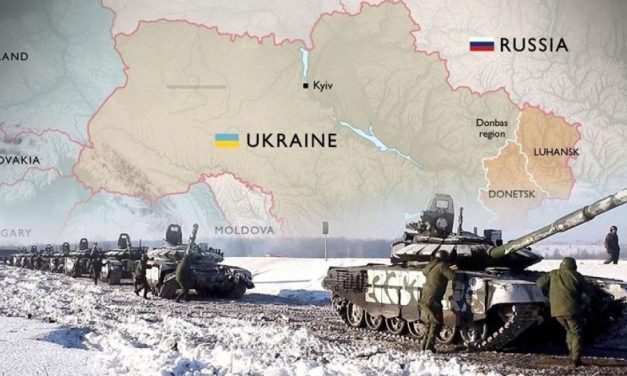
Strategic Council Online – Interview: An international affairs analyst stated: Today, Ukraine is facing a set of structural corruption, intra-European divisions, a shift in America’s approach, and a legitimacy crisis for Zelenskyy, which has propelled the course of the war and the future of the European Union and NATO into an entirely new phase.

Dr. Kharrazi Meets Delegation from Chinese Think Tanks: Emphasizes the Need for an Action Plan to Implement the Comprehensive Iran–China Cooperation Document

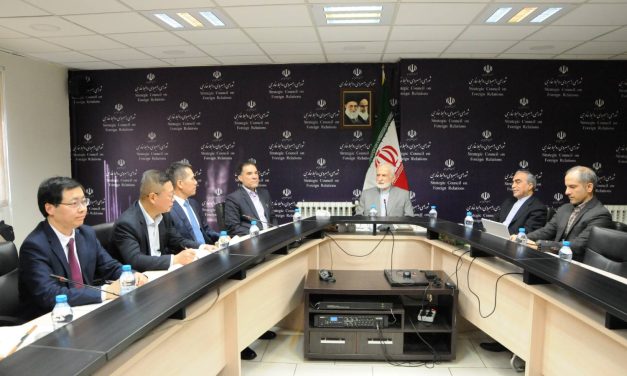
Strategic Council Online: The President of the Strategic Council on Foreign Relations stated, “Despite the signing of the 25-year Comprehensive Cooperation Agreement between Iran and China, a long path remains toward its full implementation. One key point both countries must observe is to move away from a project-based approach and instead adopt a program-oriented relationship by formulating a concrete action plan. This plan should be grounded in Iran’s national spatial planning framework and aligned with the mutual priorities of both nations as outlined in the 25-year Comprehensive Cooperation Document.”

An Analysis of the New U.S. National Security Strategy Document

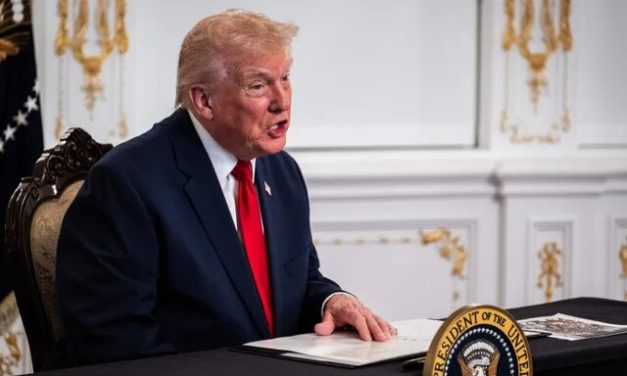
Strategic Council Online – Opinion: The new U.S. National Security Strategy document, which emphasizes the slogan “America First,” indicates that Washington has moved away from many previous patterns and shifted its focus from external interventions to the preservation of domestic security and the preservation of the Western Hemisphere. This document redefines threats, priorities, and America’s global role.

Artificial Intelligence and the Intensification of Global Inequality

Strategic Council Online – Opinion: Although other revolutions have occurred between the Industrial Revolution and the artificial intelligence revolution, especially the ICT (Information and Communications Technology) revolution, and humanity has made remarkable progress along this path, in terms of fundamental transformations in the mode of production and social relations, it can be said that the transformations of artificial intelligence and the scope of its effects are perhaps similar to the Industrial Revolution but on a much larger scale. It is, in fact, a new revolution, much more profound and complex than the Industrial Revolution.

Reasons for Trump’s Attempt to Remove South Africa from the Upcoming G20 Summit

Strategic Council Online – Interview: Iran’s former ambassador to South Africa stated: “Trump’s decision to remove South Africa from the upcoming G20 summit is an irrational, reactionary decision lacking a legal basis. On one hand, it stems from Trump’s contemptuous and narcissistic outlook. On the other hand, it is a response to Pretoria’s prominent role in pursuing the legal case against the Israeli regime at the International Court of Justice.”

An Analysis of Iran’s Missile Capability

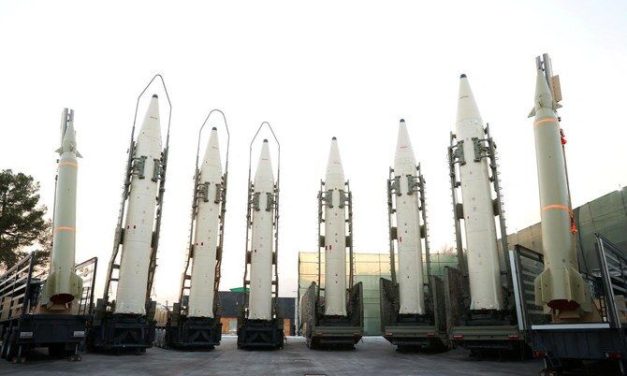
Strategic Council Online – Interview: A strategic affairs analyst said: Iran’s missile doctrine is not only part of its deterrent capability but also part of the security identity of the Islamic Republic of Iran and should not be weakened.

Japan-China Tensions Over Taiwan

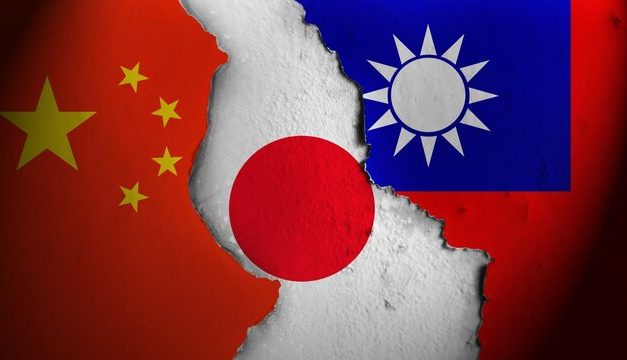
Strategic Council Online – Interview: An international affairs expert said that U.S. President Donald Trump, in a phone call this week with Sanae Takaichi, asked her not to further escalate disputes with China. Earlier this month, Takaichi created a rare tension with Beijing by stating that “a potential Chinese attack on Taiwan could lead to military action by Japan,” remarks that drew a sharp reaction from China. Beijing demanded that she retract these statements, but the Japanese Prime Minister has not done so thus far, and Tokyo has only emphasized that its policy regarding Taiwan has not changed.

A Look at bin Salman’s Recent Trip to America

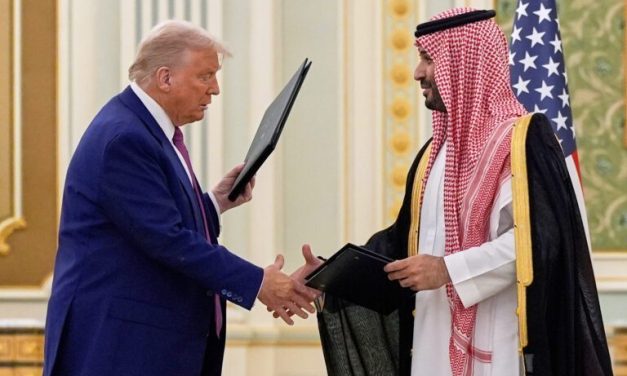
Strategic Council Online – Opinion: The recent trip of the Saudi Crown Prince to America was a targeted effort to solidify the strategic partnership with Washington, reduce political uncertainties, and strengthen Riyadh’s political role-playing.

Loading

Últimas publicaciones

Examining Political Developments Related to the Ukraine War

Strategic Council Online – Interview: An international affairs analyst stated: Today, Ukraine is facing a set of structural corruption, intra-European divisions, a shift in America’s approach, and a legitimacy crisis for Zelenskyy, which has propelled the course of the war and the future of the European Union and NATO into an entirely new phase.

Dr. Kharrazi Meets Delegation from Chinese Think Tanks: Emphasizes the Need for an Action Plan to Implement the Comprehensive Iran–China Cooperation Document

Strategic Council Online: The President of the Strategic Council on Foreign Relations stated, “Despite the signing of the 25-year Comprehensive Cooperation Agreement between Iran and China, a long path remains toward its full implementation. One key point both countries must observe is to move away from a project-based approach and instead adopt a program-oriented relationship by formulating a concrete action plan. This plan should be grounded in Iran’s national spatial planning framework and aligned with the mutual priorities of both nations as outlined in the 25-year Comprehensive Cooperation Document.”

An Analysis of the New U.S. National Security Strategy Document

Strategic Council Online – Opinion: The new U.S. National Security Strategy document, which emphasizes the slogan “America First,” indicates that Washington has moved away from many previous patterns and shifted its focus from external interventions to the preservation of domestic security and the preservation of the Western Hemisphere. This document redefines threats, priorities, and America’s global role.

Artificial Intelligence and the Intensification of Global Inequality

Strategic Council Online – Opinion: Although other revolutions have occurred between the Industrial Revolution and the artificial intelligence revolution, especially the ICT (Information and Communications Technology) revolution, and humanity has made remarkable progress along this path, in terms of fundamental transformations in the mode of production and social relations, it can be said that the transformations of artificial intelligence and the scope of its effects are perhaps similar to the Industrial Revolution but on a much larger scale. It is, in fact, a new revolution, much more profound and complex than the Industrial Revolution.

Reasons for Trump’s Attempt to Remove South Africa from the Upcoming G20 Summit

Strategic Council Online – Interview: Iran’s former ambassador to South Africa stated: “Trump’s decision to remove South Africa from the upcoming G20 summit is an irrational, reactionary decision lacking a legal basis. On one hand, it stems from Trump’s contemptuous and narcissistic outlook. On the other hand, it is a response to Pretoria’s prominent role in pursuing the legal case against the Israeli regime at the International Court of Justice.”

An Analysis of Iran’s Missile Capability

Strategic Council Online – Interview: A strategic affairs analyst said: Iran’s missile doctrine is not only part of its deterrent capability but also part of the security identity of the Islamic Republic of Iran and should not be weakened.

Japan-China Tensions Over Taiwan

Strategic Council Online – Interview: An international affairs expert said that U.S. President Donald Trump, in a phone call this week with Sanae Takaichi, asked her not to further escalate disputes with China. Earlier this month, Takaichi created a rare tension with Beijing by stating that “a potential Chinese attack on Taiwan could lead to military action by Japan,” remarks that drew a sharp reaction from China. Beijing demanded that she retract these statements, but the Japanese Prime Minister has not done so thus far, and Tokyo has only emphasized that its policy regarding Taiwan has not changed.

A Look at bin Salman’s Recent Trip to America

Strategic Council Online – Opinion: The recent trip of the Saudi Crown Prince to America was a targeted effort to solidify the strategic partnership with Washington, reduce political uncertainties, and strengthen Riyadh’s political role-playing.

Loading

DERNIER CONTENU

Examining Political Developments Related to the Ukraine War

Strategic Council Online – Interview: An international affairs analyst stated: Today, Ukraine is facing a set of structural corruption, intra-European divisions, a shift in America’s approach, and a legitimacy crisis for Zelenskyy, which has propelled the course of the war and the future of the European Union and NATO into an entirely new phase.

Dr. Kharrazi Meets Delegation from Chinese Think Tanks: Emphasizes the Need for an Action Plan to Implement the Comprehensive Iran–China Cooperation Document

Strategic Council Online: The President of the Strategic Council on Foreign Relations stated, “Despite the signing of the 25-year Comprehensive Cooperation Agreement between Iran and China, a long path remains toward its full implementation. One key point both countries must observe is to move away from a project-based approach and instead adopt a program-oriented relationship by formulating a concrete action plan. This plan should be grounded in Iran’s national spatial planning framework and aligned with the mutual priorities of both nations as outlined in the 25-year Comprehensive Cooperation Document.”

An Analysis of the New U.S. National Security Strategy Document

Strategic Council Online – Opinion: The new U.S. National Security Strategy document, which emphasizes the slogan “America First,” indicates that Washington has moved away from many previous patterns and shifted its focus from external interventions to the preservation of domestic security and the preservation of the Western Hemisphere. This document redefines threats, priorities, and America’s global role.

Artificial Intelligence and the Intensification of Global Inequality

Strategic Council Online – Opinion: Although other revolutions have occurred between the Industrial Revolution and the artificial intelligence revolution, especially the ICT (Information and Communications Technology) revolution, and humanity has made remarkable progress along this path, in terms of fundamental transformations in the mode of production and social relations, it can be said that the transformations of artificial intelligence and the scope of its effects are perhaps similar to the Industrial Revolution but on a much larger scale. It is, in fact, a new revolution, much more profound and complex than the Industrial Revolution.

Reasons for Trump’s Attempt to Remove South Africa from the Upcoming G20 Summit

Strategic Council Online – Interview: Iran’s former ambassador to South Africa stated: “Trump’s decision to remove South Africa from the upcoming G20 summit is an irrational, reactionary decision lacking a legal basis. On one hand, it stems from Trump’s contemptuous and narcissistic outlook. On the other hand, it is a response to Pretoria’s prominent role in pursuing the legal case against the Israeli regime at the International Court of Justice.”

An Analysis of Iran’s Missile Capability

Strategic Council Online – Interview: A strategic affairs analyst said: Iran’s missile doctrine is not only part of its deterrent capability but also part of the security identity of the Islamic Republic of Iran and should not be weakened.

Japan-China Tensions Over Taiwan

Strategic Council Online – Interview: An international affairs expert said that U.S. President Donald Trump, in a phone call this week with Sanae Takaichi, asked her not to further escalate disputes with China. Earlier this month, Takaichi created a rare tension with Beijing by stating that “a potential Chinese attack on Taiwan could lead to military action by Japan,” remarks that drew a sharp reaction from China. Beijing demanded that she retract these statements, but the Japanese Prime Minister has not done so thus far, and Tokyo has only emphasized that its policy regarding Taiwan has not changed.

A Look at bin Salman’s Recent Trip to America

Strategic Council Online – Opinion: The recent trip of the Saudi Crown Prince to America was a targeted effort to solidify the strategic partnership with Washington, reduce political uncertainties, and strengthen Riyadh’s political role-playing.

Loading