
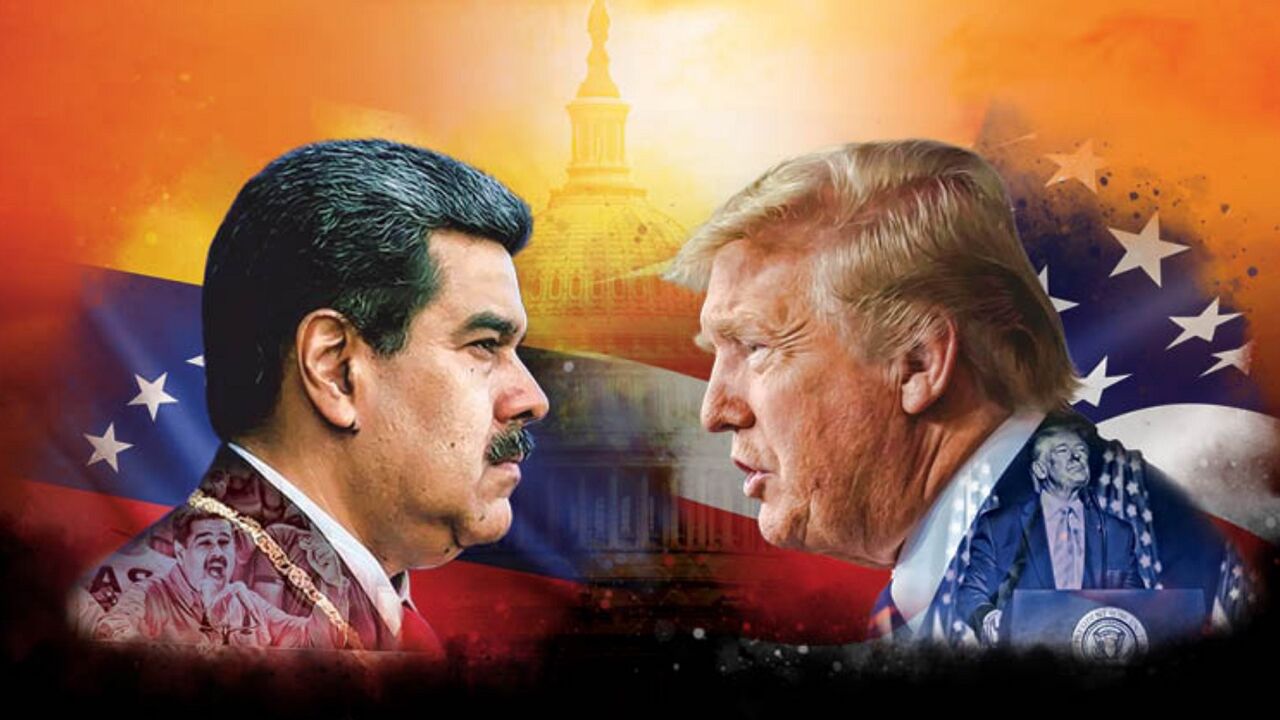
Hadi Alami Fariman, in an interview with the website of the Strategic Council on Foreign Relations, said: “While Donald Trump’s second administration has entered the global arena with the slogan of restoring ‘American power,’ evidence indicates that one of the focal points of its foreign policy is Latin America, especially countries like Venezuela, Cuba, and Nicaragua.” This university professor added: “What we are witnessing regarding Venezuela today is the reconstruction of the same multi-faceted pressure model that was previously applied against Iran.”
The Latin America expert emphasized: “Marco Rubio, the U.S. Secretary of State, who himself is of Latin origin, is considered the main architect of this policy. With his mastery of the political and social structure of Latin American countries, he is designing a strategy whose ultimate goal is to contain governments in the Western Hemisphere that are independent and not aligned with Washington.” He continued: “Trump’s policies against Caracas have obvious similarities with his anti-Iran policies, which range from imposing escalating sanctions and psychological warfare to efforts at destabilization through support for the opposition and media pressure.”
Alami Fariman believes: “Just as Trump, during his first presidential term, pursued the ‘maximum pressure’ policy by withdrawing from the nuclear agreement and intensifying unilateral sanctions against Iran, he is now taking the same path regarding Venezuela, albeit under a different guise. In both cases, the main axis of U.S. policy is ‘compelling’ independent governments to accept Washington’s demands; without showing any adherence to the logic of international law or the UN Charter.” This professor of international relations added: “Washington is trying to tighten the pressure loop around Caracas through a combination of economic, intelligence, and cyber tools. These pressures not only include oil and gas exports but also cover areas such as financial transactions, pharmaceuticals, and even humanitarian aid.” According to him: “Trump seeks to turn Venezuela into a model of economic collapse so that other independent governments in the region, including Bolivia, Cuba, and Nicaragua, do not follow a similar path.”
Alami Fariman stated: “Marco Rubio, using his influence in Congress and Spanish-language media, tries to justify Washington’s policies under the cover of supporting ‘democracy and human rights,’ while the real goal is to ensure American control over Venezuela’s vast oil, gold, and rare earth resources.” He said: “Wherever U.S. energy and geo-economic interests are threatened, Washington uses the discourse of freedom and democracy as a pretext for intervention. Venezuela today plays the same role in Latin America that Iran plays in West Asia; this country is a symbol of resistance against the desired American order.”
Venezuela on the Path of Smart Resistance; Reliance on South-South Diplomacy
This university lecturer continued: “In the face of these multi-layered pressures, Nicolas Maduro and the Venezuelan government have adopted a strategy centered on ‘smart resistance’.” Alami Fariman emphasized: “Maduro, aware of the experiences of countries like Iran, Cuba, and Russia, is trying to separate Venezuela’s economy from dependence on the dollar and the Western financial system and find a path for survival and development through cooperation with emerging powers.”
He stated: “Caracas has expanded its cooperation with China, Russia, and BRICS member countries in recent months and is trying to circumvent U.S. banking sanctions by using bilateral financial agreements and local currencies. In this regard, Venezuela has recently announced that it is seeking to formally join the ‘BRICS Pay’ payment mechanism to reduce its dependence on SWIFT and American financial networks.” Alami Fariman explained: “Venezuela’s cooperation with non-Western powers is not only a tool for economic resistance but could also form the foundation of a new economic order in Latin America. If this country can expand successful experiences such as energy bartering for goods, trading in national currencies, and joint investments with China and Russia, the structure of U.S. sanctions will gradually become ineffective.”
The Latin American affairs analyst added: “Washington is deeply concerned about this trend, because the expansion of economic cooperation between Caracas, Havana, and Beijing means a reduction of U.S. influence in its ‘traditional backyard.’ For this reason, in Trump’s second administration, the State Department, led by Marco Rubio, has been tasked with using political, media, and even cyber tools to prevent the synergy of these countries.”
Alami Fariman concluded in the end: “The current confrontation between Venezuela and the United States is no longer merely a bilateral dispute; rather, it is part of a broader competition between the old U.S.-centric order and the emerging multipolar order.” He emphasized: “Maduro, in this complex game, is trying to use the experience of countries like Iran and move from ‘sanctions’ to ‘constructive resistance’.” According to this professor of international relations, “The future of Venezuela depends on this country’s ability to link the policy of resistance with South-South economic diplomacy; a path that, if traversed wisely, could not only bring Venezuela but all of Latin America into a new stage of political and economic independence.”


0 Comments