Strategic Roots, Consequences of Protests in Occupied Territories

2023/01/27 | Note, Politics, top news

Strategic Council Online - Opinion: Simultaneously with the formation of the most extreme government of the Zionist regime in the past 75 years, the Occupied Territories have entered a new stage of tense internal conditions, and as a result, protests are expected to spread and cover various areas. Hamid Khoshayand - Expert on regional affairs

Recently, more than 100,000 people in Tel Aviv, Haifa and occupied Quds protested against the “judicial reforms” that reduce the powers of the Supreme Court, and started massive demonstrations and demanded Netanyahu’s removal from power. All parties and movements opposed to Netanyahu and members of the cabinet were also present in the demonstration.

For the first time, more than 300 American rabbis, who were previously defenders of the Israeli regime, have cut off all their contacts with the members of the new cabinet; this issue can smooth the process of turning the American Jewish community away from the Israeli regime.

Herzog, the head of the Zionist regime, issued a statement warning that the internal conflict will tear Israel and its nation into pieces.

Unlike the previous periods, the current protests have a “discursive” and “intra-structural” nature; this time, the two movements of the extreme right and the secularists have lined up against each other. Continuation of such a situation has placed a dangerous prospect in front of the Zionist regime.

Reasons for critical status of Zionist regime

Regarding the reason for the challenging situation that has arisen in the Zionist regime, in short, two categories of “obvious and apparent” and “hidden and real” factors can be identified:

Netanyahu’s return to power and the formation of the “hardest cabinet in the history of the Zionist regime” are among the apparent factors of the recent events in the occupied territories.

Netanyahu, who will do anything to stay in power, seeks to pass laws and reforms to change the judicial system, annex the West Bank, expand Zionist settlements, and allow the military to carry out terrorist operations against Palestinians.

But the real causes of the current protests should be sought in a wider scope; reasons that their political, social, etc. fields have been formed before and in previous periods and in recent years have manifested and continue to show themselves in the form of the emergence of weak, unsuccessful, fascist cabinets and the rise of elements that know nothing but terror and violence.

Today, the re-appearance of a warmongering element like Netanyahu in power in the Zionist regime, instead of causing fear and caution to the enemies of this regime, has led to the spread of the fear of “civil war” and “collapse” among the citizens of this regime.

If the presence of politicians like Netanyahu in previous decades was considered as the strength for the Zionist regime and its durability, today, on the contrary, it has become the “weakness” and “Achilles heel” of the regime’s political existence.

It is not without reason that Naftali Bennett, the former prime minister of the Zionist regime, clearly admits in his 27-page letter to the residents of the occupied territories that with the return of Netanyahu to the position of prime minister, everything may be lost. Israel is in the real danger of returning to chaos, tense days, weakness against Hamas, paralysis due to the lack of budget and a severe stoppage of issues and affairs. The people of Israel have never been able to maintain an independent and unified Jewish state for more than 80 years. The country of Israel is now in its 75th year and this time “we must succeed!”

Strategic implications

Continuation of the existing situation will have “disastrous consequences” for the Zionist regime, some of the most important of which will be mentioned:

One; “politics and power” in the Zionist regime has become increasingly fascist in nature; this situation will definitely lead to an important factor for inciting half-silent political, security, identity, social and economic faults within the occupied territories and expanding the conflict with the Palestinian resistance groups.

Two; the current situation in the field of foreign policy will affect the relations of the regime with friendly and allied governments as well as international organizations.

The recent resolution of the United Nations General Assembly with 87 votes in favor regarding the request for interpretation of The Hague Court on the usurpation of the Zionist regime, clearly shows that Tel Aviv is losing its support in this important international body.

Three; the intensification of internal differences between different political-religious parties and movements, even within the Knesset, which is composed of an unbalanced mix of gay individuals and parties, religious extremists, etc., is one of the other consequences in this regard.

The Zionist regime is now facing a much bigger gap than before due to the complex crises of discourse, identity, politics, security, etc., which is pushing the Zionist society towards a “great conflict” which, while destroying the unity of opinion and action, it strengthens the opponents of the regime in occupied Palestine, the region and the international community.

Four; the current chaotic situation will affect the Abraham Accords and the process of publicizing the relations of the regime with some Arab governments. Along with various economic, commercial, political, etc. components, provision of security” has been one of the effective and decisive elements in publicizing the foreign relations of some Arab governments with the Zionist regime.

It is natural that a regime that has experienced such a tense situation from the inside that has faced problems and damage even in providing its own security, definitely cannot play a role in providing the security of others. This issue will gradually affect the calculations of the Arab governments that have gone towards normalization.

Final word

The coming weeks and months will be tense for the Zionist regime and may lead to the collapse of Netanyahu’s government and, as the Jerusalem Post newspaper put it, to “civil war and revolution in Israel”. Whatever happens, a discursive confrontation between internal movements will continue and the depth and scope of the intertwined political, security and social crises in the occupied territories will increase.

Even if the protests of recent weeks stop sooner or later with the resignation of Netanyahu, the Zionist regime will definitely not return to the conditions before such protests. The structural problems and crises of the Zionist regime have gained such wide and deep dimensions that they have shown themselves from time to time and have practically put this regime in a state of “suicide” and “self-destruction”
0 Comments

Submit a Comment

Your email address will not be published. Required fields are marked *

LATEST CONTENT

America’s Zero-Sum Game in Iraq

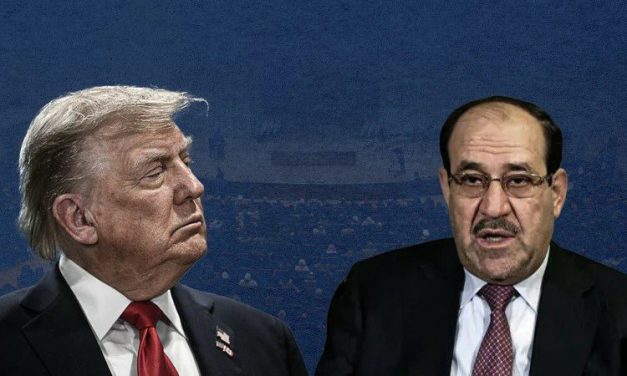
Online Strategic Council – Memoir: The swift selection of Nouri al-Maliki for the premiership constitutes a new phase in Iraq’s political sphere. Multiple factors have played a role in this process, the most important being the prevailing situation in Iraq and the region. Under such circumstances, Iraq requires a powerful and experienced prime minister who can keep the country away from the dangers of wars and crises.

America’s Strategy for Creating Tension in the Asia-Pacific

Strategic Council Online – Opinion: Relations between some countries in the Asia-Pacific region, such as China and Japan or China and Australia, which were previously relatively normal, are trending towards deterioration, and the primary reason for this is the aggressive policies of the United States of America.

The Collapse of the European Security Illusion with the Continuation of the Ukraine War?

Strategic Council Online – Interview: The Ukraine war has become a new turning point in the political, security, and even commercial relations of allies on both sides of the Atlantic. While this war is nearing its fourth year, many questions still remain regarding its future and its consequences; among them, will the continuation of the Ukraine war lead to the collapse of the European security illusion?

Is Greenland Pushing Europe Toward China?

Strategic Council Online – Interview: A European affairs expert believes that the seizure of Greenland will certainly weaken America’s relations with Europe and its allies. Donald Trump’s view is that he does not need these countries, but if Europe faces significant pressure from the United States, it is natural for it to move toward China.

Alarm Bells Sound for ISIS Revival in Syria: Threat to Iraq and West Asia

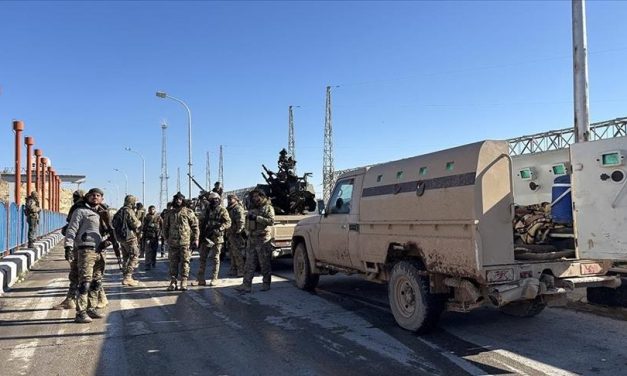
Strategic Council Online – Opinion: Numerous documents and pieces of evidence indicate that ISIS, which in recent years has been the region’s biggest threat to security and stability after the Zionist regime, has once again in recent months become a focal point for political and security exploitation by American and Zionist regime security, intelligence, and political circles.

Afghanistan’s Effective Role in the Economy of Eurasia

Strategic Council Online – Interview: A regional affairs researcher stated: Despite projects such as the Khaf-Herat railway and the Herat-Balkh-Mazar-i-Sharif corridor being on the agenda, insecurity and the absence of an inclusive government remain the most significant obstacles to realizing transit corridors and Afghanistan playing an effective role in the economy of Eurasia.

Loading

Últimas publicaciones

America’s Zero-Sum Game in Iraq

Online Strategic Council – Memoir: The swift selection of Nouri al-Maliki for the premiership constitutes a new phase in Iraq’s political sphere. Multiple factors have played a role in this process, the most important being the prevailing situation in Iraq and the region. Under such circumstances, Iraq requires a powerful and experienced prime minister who can keep the country away from the dangers of wars and crises.

America’s Strategy for Creating Tension in the Asia-Pacific

Strategic Council Online – Opinion: Relations between some countries in the Asia-Pacific region, such as China and Japan or China and Australia, which were previously relatively normal, are trending towards deterioration, and the primary reason for this is the aggressive policies of the United States of America.

The Collapse of the European Security Illusion with the Continuation of the Ukraine War?

Strategic Council Online – Interview: The Ukraine war has become a new turning point in the political, security, and even commercial relations of allies on both sides of the Atlantic. While this war is nearing its fourth year, many questions still remain regarding its future and its consequences; among them, will the continuation of the Ukraine war lead to the collapse of the European security illusion?

Is Greenland Pushing Europe Toward China?

Strategic Council Online – Interview: A European affairs expert believes that the seizure of Greenland will certainly weaken America’s relations with Europe and its allies. Donald Trump’s view is that he does not need these countries, but if Europe faces significant pressure from the United States, it is natural for it to move toward China.

Alarm Bells Sound for ISIS Revival in Syria: Threat to Iraq and West Asia

Strategic Council Online – Opinion: Numerous documents and pieces of evidence indicate that ISIS, which in recent years has been the region’s biggest threat to security and stability after the Zionist regime, has once again in recent months become a focal point for political and security exploitation by American and Zionist regime security, intelligence, and political circles.

Afghanistan’s Effective Role in the Economy of Eurasia

Strategic Council Online – Interview: A regional affairs researcher stated: Despite projects such as the Khaf-Herat railway and the Herat-Balkh-Mazar-i-Sharif corridor being on the agenda, insecurity and the absence of an inclusive government remain the most significant obstacles to realizing transit corridors and Afghanistan playing an effective role in the economy of Eurasia.

Loading

DERNIER CONTENU

America’s Zero-Sum Game in Iraq

Online Strategic Council – Memoir: The swift selection of Nouri al-Maliki for the premiership constitutes a new phase in Iraq’s political sphere. Multiple factors have played a role in this process, the most important being the prevailing situation in Iraq and the region. Under such circumstances, Iraq requires a powerful and experienced prime minister who can keep the country away from the dangers of wars and crises.

America’s Strategy for Creating Tension in the Asia-Pacific

Strategic Council Online – Opinion: Relations between some countries in the Asia-Pacific region, such as China and Japan or China and Australia, which were previously relatively normal, are trending towards deterioration, and the primary reason for this is the aggressive policies of the United States of America.

The Collapse of the European Security Illusion with the Continuation of the Ukraine War?

Strategic Council Online – Interview: The Ukraine war has become a new turning point in the political, security, and even commercial relations of allies on both sides of the Atlantic. While this war is nearing its fourth year, many questions still remain regarding its future and its consequences; among them, will the continuation of the Ukraine war lead to the collapse of the European security illusion?

Is Greenland Pushing Europe Toward China?

Strategic Council Online – Interview: A European affairs expert believes that the seizure of Greenland will certainly weaken America’s relations with Europe and its allies. Donald Trump’s view is that he does not need these countries, but if Europe faces significant pressure from the United States, it is natural for it to move toward China.

Alarm Bells Sound for ISIS Revival in Syria: Threat to Iraq and West Asia

Strategic Council Online – Opinion: Numerous documents and pieces of evidence indicate that ISIS, which in recent years has been the region’s biggest threat to security and stability after the Zionist regime, has once again in recent months become a focal point for political and security exploitation by American and Zionist regime security, intelligence, and political circles.

Afghanistan’s Effective Role in the Economy of Eurasia

Strategic Council Online – Interview: A regional affairs researcher stated: Despite projects such as the Khaf-Herat railway and the Herat-Balkh-Mazar-i-Sharif corridor being on the agenda, insecurity and the absence of an inclusive government remain the most significant obstacles to realizing transit corridors and Afghanistan playing an effective role in the economy of Eurasia.

Loading