Contemplating on Iraqi Foreign Minister’s Sarcastic Remarks about Iran

2022/07/01 | Note, Politics, top news

Strategic Council Online - Opinion: The recent remarks by Iraqi Foreign Minister Fuad Hussein in an interview with the Egyptian Al-Ghad TV channel about Iran should not be related to the will of the nation and the political system and government in Iraq. Barsam Mohammadi - Expert in regional affairs

What can be assessed based on the real data from within the Iraqi society is whether the political, social, and cultural atmosphere of the country regarding the Islamic Republic of Iran has been one of the “favorable, desirable, and appreciative” atmosphere despite the difference of opinions and tastes that sometimes exist.

In an interview with the Egyptian TV channel, the Iraqi foreign minister stressed that they have started talking with neighbors but would not accept their interference in the internal affairs of Iraq. He said relations with Iran are the relations between two neighboring countries, adding:  Decisions for Iraq should be made in Baghdad, not in another country.

Regarding Fuad Hussein’s remarks, there are some noteworthy points:

First point: The ironic remarks of the Iraqi foreign minister, who implicitly accuses Iran of interfering in the affairs of Iraq, are made at a time when the Islamic Republic of Iran has never given such permission to itself, and will not allow itself in future, to interfere in the internal affairs of Iraq and other neighboring countries. According to the principles of the foreign policy of the Islamic Republic of Iran, the national and regional interests of the country will not be secured and maintained by interfering in the internal affairs of others.

Second point: The interaction of the Islamic Republic of Iran with its neighbors, of which Iraq is one of the most important, has a “rational basis” and is based on certain principles such as good neighborliness, peaceful coexistence, de-threatening in soft and hard dimensions, détente, convergence with relevant governments, helping to resolve the crises, tensions and internal challenges of those countries and trying to repel threats to national security and interests of the neighbors, which ultimately serves the goals and interests of both parties.

Third point: Iraq is one of the important countries that have a special place among its neighbors in terms of historical, civilizational, religious, cultural, social, fate, and common geopolitical interests, as well as common vulnerabilities and concerns, especially in the field of security issues. This issue has caused the Islamic Republic of Iran to always have a special view of this important neighboring country and consider its geopolitics, territorial integrity, political structure, internal developments, and activities at regional and international levels as important for itself.

Given that developments in Iraq directly affect Iran’s security and national interests, as well as Iran’s geopolitical and political geography, the Islamic Republic of Iran cannot be “indifferent” or “inattentive” to developments in that country. Iran considers any threat against Iraq from inside and outside of the country as a threat to itself, and on the other hand, considers the creation of an atmosphere of peace, stability, and security in that country in the direction of its national security and interests.

Fourth point: The Islamic Republic of Iran is the only country in the region and the world that has stood beside Iraq in all the internal crises in that country in the past twenty years, including the occupation, the political transition period, and especially in the past years when the country was faced with the greatest threat to territorial integrity by the ISIS and other Takfiri terrorist groups, “sincerely” stood with the Iraqi government and people, and with the coordination of its government, made significant political, economic, advisory, field … support of that country. Such protections have played a decisive role in the desired stability and security that prevails in that country today. The assassination of Martyr Soleimani in Iraq is a testament to Iran’s “profound efforts” at the highest level to resolve the problems inside Iraq on the one hand and to expose the dangerous plans of the United States and its regional allies to wage war, chaos, and division among various parties and internal movements in Iraq, on the other hand.

Fifth point: The performance of the Islamic Republic of Iran in Iraq, which has various political, economic, military, cultural, security, and social … dimensions, is due to “neighborhood and geopolitical necessities” and never means interfering in the affairs of Iraq. Of course, opportunities and benefits resulting from Iran’s measures have primarily benefitted Iraq itself, facilitating the state-nation-building process, overcoming complex security, political, economic … crises, and preventing the disintegration of Iraq, and thwarting much of the US-Zionist conspiracy in that country is at the forefront of those interests.

Final point

Iraq is a country in transition and the Islamic Republic of Iran, according to the common fate and the nature of relations with Iraq, which is beyond the neighborhood and is influenced by deep historical, religious, and cultural commonalities between the two countries, regardless of any projections, adventures and psychological propaganda which is basically of foreign origin and instructions will continue to be with Iraq in difficult circumstances.

Iraqi officials, while being vigilant against the “inductions” of some regional actors and world powers, including the United States, should be aware that at the present juncture nothing is beyond the interests of the Iraqi people and the realization of security and political stability in that country. Therefore, it is expected that presenting material that has no political value, except for projections and marginalization, which can serve as a “pretext” for governments and hostile foreign forces to disrupt relations between the two countries, should be refrained.

The Islamic Republic of Iran, as a friend and neighbor, also expects Iraqi officials not to allow the country, which is the focus of regional and international destructive actors for political, security, and military exploitation of the country at any cost, to become a place for threatening the national security of Iran. Obviously, in that case, the Islamic Republic of Iran, in defending its national security will not have the slightest doubt about suppressing its perpetrators and those who order it.
0 Comments

Submit a Comment

Your email address will not be published. Required fields are marked *

LATEST CONTENT

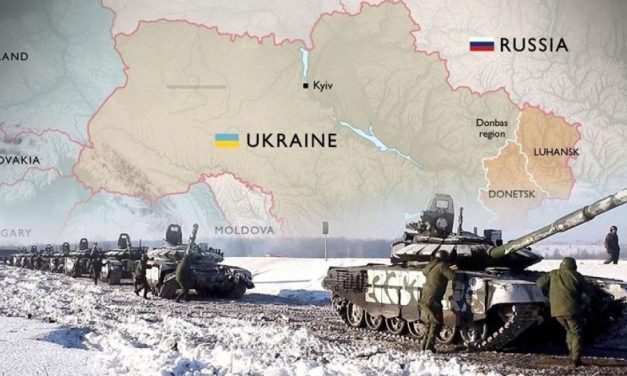
Examining Political Developments Related to the Ukraine War

Strategic Council Online – Interview: An international affairs analyst stated: Today, Ukraine is facing a set of structural corruption, intra-European divisions, a shift in America’s approach, and a legitimacy crisis for Zelenskyy, which has propelled the course of the war and the future of the European Union and NATO into an entirely new phase.

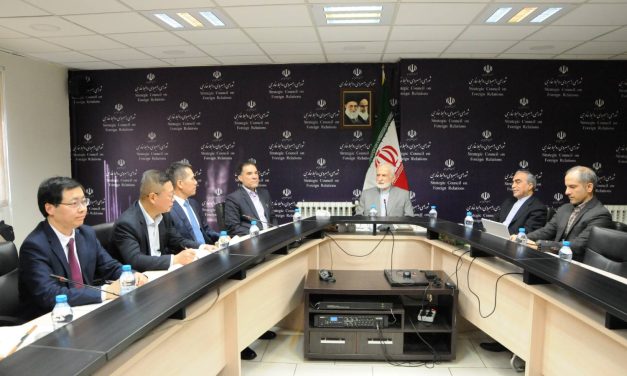
Dr. Kharrazi Meets Delegation from Chinese Think Tanks: Emphasizes the Need for an Action Plan to Implement the Comprehensive Iran–China Cooperation Document

Strategic Council Online: The President of the Strategic Council on Foreign Relations stated, “Despite the signing of the 25-year Comprehensive Cooperation Agreement between Iran and China, a long path remains toward its full implementation. One key point both countries must observe is to move away from a project-based approach and instead adopt a program-oriented relationship by formulating a concrete action plan. This plan should be grounded in Iran’s national spatial planning framework and aligned with the mutual priorities of both nations as outlined in the 25-year Comprehensive Cooperation Document.”

An Analysis of the New U.S. National Security Strategy Document

Strategic Council Online – Opinion: The new U.S. National Security Strategy document, which emphasizes the slogan “America First,” indicates that Washington has moved away from many previous patterns and shifted its focus from external interventions to the preservation of domestic security and the preservation of the Western Hemisphere. This document redefines threats, priorities, and America’s global role.

Artificial Intelligence and the Intensification of Global Inequality

Strategic Council Online – Opinion: Although other revolutions have occurred between the Industrial Revolution and the artificial intelligence revolution, especially the ICT (Information and Communications Technology) revolution, and humanity has made remarkable progress along this path, in terms of fundamental transformations in the mode of production and social relations, it can be said that the transformations of artificial intelligence and the scope of its effects are perhaps similar to the Industrial Revolution but on a much larger scale. It is, in fact, a new revolution, much more profound and complex than the Industrial Revolution.

Reasons for Trump’s Attempt to Remove South Africa from the Upcoming G20 Summit

Strategic Council Online – Interview: Iran’s former ambassador to South Africa stated: “Trump’s decision to remove South Africa from the upcoming G20 summit is an irrational, reactionary decision lacking a legal basis. On one hand, it stems from Trump’s contemptuous and narcissistic outlook. On the other hand, it is a response to Pretoria’s prominent role in pursuing the legal case against the Israeli regime at the International Court of Justice.”

An Analysis of Iran’s Missile Capability

Strategic Council Online – Interview: A strategic affairs analyst said: Iran’s missile doctrine is not only part of its deterrent capability but also part of the security identity of the Islamic Republic of Iran and should not be weakened.

Japan-China Tensions Over Taiwan

Strategic Council Online – Interview: An international affairs expert said that U.S. President Donald Trump, in a phone call this week with Sanae Takaichi, asked her not to further escalate disputes with China. Earlier this month, Takaichi created a rare tension with Beijing by stating that “a potential Chinese attack on Taiwan could lead to military action by Japan,” remarks that drew a sharp reaction from China. Beijing demanded that she retract these statements, but the Japanese Prime Minister has not done so thus far, and Tokyo has only emphasized that its policy regarding Taiwan has not changed.

A Look at bin Salman’s Recent Trip to America

Strategic Council Online – Opinion: The recent trip of the Saudi Crown Prince to America was a targeted effort to solidify the strategic partnership with Washington, reduce political uncertainties, and strengthen Riyadh’s political role-playing.

Loading

Últimas publicaciones

Examining Political Developments Related to the Ukraine War

Strategic Council Online – Interview: An international affairs analyst stated: Today, Ukraine is facing a set of structural corruption, intra-European divisions, a shift in America’s approach, and a legitimacy crisis for Zelenskyy, which has propelled the course of the war and the future of the European Union and NATO into an entirely new phase.

Dr. Kharrazi Meets Delegation from Chinese Think Tanks: Emphasizes the Need for an Action Plan to Implement the Comprehensive Iran–China Cooperation Document

Strategic Council Online: The President of the Strategic Council on Foreign Relations stated, “Despite the signing of the 25-year Comprehensive Cooperation Agreement between Iran and China, a long path remains toward its full implementation. One key point both countries must observe is to move away from a project-based approach and instead adopt a program-oriented relationship by formulating a concrete action plan. This plan should be grounded in Iran’s national spatial planning framework and aligned with the mutual priorities of both nations as outlined in the 25-year Comprehensive Cooperation Document.”

An Analysis of the New U.S. National Security Strategy Document

Strategic Council Online – Opinion: The new U.S. National Security Strategy document, which emphasizes the slogan “America First,” indicates that Washington has moved away from many previous patterns and shifted its focus from external interventions to the preservation of domestic security and the preservation of the Western Hemisphere. This document redefines threats, priorities, and America’s global role.

Artificial Intelligence and the Intensification of Global Inequality

Strategic Council Online – Opinion: Although other revolutions have occurred between the Industrial Revolution and the artificial intelligence revolution, especially the ICT (Information and Communications Technology) revolution, and humanity has made remarkable progress along this path, in terms of fundamental transformations in the mode of production and social relations, it can be said that the transformations of artificial intelligence and the scope of its effects are perhaps similar to the Industrial Revolution but on a much larger scale. It is, in fact, a new revolution, much more profound and complex than the Industrial Revolution.

Reasons for Trump’s Attempt to Remove South Africa from the Upcoming G20 Summit

Strategic Council Online – Interview: Iran’s former ambassador to South Africa stated: “Trump’s decision to remove South Africa from the upcoming G20 summit is an irrational, reactionary decision lacking a legal basis. On one hand, it stems from Trump’s contemptuous and narcissistic outlook. On the other hand, it is a response to Pretoria’s prominent role in pursuing the legal case against the Israeli regime at the International Court of Justice.”

An Analysis of Iran’s Missile Capability

Strategic Council Online – Interview: A strategic affairs analyst said: Iran’s missile doctrine is not only part of its deterrent capability but also part of the security identity of the Islamic Republic of Iran and should not be weakened.

Japan-China Tensions Over Taiwan

Strategic Council Online – Interview: An international affairs expert said that U.S. President Donald Trump, in a phone call this week with Sanae Takaichi, asked her not to further escalate disputes with China. Earlier this month, Takaichi created a rare tension with Beijing by stating that “a potential Chinese attack on Taiwan could lead to military action by Japan,” remarks that drew a sharp reaction from China. Beijing demanded that she retract these statements, but the Japanese Prime Minister has not done so thus far, and Tokyo has only emphasized that its policy regarding Taiwan has not changed.

A Look at bin Salman’s Recent Trip to America

Strategic Council Online – Opinion: The recent trip of the Saudi Crown Prince to America was a targeted effort to solidify the strategic partnership with Washington, reduce political uncertainties, and strengthen Riyadh’s political role-playing.

Loading

DERNIER CONTENU

Examining Political Developments Related to the Ukraine War

Strategic Council Online – Interview: An international affairs analyst stated: Today, Ukraine is facing a set of structural corruption, intra-European divisions, a shift in America’s approach, and a legitimacy crisis for Zelenskyy, which has propelled the course of the war and the future of the European Union and NATO into an entirely new phase.

Dr. Kharrazi Meets Delegation from Chinese Think Tanks: Emphasizes the Need for an Action Plan to Implement the Comprehensive Iran–China Cooperation Document

Strategic Council Online: The President of the Strategic Council on Foreign Relations stated, “Despite the signing of the 25-year Comprehensive Cooperation Agreement between Iran and China, a long path remains toward its full implementation. One key point both countries must observe is to move away from a project-based approach and instead adopt a program-oriented relationship by formulating a concrete action plan. This plan should be grounded in Iran’s national spatial planning framework and aligned with the mutual priorities of both nations as outlined in the 25-year Comprehensive Cooperation Document.”

An Analysis of the New U.S. National Security Strategy Document

Strategic Council Online – Opinion: The new U.S. National Security Strategy document, which emphasizes the slogan “America First,” indicates that Washington has moved away from many previous patterns and shifted its focus from external interventions to the preservation of domestic security and the preservation of the Western Hemisphere. This document redefines threats, priorities, and America’s global role.

Artificial Intelligence and the Intensification of Global Inequality

Strategic Council Online – Opinion: Although other revolutions have occurred between the Industrial Revolution and the artificial intelligence revolution, especially the ICT (Information and Communications Technology) revolution, and humanity has made remarkable progress along this path, in terms of fundamental transformations in the mode of production and social relations, it can be said that the transformations of artificial intelligence and the scope of its effects are perhaps similar to the Industrial Revolution but on a much larger scale. It is, in fact, a new revolution, much more profound and complex than the Industrial Revolution.

Reasons for Trump’s Attempt to Remove South Africa from the Upcoming G20 Summit

Strategic Council Online – Interview: Iran’s former ambassador to South Africa stated: “Trump’s decision to remove South Africa from the upcoming G20 summit is an irrational, reactionary decision lacking a legal basis. On one hand, it stems from Trump’s contemptuous and narcissistic outlook. On the other hand, it is a response to Pretoria’s prominent role in pursuing the legal case against the Israeli regime at the International Court of Justice.”

An Analysis of Iran’s Missile Capability

Strategic Council Online – Interview: A strategic affairs analyst said: Iran’s missile doctrine is not only part of its deterrent capability but also part of the security identity of the Islamic Republic of Iran and should not be weakened.

Japan-China Tensions Over Taiwan

Strategic Council Online – Interview: An international affairs expert said that U.S. President Donald Trump, in a phone call this week with Sanae Takaichi, asked her not to further escalate disputes with China. Earlier this month, Takaichi created a rare tension with Beijing by stating that “a potential Chinese attack on Taiwan could lead to military action by Japan,” remarks that drew a sharp reaction from China. Beijing demanded that she retract these statements, but the Japanese Prime Minister has not done so thus far, and Tokyo has only emphasized that its policy regarding Taiwan has not changed.

A Look at bin Salman’s Recent Trip to America

Strategic Council Online – Opinion: The recent trip of the Saudi Crown Prince to America was a targeted effort to solidify the strategic partnership with Washington, reduce political uncertainties, and strengthen Riyadh’s political role-playing.

Loading